Growth HQ
- About
Discover
Philosophy
- Our Thinking
- Case Studies
- Initiatives
- Contact Us
Graph Relationships & Node/Edge Extraction from Unstructured and Structured Data
Topics
Product
Problem
Organizations often struggle to unify fragmented datasets — from CRMs to OSINT — resulting in duplicate records, lost insights, and siloed intelligence. Traditional relational databases fail to represent complex interconnections between entities.
Strategy
Growth HQ designed a modular graph-based architecture that extracts entities and builds relational context automatically. Using OSINT and structured data, it connects people, places, and organizations in an interpretable network — ready for use in CRMs, recommendation engines, or data migration workflows.
Results
The graph system enabled seamless merging of contacts and data points across multiple sources, while maintaining contextual relationships. It provided instant recommendations and flexible visualizations, creating a foundational layer for advanced analytics, CRM intelligence, and hyper-local discovery apps.
BY THE METRICS
100K+
Entities processed and merged across multiple data sources
4
Primary data categories unified (Contacts, OSINT, CRM, Geodata)
<1s
Query latency for nearest-neighbor and relationship lookups
100%
Contact fields, tags, and notes preserved during merging
Fully Flexible
Visualization-ready structure adaptable to any downstream product
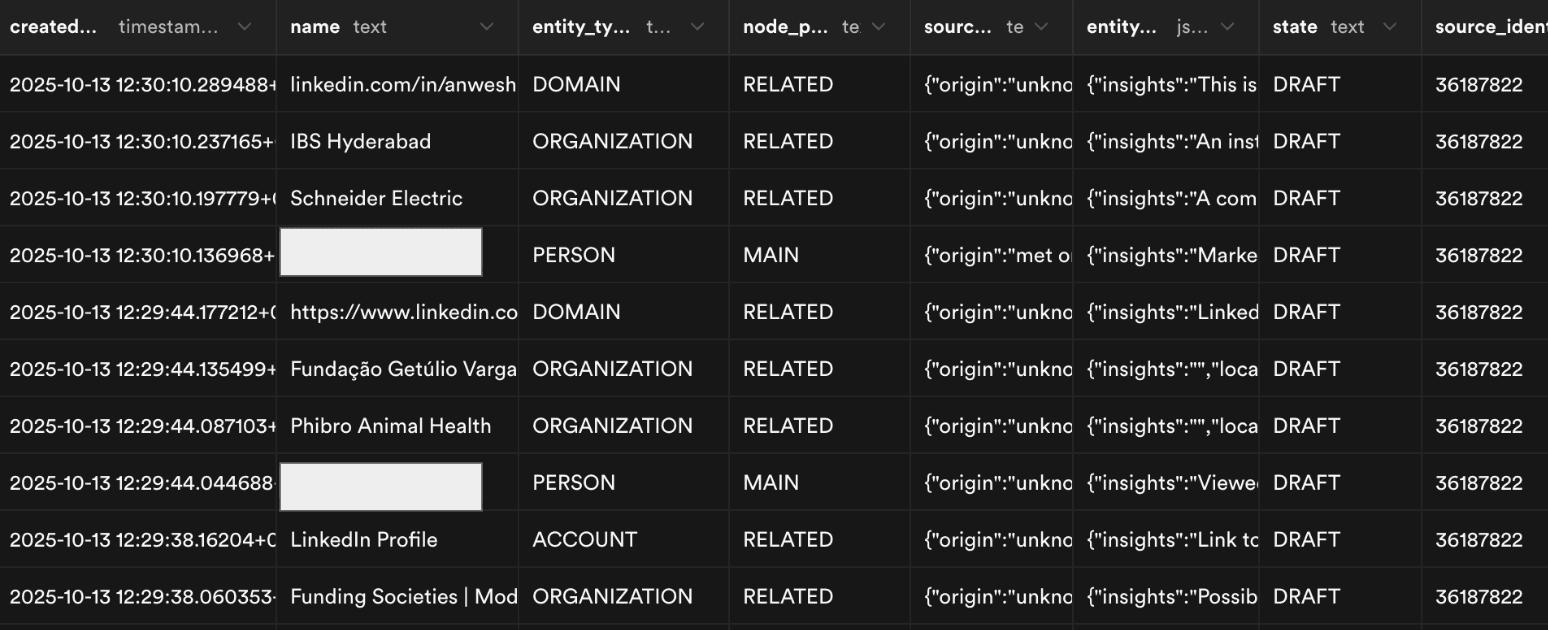
Growth HQ developed a flexible graph-based data extraction and relationship modeling framework that transforms fragmented datasets — both structured and unstructured — into interconnected knowledge graphs. This system underpins a new generation of data-rich applications, from custom CRMs to geospatial recommendation engines.
From Data Chaos to Connected Intelligence
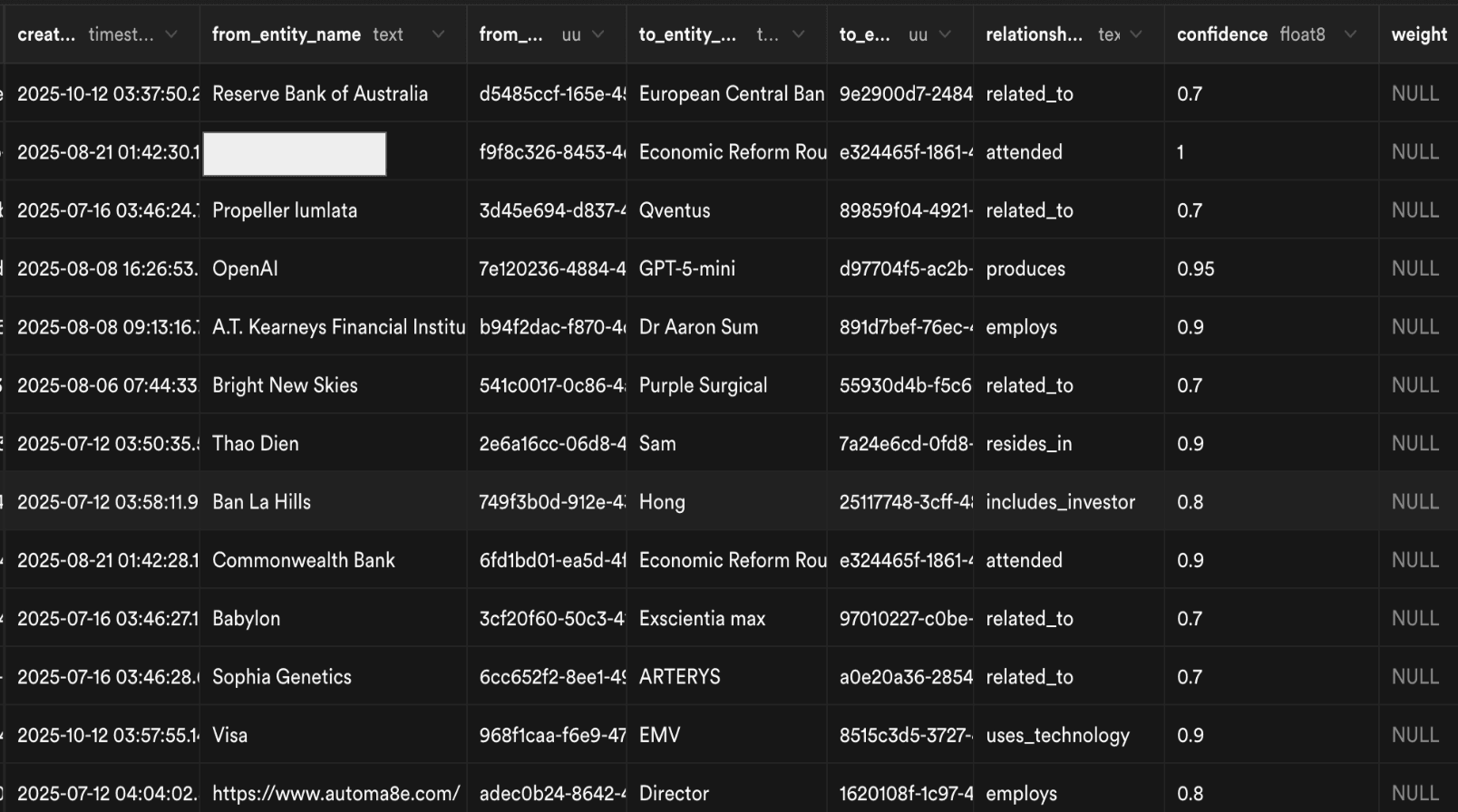
The challenge was to unify multiple data streams — contact information, OSINT data, and miscellaneous inputs — into a coherent network of nodes and edges. Growth HQ’s graph pipeline identifies entities, extracts attributes, and builds relationships, allowing downstream applications to make contextual recommendations and perform deep insights.
Core Applications
Each extracted entity becomes a node, and every association a weighted edge — creating an adaptive network that can later be visualized or queried for any use case. Whether used for recruitment matching, local discovery, or knowledge graph analytics, the framework is designed for reusability and scale.
Key Takeaways
- Graph structures unlock deep insights by modeling relationships instead of rows.
- Automated node/edge extraction from unstructured data creates flexible, scalable systems.
- Entity resolution and contact merging enable data hygiene without loss of context.
- The same data architecture can power CRMs, recommendation systems, or local discovery tools.