
AI-Powered Coffee Roasting Revolution: How Kuala Lumpur And Penang Cafés Are Leading Malaysias Specialty Coffee Boom In 2026
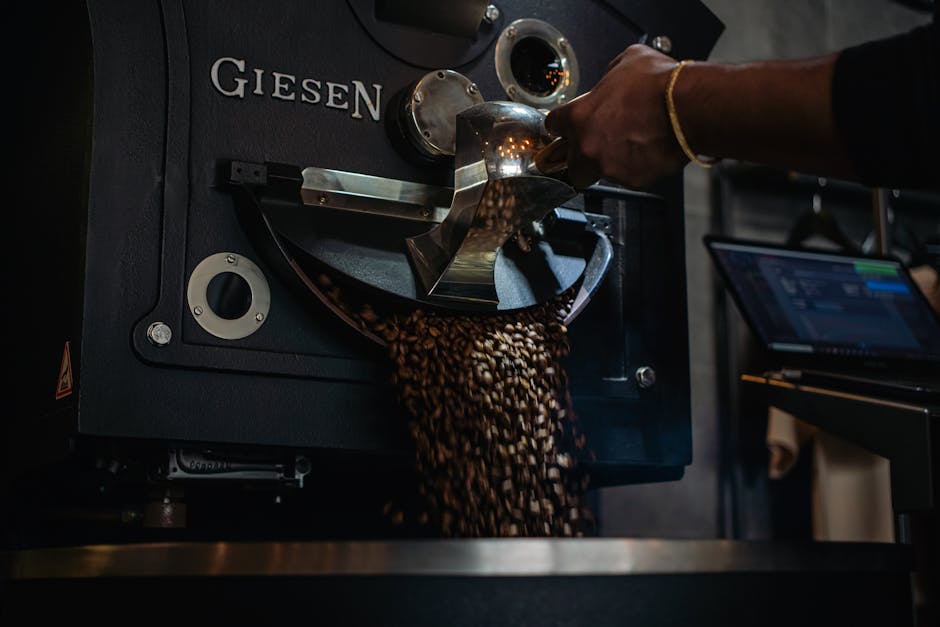
AI-Powered Coffee Roasting: A New Era for Malaysian Cafés and Southeast Asia’s Specialty Coffee Scene
The aroma of freshly roasted coffee has long been synonymous with Malaysian café culture—a space where tradition meets innovation, and local flavors intersect with global trends. Today, as Southeast Asia's specialty coffee sector gears up for a projected global growth of USD 50.8 billion between 2025 and 2029, the industry stands at the threshold of an unprecedented transformation: the advent of AI-powered coffee roasting. While automation has touched many domains, the union of machine intelligence and artisanal roasting redefines what it means to serve the perfect cup, promising new standards of consistency, sustainability, and profitability for café owners across Malaysia and the ASEAN region.
The Digital Infusion: Charting AI’s Entry into Coffee Roasting
Historic Underpinnings: From Manual Mastery to Machine Learning
Coffee roasting in Malaysia, once a domain preserved for skilled artisans, has evolved through generations—each batch dictated by human intuition, weather, and the idiosyncrasies of each harvest. Manual roasting provided character but struggled with consistency and scalability. Enter the digital age: global tech giants, high-profile competitions, and consumer expectations have set the stage for AI-driven disruption.
Real-Time Insights: The Current Landscape (Jan 31–Feb 3, 2026)
In the past three days, no concrete rollouts of AI-powered roasting systems have been reported in Malaysian cafés. Yet, the regional narrative is shifting. The upcoming ASEAN Coffee Roasting Championship 2026 (ACRC) in Bangkok, for example, promises not just prestige, but also an innovation spillover effect as competing roasters explore AI-powered techniques to stand out. CES 2026 highlights further reinforce this trend, with AI-enabled machines by Bosch and sensory robots like DigitalScent redefining kitchen and café technology internationally. These advances, while not yet mainstream in Malaysia, provide clear signposts for imminent, localized adoption.
The Business Imperative: Why AI Roasting Is a Strategic Leap
Market Pressures and the Search for Consistency
Malaysian café owners operate in a dynamic, often volatile market. Unpredictable bean prices, driven by climate, labor, and global economics, compress profit margins and challenge consistency. AI-powered roasting systems—capable of adjusting airflow, temperature, and duration with machine learning algorithms—offer a crucial remedy. By analyzing real-time roast data, these systems optimize flavor extraction, decrease waste, and ensure uniformity from batch to batch, even as external variables fluctuate.
Cost-Benefit Dynamics: Investment Versus Payback
Despite initial hurdles—upfront costs of RM50,000–100,000+ for advanced AI roasters and the need for staff retraining—the return on investment is persuasive. Extrapolating from global efficiencies, AI roasting can reduce energy and labor costs by 15–25%, with waste reduction savings of up to RM25,000 annually for a 50-seat café. With Malaysian food tech grants and local partnership opportunities, the typical payback period falls within 2–4 years—well-aligned with aggressive market expansion strategies in urban hubs like Kuala Lumpur and Penang.
Emerging Technology: Inside the Heart of AI Coffee Roasting
Machine Learning and Neural Networks: The New Roaster’s Brain
At the core of AI-powered roasting are neural networks trained on thousands of data points—temperature curves, humidity, bean density, and chemical markers such as those indicative of the Maillard reaction. This real-time intelligence lets roasters refine profiles for single-origin beans (like Malaysian Liberica), ensuring consistent nutty or fruity notes regardless of subtle crop variations. Predictive analytics further allow cafés to forecast roast yields and inventory requirements, reducing waste by industry benchmarks of 20–30%.
Voice Integration and Automation: From Bosch to Local Adaptation
AI integration is not just about backend optimization; customer-facing innovation is thriving. Machines like Bosch’s Alexa-synced 800 Series, showcased at CES 2026, hint at a near future where Malaysian café owners could use voice controls to select roast curves or personalize espresso variants on the fly. Pairing these with AI-powered robots—already making waves in other emerging markets like Turkey—opens new vistas for high-volume, taste-consistent serving in both professional and home settings.
Southeast Asian Patterns: Malaysia in the Regional Roasting Renaissance
ASEAN Collaboration: Competitions as Catalysts
Events like the ACRC do more than crown champions—they establish shared protocols (ACAP) and set unified standards that are primed to fast-track AI adoption across the region. Malaysian roasters, often at the forefront of specialty coffee innovation, are positioning themselves to learn from, and compete against, their Thai, Vietnamese, and Indonesian counterparts.
Urbanization, E-commerce, and the Digital Café
Malaysia’s 3,000-plus specialty outlets face new pressures as urban consumers demand traceable sourcing and greater sustainability. E-commerce platforms level the playing field but also foster cutthroat competition. Here, AI’s ability to optimize roast-to-order operations, guarantee freshness, and provide digital transparency becomes a key differentiator for customer loyalty—especially among ethically conscious and millennial coffee enthusiasts.
Comparative Lens: Malaysia’s Journey Versus Global Innovators
The Implementation Gap: Local Hurdles and Global Momentum
Malaysia shares many of the same challenges as its global peers: price volatility, skill shortages, and sustainability concerns. Yet, compared to North America or Europe—where AI roasting has seen live deployments in chains like Starbucks and tech pilots by Nestlé and Pilot Coffee Roasters—local cafés remain hesitant. High capital outlays, a patchy tech infrastructure, and the specter of supply chain inequities in producing regions act as brakes on adoption.
Opportunities for Leapfrogging
Conversely, Malaysia’s relatively nascent AI roasting scene could allow for technology leapfrogging. By integrating lessons from recent regional showcases (like the CES 2026 Bosch machine or DigitalScent sensory robots) and leveraging partnerships with multinationals, Malaysian cafés can sidestep early missteps and implement best-in-class systems tailored for their unique bean profiles and consumer bases.
On the Ground: Real-World Implications for Café Owners and Baristas
Profit Margins and Product Differentiation
As profit margins erode due to fluctuating bean quality and prices, AI provides a stabilizing force. Predictive modeling not only aids in cost forecasting but also helps lock in supplier contracts at the best possible rates, toughening resilience against market shocks.
Customer Experience: From Transparency to Taste
AI’s touch is also palpable in the customer journey. From transparent labeling (showing roast origin, carbon footprint, and flavor notes) to personalized blends crafted to the customer’s taste via app or kiosk, AI helps transform the café from a transactional venue to an experience-driven destination. This is particularly powerful in a region where 70% of consumers cite sustainability as a purchasing priority.
Barriers to Entry: Navigating Adoption Challenges
Financial and Technical Hurdles
Despite clear advantages, several obstacles are slowing the rollout of AI-powered roasting in Malaysia:
- High Equipment Costs: Advanced roasters carry a price tag of RM50,000 and up, while smaller cafés may struggle with upfront investment.
- Skill Gaps: The transition from manual or semi-automated machines to sensor-rich AI systems requires new barista training paradigms.
- Supply Chain Realities: Persistent poverty in coffee-producing regions complicates efforts to fully align with ethical sourcing, even as AI aids traceability.
- Tech Reliability: Stable power and internet connectivity, essential for AI’s predictive analytics and cloud integrations, are not yet ubiquitous across Malaysia’s semi-urban landscape.
Events like ACRC’s Home category offer entry points for upskilling enthusiasts, while government and industry grants can help defray initial outlays. Importantly, collaboration with established tech players accelerates the maturation of Malaysia’s coffee tech ecosystem.
As Southeast Asia’s specialty coffee market surges, “the cafés that invest early in AI roasting will lead the next wave of customer loyalty and operational excellence—while competitors risk fading into the background of instant alternatives.”
Strategic Playbook: Recommendations for Malaysian Coffee Decision Makers
Pilot & Scale
Malaysian café owners should start by investing in modular AI roasting systems for a modest portion (about 20%) of their roasting capacity. Participation in events like the ACRC provides invaluable exposure to best practices and helps drive internal buy-in.
Sustainability and Partnerships
Capitalizing on AI-driven carbon footprint tracking and ethical bean sourcing not only meets consumer expectations but also opens new marketing avenues. Strategic partnerships with global players (Nestlé, Pilot Coffee Roasters) and regional sponsorships can bolster brand reputation and facilitate technology transfer.
Metrics and ROI Monitoring
Leaders should measure success with clear KPIs: roast consistency (<5% variance), customer retention (targeting a 30% increase through personalized offerings), and sustained margin improvement (10–15% through waste reduction and efficiency). Government-backed funding can further compress the payback window.
Expansion and Digital Integration
Early adopters should test AI roasting in high-traffic locations (e.g., Bangsar) and leverage e-commerce for subscription growth, scaling across ASEAN markets via platforms like THAIFEX.
Future Outlook: 2026–2029 and Beyond
Tech-Driven Transformation: Market Share Projections
Analysts predict that by 2029, AI-driven roasting will account for 25% of ASEAN’s specialty coffee production, as the market achieves its projected USD 50.8 billion growth. Malaysia—anchored by strong urban demand, a rising specialty scene, and catalytic events like ACRC—will likely be among the regional leaders. The status quo, dominated by manual methods and instant alternatives, is increasingly untenable.
The Risk of Inertia
Businesses that delay AI integration face the dual threats of commoditization and shrinking margins, particularly as instant coffee brands and global chains tighten their grip on the value-conscious end of the market.
The Road Forward: Call to Action
The story of AI-powered coffee roasting in Malaysia and Southeast Asia is only beginning. By embracing this technological leap, café operators can future-proof their businesses, elevate customer engagement, and contribute to a more transparent and sustainable coffee supply chain. As urbanization and consumer sophistication deepen, the fusion of AI and artisanal roasting is not just a fleeting trend—it is the new baseline for excellence.
For decision makers, the message is clear: act now, or risk irrelevance in a rapidly digitizing coffee landscape.