
Bimbo Bakeries USAs Regional Sourdough Surge: Winning Strategies For Portland, Seattle, LA, SF, NYC, Houston & Chicago In 2026
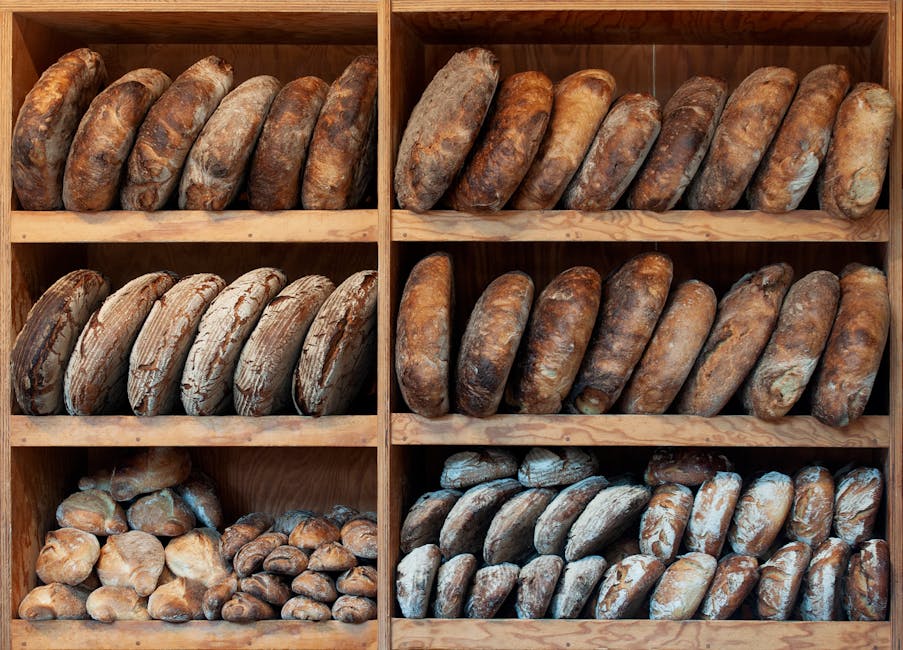
The Sourdough Surge: How Bimbo Bakeries USA Can Shape, Scale, and Savor a National Bread Renaissance
In the heart of America’s breadbasket, a quiet revolution has been leavening for years—but only recently has the country witnessed a full-fledged sourdough renaissance. What began as a regional curiosity in quirky bakeries of San Francisco has exploded into a nationwide movement, reimagining how consumers think about flavor, health, and authenticity. Bimbo Bakeries USA—a subsidiary of the world’s largest baking company, Grupo Bimbo—is now poised at a strategic crossroads, confronted by the meteoric rise of artisanal sourdough. The question for its regional brand leaders is as vital as it is urgent: Will Bimbo ride this wave and redefine the premium bread market, or will it yield the crust to nimbler competitors and entrenched local artisans?
Grain by Grain: The Context Behind America’s Sourdough Awakening
From Tradition to Trend: Sourdough has always held a unique place in the American bread story, but the past year has transformed it from a niche artisanal product into a mainstream staple. The first quarter of 2026 saw U.S. sourdough sales climb an astonishing 28% year-over-year, with the Pacific Northwest, California, and the Northeast leading the charge. Millennials and Gen Z, drawn by claims of gut health, authenticity, and the crafted touch, are fueling this upswing, as evidenced by a 15% increase in visits to artisanal bakeries.
Social Momentum: Digital platforms, especially TikTok, have catalyzed 180% spikes in sourdough-related content, amplifying viral trends (“discard” recipes now boast over 3.5 billion views). These online conversations underscore a deeper realignment in consumer values—one that prizes small-batch fermentation, regional identity, and transparency.
Competitive Crossroads: The Stakes for Bimbo Bakeries USA
Underserved Opportunity: Despite boasting 32 bakeries and an enviable 19.2% national bread market share, Bimbo’s presence in sourdough remains under 5%—a glaring gap given the segment’s acceleration. The premium market is monopolized by Tartine Bakery with a 45% share, and mass-market entrants like Pepperidge Farm (8%) have outpaced Bimbo’s flagship “Thomas’” brand, which has yet to launch a sourdough loaf.
Segment Hotspots & Demographics: Data from April 2026 pinpoints high-potential markets: the Pacific Northwest (42% penetration, 35% YoY growth), California (38% penetration), and the Northeast (35%). Each region tells a unique demographic story: the Pacific Northwest is youth-driven and vegan-friendly, California is health-focused with a strong Hispanic influence, and the Northeast is characterized by urban professionals seeking authentic, seeded hybrids.
Strategic Realignment: Bimbo’s Plan for Localized Sourdough Domination
Product Innovation, Localization, and Pricing: The cornerstone of Bimbo’s regional sourdough strategy is a commitment to hyper-localization. New lines—“Cascade Sourdough,” “Golden State Sourdough,” “Empire Sourdough,” “Lone Star Sourdough,” and “Heartland Sourdough”—will each utilize region-specific wild yeast cultures. These loaves will be priced 20–30% above standard offerings ($4.99–$6.49), reinforcing their artisanal credentials while targeting a collective 15% segment share in year one.
Distribution Leverage and Store Locator Technology: A strategic advantage lies in Bimbo’s vast reach. By embedding advanced store locator tools on their website (see example here), Bimbo aims for maximum consumer convenience and regional precision, mapping the journey from online search to in-store purchase.
Regional Flavors, Real-World Tactics: Execution Across the U.S.
Pacific Northwest: With 42% household penetration and a penchant for novel flavors like cherry-almond, Bimbo’s “Cascade Sourdough” will launch in partnership with local heroes such as Leaven Bakehouse. The projected result: An 18% sales lift and rapid consumer trial.
California: Leveraging the region’s health and flavor consciousness, “Golden State Sourdough” will offer fusion variants (e.g., jalapeño, bolillo-style). Engagement with digital influencers and TikTok campaigns (#BimboSourdoughCA) will aim to achieve a 20% market share.
Northeast: “Empire Sourdough” will home in on dense urban demand, partnering with retail stalwarts like Whole Foods and participating in local farmers’ markets. The focus: rye-sourdough hybrids and freshness, monitored via AC Nielsen scores.
Texas/South: The fastest-growing region will receive “Lone Star Sourdough,” with unique mesquite infusion. Retail partnerships with HEB and BBQ-themed kits will push family penetration.
Midwest: “Heartland Sourdough” will satisfy price-sensitive shoppers with budget-friendly, organic options distributed efficiently using the Albany, NY facility.
Comparing Old Guard and New Entrants: Perspectives on Sourdough’s Future
Artisan Versus Scale: Traditionalists argue that only small, local bakeries can deliver true sourdough flavor and freshness. Their allegiance is formidable: 60% of regular sourdough buyers report “loyalty to my local baker.” However, mass-market brands can promise consistency, availability, and—now—hyper-localization.
Bimbo’s Balancing Act: Here, Bimbo’s scale meets regional nuance. By co-branding with local artisans, investing in robust freshness protocols (hybrid sourdough starters for 90% reliability), and tailoring its marketing to each region, Bimbo is betting that national reach and local flavor can coexist.
Tech Versus Touch: The integration of store locators, digital campaigns, and loyalty apps challenges the artisanal approach’s reliance on word-of-mouth and in-person experiences—but also democratizes access to authentic products.
"The future of bread is not a battle between artisan and industrial, but a synthesis—where tradition meets technology, and heritage flavors are scaled without compromise. The brands that thrive will be those who honor local roots while leveraging global reach."
Key Metrics and Financial Insights: Tracking the Sourdough Opportunity
Market Size and Growth: The U.S. sourdough market is projected at $2.1 billion in 2026, with a 26% CAGR. For Bimbo, the addressable opportunity is estimated at $320 million across core regions, with a 22% ROI and an average payback period under five months.
Operational KPIs: Each region is equipped with clear metrics: sales velocity targets (+20%), shelf-share goals (15%), and freshness benchmarks (Nielsen scores exceeding 95%). Investments—ranging from $450K in the Pacific Northwest to $1.2M in California—are forecast to yield remarkable uplifts (28–35% regionally).
Risks and Mitigation: Challenges include supply chain volatility (25% cost increase in wild yeast), consumer concerns about freshness (40% cite staleness in mass-market loaves), and regulatory oversight. Bimbo’s response has been a blend of centralized quality control, patenting regional recipes, and adhering to FDA standards for fermented labeling.
Innovation Unleashed: Store Locators, Digital Activation, and Community Building
Hyper-Local Digital Tactics: Embedding robust store locator functionality enables geo-fenced promotions, maps the precise availability of each regional sourdough SKU, and drives monthly locator traffic to a projected 500,000 visits.
Community and Content: Strategic partnerships with local influencers and event-driven marketing (e.g., in-store demos, pop-ups at farmers’ markets) bridge the gap between digital discovery and real-world trial.
Data-Driven Stewardship: Salesforce analytics will parse sales attribution, while pilot tests in 50 stores per region allow for continual calibration—aligning with consumer sentiment and operational realities.
Lessons from the Field: Competitive Intelligence and Benchmarking
Tartine’s DTC Playbook: Tartine Bakery’s 45% stranglehold on the premium market has been powered by direct-to-consumer fulfillment and an aura of exclusivity. Bimbo’s counter? Unmatched distribution and 99% in-stock rates, turbocharged by store locator accuracy and regional product variants.
Pepperidge Farm’s Pilot: The 2025 pilot by Pepperidge Farm yielded a 24% uplift—strong evidence for Bimbo’s much larger and more localized rollout.
The Loyalty Factor: While local artisans retain fiercely loyal customers, Bimbo’s multi-channel execution (from SMS campaigns to school lunch pilots) expands the sourdough envelope, inviting new customers while retaining bread traditionalists.
Looking Ahead: Future-Proofing America’s Bread Aisle
Institutionalizing Innovation: For Bimbo, the sourdough surge is more than a product trend—it is a proving ground for agile, regionally tailored, tech-enabled brand management. The company’s ability to iterate, adapt, and scale will be tested by shifting consumer expectations and relentless competition.
Cross-Functional Value: The sourdough initiative has already catalyzed collaboration across R&D, supply chain, digital marketing, and field sales. Such cross-functional alignment will be essential as Bimbo moves beyond bread into broader “better-for-you” categories.
Talent and Culture: With regional hiring for sales, maintenance, and innovation roles (ranging from $72K maintenance team leaders to $205K directors), Bimbo is investing not just in dough, but in people and process. Training programs focused on “sourdough storytelling” reflect a commitment to authenticity that can’t be easily replicated.
Conclusion: The Strategic Imperative of Sourdough—A Final Word
America’s love affair with sourdough is not a passing fad—it’s an expression of a deeper hunger for flavor, health, and regional identity. The brands that succeed in this new landscape will be those who move nimbly, think locally, and execute globally. Bimbo Bakeries USA stands at an inflection point: with deep resources, advanced digital tools, and a willingness to adapt, it can capture an outsized share of this $2.1 billion market.
The next twelve months will determine whether Bimbo will merely participate in the sourdough boom—or define it. By leveraging innovative regional launches, omnichannel activations, and a relentless focus on freshness and authenticity, Bimbo has the potential not only to close the premium gap but to set a new standard for the baked goods industry.
In the war for the American bread basket, sourdough is just the beginning. The lesson is clear: The future belongs to those ready to marry tradition with technology—and to those bold enough to lead, one crust at a time.