
Bukit Merah HDB Renovation Cost Guide 2026–2027: Affordable Upgrade Strategies, Price Trends, And Asset Value Insights For Singapore Homeowners
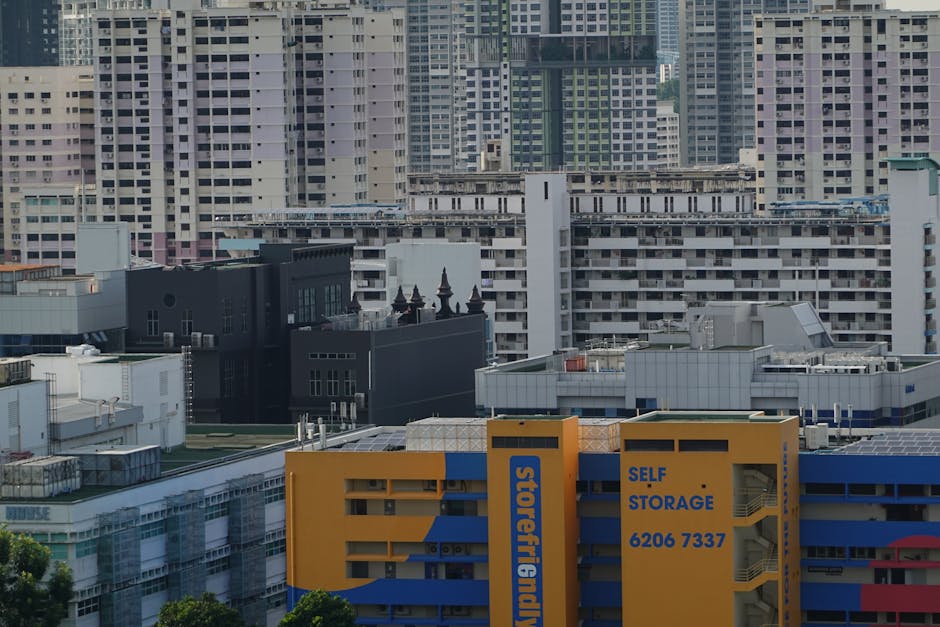
Bukit Merah HDB Renovations 2026–2027: Shaping Value Amidst High Prices, Upgrades, and Changing Market Dynamics
In the heart of Singapore, Bukit Merah stands as a beacon for homeowners seeking both urban convenience and enduring asset value. By 2026, this mature town has become a microcosm of HDB market evolution: premium resale prices, layered policy interventions, and the rolling wave of neighbourhood upgrades converge to create a complex yet rich landscape for renovation decision-makers. As market sentiment shifts from exuberance to measured optimism, a new question emerges—how do Bukit Merah homeowners and investors balance affordable upgrades with strategic asset optimisation, especially in an environment where every renovation dollar can yield outsized impact? This exposé explores the critical numbers, timelines, and planning strategies that will define success in Bukit Merah’s 2026–2027 renovation cycle.
The Bukit Merah Premium: Why Upgrades Matter More Than Ever
Historical Asset Appreciation & Current Price Benchmarks
Bukit Merah’s HDB flats have long showcased one of the highest price premiums in Singapore. As of the past year, the median resale price sits at approximately S$790,000, some 25% above the national median (Winfred Quek HDB Prices). Drilling deeper, 4-room units command medians near S$944,000, while 5-room flats stretch to S$1.08 million (HDBData Bukit Merah). This premium is not an accident: Bukit Merah’s central location, established amenities, and mature neighbourhood infrastructure attract both local buyers and investors seeking risk-controlled returns.
Emerging Capitalisation Trends
Within such a high-value town, every functional upgrade—whether kitchen, bathroom, flooring, or air-conditioning—has an outsized probability of enhancing resale or rental value. Even modest, well-planned renovation can propel older flats closer to the benchmarks set by new launches or prime-location projects (StackedHomes Market Analysis). This is especially relevant as HDB resale prices, after a multi-year upcycle, have softened slightly: by mid-2026, prices fell for two consecutive quarters, marking a shift from pure speculation toward disciplined, cost-controlled investment.
Neighbourhood Renewal: The Public-Private Upgrade Synergy
The Infrastructure Backdrop
Bukit Merah is at the center of Singapore’s latest HDB upgrade round, covering 29,000 homes nationwide. Its selected precincts—spanning nearly 9,000 households—will see town-level upgrades starting from the second half of 2026, with completion stretching into 2028 (SBR HDB Upgrades News). This public works investment means that the external built environment (common areas, facades, amenities) will improve at state expense.
Strategic Renovation Redirection
For Bukit Merah homeowners, this is a pivotal moment. Renovation budgets should be re-allocated toward internal functionality and aesthetics rather than duplicating external improvements. Those aiming for a sale or rental after 2028 can time their interior upgrades to coincide with visible neighbourhood uplift, capturing the elusive “double uplift”—an asset enhanced both inside and out.
Policy Implications and Grants
The policy environment further shapes timing. Recent revisions have expanded grants for singles purchasing Bukit Merah resale units—up to S$40,000 under certain schemes—allowing for grant-driven savings that can be partially invested in immediate upgrades (Straits Times Bukit Merah Launch). Meanwhile, the 30-month “wait-out” rule restricts frequent trading, making a multi-year, phased upgrade plan more attractive for both owner-occupiers and business-minded landlords.
Renovation Cost Intelligence: Real Numbers for Bukit Merah 2026
BTO Price References and Renovation Benchmarks
Historical Bukit Merah BTO launches provide a powerful calibration for future upgrades. 3-room BTOs ranged from S$420,000–S$570,000; 4-room units, S$560,000–S$790,000, and 5-room units, S$380,000–S$500,000 (excluding grants). After CPF grants, effective entry prices could be S$300,000–S$450,000 for 3-room, and S$440,000–S$670,000 for 4-room (RecordBTO). These figures frame a rational cap for private renovations: upgrades must preserve value and avoid overspending relative to prevailing ceiling prices.
Renovation Guides: Package and Line-Item Costing
Dedicated guides for Bukit Merah BTO flats in 2026 reveal granular cost envelopes:
- 3-room unit: S$14,000–S$50,000 (standard move-in: ~S$7,590, premium: ~S$8,290).
- 4-room unit: S$16,000–S$60,000 (bathroom overlay package: S$10,000, kitchen upgrade: S$5,000–S$15,000).
- 5-room unit: S$25,000–S$45,000 (complete premium package: S$20,690, full interior design scenario: S$110,690).
Decision-Maker Strategies: Phasing, Prioritisation, and Value Maximisation
Financial Baseline and Renovation Budgeting
Business-minded owners should:
- Benchmark their unit against current market value (3-room: S$430,000, 4-room: S$944,000, 5-room: S$1.08 million).
- Set renovation budget as a percentage of value (owner-occupier: 5–10%; investor/landlord: 3–7%).
- Clarify exit horizon—ideally completing upgrades in 2026–2027, before precinct works conclude (2028+).
With HDB precinct works scheduled from 2H 2026, private renovation budgets should focus on high-impact internal drivers:
- Kitchens and bathrooms
- Flooring and storage
- Electricals, lighting, air-conditioning
- Acoustic and thermal comfort upgrades
High-ROI Upgrade Categories
Using context data:
- Kitchens: S$6,000–S$12,000 for functional upgrades (cabinets, countertops, basic appliances).
- Bathrooms: S$10,000–S$15,000 for overlays in 4- and 5-room units; S$7,000–S$10,000 for 3-room units.
- Flooring: Vinyl packages at S$14,000–S$15,000 for cost-effective modernisation.
- Air-conditioning: Reliable systems are essential; S$3,500–S$6,500 for System 2/3, upgrading for rental/resale appeal.
- Acoustics: Soundproofing investment (S$4,000) pays off for units near main roads.
Move-in packages (~S$7,500–S$8,300) offer core functionality. Complete packages (~S$19,000–S$21,000) with minor customisation provide predictable costs and project duration—a valuable benefit for time-pressed executives or investors.
Phased Renovation Playbook: Smoothing Cash Flow, Capturing Value
2026: Infrastructure and Core Systems
Renovate electricals, plumbing, and basic flooring, synchronising with precinct works (2H 2026).
Early 2027: Kitchens & Bathrooms
Upgrade main functional areas, with market trends informing spend calibration.
Late 2027: Fine-tuning
Add built-in storage, lighting, and smart home features—flexible adjustments if market conditions shift.
Risk Management
Avoid overcapitalising relative to Bukit Merah’s price ceilings. With 4-room medians near S$924,000–S$944,000, most households should keep spend below S$45,000, reserving S$80,000+ for long-term holds or high-income tenant targeting.
Comparative Perspectives: Owner-Occupier vs Investor/Landlord
Owner-Occupiers
For those living in their flats, the focus is quality-of-life and future-proofing. Renovation budgets are set higher (5–10% of unit value), and upgrades are phased for minimal disruption. Phasing systems in 2026, functional areas in 2027, and fine-tuning later ensures cash flow management and asset appreciation.
Investors/Landlords
Rental appeal and vacancy minimisation drive choices. Renovation budgets are tighter (3–7%), prioritising durable flooring, tenant-friendly kitchens, and bathroom overlays. Boutique design is rarely justified unless targeting niche segments.
New Viewers and First-Time Buyers
Singles or families entering Bukit Merah via the expanded grant schemes can parlay savings into move-in upgrades. Careful benchmarking using Bukit Merah median prices and renovation guides (RenovationContractorSingapore 4-room Guide) ensures new buyers do not overspend relative to prevailing values.
Emerging Patterns and Market Signals
Resale Price Softening: A Shift Toward Value Preservation
With HDB resale prices falling for two quarters in 2026, the era of aggressive speculative spend is waning (SG Properties Market Analysis). Instead, quality-of-life upgrades and risk-managed value preservation become core priorities.
Neighbourhood Upgrades as Value Lever
As Bukit Merah’s streetscape and block appearance improve at public expense, private owners gain a “free uplift.” Savvy decision-makers complete targeted interior upgrades ahead of marketing units, leveraging the enhanced backdrop to support valuations.
Headroom for Value-Add Upgrades
Prime-location PLH projects (e.g., Berlayar Rise) launch at S$592,000, but comparable resale flats nearby are S$938,888–S$1.068 million—indicating a 59–80% premium for maturity and integrated upgrades (Edward Meow Property Monthly). Bukit Merah offers similar headroom, especially for repositioning older flats.
Innovative Practices: Data-Driven Renovation Planning
Leveraging Data Dashboards and Analytics Sites
The new era demands systematic use of Bukit Merah-specific HDB data dashboards, town-specific analytics sites, and dedicated renovation cost portals (RenovationContractorSingapore 5-room Guide). Cross-referencing official town-level price data, independent resale analytics, and contractor cost guides enables strategic planning aligned with upgrading cycles and evolving market trends.
Modular Package Selection and Phasing
Package-based renovation pricing simplifies project management. Owners can start with a standard move-in package, then layer on high-ROI upgrades (kitchen, bathroom, air-con) as cash flow permits. Phasing upgrades across 2026–2027 aligns spending with market dynamics and precinct upgrade schedules.
Real World Case Studies: Practical Recommendations by Flat Type
Owner-Occupier in a 3-room Bukit Merah Flat
- Value: S$430,000–S$450,000
- Budget: S$20,000–S$30,000
- Recommended Upgrades: Vinyl flooring (S$14,000–S$15,000), kitchen cabinet/appliance integration (S$6,000–S$11,000), System 2/3 air-con (S$3,500–S$6,500).
- Phasing: Systems/flooring in 2026, kitchen in 2027.
Family in a 4-room Bukit Merah Flat
- Value: S$924,000–S$944,000
- Budget: S$30,000–S$45,000
- Recommended Upgrades: Bathroom overlay (S$10,000), kitchen upgrade (S$10,000–S$15,000), storage and soundproofing (S$4,000–S$8,000), air-con upgrade (S$5,000–S$7,000).
- Strategy: Turn-key family unit near upper quartile for condition.
Investor-Landlord with 5-room Flat
- Value: S$1.03–1.08 million
- Budget: S$35,000–S$55,000
- Focus: Durable flooring, neutral design, efficient kitchen, tenant-friendly bathrooms, robust air-con.
- Aim: Raise rental appeal, minimise vacancy, avoid top-end boutique spend.
Forward-Thinking Insights: The Renovation “Sweet Spot” for Bukit Merah
“In Bukit Merah’s high-value context, affordable, phased upgrades aligning with neighbourhood renewal timelines offer the greatest leverage—preserving cash flow, enhancing asset desirability, and positioning units for long-term capital appreciation. The key is data-driven discipline: spend where value is created, time upgrades to public enhancements, and always benchmark against evolving price ceilings.”
Comparative Segment: Different Stakeholder Perspectives
Young Singles and First-Time Homebuyers
With expanded grant schemes, singles may receive up to S$40,000, making Bukit Merah accessible and enabling immediate move-in upgrades. Their priorities: functionality, aesthetics, and future resale positioning via modest, well-targeted renovations.
Landlords and SMEs
For landlords, durability and rental appeal drive choices. SMEs operating from home focus on soundproofing, lighting, and workspace creation.
Long-Term Residents
Those holding for 10+ years may justify higher renovation spend, especially if targeting niche, high-income segments (expats, families wanting central HDB locations). Phased, design-heavy fit-outs are more defensible here.
Newcomers vs Established Owners
First-time viewers may underestimate Bukit Merah’s price ceilings and overinvest. Established owners, armed with data and strategic timing, phase upgrades for maximum return leveraging public works.
Using Data and Online Resources: Planning with Precision
Systematic Cross-Referencing
Homeowners should routinely access HDB data dashboards (~HDB Q2 2026 Data), town-specific analytics (Winfred Quek Bukit Merah Prices), and granular renovation cost guides by flat type (RenovationContractorSingapore 3-room Guide). Monitoring neighbourhood upgrade news and market analysis portals ensures that renovation plans are aligned with both public works timing and market price ceilings.
Actionable Intelligence
Armed with real numbers—price per square foot, median transaction value, cost-per-package—owners can craft upgrade plans that are affordable, strategically timed, and value-maximising. For business stakeholders, this modular, data-driven approach mitigates risk and supports cross-functional decision making.
Conclusion: Bukit Merah’s Renovation Renaissance—Disciplined Optimisation in a Premium Market
As Singapore’s HDB landscape matures, Bukit Merah crystallises the challenges and opportunities facing homeowners and investors. Here, high baseline values and scheduled neighbourhood upgrades demand a disciplined, data-led approach to renovation. The 2026–2027 window will reward those who calibrate functional upgrades to market realities, phase investments to public enhancement cycles, and leverage online data resources for precision planning. Overcapitalising is a risk; but so is under-investing in a town where every dollar can shift asset positioning. The future will belong to decision makers who treat renovations as both an art and a science—balancing affordability, timing, and real-world value creation in one of Singapore’s highest-priced, best-located HDB towns.