
Bukit Merah Vs Sembawang: The Ultimate 2026 BTO Budget Living Guide For Singapore Homeowners And Investors
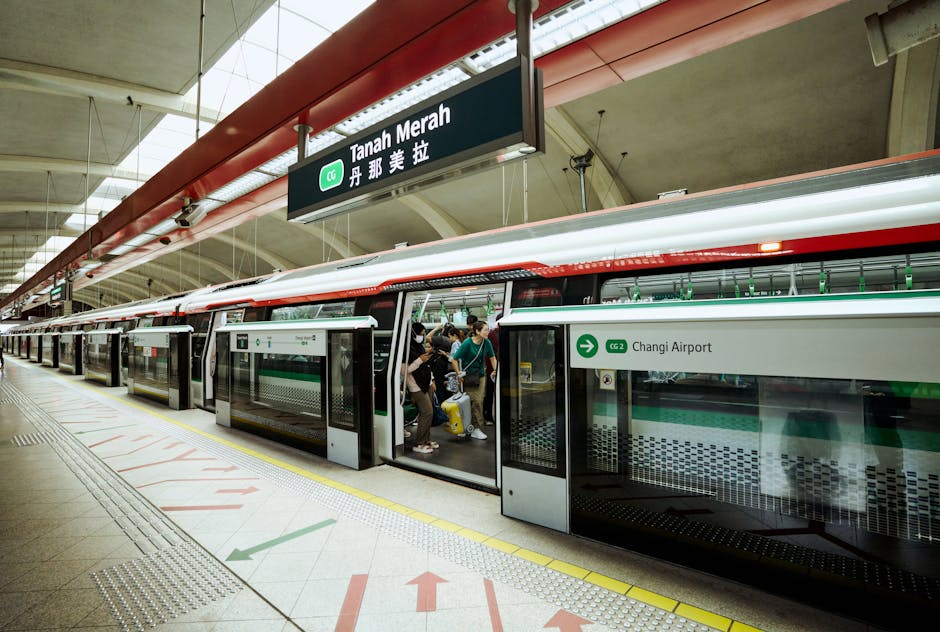
Bukit Merah vs. Sembawang: The Unvarnished Truth About Budget-Savvy BTO Living in Singapore
In recent years, the dynamics of Singapore’s public housing landscape have shifted, driven by shifting demographics, evolving commuter habits, and a razor-sharp focus on value retention. Against this backdrop, two neighbourhoods—Bukit Merah and Sembawang—have emerged as polar opposites in the debate over budget-savvy BTO living. While Sembawang touts the allure of affordable, spacious units and new-town vibrancy, Bukit Merah offers proven property appreciation and cost efficiencies deeply rooted in its central, mature estate status. As we journey through critical metrics, market realities, and forward-thinking investment perspectives, this exposé unpacks what truly matters for business decision makers and families alike in the quest for the smartest BTO choice.
Setting the Stage: Singapore’s Public Housing Transformation
From Function to Asset: HDB’s original mission was to put a roof over every Singaporean’s head. But over the decades, the BTO (Build-To-Order) scheme turned homes into instruments for wealth accumulation. As central estates like Bukit Merah matured, their limited new launches created natural scarcity, while new towns like Sembawang expanded rapidly, offering upfront affordability but with less predictable long-term returns.
Why This Matters Now: In 2026, with cooling measures rising (such as a 35% ABSD for second properties) and inflation biting into household budgets, the calculus for BTO buyers is more complex—and consequential—than ever before.
The Cost Equation: Breaking Down the BTO Value Proposition
Entry Price vs. Lifetime Cost: On the surface, Sembawang dazzles with median BTO prices (S$420k-520k for 3- and 4-room flats) that undercut Bukit Merah by S$100k or more. For large families or buyers maximizing grants (like the Enhanced CPF Housing Grant of up to S$80k), this can unlock homeownership more quickly.
Yet, Bukit Merah’s centrality—and limited supply—makes a compelling long-term case. Despite higher entry prices (S$520k-620k), owners here saw their BTO flats appreciate from S$480k (2023) to S$580k (2026), netting up to S$250k profit after the Minimum Occupation Period (MOP). Factoring in transport, amenities, and daily expenses, Bukit Merah delivers an effective S$1,200/month savings over five years, decisively outstripping Sembawang’s upfront affordability.
Transport, Convenience, and the Hidden Cost of Commuting
A Tale of Two Commutes: Location isn’t just about prestige—it’s about practicality. Bukit Merah’s Circle and East-West MRT lines cut CBD journeys to 10 minutes (S$1.50-2.50/trip), against Sembawang’s 40-minute North-South line odyssey (S$2.50-3.50/trip). For dual-income families, that’s S$4,800 in annual savings, not to mention precious hours reclaimed each week.
Bus and Walkability Multipliers: With 15 bus services and an 18% higher walkability score, Bukit Merah further minimizes car ownership and related costs—saving S$1,500/year in parking, petrol, and maintenance. Sembawang, facing sparser bus coverage and less amenity density, compels higher incidental spending and longer days.
Daily Living: The True Cost of Amenities and Lifestyle
Grocery, Dining, and the Wet Market Advantage: In Bukit Merah, wet markets and affordable retailers (e.g., Sheng Siong) consolidate to trim grocery bills by up to 12% compared to Sembawang. Hawker centers like ABC Brickworks offer meals at S$4-6—underpricing Sembawang by a full dollar per meal. Over a month, these differences compound powerfully.
Education and Childcare Proximity: Proximity to reputable schools like CHIJ Kellock means Bukit Merah families can cut S$150/month on transport alone, enhancing work-life balance for working parents. In contrast, Sembawang’s schools are more spread out, requiring longer and costlier commutes.
Utilities: Old is Gold? Bukit Merah’s mature HDB blocks, far from being liabilities, boast naturally cooler designs, slashing AC usage and resulting in lower utility bills (S$280/month vs. S$310 in Sembawang). While Sembawang’s newness is appealing, it comes with higher service charges (S$45 vs. S$38) and less efficiency.
Investment Outlook: Asset Growth, Rental Yield, and Strategic Risks
Resale Value and Upward Mobility: The ultimate test for any BTO purchase is what it’s worth after MOP. Bukit Merah’s properties, constrained by a historic lack of supply (only 2,500 units launched since 2020), have consistently outperformed, with 6.2% average annual resale growth. Sembawang, while offering more launches (5,000 units), trails at 4.1%. In dollars, that’s a S$150k-250k premium for Bukit Merah sellers.
Rental Demand and Yields: For investors or those considering leasing out post-MOP, Bukit Merah also wins. Average four-room rents clock in at S$3,800/month (3.8% yield), compared to Sembawang’s S$3,200/month (3.2%). Proximity to the CBD makes Bukit Merah units perpetually attractive to young professionals and expatriates.
En-Bloc and Policy Headwinds: In a climate of tighter cooling measures, Bukit Merah’s en-bloc narrative (e.g., Parkside Mansions eyeing a S$1.2B collective sale) and central value resilience offer protection against market volatility. By contrast, a looming supply glut in Sembawang (3,000 units by 2028) may cap future appreciation.
Case Study Perspectives: A Day in the Life, and the Five-Year Horizon
A Newcomer Family in Bukit Merah: Imagine two working parents, spending 10 minutes to commute to the CBD, with children enrolled at CHIJ Kellock—a five-minute bus ride away. Grocery runs are completed under one roof at Sheng Siong, and weekends are spent at VivoCity or Tanjong Pagar RICOH Park, all accessible by foot or a short bus hop. Over five years, this family accumulates an extra S$72,000 in savings and sees home equity balloon by S$150,000, all while enjoying a lifestyle tailored for urban convenience.
A Large Family in Sembawang: For those needing space, Sembawang’s larger BTO units at S$550k are seductive. A family of six enjoys extra rooms, but faces longer commutes, higher grocery and utility bills, and modest asset growth. After five years, they may save S$80,000 upfront, but miss out on the compounded cost savings and appreciation Bukit Merah delivers.
Comparative Analysis: Strategic Implications for Different Buyer Archetypes
For Long-Term Value Seekers: Bukit Merah stands out for those with a tenure horizon beyond five years, maximizing appreciation, minimizing hidden costs, and ensuring liquidity and rental potential.
For Short-Term Planners or Space-Maximizers: Sembawang holds a niche appeal for buyers prioritizing immediate affordability, larger units, or short stays (under three years), but they must be prepared for a trade-off in long-term value retention and daily expense creep.
For Business Decision Makers: The numbers decisively favor Bukit Merah for family relocations and portfolio-conscious managers. Enhanced CPF usage (up to 40% more post-MOP extraction) and lower car-dependency reinforce its strategic edge.
In a city where every minute and every dollar matter, the neighborhoods that optimize for both time and capital will define the new standard of budget-savvy living. The smart money isn’t just chasing low entry costs—it’s invested in the places where convenience, appreciation, and livability intersect.
— Forward-Looking Principle for Singapore BTO Owners
Innovative Practices and Tactical Shifts: Adapting as a Budget-Savvy Buyer
Monitoring Launch Cycles Proactively: Platforms like 99.co and the official HDB BTO portal are indispensable for tracking next launches and comparing past appreciation.
Leveraging CPF Rules and Financing: Strategic CPF use can unlock higher grants and longer-term liquidity in Bukit Merah, especially post-MOP. Business managers should model multiple grant scenarios to evaluate the true cost of each option.
Renovation Cost Planning: While Bukit Merah’s older units may need S$5k-10k more in renovations, savvy buyers tap into government upgrades and energy-efficient retrofits to offset these costs over time.
Community and Amenity Engagement: Dense amenities, parks, and high walkability not only slash daily costs but also boost resale appeal and tenant demand—a factor increasingly tracked by portals such as EdgeProp and URA livability indices.
Alternative Perspectives: Sembawang’s Evolving Narrative
Emerging Infrastructure and Future Bets: Advocates for Sembawang highlight the anticipated completion of the Woodlands Regional Line (WRL) in 2028, which could narrow the commuting gap. For buyers willing to “buy low” and wait, this may inject fresh upside to Sembawang’s value story, but carries construction and timeline risk.
Large-Unit Lifestyle and New-Town Identity: For those seeking space, modern layouts, and a sense of neighbourhood pioneering, Sembawang delivers an experience unavailable in denser, older estates. As Singapore’s demographics shift towards larger multi-generational households, Sembawang could become a new epicenter for such families—if its infrastructure keeps pace.
Conclusion: The Future of Budget-Savvy BTO Living in Singapore
The Bukit Merah versus Sembawang debate is more than an exercise in comparing prices—it’s a window into the evolving DNA of Singapore’s public housing future. While Sembawang’s affordability and newness speak to immediate needs and larger families, the evidence is overwhelming: for those prioritizing cost efficiency, appreciation, and daily convenience, Bukit Merah stands as the superior strategic choice.
As Singapore grapples with supply constraints, demographic trends, and shifting policy levers, decision makers must move beyond sticker prices and embrace a holistic, data-driven approach. Tracking launches, benchmarking cost-of-living metrics, and demanding proximity-driven ROI will become non-negotiables in tomorrow’s housing playbook.
Ultimately, the smart money—families, business managers, and forward-thinking investors—will look to neighborhoods where time, capital, and quality of life converge. In 2026 and beyond, Bukit Merah exemplifies this future. The lesson for all? In a city defined by progress, the most budget-savvy move is one that invests in both value and vision.