
DHLs €1.35 Billion Emerging Market Expansion: Strategic Growth In Latin America, Southeast Asia (Vietnam, Thailand, Indonesia), Middle East (GCC, UAE, Saudi Arabia), And North America Data Center Hubs Through 2030
DHL’s Emerging Markets Gamble: How Strategic Expansion in High-Growth Corridors Is Redefining Global Logistics
The shape of global logistics in 2030 is being forged today on the frontiers of commerce—where e-commerce surges, manufacturing networks fragment, and demand for specialized supply chain services accelerates. At the center of this high-stakes transformation stands DHL Group, logistics titan and market leader in the time-definite international (TDI) space, now orchestrating a multibillion-euro campaign into Latin America, Southeast Asia, and the Middle East. Backed by a commanding 43% share of the global express market, DHL’s emerging markets strategy is more than just geographic diversification; it is a blueprint for capturing new value as the world’s economic gravity shifts. This exposé explores how DHL is leveraging early infrastructure bets, M&A, and vertical specialization to create enduring competitive advantages, and what this means for companies seeking a logistics edge in an era of volatility, complexity, and opportunity.
Market Dominance Reimagined: Why DHL’s Expansion Matters Now
Market Leadership as a Moat. DHL’s TDI express market dominance—43% versus FedEx’s 27% and UPS’s 22%—did not appear overnight. Its network of 2,300+ daily flights, 22 air hubs, and presence in over 220 countries has not only created reach but formidable switching costs for clients. This backbone, long optimized for Europe, is now being recalibrated for emerging market growth. Where regional fragmentation and infrastructural gaps once stymied global expansion, DHL’s early bets on local partnerships and infrastructure have left competitors reliant on its network for “last-mile” delivery in hard-to-serve territories.
Revenue Geography: From European Core to Global Engines. Historically, DHL’s revenue has been weighted toward Europe (55%, roughly $27 billion), with Asia-Pacific contributing a modest 10%, and the Americas and other regions making up the rest. While European operations provide stability, the modest Asia-Pacific performance signals substantial untapped potential at a time when the region’s e-commerce is the fastest-growing globally. DHL’s strategic rebalancing seeks to close this gap, shifting capital toward high-growth corridors and sectors.
Latin America: The €500 Million Bet on E-Commerce and Nearshoring Transformation
Why Latin America, and Why Now? DHL’s announced €500 million capital injection positions the company as a first-mover in a region where e-commerce acceleration (9% CAGR through 2025), manufacturing diversification—driven by the “China plus one” trend—and evolving omnichannel fulfillment models are reshaping value chains. Brazil and Mexico, with projected e-commerce markets of $200 billion and $150 billion by 2028, are the new battlefields for global logistics supremacy. Manufacturing relocation, spurred by nearshoring strategies in Mexico and Central America, is drawing multinational investment away from China and creating unprecedented demand for integrated logistics support.
Warehouse and Last-Mile Innovation. DHL’s Latin American investments are singular in scale and scope: fulfillment centers in megacities like São Paulo, Mexico City, and Bogotá; micro-hub expansion into secondary cities; and advanced automation deployments targeting lower per-unit costs and faster inventory turns. Fragmented last-mile infrastructure—historically the Achilles’ heel for retailers—becomes a competitive opportunity as DHL integrates urban delivery nodes, local partner networks, and proprietary tech for real-time visibility.
Strategic Hub Placement. The emergence of Mexico as both a nearshoring “gateway” and a logistics linchpin for USMCA trade is reflected in DHL’s regional hub consolidation, facilitating seamless North-South and intra-LATAM flows. Brazilian hubs, meanwhile, anchor supply chain optimization across the continent.
Sectoral Differentiation. Not all freight is created equal. DHL is focusing its value-added resources on high-compliance verticals (healthcare, electronics, automotive), where supply chain integrity trumps mere price. For commodity freight, DHL advises clients to maintain vendor diversity, signaling a pragmatic approach to partnership and risk management.
Southeast Asia: €350 Million Toward the Next Manufacturing and E-Commerce Powerhouse
Unlocking the “China Plus One” Ecosystem. Southeast Asia’s rise isn’t hypothetical—it’s measurable. With labor costs 30-40% below China, and productivity indices closing in, Vietnam and its neighbors are attracting waves of foreign direct investment pivoting away from China. DHL’s €350 million commitment—concentrated in Vietnam, Thailand, Indonesia, and Singapore—combines hub development, last-mile network expansion, and automation.
E-Commerce Supercycle. Regional e-commerce growth in Vietnam (20%+ annually to 2028) and parallel surges in Thailand and Indonesia are fueling a $200 billion+ GMV opportunity. DHL’s integrated facilities are designed for both just-in-time manufacturing flows and complex e-commerce fulfillment, with dedicated air freight, multimodal routing flexibility, and the capacity to withstand regional demand spikes.
Competitive Moats and Technology Edge. Early infrastructure deployment, especially in Vietnam, is a critical advantage. Where legacy players face fragmented, localized competition, DHL leverages proprietary automation, warehouse-to-door optimization, and end-to-end visibility—a boon for multinationals seeking reliability amid supply chain shocks.
Sectoral Specialization for Long-Term Value. Healthcare and electronics are not afterthoughts; they are central to DHL’s regional thesis. Temperature-controlled logistics, compliance frameworks, and support for verticals with demanding requirements ensure DHL’s services command both premium pricing and customer loyalty.
Middle East and Africa: A €500 Million Bid for Gateway Supremacy and Vertical Leadership
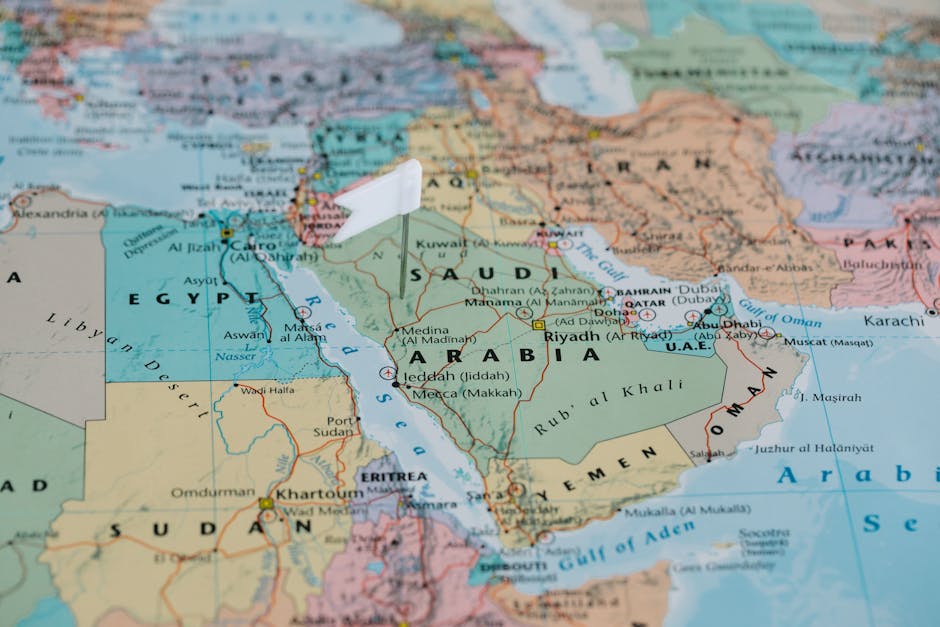
GCC as the New Nexus. With combined GDP of $2 trillion, the Gulf Cooperation Council (GCC) is more than an oil powerhouse—it is fast becoming a global logistics superhub. Dubai and Abu Dhabi anchor free zones attracting global players, while Saudi Arabia’s Vision 2030 is catalyzing industrial and logistics modernization. DHL’s €500 million regional investment pushes further into air freight capacity, customs compliance, and cold-chain/logistics for high-growth sectors like healthcare and green energy.
Turkey’s Pivotal Role. The 2024 acquisition of MNG Kargo in Turkey creates a direct Europe-Asia bridge, consolidating flows, optimizing customs, and providing logistics alternatives as regional instability waxes and wanes.
Africa’s Long-Term Potential. While current revenue from Africa is modest, DHL is positioning for the next wave of opportunity as infrastructure, e-commerce, and manufacturing scale up across the continent. The focus is on multimodal routing, mobile-enabled last-mile delivery, and support for emerging manufacturing clusters.
Vertical Expansion: Healthcare and Green Energy. In both GCC and Africa, DHL’s bet on pharmaceutical logistics and green energy supply chains (solar panels, EV batteries) signals a move beyond traditional warehousing into high-margin, regulation-heavy verticals that competitors struggle to service at scale.
North America: Data Center Logistics as the New High-Margin Frontier
The Hidden Engine of the Digital Economy. Data center logistics—while not an emerging geography—has emerged as one of DHL’s highest-margin bets in the developed world. With the 2026 launch of 10 dedicated sites and 7+ million square feet of capacity, DHL aims to secure 20%+ of the data center logistics market, aligned with hyperscale growth in Northern Virginia, Silicon Valley, and Texas.
Sophisticated, Specialized, and Secure. The demands are formidable: rack configuration, white-glove handling for high-value IT hardware, heavy-lift transport, and seamless international coordination. DHL’s offering resonates with the 85% of operators seeking single-partner, end-to-end solutions. Its integrated global-forwarding-plus-domestic-assembly model is setting new standards for service quality and risk management.
Competitive Differentiation. Generalist logistics providers cannot match DHL’s sector-specific protocols—such as pre-configuration and damage prevention—or its ability to coordinate complex, multimodal hardware flows at hyperscale. This edge is rapidly becoming a key reason for data center operators and IT manufacturers to lock in partnerships now.
Comparative Insights: DHL Versus the World—What Differentiates Its Strategy
First-Mover Advantage in Emerging Markets. DHL’s capital allocation strategy through 2030 is not just larger than its competitors—it is more intentional. By establishing deep infrastructure (air and warehousing), local partnerships, and regulatory relationships in emerging markets years before peers, DHL has created barriers to entry that rivals like FedEx and UPS cannot easily replicate.
Sectoral Focus as a Competitive Lever. Where competitors chase volume, DHL is doubling down on verticals where complexity—healthcare, green energy, data center logistics—commands higher pricing and embeds long-term customer relationships. Its specialized investment in cold-chain, compliance infrastructure, and white-glove services signals a pivot from legacy “mail” models to high-value, resilient growth.
Omnichannel and Technology Integration. DHL’s approach to e-commerce is not about last-mile alone; it’s about owning the full stack—regional micro-hubs, real-time tracking, advanced automation, and the ability to manage omnichannel (B2B and B2C) needs in tandem. Where local players may excel in a single segment, DHL orchestrates the entire value chain—a compelling sell for multinationals facing unpredictable demand and regulatory hurdles.
Risk Mitigation and Strategic Redundancy. The company’s diversified geographic and sectoral bets buffer shocks from geopolitical (US-China, Middle East) or labor supply disruptions. Investment in automation and emerging-market labor pools further future-proofs profitability.
“Emerging markets are not simply the next frontier of growth—they are the laboratory for the future of logistics. The companies that invest early, specialize deeply, and embed themselves in regulatory and sectoral value chains will define competitive advantage for the next decade and beyond.”
Real-World Implications for Business Decision-Makers
For Multinational Manufacturers. The imperative is clear: strategic logistics partnerships must move beyond simple cost calculations to prioritize capacity, specialization, and alignment with “China plus one” migration. DHL’s €350 million commitment to Southeast Asia, especially Vietnam, is a signal to begin partnership negotiations now—not after regional capacity is constrained and pricing power shifts.
For Retailers and E-Commerce Operators. Emerging market expansion—whether in Latin America, Southeast Asia, or the GCC—demands omnichannel integration, peak surge capability, and a partner who can deliver both urban density and rural reach. DHL’s micro-hub and automated fulfillment investments reduce go-to-market barriers and increase resilience in volatile demand environments.
For Technology and Data Center Ecosystem Players. As infrastructure growth in the US and abroad accelerates, early engagement with DHL unlocks not just space but specialized services (rack configuration, white-glove handling) that mitigate downtime risk and total cost of ownership.
For Healthcare and Pharmaceutical Supply Chain Leaders. Regulatory complexity and cold-chain stringency in emerging markets make partner selection a competitive differentiator. DHL’s scale and documented sectoral expertise reduce risk for market entry and ongoing compliance.
Forward-Thinking Strategies: Margin Enhancement and Legacy Diversification
High-Margin Specialization. DHL’s capital is not chasing volume for its own sake—it is targeted at international express, omnichannel fulfillment, and specialized verticals where complexity and compliance spell pricing power. This is not merely diversification; it is transformation.
M&A as a Strategic Accelerant. The MNG Kargo integration in Turkey is emblematic of bolt-on acquisitions that expand gateway positioning, customs infrastructure, and regional market share. Anticipate similar moves in healthcare and green energy logistics—segments where inorganic growth accelerates sectoral leadership.
Risk Management as Growth Enabler. Geopolitical and labor risks are not afterthoughts. DHL’s regionally diverse, automation-heavy model creates strategic redundancy—limiting exposure to single-market shocks and enabling rapid demand reallocation as global trade patterns shift.
Market Risks and Mitigation: The Realities Behind the Opportunity
Geopolitical Uncertainty. US-China tensions, Middle East instability, and trade policy shifts are persistent threats. DHL counters with geographic diversification (Vietnam, Turkey, Africa), customs optimization services, and flexible routing.
Competitive Pressure from Capitalized Rivals. UPS and FedEx still possess deep pockets—but DHL’s early investments, sectoral emphasis, and integrated omnichannel solutions have created defensible moats at the network and service level.
Labor and Cost Headwinds. Automation and upskilling initiatives are already yielding 3-5% annual productivity improvements, even as DHL leverages lower-cost emerging market hubs to buffer against Western wage inflation and driver shortages.
Conclusion: The Future Trajectory—From Frontier to Foundation
DHL’s €1.35 billion emerging markets strategy through 2030 is more than an expansion plan—it is a deliberate, data-driven repositioning for the realities of tomorrow’s supply chain. As e-commerce growth outpaces infrastructure in Latin America and Southeast Asia, as “China plus one” reshapes where and how goods are made, and as specialized logistics becomes a source of competitive separation, DHL is laying the foundation to remain essential. The company’s pattern of early investment, sectoral specialization, and integrated technology sets a bar few can match.
Opinion: The next decade will not be defined by the logistics players with the most trucks or cheapest rates, but by those who anticipate where value is moving—and act before others know the opportunity exists. DHL’s aggressive and forward-thinking capital allocation is not simply reshaping markets; it is consolidating a new kind of leadership that leaves competitors playing catch-up. For business leaders, the time to secure—rather than chase—capacity and partnership in these rising corridors is now. The contours of global commerce’s next revolution are being drawn; those who wait may only find themselves at the end of the line, while DHL holds the keys to the world’s emerging supply chain future.
For further analysis and real-time updates on DHL’s strategy, see businessmodelcanvastemplate.com and the latest from Red Stag Fulfillment.