
Digital Innovation Transforms Vietnams Central Highlands Coffee: How AI Empowers 600,000 Smallholders In Buon Ma Thuot And Beyond
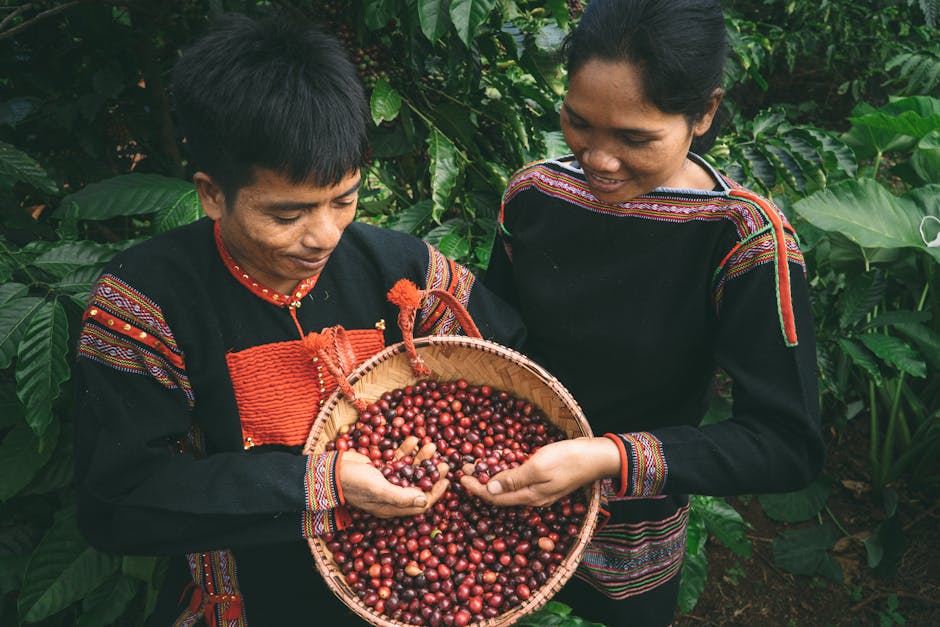
From Beans to Bytes: How Digital Innovation Empowers Vietnam's Highland Coffee Farmers
Vietnam’s Central Highlands—a region blanketed by verdant coffee plantations stretching across 137,000 to 462,000 hectares—has long sat at the heart of the world’s second-largest coffee producing nation. Here, more than 600,000 smallholder farmers have toiled for decades, their livelihoods inextricably tied to the unpredictable tides of global markets, climate shifts, and volatile export prices. As the world pivots into the digital era, a quiet, yet profound revolution is taking root among these highland farmers, redefining what it means to produce, trace, and profit from coffee. In 2025 and beyond, digital transformation is not a distant vision—it is the new reality, stitching resilience, premium revenue, and sustainability into the very fabric of Vietnam’s coffee economy.
Seeds of Change: The Digital Genesis in Vietnam’s Coffee Heartland
Historical Context Meets Modern Disruption: Traditionally, Central Highlands’ smallholders were vulnerable “price takers,” buffeted by the twin threats of climate volatility and a $5 billion+ swing in annual export values. But today, the region stands at the epicenter of a digital agri-renaissance. Investment leaders like Highlands Coffee, which has injected $19.3 million into AI-powered roasteries and supply chain digitization, are rewriting industry playbooks. The company’s goal: reach 70% digital transactions by 2026, while sourcing from traceable, digitally bold suppliers.
Smallholders Step Into the Spotlight: No longer sidelined, Central Highlands’ farmers are onboarding to platforms like TraceCoffee and FarmTrace, leveraging GPS mapping and real-time yield tracking apps accessible from the palm of a hand. These digital tools are not mere luxuries—they are lifelines, offering a pathway out of subsistence and into premium, data-driven supply chains. For the first time, a 1-5 ton cooperative with a smartphone and a few hours of digital literacy training can command $60+ per ton in green bean premiums and unlock entry into lucrative partnerships with major buyers such as Highlands Coffee and FMCG-Viet.
Toolkits of Transformation: AI, Traceability, and the Digital Co-op Revolution
AI-Fueled Traceability as a Business Imperative: In the premium café supply chain, proof of origin isn’t just marketing—it’s contract currency. The Highlands Coffee model requires complete farm-to-cup traceability, now delivered via blockchain-enabled apps and QA/QC platforms that reduce manual errors and fraud. Farmers upload field maps, harvest logs, and quality data directly to corporate buyers, automating compliance with EU, VietGAP, and GlobalGAP standards. In Buon Ma Thuot, dubbed the “coffee capital,” TMA Solutions’ AI modules minimize farmer input to as little as 1-2 hours per week through voice/photo documentation—shattering the myth that digital inclusion is the preserve of urban elites.
B2B Portals and Rapid-Response Marketplaces: Accelerating beyond traditional procurement, portals like Accio and FMCG-Viet facilitate near-instant B2B connections, with Highlands prioritizing “Vietnamese origin” Arabica and Robusta supplied by registered, digitally-audited partners. The outcome: a 20-30% higher entry success rate for digital adopters and a burgeoning indirect revenue pool, where even a 1% share in the Highlands supply chain can translate to $500,000 in new annual income for agile co-ops.
Comparing the Old and the New: Perspectives on Innovation and Inclusion
The Legacy Model: Before the digital pivot, most Central Highlands smallholders relied on informal networks—local traders, pen-and-paper records, and trust-based deals. Access to finance, export certification, or market data was limited, and quality verification resided with middlemen.
The Digital Advantage: In contrast, today’s digital-first farmers harness smartphones, cloud-based inventory systems, and AI defect checks to sidestep bottlenecks and secure contracts directly with major brands. The playing field is leveling. Notably, digital adopters command $60+ premiums per ton, with digitally-verified batches prioritized over traditional counterparts. While urban supply chains and major cities like Hanoi and Ho Chi Minh City approach near-total cashless transactions, village co-ops leveraging GPS/blockchain apps now punch above their weight in verified supply deals.
Challenges and Gaps: The transformation is not universal. Digital divides persist—village-level co-ops often lack reliable smartphone access, while literacy and finance barriers remain stark for the most marginalized. Yet, government subsidies, Café-REDD+ climate-smart finance pilots, and mobile-first education initiatives are steadily closing these gaps. The message is clear: digital exclusion is a risk, digital adoption is a gateway.
“By 2026, digital agility and traceable data will no longer be optional—they will be the price of admission for Vietnam’s coffee farmers aspiring to thrive in resilient, premium, and sustainable supply chains.”
The Business Case: Metrics, ROI, and Strategic Value
Quantifiable Premiums and Entry Rates: The numbers speak volumes. For every digitally verified ton of green beans, smallholders capture an additional $60+ in premiums. Highlands Coffee’s model yields a 20-30% entry rate for digital cohorts, and co-ops with even a 1% supply share generate upwards of $500,000 annually.
Operational Efficiency and Compliance: AI crop prediction, remote climate monitoring, and mobile onboarding reduce the labor and uncertainty of smallholder farming. In Buon Ma Thuot, service centers allow for near frictionless digital engagement—inventory, payments, and compliance all handled within 1-2 hours per week. Platforms built by Alliance Bioversity CIAT utilize remote sensing and land-use monitoring to help 600,000+ farmers preempt deforestation penalties and align with EU green standards.
Resilience in Volatile Markets: Digital contracts and big data analytics buffer farmers against the wild $5B+ swings in export revenues, while a strategic pivot toward domestic sales (with over 1,100 supermarkets and 10,000+ convenience stores) insulates co-ops from export shocks. Highlands Coffee’s cloud kitchen ecosystem, growing at a 3.72% CAGR, demonstrates how digital supply chain integration directly uplifts quarterly profits.
Tactical Shifts: Innovation in Practice
Three-Step Digital Onboarding: Smallholders are being ushered into the digital fold via a proven, accessible sequence: (1) plot audits and output logging, (2) registration on B2B procurement portals with geotagged data, and (3) certification through AI-driven apps like CropIn and Rainforest Alliance for real-time quality checks.
Service Hubs and Local Partnerships: Digitization is not imposed from afar—Buon Ma Thuot’s service centers offer hands-on support, while pilot programs from WSCAFE and Nam Viet Foods provide real-time troubleshooting, bridging urban-rural divides.
Blended Tech Solutions: Highlands Coffee’s digital transformation extends beyond Vietnam’s borders, with pilot projects in the Philippines replicating the loyalty, traceability, and AI infrastructure tested at home. Early data suggests scalability potential, though maturity lags compared to the Vietnamese market.
Inclusive Innovation: Addressing the Digital Divide
The Barriers: Not all smallholders benefit equally. Gaps in smartphone access, digital literacy, and financing mean that some co-ops risk exclusion from verified, premium channels. Climate change amplifies the stakes—deforestation and yield shocks are existential threats, especially for non-digitized communities.
Solutions in Play: Policymakers, NGOs, and corporate leaders are intervening. The Café-REDD+ initiative and government-subsidized programs lower the cost of digital certification and provide mobile-first literacy training. National databases and open APIs ensure interoperability and scalability, while digital OEM networks and enterprise alliances (like WSCAFE) scout promising digital co-ops for inclusion in high-value chains.
Risk and Reward: The strategic calculus is unambiguous. Assigning 15-20% of capital expenditures to digital customer experience (CX) is now considered best practice for IPO readiness and long-term supply security. In a market expected to surpass $39 billion in e-commerce transactions in 2025, the opportunity cost of inaction grows more severe with each harvest.
Case Studies: Transformation on the Ground
TMA Solutions in Buon Ma Thuot: Touted as Vietnam's most advanced AI deployment in agriculture, TMA’s mobile platforms have measurably boosted productivity, streamlined compliance, and compressed administrative time—a win-win for farmers and buyers alike.
Alliance Bioversity CIAT: By fusing AI-powered land-use monitoring with direct farmer engagement, Alliance CIAT’s platforms help prevent deforestation and enforce green compliance even across the region’s most fragmented landscapes.
Highlands Coffee’s Supply Chain Pivot: Highlands’ full-spectrum digitalization—spanning field to finished cup—was instrumental in achieving the company’s highest-ever quarterly profits in 2025, all while shielding its suppliers from global volatility and driving domestic market dominance.
Smallholder Wins: Digitally savvy co-ops report 20-30% entry rates into premium chains, with many scaling from a single ton of output to stable, multi-ton contracts in a matter of seasons. The knock-on benefits—from price premiums to climate resilience—are rippling through local economies.
Future Outlook: Scaling Inclusive Growth and Sustainability
Mandatory Digital Agility by 2026: The direction of travel is clear. As global buyers, regulatory regimes, and consumers demand ever-greater traceability and sustainability, digital proficiency will become a non-negotiable baseline for participation in premium supply chains. Highlands Coffee’s aggressive targets—70% digitalization by 2026, with 900+ outlets and a $19.3 million investment in AI—signal where the sector is headed.
Sustainability as a Value Multiplier: Alignment with international green standards (VietGAP, GlobalGAP) is no longer a bureaucratic hurdle, but a strategic lever unlocking premium markets, reducing reputational risk, and safeguarding long-term land health.
Policy and Cross-Sector Collaboration: Achieving truly inclusive digital transformation will require a coalition of actors—corporate leaders, government agencies, fintech innovators, and grassroots organizations. National databases, targeted pilot subsidies, and digital literacy campaigns must converge to ensure that no farmer—or region—is left behind.
Conclusion: Strategizing for Vietnam’s Digital Coffee Future
Vietnam’s Central Highlands coffee sector is at a historic inflection point. The fusion of AI, traceability apps, and mobile-first supply chains is fundamentally altering how value is created and shared—from farm to café. For business decision makers, investors, and policymakers, the implications could not be clearer: digital innovation is not only raising profits and premiums, but is building adaptive, inclusive, and climate-resilient supply chains that position Vietnam as a trendsetter in the global coffee arena.
The future belongs to those who act—who invest in traceability, scale AI, and champion digitally inclusive business models. As the rest of the world races to catch up, Vietnam’s smallholder farmers, once at the margins, are proving that the next wave of agri-empowerment starts with a byte as much as a bean.