
Dunkin Franchise Cost & Requirements 2026: Complete Guide To Investment, Fees & Application Process
The Dunkin’ Franchise Horizon: Navigating Opportunity and Risk in the 2026 Playbook
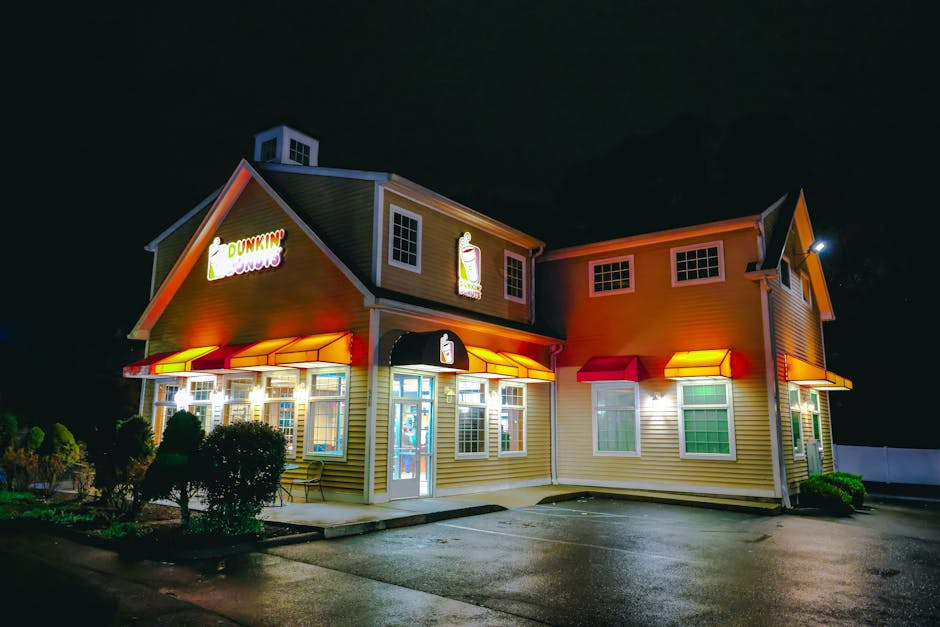
In the tapestry of the American quick-service restaurant (QSR) landscape, few brands have woven themselves as tightly—or as lastingly—into the cultural and commercial fabric as Dunkin’. Born as a simple coffee and donut shop in the 1950s, Dunkin’ has steadily transformed into a global franchise icon, serving millions daily. Today, prospective franchisees gaze at Dunkin’s neon-pink and orange signage not just as a brand mark, but as a beacon of economic possibility.
But what does the road to owning a Dunkin’ franchise look like in 2026? What are the implications, challenges, and evolving strategies? This exposé dives deep into the operational and financial realities, using current data and expert resources to illuminate a future that is both lucrative—and fraught with decisions that could shape the next generation of QSR leadership.
Mapping the Dunkin’ Franchise Journey for 2026
Real-World Thresholds: The Financial Gateways
For the aspiring Dunkin’ franchise owner, the journey begins with a careful calculation of resources and ambition. As of 2026, the total initial investment required for a Dunkin’ franchise falls between $210,900 and $1,832,500—a range that reflects everything from bare-bones kiosks in bustling metropolitan malls to full-scale, standalone stores with drive-thrus [source].
But upfront capital is only part of the equation. Dunkin’ enforces a minimum liquid asset requirement of $250,000 per store—a screening mechanism that ensures franchisees possess both the financial stability and risk tolerance to withstand the unpredictable tremors of the retail coffee industry [source].
Timeline to Launch: Patience as a Prerequisite
Those who clear the financial hurdles face a rigorous, multi-phase application process that can take anywhere from 6 to 12 months. This window includes franchisee approval, site selection, buildout, and operational ramp-up, reflecting Dunkin’s commitment to brand consistency and operational excellence [source].
With these requirements, Dunkin’ screens not just for financial acumen, but for long-term resilience. In an era marked by inflationary pressures and shifting consumer tastes, such thorough vetting no longer feels optional—it is essential.
Emerging Patterns: Dunkin’s Tactical Shifts in a New Decade
Expansion in a Fractured Landscape
Dunkin’s franchise growth in the 2020s has been marked not by wild proliferation, but by calculated, data-driven expansion. As legacy QSR chains recalibrate following pandemic volatility, Dunkin’ has prioritized high-density urban corridors, travel centers, and co-branded spaces, rather than scattershot suburban growth.
Innovation Beyond Beverages
The brand’s pivot toward specialty beverages and on-the-go snacking was prescient—especially as remote work, digital ordering, and third-party delivery continue to uproot old habits. Dunkin’s success with mobile ordering and loyalty programs is a signal: franchisees who embrace technology-first operational models are better positioned to weather headwinds.
Innovative Practices: Franchisee Adaptation in the Digital Era
Technology as a Differentiator
With digital engagement driving both frequency and ticket size, Dunkin’ now expects franchisees to champion mobile integration and customer experience platforms. Operational dashboards, digital menu boards, and AI-driven inventory management are no longer outliers—they are table stakes.
Workforce Flexibility and Automation
In response to labor shortages and rising wage costs, Dunkin’ franchisees are increasingly exploring semi-automated espresso machines, order kiosks, and workflow optimization software. While implementation costs add to upfront investment, those who master these systems may see long-term efficiency and happier staff.
Comparative Perspectives: Newcomers versus Veteran Franchisees
Barriers for New Entrants
For newcomers, the 2026 environment presents both daunting challenges and distinct advantages. Rising costs, more thorough scrutiny, and the necessity of digital fluency can be intimidating. However, entering the system now means benefiting from Dunkin’s latest operational playbooks and technology stack—without the baggage of legacy store models.
Legacy Insights from Seasoned Operators
Veteran franchisees hold critical advantages—brand familiarity and region-specific knowledge chief among them. Yet, some are now navigating reinvestment cycles to retrofit aging stores with new tech and adapt to evolving consumer expectations.
This divergence creates a dynamic tension: new franchisees arrive hungry and agile, while established operators reinvent with capital and hard-won wisdom.
Financial Realities: Franchise Cost Breakdown & Risk Assessment
Understanding the Real Cost Structure
Breaking down the investment, the lion’s share typically goes toward buildout (construction, signage, equipment), franchise fees, and initial inventory. Royalty fees and advertising contributions are ongoing, affecting long-term ROI calculations.
Recent data from 1851 Franchise and related sources suggest that, while margins are robust in high-traffic areas, variability persists. Site selection and operational discipline remain the key profit levers.
Risk and Resilience
Franchisees must weigh regional cost-of-living volatility, supply chain disruptions, and the ever-looming specter of new market entrants. Dunkin’s corporate safeguards—including comprehensive onboarding and ongoing support—mitigate some risk, but ultimate accountability rests with the operator.
Real-World Implications: The Franchisee’s Field Guide
Community Integration
Successful Dunkin’ operators increasingly act as local ambassadors, customizing product assortments and marketing with a hyperlocal lens. In an age of mass-brand fatigue, such community-tailored engagement drives repeat business.
Operational Agility
Store layouts, staffing patterns, and menu innovation all demand continuous iteration. Those who treat their store as a “living laboratory”—open to experimentation—often unearth incremental gains that compound over time.
Dunkin’s next era of franchise growth will reward not just those with capital, but those who embody adaptive leadership—where resilience, digital fluency, and local engagement are the new currencies of sustainable success.
Looking Forward: Franchise Ownership in a Changing QSR Landscape
Regulatory and Competitive Uncertainty
As regulatory scrutiny intensifies around labor, health, and environmental standards, franchisees must anticipate new compliance costs and brand-wide pivots. Meanwhile, competitors—from Starbucks to emergent specialty coffee chains—relentlessly innovate on customer experience and product freshness.
The Franchise Model—Stability Amidst Disruption?
Despite these challenges, the franchise model demonstrates remarkable resilience. Dunkin’ continues to attract both single-unit operators and multi-unit investors, gravitating toward those who can ride out macroeconomic volatility.
For those considering the leap, the dual imperatives are clear: invest in the tools and teams that drive digital modernization, and foster authentic community connections that transcend transactional loyalty.
Conclusion: The Strategic Imperative—Why Dunkin’ Remains a Franchise to Watch
Dunkin’s franchise system stands at a crossroads, shaped by shifting consumer habits, cost pressures, and digital transformation. For would-be franchisees in 2026, the calculus is more complex than ever: capital, competence, and adaptability are the entry fee to a rapidly evolving game.
Yet, with robust brand equity, a proven franchise framework, and a renewed focus on innovation, Dunkin’ offers a playbook that—executed well—delivers enduring value.
In the coming years, the most successful Dunkin’ franchisees will be those who approach their role as both operators and innovators, leveraging data, technology, and local insight to build resilient, future-proof businesses. As the QSR sector continues its transformation, Dunkin’ serves as a bellwether: proof that with the right mix of ambition, strategy, and adaptability, the franchise model can offer a compelling, sustainable path to entrepreneurial achievement.
For serious investors and community-minded leaders alike, the Dunkin’ opportunity is not just about coffee and donuts—it is about shaping the next chapter of brand, business, and belonging.