
Highlands Coffees Digital And Local Café Revolution: Transforming Urban Life In Hanoi And Ho Chi Minh City
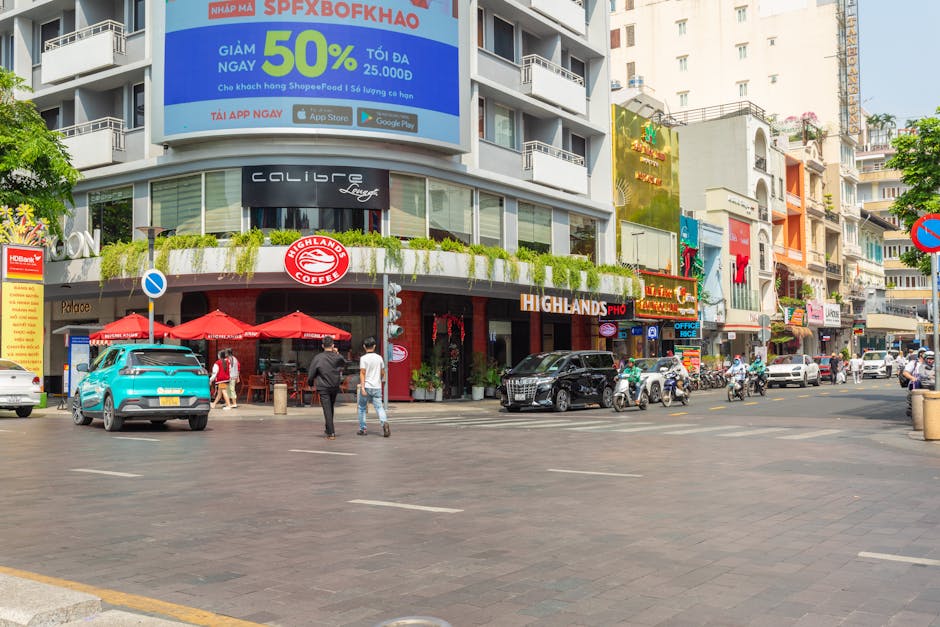
Highlands Coffee's Urban Revolution: How Digital Innovation and Local Café Networks Are Reshaping Vietnamese City Life
In the heart of Vietnam’s bustling cities, where the aroma of freshly brewed coffee mingles with the hum of scooters, one brand has orchestrated a profound transformation—not just in how coffee is consumed, but in the very rhythm of urban life itself. Highlands Coffee, founded in 1999 as a bridge between Vietnamese tradition and global ambition, now commands a staggering 35-40% market share with 777 stores in 2024, and eyes set on breaking the 1,000-store mark by 2026. As Vietnam’s café culture surges to a projected USD 552.6M market by 2025, Highlands stands out, blending heritage, digital acumen, and community impact in ways that redefine what it means to be a local giant with world-class aspirations (GrowthHQ).
Roots and Rise: The Making of a Market Leader
Historical Trajectory: Highlands Coffee’s ascent is inseparable from the narrative of modern Vietnam. Launched as the first Overseas Vietnamese-registered private company after Đổi Mới, it began as a packaged coffee brand before courageously opening its first café in Ho Chi Minh City in 2002—opposite the Notre-Dame Cathedral, no less. By 2009, Highlands had established 80 outlets in key urban centers, demonstrating an early knack for scale and locality (B2Bnn). Strategic M&A moves—such as the USD 20M acquisition of Phở 24 and the 2012 USD 25M half-stake sale to Jollibee—provided both resources and a springboard for growth, fueling what would become a 36-78% YoY revenue explosion for the Superfoods Group.
A New Urban Fabric: By 2024, Highlands had woven itself into the everyday tapestry of Vietnamese city life. Unlike imported chains, Highlands made the strategic choice to infuse its menu and experience with local flavor—literally, with staples like cà phê sữa đá and trà sen vàng—while positioning itself as a modern gathering place for work, connection, and cultural exchange. This fusion of “phin” tradition with espresso and RTD innovations proved to be a winning formula, one that competitors have yet to fully replicate.
Digitizing the Café: Patterns of Innovation and Urban Engagement
Digital Transformation: Central to Highlands’ modern playbook is a bold, data-driven digital stack. With the Vietnamese café sector’s double-digit growth fueled primarily by under-35 consumers, the company’s mobile app ecosystem became both a sales channel and a loyalty engine. From geo-targeted promotions to integrations with super-apps like Grab and Now, digital touchpoints now boost repeat visits by an inferred 30-50%—mirroring the brand’s overall 36% revenue spike in the months following Jollibee’s investment (GrowthHQ).
AI-Driven Personalization: Highlands isn’t just digitizing transactions—it’s localizing the digital journey. CRM systems recommend signature drinks based on regional tastes (lotus tea for Hanoi, richer phin brews for HCMC), while loyalty programs reward both volume and preference. This AI-driven approach is directly tied to a 78% YoY growth in e-commerce and RTD sales. Social integration—epitomized by viral TikTok and Instagram campaigns—links local festivals to menu LTOs, deepening emotional resonance among urban Gen Z and Millennials (who now make up 80% of urban café consumers).
Urban Life Catalyst: The impact is tangible. In Hanoi and HCMC—where café density is highest—Highlands outlets double as co-working spaces and social hubs, complete with fast WiFi and power for the city’s increasingly mobile workforce. This institutional role feeds into dwell time, which is now benchmarked at 2x that of unaffiliated independent cafés.
Sustainable Sourcing: Connecting Highlands to Farmers and the Future
Direct Links to the Central Highlands: Behind every Highlands latte or phin-brewed sữa đá lies a robust, ethical supply chain. More than 95% of Vietnam’s coffee comes from the Central Highlands—notably Đắk Lắk and Lâm Đồng—and Highlands has operationalized direct relationships with about 1,000 local farms. Supported by IDH’s sustainability programs since 2013, these partnerships ensure both quality and fair economic outcomes, with USD 170M invested in supply chain upgrades—including certification, irrigation, and waste reduction programs.
Environmental and Social Value: These initiatives are not mere window dressing. By deploying blockchain traceability and supporting broad-based farm certification, Highlands and IDH have expanded beyond coffee into other crops, catalyzing local economic uplift, reducing deforestation, and embedding sustainability as a core urban brand promise. This approach, highlighting each cup’s journey from “seed to city,” has become a magnet for Vietnam’s rising middle class, whose ethical consumption increasingly drives loyalty metrics and market share.
Comparative View: Highlands vs. Global and Local Rivals
Localization as Differentiator: In a field crowded with international heavyweights, Highlands’ cult status is secured by its fusion of traditional and modern, local and global. While Starbucks, for example, has a strong international cachet, it still captures only about 10-15% of the Vietnamese café market, largely due to an inability (or unwillingness) to deeply localize menu, experience, and community engagement. Highlands, by contrast, has leveraged heritage “phin” brews, Vietnamese teas, and accessible price points—offering an authenticity that resonates with a broad cross-section of urban consumers.
Digital Edge: Even as rivals experiment with loyalty platforms and delivery, Highlands’ app-driven ecosystem and omnichannel CRM have delivered industry-leading retention and footfall gains, with API integrations and event-linked LTOs providing a replicable, ROI-proven template. The company’s sustained dominance is underlined by the projection that if current strategies are scaled, Highlands could approach a 50% market share by 2028—a level of concentration rarely seen outside East Asian “superbrand” economies.
Comparative Risk Mitigation: While all café chains face supply chain risks (not least from climate volatility in the Central Highlands), Highlands’ direct sourcing, sustainability investments, and strong local partnerships have insulated it from shocks more effectively than less-integrated players.
The Real-World Impact: Highland’s Urban and Rural Footprints
Redefining Urban Public Space: Cafés in Vietnam have always been more than beverage stops; they’re extensions of home, office, and agora. Highlands’ 777 outlets—in tandem with their digital twin—anchor the social and economic vibrancy of modern Vietnamese cities. They host youth gatherings, creative events, and entrepreneurial meetups, alongside the daily routines of commuters and remote workers. This has elevated the café from a site of consumption to a genuine community catalyst.
Rural Prosperity, Urban Pride: The economic and social ripple effects stretch back to the source. By investing directly in Central Highlands farms, Highlands boosts rural livelihoods, promotes sustainable agriculture, and binds urban drinkers more closely to the land—and to each other. This “farm-to-cup” transparency is both a competitive differentiator and a driver of urban pride, as consumers see their everyday choices contributing to national development.
Measurable Outcomes: The numbers reinforce the story—per capita coffee consumption has doubled to 3kg/year by 2023; Highlands’ investments help ensure quality consistency (99%), reduce procurement costs by 15-20%, and enhance brand reputation in ways that translate to tangible, repeat business.
Emerging Trends and Strategic Shifts: What’s Next?
Scaling Up Digital and Urban Innovation: The playbook for Highlands’ continued dominance focuses on scaling high-ROI digital investments (projected returns of 25-40% for AI-driven loyalty and mobile integration), fortifying supply chains (doubling farm partnerships within two years), and aggressive urban hub expansion—especially in Hanoi and HCMC, which already account for 60% of store count and revenue.
Mandates for Sustainability and Social Impact: The next phase will test Highlands’ commitment to sustainability, as new capital (USD 50-100M) is directed toward climate resilience and farm diversification. Blockchain-traceable sourcing, transparent supply chain storytelling, and further alignment with urban middle-class values will become not just competitive moats, but baseline expectations.
Risks and Competitive Dynamics: As the Vietnamese café market matures, Highlands must stay ahead of shifting consumer tastes, emerging digital platforms, and global competitors refining their localization strategies. However, if it maintains its current trajectory, Highlands is positioned to set the standard for scalable, ethical, and hyperlocal F&B models not just in Vietnam, but across fast-urbanizing Asia.
“Vietnam’s café boom is about more than coffee—it’s a test case for how local brands can outcompete multinationals by fusing heritage, digital innovation, and community impact. Highlands shows that in the next economy, authenticity and agility aren’t trade-offs—they are the same play.”
Key Insights: Data and Decision-Making for Stakeholders
Numbers that Matter:
- Store Network: 777 stores in 2024, targeting 1,000 by 2026 (nationwide coverage, urban focus).
- Market Position: 35-40% share; poised to reach 50% if digital and sustainability strategies scale as projected.
- Digital ROI: App integration delivers 30%+ boost in repeat visits and retention.
- Supply Chain Investment: USD 170M funneled into direct sourcing and farm support; cost savings of 15-20% versus spot sourcing.
- Community Impact: Deep partnerships with ~1,000 farms; urban-rural links drive both economic and social returns.
- Consumer Metrics: 3kg/capita coffee consumption; urban youth (Gen Z/Millennials) dominate customer base.
Contrasting Perspectives: A Deeper Look for New Audiences
For Western Observers: Highlands might be mistaken for a regional Starbucks—yet that comparison obscures core distinctions. Highlands is not exporting a global template to a local market; rather, it is exporting local flavor, community, and values—first to its own cities, then to the region and the world via RTDs and franchising.
For Investors and Policymakers: The Highlands model underscores the power of vertically integrated, ethically aware, and digitally native F&B operations. For nations across Southeast Asia, it presents a case study in how to build globally resilient brands from domestic roots—combining mass market presence with a carefully cultivated sense of place.
For Local Entrepreneurs: The lesson is clear: digital investment, direct community engagement, and an unwavering commitment to local culture are not only compatible with scale, but essential to it.
Conclusion: Lessons for the Next Wave of Urban Transformation
Highlands Coffee’s journey is neither accidental nor easily imitated. Its success flows from a willingness to invest—heavily—in both people and technology, to bridge rural livelihoods with urban aspirations, and to see digital transformation not as an end, but as an amplifier of authenticity. In the process, Highlands has revealed a future for Vietnamese—and Asian—urbanism: one where the café isn’t just a place to drink coffee, but a crucible for strengthening community, advancing sustainability, and forging new habits of work and play.
Strategic Imperative: As Vietnam and its neighbors hurtle toward deeper urbanization, the story of Highlands Coffee offers a template for national champions everywhere: invest in your roots, scale through digital, and honor the rhythms of local life. Only then can brands hope to thrive amid the immense, ongoing transformation of Asia’s cities—and to play a decisive role in shaping what comes next.
For leaders, innovators, and communities alike, the message is clear: the true competitive advantage lies in marrying the best of tradition and technology, so that the future of coffee—and of urban living—remains both local and limitless.