
How 2026 U.S.-China Tariff Hikes Are Forcing Startups To Rethink Global Supply Chains: Key Data, Regions, And Strategies For Business Leaders
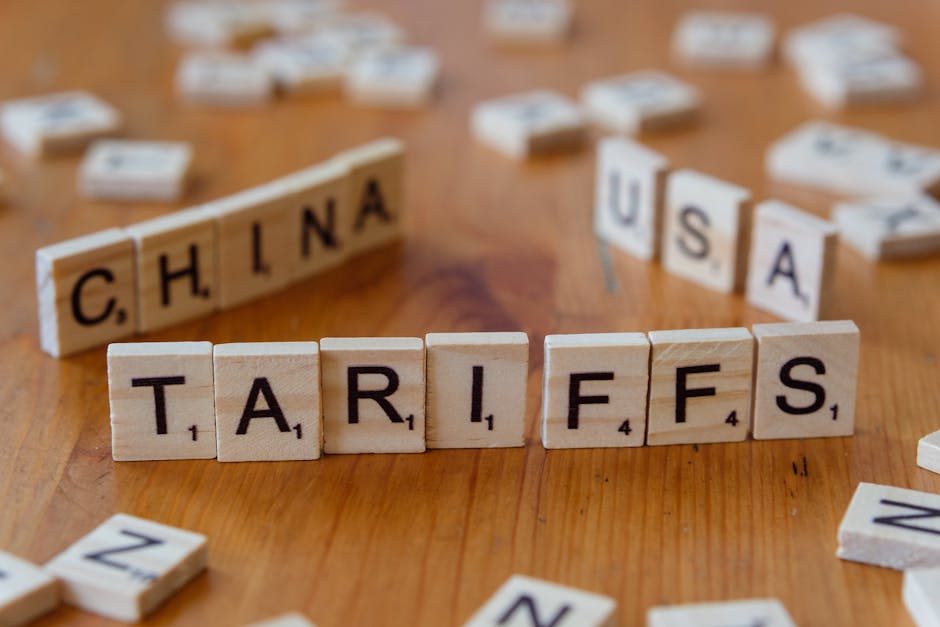
How U.S.-China Tariff Hikes Are Redrawing the Global Startup Supply Chain Map
A new era in global trade dawned in January 2026, not with a whimper but an unmistakable bang: the U.S. unveiled a fresh suite of tariff hikes on Chinese imports, with rates surging up to 145% on specific items and wide swaths of technology now facing fresh costs. For startup founders—especially in semiconductors, electrification, and AI—the tremors of these policies are more than macroeconomic abstraction; they are daily realities, reshaping margins, strategic roadmaps, and even the very DNA of global entrepreneurship.
What began as a trade spat has evolved into a defining force for a generation of businesses. If the 2010s were the era of just-in-time efficiency, the mid-2020s have become the testing ground for a new philosophy: resilience, redundancy, and the art of operating “just-in-case.” The story playing out is not just one of challenge, but of opportunity—where the nimble and the informed can pivot, adapt, and seize advantage amid geopolitical flux.
This exposé unpacks the mechanisms, motives, and unexpected innovations emerging as the U.S.-China contest transforms startup supply chains. Drawing on recent policy shifts, real-world cases, and forward-looking analysis, we reveal how the next wave of tech leaders is navigating—and often thriving—amid uncertainty.
Tariffs in Context: The Escalating Chessboard
Historic Escalation and the Great Untangling
Since early 2024, successive waves of tariff increases have methodically targeted Chinese imports, reinforcing a slow shift from globalization’s golden age to a world defined by strategic decoupling. The climax arrived in January 2026, as policy announcements under the Trump administration ratcheted up tariffs on critical technologies—semiconductors, AI chips, EV batteries, and steel—ushering in an era of duties ranging from 25% to a staggering 145% on certain goods. Universal Logistics notes that these increases are “disruptive enough to reset supply chain thinking globally.”
The New Reality for Startups
High-growth enterprises—the archetypal startups—have been caught in this reordering with little insulation. Lacking the scale or negotiating heft of incumbents, these firms face direct exposure to new tariffs: NVIDIA and AMD’s AI chips, essential for next-gen applications, bear an instant 25% tariff, while advanced semiconductors face phased duties up to 50% by 2026. The impact is compounded for EV, renewable, and hardware startups, as batteries, solar cells, and steel now carry burdensome cost increases. According to TecEx, logistics costs are up 10-15% within weeks, with lead times swelling by up to 30%.
The Market’s Response
As tariffs bite, stock volatility has increased—Reuters reporting sharp tumbles among public tech startups—while private founders race to recalculate business models. The game is no longer about lowest cost, but smartest configuration.
From “Just-in-Time” to “Just-in-Case”: Tactical Shifts in Supply Chain Philosophy
Building Redundancy Over Agility
Startups built for speed—once dependent on razor-thin, just-in-time inventory models—are now deliberately engineering slack into their systems. “The new playbook is one of buffers and backup plans,” observes a founder quoted in a recent analysis. Inventory holding costs, once anathema, now represent strategic insurance: universal logistics estimate a 5-10% rise in inventory costs, but note this buffer slashes catastrophic delay risk.
China +1: A New Geographic Logic
The “China +1” strategy has become the default for ambitious startups. Instead of a single-country bet, firms are diversifying, leveraging Southeast Asian, Indian, and Mexican supply ecosystems to spread risk and restore stability. As the data shows, Southeast Asia emerged as a leading alternative, boasting 20-30% lower labor costs and a surging electronics ecosystem. Vietnam, for instance, attracted $50B in electronics FDI in 2025—testament to its desirability as a risk-mitigated manufacturing hub.
Case in Point: The Hardware Startup Pivot
Consider the case of a U.S.-based AI chip startup, which, facing sudden 25% tariffs on NVIDIA chips, shifted 40% of its production to TSMC’s Arizona plant. The result? Margins held at 25%, a projected $5M savings in 2026, and a supply chain future-proofed against further shocks.
Comparative Perspectives: Strategies from Southeast Asia, India, and Mexico
Southeast Asia – The Rising Electronics Archipelago
Vietnam, Thailand, and Malaysia stand as the standout beneficiaries of the “China +1” movement. Vietnam, especially, has become the region’s assembly powerhouse: Samsung and LG now produce 60% of regional chips in-country, while Foxconn’s partial exodus cut its reliance on China by 40%. For startups, the region offers not just cost savings (20-25% lower than China) but also access to trade agreements that mitigate U.S. tariffs, such as CPTPP.
Malaysia’s Penang grows as a semiconductor hub—the likes of Intel and Infineon already entrenched—while Thailand specializes in battery and EV-related clusters. Incentive programs (e.g., BOI in Thailand, local tax holidays in Vietnam) sweeten the deal further.
India – The Ambitious Challenger
Driven by government “PLI” incentives offering 25% cashbacks, India is becoming a serious contender for complex manufacturing. Foxconn’s EV component plant and Tata’s semiconductor ambitions are emblematic, buoyed by labor rates of just $4/hr. The edge? For American startups, the US-India iCET pact has made technology transfer more seamless, and the labor force is both vast and increasingly skilled.
Mexico – Nearshoring’s Proximity Play
Mexico’s value proposition relies on nearness to the U.S. and the (currently favorable) USMCA framework. Tesla’s and Zebra Technologies’ recent moves are illustrative; FDI hit $40B in 2025, and startups report 10%+ lower shipping costs relative to Asia. But there are risks: the 2026 USMCA review could inject uncertainty, and overreliance on maquiladoras may expose firms to policy shocks.
Perspective Table: Regional Comparison
| Region | Key Strengths | Cost Savings vs. China | FDI Growth (2025) | Startup Case Example |
|---|---|---|---|---|
| Vietnam | Electronics scale, CPTPP | 20-25% | $50B | Foxconn iPhones |
| Thailand | EV incentives, BOI | 15-20% | $15B | Delta Solar |
| Malaysia | Semis hub | 18% | $20B | Intel Penang |
| India | PLIP rebates, labor | 22% | $25B | Tata EVs |
| Mexico | USMCA proximity | 10-15% + shipping | $40B | Zebra RFID |
Innovative Responses and Real-World Startup Stories
Pioneers in Realignment
The difference between those merely surviving and those thriving lies in their willingness to rapidly adopt new configurations:
- AI Hardware Startup: Abandoned China-centric procurement for U.S. assembly; used Intel Gaudi chips as alternatives, safeguarding profit margins.
- EV Battery Firm: Shifted to Vietnam, reducing costs by 15% and gaining redundancy. Lead times fell by 25% after the tariff shock.
- Solar Tech Mover: Absorbed short-term pain with 10% initial cost bumps by setting up in Malaysia, breaking even within the year thanks to local incentives.
- Medtech Startup: Sourced PPE from India/Thailand, slashing costs by 20% and accelerating regulatory clearance.
- IoT Hardware Firm: Nearshored to Mexico, cutting delivery times by 30% for the U.S. market.
Comparative Analysis: Newcomers vs. Incumbents
Startups vs. Established Giants
Incumbents with multibillion-dollar supply chains can afford to absorb shocks or lobby for USTR exclusions. Startups, however, live day-to-day with the consequences of tariffs, unable to pass on costs or wait out uncertainty. As a result, they are more likely to:
- Pivot rapidly to new regions.
- Adopt “just-in-case” buffers and multiple sourcing contracts.
- Deploy AI-driven supply chain prediction tools to identify new efficiencies.
While the “decouple from China” narrative dominates headlines, most startups now aim for strategic multi-sourcing. China retains an irreplaceable 40% global electronics share; the smart play is risk-mitigation, not total abandonment.
“By the end of 2026, the startups that survive and thrive will not be those with the cheapest supply chain—but those with the most intelligent, diversified, and resilient one. The future belongs to the ecosystem orchestrator.”
Forward-Thinking Insights: Risks, Opportunities, and Strategic Recommendations
Material Risks
- Further Retaliation: China’s 2026 tariff cuts (on 935 categories) are asymmetric, aiming to give local firms an edge and further squeeze unprepared U.S. startups.
- Capacity Constraints: Southeast Asia’s capacity, while improving, remains stretched—universal logistics warn of lead times up an additional 15% in late 2026.
- Rising Overheads: Maintaining buffer stocks adds 5-8% operational overhead, a tough pill for bootstrapped firms.
- Targeted Tariff Exclusions: Startups can explore USTR’s machinery exclusion program for crucial imports.
- Incentives and Subsidies: From Vietnam’s BOI to India’s evolving PLI schemes and U.S. CHIPS Act funding ($52B), financial tailwinds are available for the proactive.
- Technology-Driven Resilience: AI-based forecasting (via partners like Jabil or Flex) is closing the prediction gap, making multi-sourcing both practical and profitable.
1. Audit Vulnerabilities: Use tariff calculators and scenario simulations to quantify exposure at every node.
2. Diversify Aggressively: Target 30% sourcing from Southeast Asia, 20% from India, and 20% from Mexico for risk balance.
3. Build Resilience: Adopt “just-in-case” inventory (3-6 months), and secure contracts with multiple suppliers.
4. Leverage Regional Incentives: Pursue BOI, PLI, IMMEX, and USTR exclusions for cost offsets.
5. Invest in Tech: Utilize AI supply prediction tools, and partner with experienced regional assemblers.
6. Monitor Policy Shifts: Track U.S. election outcomes and the 2026 USMCA review.
7. Budget for Change: Allocate at least 15% CapEx to transition strategies, targeting breakeven within 12 months.
Conclusion: The Strategic Imperative—and the Road Ahead
The tectonic shifts in U.S.-China trade policy are no temporary squall. For startups, the navigation of these churning waters is no longer optional—it is existential. The winners of the next decade will be those who move fastest to reimagine supply chain risk, treat diversification not as Plan B but as core business logic, and leverage technology to transform adversity into outperformance.
This era will reward not the most powerful, but the most adaptive. The principle is clear: in a world where “we can’t quite quit China”, it is those who orchestrate truly global, multi-polar ecosystems who will capture new value and define a new normal—one that is robust, responsive, and unafraid to embrace complexity as competitive advantage.
For business decision makers and founders, this is the moment to audit, commit, and deploy. The future supply chain is already being built. Will you lead, or be left behind?