
How AI Chatbots Are Transforming Vietnamese Coffee Chains: Market Data, ROI, And Strategic Playbook For 2025
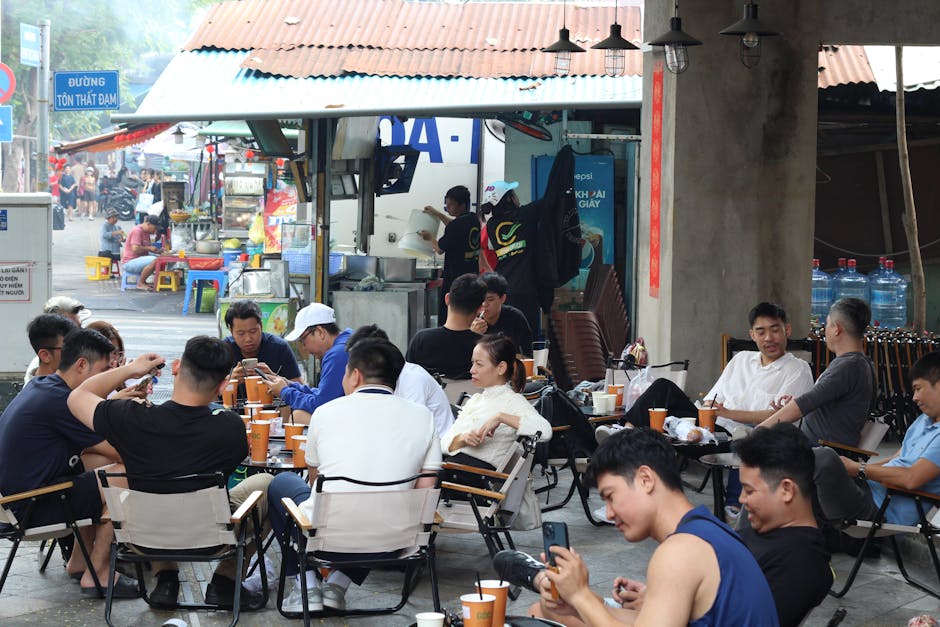
Vietnam’s Coffee Houses Go Digital: How AI Chatbots Are Shaping the Next Era of Café Culture
Vietnamese coffee houses, renowned for their bustling ambiance and deep-rooted traditions, stand at a pivotal crossroads in 2024. Powered by the nation’s surging AI sector, these cafés are beginning to redefine customer experience—no longer just through a cup of cà phê sữa đá, but increasingly via smart, omnichannel chatbots. As Vietnam’s digital economy accelerates and generational shifts remake how people connect with brands, coffee chains and specialty cafés are quietly piloting AI solutions that promise to transform not only how drinks are ordered, but how customers feel understood, valued, and enticed back for more. The story of Vietnamese coffee houses in this digital transition is one of rapid experimentation, fragmented adoption, and bold innovation, echoing lessons from e-commerce and hospitality while forging a uniquely local path.
The Arrival of AI Chatbots: Decoding Vietnam’s Digital Moment
Vietnam’s AI Market Is on Steroids.
By 2024, Vietnam’s artificial intelligence market was valued at USD 753.4 million, with projections for a blistering 15% CAGR through 2030. Chatbots, in particular, are seeing adoption rates north of 25% annually, outpacing other AI applications in the region—a testament to the sector’s hunger for efficiency and differentiation.
Conversational Commerce Is Becoming the Norm.
Nearly two-thirds of Vietnamese businesses now deploy AI for customer communication and acquisition. For coffee operators, this means more than just digital orders—it’s about delivering personalized, always-on engagement across ubiquitous platforms like Zalo, Facebook, mobile apps, and even in-store kiosks. The ground is shifting under the feet of every café owner: those who move quickly stand to protect margins and surprise customers in new ways.
Tactical Shifts: From Manual Service to Smart, Omnichannel Experiences
Omnichannel Chatbots as the New Barista.
Coffee houses are borrowing heavily from hospitality and e-commerce sectors, deploying chatbots on Zalo, Facebook Messenger, Telegram, and web platforms for seamless, first-line service. These bots handle everything from 24/7 Q&A on store hours to real-time menu information, calorie counts, and parking details. But the transformation goes deeper:
- Order Handling & Pre-Ordering: Customers can pre-order and pay via chat, with integration to POS systems ensuring no more chaotic, ad hoc instructions for baristas.
- Queue & Seating Notifications: Bots forecast demand, notify when seats are available, and recommend quieter hours to remote workers, echoing hospitality demand forecasting.
Personalization Is No Longer Optional.
Driven by data from mobile apps and previous orders, AI-powered chatbots begin to understand and predict “coffee preference profiles”—sweet vs. bitter, hot vs. iced, strong vs. mild. Such insights enable:
- Dynamic Beverage Recommendations: Suggesting cold brews on hot days or upselling breakfast combos to morning commuters.
- Contextual Offers: Leveraging weather, time, and purchase history to push highly relevant promotions—mirroring e-commerce tactics that have driven up to 20% conversion uplifts elsewhere.[source]
Multilingual Support Fuels Tourism Rebound.
With Vietnam welcoming back international visitors, coffee chains in tourist corridors (HCMC, Hanoi Old Quarter, Da Nang, etc.) deploy chatbots that fluidly switch between Vietnamese, English, Korean, Chinese, Japanese, and beyond. This not only eases service bottlenecks but opens new avenues for menu storytelling and local discovery, positioning cafés as micro-tourism hubs riding the AI revolution in hospitality.[hospitality AI impact]
Behind the Scenes: The Technology Stack Powering Vietnam’s Coffee Revolution
Localized Language Models and Frameworks Take Center Stage.
Unlike generic platforms, Vietnamese coffee chains are increasingly relying on Vietnamese-specific AI models, tuned for local slang and conversational nuance. From BERT, LLaMA, and GPT-class models to frameworks like Rasa and Dialogflow, the emphasis is on fast, natural-sounding Vietnamese dialogue—and robust omnichannel connectors to social media, POS systems, and loyalty databases.[Vietnam generative AI]
Integration Is the Game Changer.
The most advanced coffee chains borrow from hospitality playbooks: integrating chatbot data with CRM, inventory, and loyalty engines to deliver unified profiles and dynamic offers. For the average café, this means:
- Faster deployment with Vietnam-optimized NLP
- Ability to personalize offers at scale, without huge data science teams
- Smoother handoffs between online and physical store experiences
Adoption Patterns: Who’s Leading, Who’s Catching Up?
Tier-1 Chains Are Piloting, Regional Players Are Experimenting.
Statistics suggest that major chains are already rolling out chatbots for customer service and marketing, especially on Facebook and Zalo. Specialty cafés in major cities remain at the “FAQ bot” stage, while independent spots in provincial towns still operate manually—highlighting a fragmented landscape where SaaS vendors and industry education will play decisive roles.
Key Drivers and Challenges.
Rising labor costs and changing customer expectations (shaped by e-commerce and ride-hailing) are pushing coffee operators to innovate. However, challenges persist:
- Language Diversity: Regional Vietnamese and code-switching (VN–English) confuse standard chatbots.
- Data Fragmentation: Many cafés lack clean, centralized customer data—limiting the impact of AI personalization.
- Skills Shortage: A lack of in-house AI talent means most rely on external vendors.
- Regulatory Pressure: The upcoming E-Commerce Law 2025 will require new standards on privacy, consent, and ethical AI.
Quantified Impact: What Numbers Reveal About AI’s True Value
What Can Operators Realistically Expect?
| Metric / Area | Vietnam benchmark | Coffee-house implication |
|---|---|---|
| AI chatbot market growth | 25%+ CAGR | Broader vendor ecosystem, dropping costs by 2026–2027 |
| Businesses using AI for CX | 66% by 2025 | Customers expect instant, AI-powered responsiveness |
| Personalization uplift | Up to 20% higher conversion | 5–15% rise in ticket size via smart recommendations |
| Routine query automation | 85%+ handled by chatbots | 50–80% of café FAQs/orders can move to bots |
| Direct revenue boost | 10% more direct bookings (tourism) | 5–10% shift from platforms to direct orders |
| Inventory & waste | +30% turnover, −15% waste | 10–20% cut in waste via smarter stock management |
The Bottom Line: When properly integrated, AI chatbots can be expected to lift margins, grow direct sales, and slash wasted staff hours—provided data quality and change management are not neglected.[smart café experiences]
Comparative Landscape: Vietnam vs. Global Coffee Tech
What Sets Vietnam Apart?
While Western coffee chains have explored AI for years, Vietnam’s context is distinctive:
- Mass Social Media Adoption: Zalo and Facebook Messenger remain far more central than proprietary apps, driving chatbot integration needs unique to Vietnam.
- Language Localization: The proliferation of Vietnamese-trained LLMs is outpacing many ASEAN peers, enabling nuanced service and local storytelling.
- Regulatory Momentum: Vietnam’s government is actively championing digital transformation and AI commercialization, whereas other APAC markets are often more hands-off.
Strategic Recommendations: Actionable Roadmaps for Different Café Profiles
National Chains: Go Deep and Wide
- Deploy chatbots across all major channels—ensure customers meet a consistent persona anywhere they engage.
- Consolidate data into a single customer profile for layered personalization—start simple and build with ML over time.
- Align AI initiatives to measurable KPIs (response time, NPS, ticket size, etc.).
- Prepare for multilingual flows in tourist areas.
- Stay ahead on AI ethics and compliance as regulations evolve.
- Use Vietnam-focused SaaS or low-code platforms—avoid risky custom builds.
- Deliver value via FAQ bots, reorder journeys, and promo targeting.
- Leverage chatbots for educational content (“Ask our virtual barista”) to deepen brand affinity.
- Train staff to co-work with bots as filter, not replacement.
- Embrace free/low-cost chatbot tools (Facebook, Zalo) for basic automation.
- Begin capturing structured customer data now, even if manually.
- Take advantage of platform-provided AI tools before investing in bespoke solutions.
Risk and ROI: Navigating the Path Forward
Financial ROI Is Tangible: Most projects can be funded from marketing or CX budgets, with payback in 6–18 months if ticket size and direct orders grow even modestly.
Operational Risk: Over-automation can alienate customers. Escalation to human staff must be seamless when complexity or complaints arise.
Compliance: Anticipate Vietnam’s evolving AI and e-commerce laws. Prioritize data minimization, opt-in consent, and easy profile deletion.
Brand Risk: Poorly tuned bots frustrate customers. Early hybrid, human-in-the-loop models are essential. Rigorous A/B testing and sentiment monitoring are a must.
“In the next three years, the defining edge for Vietnamese coffee houses will shift from simply using AI chatbots, to how deeply they personalize, integrate, and ethically govern these platforms—turning data into delight and operational intelligence.”
Implementation Playbook: 12–18 Month Roadmap to AI-Driven Café Success
Phase 0 – Strategy & Data (1–3 months): Define goals, audit channels and systems, select local technology partners.
Phase 1 – Foundation Chatbot (3–6 months): Launch bots on primary channels for FAQs, menu, and basic orders. Integrate minimal CRM.
Phase 2 – Personalization (6–12 months): Introduce preference profiles, recommended drinks, rule-based offers, and demand insights.
Phase 3 – Advanced AI (12–18+ months): Experiment with generative AI, voice and multilingual features, in-store kiosks, and ecosystem integration.
The Competitive Outlook: 2025 and Beyond
Standardization and Differentiation:
By 2027, AI chatbots will be universal across major Vietnamese coffee chains, embedded in every customer-facing digital channel. But the competitive battlefield will move quickly—from “do you have a bot?” to “how well does it know and serve your customers?” Chains that invest early in data infrastructure, Vietnamese-tuned AI, and ethical governance will own a defensible advantage in brand loyalty, marketing efficiency, and operational resilience.
The Strategic Imperative: For Vietnam’s coffee sector, the question is no longer whether to deploy AI chatbots, but how quickly and how intelligently to do so—balancing speed of rollout with depth of personalization, data stewardship, and brand integrity.
Conclusion: Brewing the Future—AI as the New Signature of Vietnamese Coffee
Vietnam’s coffee houses have always thrived on cultural innovation—adapting French techniques, integrating local flavors, and fostering community. In 2024 and beyond, that spirit is migrating to the digital realm. The rise of AI chatbots is much more than a tech upgrade; it is an epochal shift in how cafés connect, serve, and endear themselves to a rapidly changing customer base.
Coffee chains, specialty houses, and even independent cafés that master the fusion of personalization, omnichannel engagement, and ethical data use will define the next era of Vietnamese café culture. The stakes are clear: those who move boldly and thoughtfully will lead not only in margin and efficiency, but in the hearts—and tastes—of millions. For decision-makers, the call is urgent: start smart, scale wisely, and let AI transform every touchpoint into a reason for customers to return, again and again.