
How Bimbo Bakeries USA Can Thrive In North Americas $120B Bakery Market: 2025-2026 Growth Strategies, Innovation, And Resilience Amid Economic Uncertainty
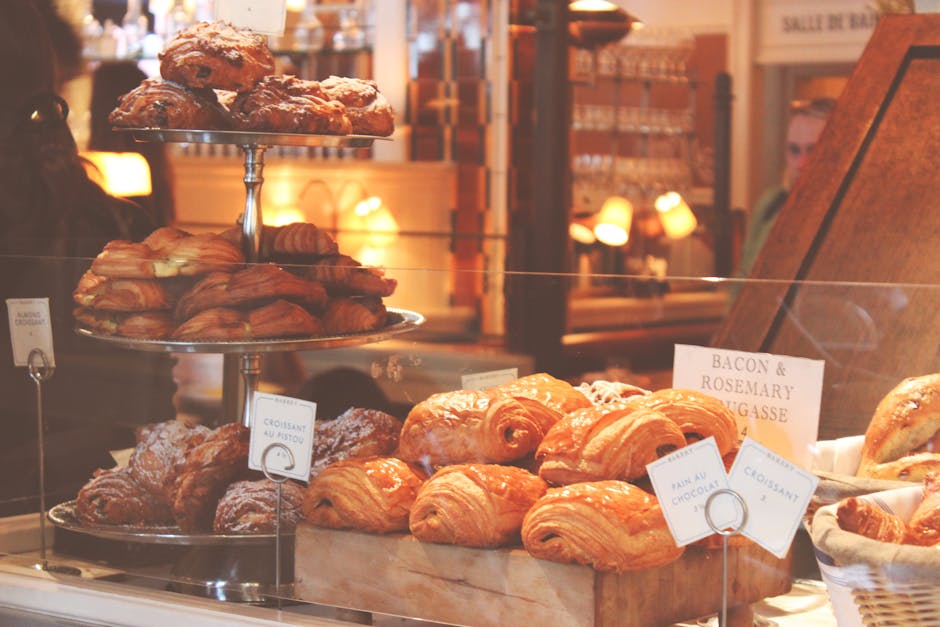
Bimbo Bakeries USA: Baking Resilience Into North America’s Breadbasket Amid Economic Uncertainty
In a market long defined by steady routines—a morning toast, a lunchbox sandwich, an after-dinner pastry—North America’s $120 billion bakery sector is quietly undergoing its own transformation. At the heart of this evolution stands Bimbo Bakeries USA, the behemoth subsidiary of Grupo Bimbo, charting a course through storms of inflation, seismic consumer shifts, and intensifying competition.
As grocery aisles crowd with both value labels and health-forward upstarts, and as economic headwinds threaten to stifle organic growth, Bimbo Bakeries USA’s approach to resilience is rewriting what it means to thrive in a mature, saturated industry. This comprehensive exposé unpacks the strategic playbook, real-world implications, and what the future holds—for the company, its competitors, and the broader ecosystem of consumers, partners, and stakeholders.
Context: A Market Braced for Change
Historical Trajectory Meets Modern Disruption. For decades, the North American bakery industry has stood as both staple and symbol—ubiquitous, predictable, and (for the largest players) highly lucrative. The sector’s sheer scale—projected to reach $165 billion by 2035—masks slower-moving undercurrents: wavering consumer loyalty, rising ingredient costs, and saturation in key segments like bread and sweet goods.
Recent years, however, have delivered a series of shocks. Cost inflation, largely in wheat, sugar, and packaging, has squeezed margins even for dominant brands. Shoppers, facing their own economic uncertainty, increasingly “bifurcate” between bargain hunting and trading up for premium or health-conscious items. And as regulatory demands tighten around nutrition and sustainability, legacy business models are being tested as never before.
Bimbo Bakeries USA, which alone posted $2.65 billion in North American revenue in Q2 2025 (an 8% nominal rise, but a 4.6% organic drop), finds itself at the intersection of these trends, forced to rethink its toolkit for both resilience and growth.
Read more on Bimbo’s 2025 market leadership
The New Realities: Economic and Sectoral Headwinds
Stagnation and Bifurcation. The North American bakery market is growing, but slowly: current forecasts put the compound annual growth rate (CAGR) between 2.0% and 2.94% through 2035, with the US segment expected to reach $97.7 billion by 2026. Bread remains the mainstay, but marked by “value-seeking behaviors” in a climate the industry now calls a “soft consumer environment.”
Cost Volatility as the New Constant. Input prices for wheat, sugar, and packaging remain unpredictable, contributing to a 42% drop in operating income for Bimbo Bakeries USA year-on-year in Q2 2025. Private-label brands, buoyed by retailers’ consolidated bargaining power, threaten not just market share, but also pricing discipline.
Health, Wellness, and Regulatory Squeeze. A crucial, growing cohort of consumers now scrutinizes labels for artificial ingredients, added sugars, and sustainability credentials. Regulatory pressure on both health (nutrition, clean-label) and ESG fronts is escalating—as is the risk of brand erosion should legacy players lag behind.
Sector forecasts and competitive landscape
Bimbo Bakeries USA’s Playbook: Building Resilience Through Reinvention
Dual-Segmentation: Serving Both Sides of the Consumer Coin. Bimbo’s strategy is neither to double down solely on value nor to pivot entirely to the premium tier. Instead, it has architected a dual-segmentation approach: on one side, robust value lines (like Sara Lee half loaves) cater to budget-conscious shoppers; on the other, artisanal and functional products—think high-protein, gluten-free, and low-sugar—target the booming $70B+ health snacks segment.
Innovation Acceleration and Portfolio Health. With 15% increase in new product launches in 2024—outpacing competitors like Flowers Foods (8%)—and an 8% boost in R&D investment, Bimbo is pushing hard to renew relevance. The Thomas’ High Protein Bagels (20g plant-based protein) and a bread/bun/breakfast lineup targeting a 3.5+ Health Star Rating (HSR) across the board exemplify this shift.
Distribution & Supply Chain Agility. The company’s scale advantage—advanced process automation, route optimization, and multi-channel touchpoints—ensures its brands remain omnipresent despite logistic disruptions. Strategic partnerships with both retail and foodservice channels help defend shelf space against private labels and upstart rivals.
Sustainability as Differentiator. Twenty-one bakeries now operate with certified energy programs; circular packaging initiatives and multiple sustainability awards cement Bimbo’s ESG credentials, catering to both regulatory compliance and the growing “conscious consumer.”
Highlights of Bimbo’s 2025 sustainability wins
Comparing “New Game” vs. “Old Guard” Strategies
Legacy Defenses vs. Next-Gen Offenses. For traditionalists, resilience has meant hunkering down—cutting costs, eking out efficiency from established product lines, and leveraging scale to weather storms. This “old guard” approach, while effective in eras of stable demand, is increasingly brittle amid today’s twin pressures of cost spikes and shifting consumer values.
By contrast, Bimbo’s emerging playbook is about proactive transformation: not only shoring up core advantage (supply chain, distribution), but also attacking on innovation, segmentation, and new digital avenues. The goal: respond to consumer bifurcation not with a single, lowest-common-denominator product, but with a portfolio that flexes across income and values.
Real-World Implication: While rivals like General Mills and Kraft Heinz focus on specific product clusters or regions, Bimbo’s breadth—bolstered by Grupo Bimbo’s 245 bakeries across 35 countries—provides both competitive insulation and global learning leverage. This means that not only can Bimbo buffer against NA slowdowns by leaning into growth in Mexico and Latin America, but it can also cross-pollinate innovations and operational best practices across markets.
Grupo Bimbo global resilience and performance
Spotlight: Tactical Execution in the Face of Uncertainty
1. Innovating Toward Health and Premiumization. In 2025-2026, Bimbo’s North American brands are marching toward 100% HSR 3.5+ portfolio coverage and a full removal of artificial colorants by end of 2026. Product launches—especially those with high protein counts, gluten-free credentials, and portion-controlled packs—are set to grow at a rate twice that of key rivals. This not only supports premium pricing, but also repositions Bimbo as a leader in the “food as fuel” movement.
2. Fortifying Distribution and Supply Chain Agility. Automation and digitization enable route and inventory optimization, boosting uptime and resilience. By tailoring promotions and pack sizes for retail, online grocery, and direct-to-consumer (DTC) channels, Bimbo strengthens both presence and margins—even as cost pressures mount.
3. Deepening Retail Partnerships and Category Management. In an era where a handful of major retailers control the lion’s share of shelf space, Bimbo’s data-driven, co-managed approach allows for rapid adaptation to local shopper preferences, giving it an edge over both legacy and private-label competitors.
4. Advancing Sustainability. The clean-label revolution is no longer optional. By aiming for full artificial-free status and scaling up circular packaging, Bimbo aligns not just with consumer demand but also with investor expectations—critical for maintaining strong ratings (e.g., Fitch’s ‘BBB+’ affirmation) and capital access.
5. Diversifying Channels and Markets. The ramp-up in DTC, e-commerce, and selective forays into adjacent snack categories or international markets (Asia, Latin America) are risk hedges, allowing Bimbo to offset potential North American stagnation with higher-growth geographies.
Detailed analysis of Bimbo’s 2025 strategic leadership
What Sets Bimbo Apart? A Comparative Lens
Scale Meets Agility. Unlike Flowers Foods (focused mostly on traditional bread) or Kraft Heinz (playing in more fragmented, often less perishable categories), Bimbo’s scale delivers efficiencies, but its dual-segment model breeds versatility. The company’s commitment to a 15% annual product launch cadence and 8% R&D growth—contrasted with single-digit rates among its closest rivals—signals a willingness to disrupt its own legacy.
Global Integration as a Growth Insulator. Bimbo’s international footprint (with over 10 million tons produced annually) offers both risk diversification and innovation cross-feed. Where North America faces 2-3% CAGR, Latin America and Asia present outsized growth, with learnings from one region (such as Mexican functional bakery formats) quickly adapted to others.
Sustainability Credentials and Clean Labeling. Award-winning energy programs, a growing roster of clean-label SKUs, and active participation in industry-wide ESG initiatives give Bimbo “permission” to premiumize. This stands in contrast to some peers, who are either catching up or confined to narrow product upgrades.
Global bakery market trends and Bimbo’s place within it
Real-World Implications: What This Means for Stakeholders
For Retailers: Partnerships with Bimbo now mean access to a wider, more adaptive portfolio in both value and premium/health segments. The company’s agility in responding to consumer trends and its dominance in bread, buns, and breakfast goods make it a must-have anchor supplier.
For Consumers: The resurgence of “healthier” bread is not a fleeting fad; it is being codified via HSR certification and clean-label formulas. Even as macroeconomic uncertainty prompts value-seeking, the best-selling innovations increasingly reside at the intersection of health, taste, and sustainability.
For Competitors: The “moat” around scale is no longer unbreachable; it must be paired with data, agility, and a willingness to break with legacy structures. Rivals who focus only on efficiency or only on premiumization risk missing the market’s increasingly complex center.
For Investors: The ability to post 8% nominal revenue growth amid a 4.6% organic decline is testament to short-term resilience. But the long-term bet is on Bimbo’s capacity to drive low-double-digit gains via innovation, segmentation, and global hedging—while maintaining its BBB+ credit rating.
Fitch’s affirmation and financial resilience analysis
“Navigating a market beset by stagnation and rising demands on both affordability and health, true resilience means building an organization that innovates faster than shifts in consumer sentiment, adapts quicker than commodity cycles, and turns every disruption into a new point of competitive leverage.”
— Growth HQ North America Strategy Team
Future Insights: Key Trends to Watch
Health Will Outpace Indulgence. As regulatory bodies and consumers both demand cleaner, higher-protein, and more functional bakery goods, expect the bulk of innovation to target health benefits first and foremost—behind which premium pricing follows.
DTC and E-Commerce Will Accelerate. Already, Bimbo is targeting a 20% channel revenue share from direct and online sales by 2026, channeling learnings from pandemic-era grocery shifts into lasting digital advantage.
Market Consolidation Favors the Nimble, Not Just the Big. As fewer, larger retailers gain power, suppliers able to provide both broad coverage and nimble, local adaptations will win out. Bimbo’s partnership model, blending national scale with granular shopper insights, is designed precisely for this environment.
ESG Will Move From Compliance to Growth Driver. Sustainability certifications and transparent ESG reporting are now as much about access to capital (and insurance) as regulatory compliance; winners will market these credentials as part of their value proposition, not simply as a risk hedge.
Explore detailed resilience tactics
Implementation Roadmap: Building Resilience for 2026 and Beyond
Q1 2026: Complete transformation of core product portfolio (>HSR 3.5), pilot new DTC platforms, and launch at least 10 health-centric innovations.
Q2 2026: Scale partnerships with major retailers, eliminate 50% of artificial colorants in existing SKUs, and further optimize supply chain routes for cost savings.
Q3-Q4 2026: Finish clean-label conversion, expand into adjacent snack markets, and selectively introduce international pilots to buffer against North American stagnation.
Ongoing: Quarterly SWOT reviews, scenario planning against conservative 2-3% NA CAGR, and close tracking of organic growth and margin decline targets.
Review long-term market projections
Conclusion: Baking the Future—Why Resilience is the New Growth Engine
As North America’s bakery market transitions from an era of steady certainty to one of perpetual reinvention, the difference between survival and dominance will rest not on legacy, but on adaptability. Bimbo Bakeries USA embodies the vanguard: leveraging scale, but refusing to be held hostage by it; innovating in both value and health; placing bold bets on digital and ESG; and fortifying global hedges to counter local stagnation.
The competitive landscape of 2026 will not favor the merely efficient or the narrowly innovative. It will reward those who can bridge consumer bifurcation, meet the full spectrum of taste, value, and health demands, and operationalize agility from bakery floor to boardroom.
In this context, Bimbo’s multidimensional resilience strategy is more than a defensive stance—it is a blueprint for outpacing the sector’s 2-3% North American growth, converting headwinds into sustainable, low-double-digit gains.
For business leaders across retail, food production, and supply chain, the lesson is unmistakable: only those companies that treat resilience as a core capability—rooted in both operational prowess and relentless customer-centric innovation—will truly rise above uncertainty, shaping not just the future of bakery, but the future of food itself.
See Growth HQ’s full strategic breakdown