
How Digital Ads At EV Charging Stations Are Transforming Urban Skincare Buying In Bangkok, Jakarta, And Southeast Asia
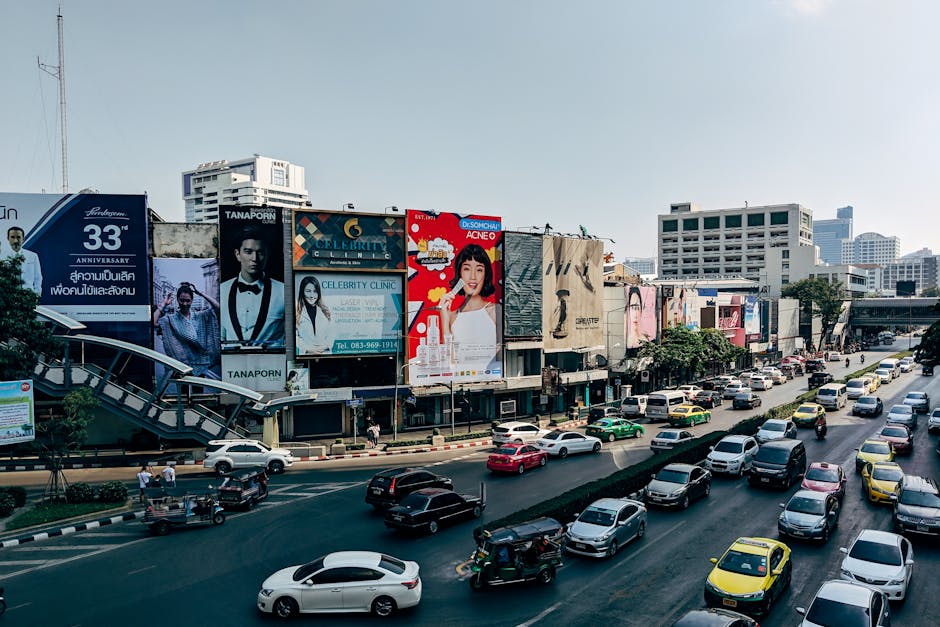
Charging Up Urban Skincare: How Southeast Asia’s EV Hubs are Transforming Beauty Marketing
In the heart of Southeast Asia’s megacities, a quiet revolution is unfolding at an unlikely crossroads: the electric vehicle (EV) charging station. With public EV infrastructure surging at a pace unrivaled globally, these hubs have become more than just waypoints for eco-conscious motorists—they are rapidly morphing into the region’s newest, most strategic touchpoints for digital advertising. Nowhere is this more evident than in the booming, pollution-fueled skincare market, where urban professionals seek premium solutions and brands jockey for prime, high-dwell exposure. As EV adoption accelerates and digital out-of-home (OOH) technology matures, the collision of mobility, urban pollution, and impulse-driven beauty spending is setting the stage for a profound shift in how—and where—Southeast Asia’s consumers make skincare decisions.
The EV Charger: From Mobility Backbone to Urban Advertising Goldmine
Exponential Infrastructure Growth. Southeast Asia stands at the vanguard of EV adoption, with Thailand fast emerging as the region’s electrification hub. Data from the Deloitte Automotive Survey highlights that 58% of Thai motorists now intend to purchase hybrid or battery-electric vehicles—outpacing the nation’s neighbors and propelling a profound shift in automotive expectations. This consumer intent is undergirded by a staggering 9x increase in public EV charger installations since 2022 across Indonesia, Thailand, Malaysia, and Vietnam, according to the CFA Institute’s IEA-sourced analysis.
Public Charging: A New Urban Ritual. The “charging gap”—where 75% of drivers expect home charging, but only 36% have access—forces a daily return to public charging stations. Crucially, over half of consumers (51%) prefer these stations to be co-located with familiar fuel stations. These are not transient pit stops: Industry leader JCDecaux reports dwell times averaging 15 to 30 minutes per session, creating invaluable, captive ad exposure windows for marketers.
Affluent, Urban, and Ready to Switch. Today’s EV charging hubs cluster in economic powerhouses such as Bangkok, Jakarta, and Kuala Lumpur, giving advertisers unparalleled access to high-income urbanites—65% of whom are professionals earning over USD2,000 per month, per Deloitte. This group is not just affluent but highly dynamic: 64% are open to switching EV brands, making them unusually receptive to lifestyle messaging, including premium skincare.
Skin in the Game: The $12.5 Billion Urban Skincare Boom
Pollution: The Relentless Catalyst. Air pollution has become an inescapable part of city life in Southeast Asia’s largest urban centers. According to IQAir and Kantar, Bangkok and Jakarta regularly record PM2.5 levels of 35–40µg/m³—seven to eight times the World Health Organization’s recommended limits. This reality is not lost on consumers: 72% of urban women aged 25–40 in Southeast Asia cite air quality as a principal driver of their premium skincare purchases.
Market Dynamics and the Urban Premium. The 2026 Southeast Asian skincare market is projected to surpass USD12.5 billion, growing 8% year over year—led by Indonesia (USD4.2B) and Thailand (USD3.1B). The core demographic? Urban consumers aged 25–44, 70% of whom are female, with a rising influence from male “K-beauty” adopters. These shoppers are impulse-driven—55% admit to buying skincare on-the-fly at convenience points, a behavior that perfectly overlaps with habits at high-dwell, high-traffic locations such as EV charging hubs.
Where Chargers Meet Core Demographics. The concentration of EV chargers in city centers is more than logistical convenience—it’s strategic. In Bangkok alone, the number of public charging stations surged 300% in two years, placing skincare brands right in the path of their most profitable prospects. Urban professionals using these stations frequently spend USD50–200 per skincare purchase, responding to messages about “pollution-defending” serums, AR-driven skin analysis, and instant e-commerce offers.
Digital OOH at Chargers: A New Rulebook for Skincare Marketing
High-Dwell, High-Engagement. Unlike the fleeting seconds at traditional fuel pumps, EV charging sessions hand marketers a generous 15–30 minute canvas to work with. A typical user encounters 5–10 digital or interactive ad cycles in this window. Crucially, 74% of these urban drivers check their phones while waiting, but 82% actively engage with the digital charger screens—a behavior that supercharges cross-device targeting and campaign recall.
AR Try-ons and Geo-Retargeting: From Awareness to Impulse Conversion. The latest digital OOH screens at these hubs don’t just play videos—they invite interaction. L’Oréal’s Southeast Asia pilots revealed that AR skin analysis at public stations can drive a 30% lift in conversion. When this is paired with instant QR codes or geo-fenced retargeting to e-commerce platforms like Shopee or Lazada, the path from awareness to purchase is frictionless: Dentsu’s 2025 benchmarks indicate that 18% of SEA beauty ad viewers at digital OOH convert via scan-to-purchase mechanisms, with interactive engagement rates reaching 41%.
Boosting Intent and Uplift: The Data. While direct “skincare at EV ads” studies are sparse, analogous campaigns at fuel station digital OOH yielded a 22% uplift in FMCG sales, according to Ocean Outdoor (2025). Given the threefold longer dwell time during EV charging, modeled projections suggest potential uplift in skincare purchase intent in the 20–35% range. Real-world pilot estimates contribute to a projected 15–25% increase in ROI for SEA skincare campaigns deploying at charging hubs.
Comparative Views: The New vs. The Uninitiated
For the Urban Professional, EV charging stations have seamlessly integrated into daily routines—not merely as infrastructure, but as digital experience zones. This demographic expects hyper-relevant, context-aware content: “Pollution shield” serums, AR try-ons, and seamless e-commerce journeys. The synergy between time-rich dwell periods and impulse-ready mindsets is difficult to replicate elsewhere in urban life.
For Traditional Marketers and First-Time Observers, the leap from petrol-pump posters to interactive, data-driven screens may seem radical. Yet, the reality is that static OOH is rapidly losing ground to digital, location-aware tactics. For new entrants, the shift requires a recalibration: creative assets must harness both motion (video), interactivity (AR), and instant digital conversion paths. Measurement, now reliant on QR scans and app attribution, surpasses old-world “eyeballs” metrics.
The Southeast Asian Charging Adscape: Local Variations and Strategic Focus
Thailand: The Testing Ground. With its robust 58% EV intent rate and over 8,000 chargers projected in 2025, Thailand leads in both infrastructure and marketing opportunity. Campaign math is compelling: partnering with fuel station networks (PTT, Shell) for digital OOH provides access to more than 1 million urban drivers monthly. Skincare brands trialing here can reasonably target a 25% purchase uplift, leveraging AR-led content and precise audience retargeting.
Indonesia: The Scale Play. With a trajectory toward 30,000 public stations by 2030 and 300% annual charger growth, Indonesia’s scale is unmatched. Despite infrastructure concentration in Jakarta (with emerging gaps on intercity highways), the city’s 10-million-strong urban population offers a ripe 2.5 million core skincare demographic.
Malaysia and Vietnam: Premium Niches via XPeng/Charge+. The rollout of 3,800 new chargepoints across Malaysia and Vietnam (notably via XPeng’s 5,000km cross-border network) links affluent city dwellers and high-traffic corridors. These locations invite campaigns targeting premium skincare categories, amplified by tourism and cross-border commerce.
Innovation in Action: Tactical Shifts and Platform Potential
Integrating AR and Interactive Content. Leaders are unlocking new forms of engagement—think AR “pollution defense” routines or instant skin health assessments—directly at the charger. This not only sustains user attention but builds high-intent, data-rich profiles for downstream targeting. The result: engagement rates up to 35% higher than static messaging.
Geo-Fencing and Data-Driven Attribution. Modern OOH platforms integrate geo-fencing with e-commerce retargeting, achieving match rates up to 95%. PlugShare-style routing apps now factor in both physical journey and digital engagement, enabling continuous shopper journeys from charger to checkout—an innovation unthinkable with legacy billboard buys.
Multi-Stakeholder Networks. The formation of integrated ad networks—spanning charger operators (e.g., XPeng, Grab-Sharge), mall consortia, and fuel retailers—extends campaign reach across urban and commuter zones. These consortium approaches are primed to aggregate smaller operators into unified platforms, maximizing utilization rates and providing advertisers with comprehensive reach and real-time analytics.
Impact Metrics: Quantifying the Opportunity
Impressive Projected Returns. In Bangkok, 50 test stations can deliver 100,000 impressions per month, translating to an estimated 5,000 conversions at a USD10 average selling price—USD50,000 in incremental monthly revenue. On a region-wide scale, modeled data forecasts 50–80 million monthly ad impressions per country in Thailand and Indonesia alone, with skincare uplift rates between 20–35% depending on creative execution and audience targeting.
Fast Payback for First Movers. For brands prioritizing Thailand, a well-executed campaign (THB50M scope) can target a 15% ROI—exceeding global dwell OOH benchmarks. At the regional level, the forecast is even more bullish: ROI payback periods of under 6 months become realistic as infrastructure density and consumer behavior continue to converge.
Emerging Gaps and Critical Risks
Infrastructure Imbalances. While urban and highway corridors are increasingly saturated, tourism-driven zones and “last-mile” suburban areas still lag behind. Persistent grid limitations and seasonal demand swings can dampen campaign efficiency. Addressing the “charging gap”—where only 36% can charge at home—remains a structural challenge but also a lever for increasing urban dwell time and, by extension, ad exposure.
Measurement and Attribution Complexity. As OOH migrates toward interactive and data-driven paradigms, advertisers must calibrate new metrics: QR scans, app journey attribution, and geo-fenced retargeting replace vague traffic estimates. Brands slow to embrace these approaches risk underperforming against competitors leveraging real-time, closed-loop analytics.
“The intersection of sustainable urban mobility and digital advertising is not a trend—it’s an inflection point. Marketers who learn to harness the EV charging ecosystem will not just reach, but reshape, Southeast Asia’s most influential consumers.”
Strategic Recommendations: Seizing the Urban Skincare Moment
Prioritize High-Intent Markets. Thailand’s unique blend of EV adoption, urban density, and skincare spend marks it as the region’s natural entry point. Brands should focus efforts on fuel station and shopping mall charger hubs, leveraging established operator partnerships for scale and reliability.
Leverage Tech-Enabled Engagements. Interactive AR creative and QR-based conversion paths drive superior engagement and tangible ROI. Geo-fenced retargeting ensures sustained conversion post-visit, with 95%+ match rates now possible through advanced analytics platforms. Real-time performance tracking, via mobile measurement partners (MMPs), offers actionable feedback loops.
Extend Across the Region—But Tailor Locally. Indonesia’s scale and Malaysia/Vietnam’s premium niches demand nuanced content and deployment strategies. Highway-centric campaigns may skew toward mobile commuters and tourists, while city-center activations should double down on pollution-focused, premium narratives.
Mitigate Risk via Diversification and Collaboration. To address infrastructure and utilization gaps, marketers should invest in network-wide buys spanning multiple charger operators and localities. Collaborations with ride-hailing partners (e.g., Grab’s 500 charger initiative) tap into high-frequency, beauty-aware drivers, particularly in urban settings.
Budget for Impact. With cost-per-1,000 impression rates between USD1–2 and projected sales uplifts up to 25%, marketing leaders should not hesitate to allocate significant budgets for scalable, multi-month pilots. Fast payback cycles and cross-platform amplification (OOH plus mobile) only increase the channel’s strategic value.
Conclusion: The Future is Beautiful—and Electrified
Southeast Asia’s explosive growth in EV charging infrastructure is not merely a story of clean mobility—it is a clarion call for marketers, particularly in the booming skincare sector, to rethink how and where urban consumers are engaged. The high-dwell, high-value context of EV charging stations provides an unprecedented platform to combine personalized storytelling, interactive technology, and instant conversion opportunities—all against a backdrop of urgent urban health concerns.
Brands that act now will position themselves at the center of a new urban consumer ritual, capturing attention, intent, and wallets in the moments that matter most. The digital ad real estate of the future is here—and it’s plugged in, illuminated, and perfectly aligned with the next generation of Southeast Asian beauty buyers. For decision-makers unwilling to adapt, the risk is irrelevance. For those who seize the moment, the rewards will be measured not just in sales uplift, but in shaping the very contours of modern urban aspiration.
As public chargers surge toward critical mass by 2027, the window for first-mover advantage remains open—but not for long. The convergence of sustainable mobility and digital OOH is more than a marketing channel: it is the new infrastructure of influence in Asia’s 21st-century cities.