
How Gemadepts Digital Transformation Is Revolutionizing Port Operations In Ho Chi Minh City And Across Vietnam
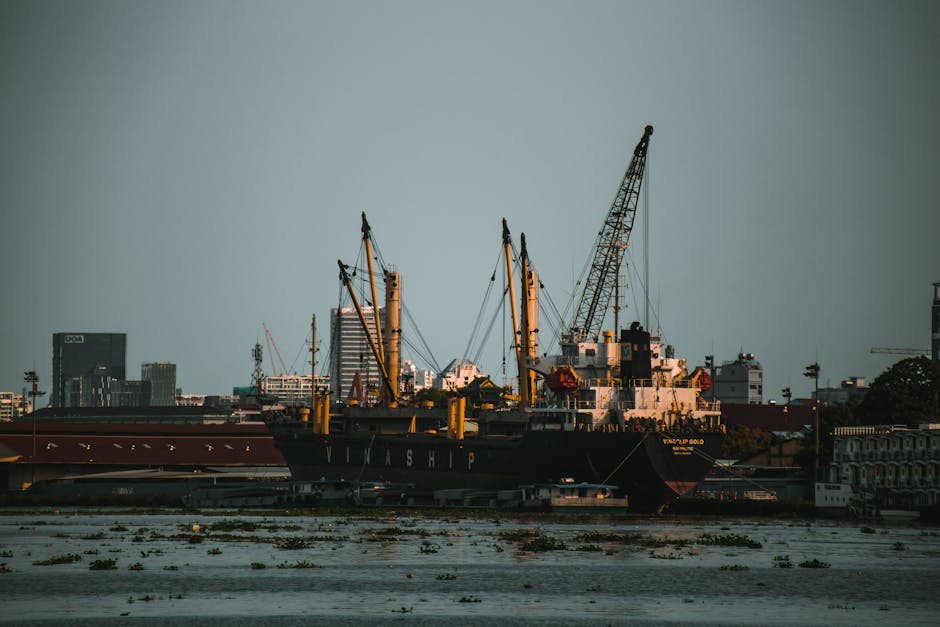
Gemadept’s Digital Revolution: Redefining Vietnam’s Place in Global Port and Logistics Leadership
As the tectonic plates of global trade realign and Vietnam emerges as a manufacturing powerhouse, the country’s logistics infrastructure faces a once-in-a-generation inflection point. No longer is success forged solely through geographic fortune or inexpensive labor. Today, digital innovation is the decisive lever, and Gemadept Corporation has seized it with bold, system-wide transformation.
This exposé unpacks how Gemadept — Vietnam’s only listed operator with an integrated North-South port system — has not only modernized workflows but reimagined the very architecture of port operations, setting new global benchmarks in speed, transparency, and environmental stewardship. The journey from manual, paper-bound processes to an AI-powered, green-enabled port ecosystem is not just Gemadept’s story. It is a parable for every emerging-market supply chain aspiring to world-class performance and relevance.
The Strategic Imperative: Transformation or Obsolescence
Historic Crossroads for Vietnam’s Global Integration. The last two decades catapulted Vietnam from a peripheral player to the world’s “new workshop,” buoyed by foreign direct investment and strategic manufacturing relocations. Yet, as production footprints shift from traditional Asian giants, competitive advantage is no longer assured by destiny but must be earned through operational excellence. The critical bottleneck? Outdated port operations unable to match the speed and visibility demanded by just-in-time global supply chains.
Industry Adoption Drives Existential Change. In today’s logistics landscape, digital transformation is not a technical “nice-to-have,” but an existential mandate. With more than 80% of Vietnamese logistics enterprises now utilizing digital solutions, Gemadept recognized the imperative: adapt or risk irrelevance. By anchoring its transformation in data digitization, automation, and ecosystem connectivity, Gemadept has redefined what it means to be a gateway to the world.
Old vs. New: From Bottlenecks to Breakthroughs
The Cost of Business-As-Usual. Consider the legacy processes: manual paperwork, hours spent at port gates, and opaque workflows prone to human error. Average port transactions once consumed 3-4 hours, stifling efficiency and amplifying costs for exporters. Each bottleneck compounded downstream: inventory pileups, delayed shipments, and spiraling working capital costs.
Digital Arsenal, Real-World Impact. Gemadept’s 2023-2025 strategy harnessed three integrated platforms, each attacking historic pain points:
- SmartPort: Compressing transaction deployment from 3-4 hours to 10 minutes — a 95% reduction, confirmed by rapid throughput of 45,000 TEUs in just two months during its launch. Adoption has soared 400% since late 2023.
- SmartGate: Automating truck-to-port physical interfaces, cutting container verification from 5-7 minutes to 5-7 seconds (a 98% improvement), with 95-97% recognition accuracy.
- RiverGate: Illuminating Vietnam’s inland waterway “blind spot,” delivering end-to-end, real-time logistics visibility to major shipping lines and supporting fuel- and cost-saving routes.
Result: These digital platforms translate directly into measurable, sustained performance and lower operational risk, impacting not only Gemadept but its national and multinational stakeholders.
Deep Dive: The Engines of Transformation
SmartPort — Where Speed Meets Transparency
Gemadept’s SmartPort is the fulcrum upon which the modernization of port operations pivots. By integrating ordering, scheduling, and documentation into a single digital workflow, SmartPort empowers exporters, shipping lines, and manufacturers with:
- Reduced dwell time: Standard 10-minute processing unlocks rapid cargo movement.
- Improved cash flow: Early cargo release means faster monetization and fulfillment.
- Predictable supply chains: Standardization allows supply chain managers to optimize scheduling, reducing premium costs associated with uncertainty.
- Lower labor costs and error rates: Fewer manual steps mean less rework and overtime.
User adoption data validates SmartPort’s resonance with the market: a 400% usage increase since 2023 underscores its criticality to Vietnam’s contemporary exporters.
SmartGate — Automating the Supply Chain’s First Mile
If SmartPort is the digital nexus, SmartGate is the physical accelerator. Traditional container verification — a laborious, manual process taking up to 7 minutes per truck — now requires just 5-7 seconds. This quantum leap is powered by AI-driven recognition with industry-leading accuracy.
Why it Matters: Every minute saved at the gate ripples across the value chain. SmartGate slashes congestion, reduces emissions from idling trucks, and, critically, minimizes costly misverification errors that disrupt factory and delivery schedules.
The platform’s tight integration with all stakeholders — customs, shipping lines, truckers — means collaborative, real-time resolution replaces guesswork and manual escalation.
RiverGate — Connecting the Inland Heartland
Vietnam’s economic geography is dictated by its rivers and its sprawl. Historically, inland waterway logistics was a “black box,” reliant on legacy communications and lacking coordination.
RiverGate fills this gap, providing two-way communication and live tracking for industry leaders like CMA CGM, Maersk, and COSCO-OOCL. The platform allows:
- Optimized routing and fuel savings — operators see barge positions and can minimize idle time and redundant legs.
- Reduced transshipment costs — direct scheduling creates a seamless inland-to-seaport corridor.
- Data-driven planning — shippers and manufacturers gain visibility for better forecasting and supply planning.
Competing Perspectives: Old Paradigms vs. Digital Disruption
Traditionalists: For decades, Vietnam’s port sector relied on relationships, local knowledge, and manual labor — a system that, while human, was increasingly incompatible with multinational supply chain demands. In this model, service delays were common, and transparency was scarce.
Digital Leaders: In contrast, the new paradigm emphasizes system reliability, automation, and transparency. Digital systems like those deployed by Gemadept not only reduce costs but shift the basis for competitive differentiation from “who you know” to “what your system can deliver.”
International Context: Leading global ports — from Singapore to Rotterdam — have already migrated to digital and green models. Gemadept’s rapid transformation ensures Vietnam is not left behind in the new era of hyper-efficient, ESG-oriented supply chains.
The Port-Logistics Model: Seamless Integration as Competitive Edge
Unlike competitors with fragmented regional operations, Gemadept’s Port-Logistics model offers end-to-end control, connecting the northern Nam Dinh Vu port complex with the southern Gemalink Deep-sea Port via a unified ecosystem. This means:
- Fewer handoffs — reduced error and loss risk.
- Faster resolution — one accountable operator across the chain.
- Lower cost per container — eliminating double-handling and reducing finance costs.
For foreign investors and exporters, this integrated model offers clarity, predictability, and efficiency — key drivers for multinational manufacturing relocation decisions.
The Mega-Port Advantage: Gemalink's Global Status
Gemalink Deep-sea Port, set in Ho Chi Minh City, is among the world’s top 19 ports for handling 250,000 DWT mega-vessels. This infrastructure, coupled with digital workflows, positions Vietnam as a true global gateway, not a feeder port reliant on transshipment through foreign hubs.
As global shipping lines consolidate around mega-ship services, only ports with this capability can offer direct access to world markets, lowering costs and increasing schedule reliability. The upcoming Phase 2 expansion (2026-2027, US$228 million investment) will push capacity past 3 million TEUs annually.
AI and Environmental Intelligence: The New Performance Frontier
Next-Generation AI Integration. With the support of FPT Digital, Gemadept is piloting AI across scheduling, equipment deployment, and predictive analytics. This is not about automation for its own sake, but about unlocking new levels of process optimization, anomaly detection, and resource allocation.
Environmental Leadership. Gemalink’s operations incorporate energy-saving models, natural lighting, and international-standard wastewater management. This is more than compliance — it is a signal to global investors and multinational shippers that Gemadept is a strategic partner for decarbonized supply chains. RiverGate’s support for fuel-efficient barge routing underscores the company’s dual mandate: profitability and sustainability.
Measurable Results: From Pilot to Scale
| Operational Metric | Traditional | Gemadept Digital | Improvement |
|---|---|---|---|
| SmartPort transaction time | 3–4 hours | 10 minutes | 95% less |
| SmartGate verification | 5–7 minutes | 5–7 seconds | 98% less |
| SmartGate accuracy | Manual (no measure) | 95–97% | World-class |
| Platform adoption (2023-present) | Baseline | 400% increase | Market validation |
| SmartPort launch, 2 months | — | 45,000 TEUs | Scaling proven |
Strategic Implications: Action Points for Stakeholders
For Manufacturers and Exporters: Those who align with Gemadept’s digital-native platforms secure real-time cost savings, reduced complexity, and ESG credentials vital for global market entry. Direct integration with SmartPort and use of Gemalink for mainline shipping allows manufacturers to bypass congestion and minimize hidden costs.
For Logistics Service Providers: The imperative is co-opetition. Rather than competing, providers should integrate as value-added partners within Gemadept’s ecosystem — focusing on specialized services (customs, last-mile) and leveraging real-time data to differentiate.
For Investors: With the 2026–2030 strategic roadmap and mega-port expansion on track, growth depends on disciplined capital deployment and continued execution of digital and environmental strategies. Investors should monitor not just capacity growth, but utilization rates and AI-driven operational improvements.
A Comparative Lens: Vietnam’s Digital Port Race
Vietnam’s digitalization rate (80% adoption) is impressive, but Gemadept’s combination of scale, global partnerships, and validated, proprietary platforms positions it ahead of locally-focused peers and potential foreign entrants. Where some ports still experiment with off-the-shelf software solutions, Gemadept operates a live, nationwide digital ecosystem proven at volume and endorsed by Tier-1 shipping lines.
What Differentiates Gemadept:
- Exclusive North-South system integration
- Purpose-built AI and digital platforms (not mere automation of legacy processes)
- Deep partnerships with the likes of CMA CGM, Maersk, and MSC
- Capital capacity to sustain ongoing innovation ($227.83M expansion underway)
“The future of logistics will not be won by the lowest wage or the busiest dock, but by the platforms that enable intelligent, visible, and sustainable supply chain flows. The transformation Gemadept has unleashed is not simply a local upgrade, but a world-class blueprint — one with the power to recast Vietnam as a logistics leader, not a follower.”
Risks and Forward-Looking Considerations
Execution and Integration Risks. While the digital gains are impressive, Gemadept’s ambitions hinge on timely delivery of its Phase 2 expansion and seamless AI integration. Delays, technical snags, or macroeconomic shocks could impact capacity utilization and ROI.
Competitive Catch-Up. With digital port transformation now table-stakes, other Vietnamese and regional ports are accelerating their own investments. Gemadept’s first-mover advantage must be defended with continual innovation and customer-centricity.
Global Uncertainties. Port throughput remains highly correlated with world trade volumes. Geopolitical disruptions or downturns could test even the most efficient operators. However, Gemadept’s diversification into full-stack logistics (including maritime and inland transport) hedges against volatility in any one segment.
Conclusion: Port Digitalization as a Strategic Imperative for Vietnam’s Future
Gemadept’s digital transformation marks the end of Vietnam’s manual, relationship-based port era and the dawn of intelligent, integrated, and green-enabled supply chains. With platforms like SmartPort, SmartGate, and RiverGate, the company has re-engineered port operations at speed and scale, validated by real-world data and global partnerships.
The competitive stakes are clear: In a world where speed, transparency, and ESG compliance define investment and sourcing decisions, Gemadept’s model — blending national reach, deep digitalization, and sustainable operations — is more than best-in-class; it is the new baseline for Vietnam and a challenge to the rest of Asia.
For business leaders, investors, and policymakers, the lesson is unmistakable: the road to global logistics leadership runs through strategic, data-driven transformation. The investments made today will determine not only the competitiveness of individual companies but the economic trajectory of nations.
The future belongs to the digitally integrated, the environmentally conscious, and the strategically bold. Vietnam’s ascent in global logistics now has a blueprint. The world is watching.