
How Đắk Lắk, Lâm Đồng, And Gia Lai Farmers Can Lead Vietnams Tech-Driven Coffee Revolution: Key Steps, Platforms, And 2026 Market Insights
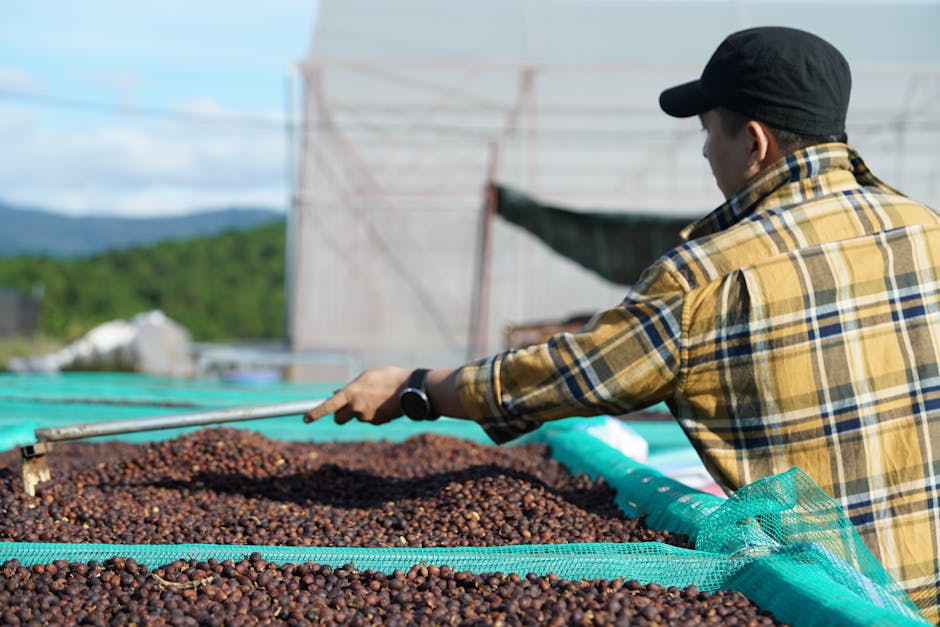
The Digital Awakening of Vietnam’s Coffee Heartland: How Local Farmers Are Partnering with Tech-Driven Supply Chains
Vietnam stands on the cusp of a profound transformation. Once known primarily as the world’s second-largest coffee grower, exporting vast volumes of raw Robusta beans, the nation is now powering into a new digital age. Facing unprecedented climate shocks, net-zero mandates, and increasingly demanding global markets, Vietnamese farmers—especially in the Central Highlands strongholds of Đắk Lắk, Lâm Đồng, and Gia Lai—are forging strategic partnerships with cutting-edge supply chain platforms. Their goal? To transcend raw exports, unlock new premiums, and cement Vietnam as a true value partner in the $240 billion global coffee industry.
The Landscape: From Production Giant to Tech Innovator
Vietnam’s Coffee Backbone. The Central Highlands, with its rich red basalt soils and unique microclimates, has nurtured a coffee empire: 710,000 hectares (ha) under cultivation, 92.4% of which lies in Đắk Lắk, Lâm Đồng, and Gia Lai. These provinces produce a staggering 95% of Vietnam’s coffee, anchoring a sector that exported $8.6 billion worth in 2025—a 52% year-over-year leap, as detailed by VietnamPlus Longform. Fueled by global Robusta demand for espresso and instant blends, 2026 crop forecasts surged to 1.8 million tonnes (about 31 million 60-kg bags), reinforcing Vietnam’s second-place rank just behind Brazil.
Climate and Market Crosswinds. But this success masks intensifying challenges: climate volatility, stricter EU/US import standards, aging farm infrastructure, and the urgent need for environmental stewardship. The launch of the Global Coffee Alliance (GCA) in Hanoi in March 2026 marked a watershed: a net-zero pledge by 2040, with every member farmer—no matter how small—included in the journey toward 100% regenerative agriculture. The stakes could hardly be higher for the 125 million “coffee citizens” worldwide.
Digital Disruption and the Rise of Tech-Driven Supply Chains
IoT, Blockchain, and Big Data at the Farm Gate. The digital wave sweeping Vietnamese coffee is not theoretical. “Smart Supply Chain” pilots in Lâm Đồng and Đắk Lắk have cut post-harvest storage costs by 15%, thanks to IoT sensors providing real-time soil and moisture data, while blockchain traceability is fast becoming a prerequisite for EU and US buyers. Digitalization, once seen as futuristic, is now vital for farmers seeking contracts and premiums.
Proof in the Numbers. With export revenues surging ($1.09 billion in January 2026 alone, up nearly 40%), tech investment is no longer optional. Industry leaders like the NESCAFÉ Plan—an alliance between Nestlé and MoARD, active since 2011—now partner with over 100,000 local farmers, offering high-yield varieties, training, and digital toolkits. Newcomers like the DQ Coffee Ecosystem further integrate sensor analytics and blockchain, weaving smallholders into transparent, data-rich chains (DQ Coffee).
From Volume to Value: The Tactical Shifts Redefining Vietnamese Coffee
Deep Processing and Domestic Powerhouses. The story is no longer just about exporting green beans. Chains such as Highlands Coffee and Phúc Long are driving the $1.2 billion domestic market, growing at 8-10% per year and now expanding across Southeast Asia. These brands increasingly source directly from tech-enabled farmers—rewarding quality, not just quantity—and even pilot franchise platforms to help smallholders roast and package semi-finished goods.
Premiums and Inclusive Growth. Digitally traced, specialty-grade Robusta now commands 20-50% premiums on world markets, and the best-positioned Central Highlands farmers are tapping into green finance and reforestation grants through the new GCA Sustainable Fund. The imperative is clear: those who digitize and partner win access to new, lucrative value chains; those who do not risk being left behind as standards rise and climate costs bite.
The Partnership Playbook: How Local Farmers Join Tech-Driven Value Chains
Step 1: Assess and Digitize
The journey begins with basic digitalization: installing IoT sensors for soil, moisture, and microclimate readings. In Đắk Lắk co-ops, pilots show that a $500-1,000/ha investment pays back through a 10-15% cut in waste, with data feeding directly into supply chain dashboards for buyers. For many, MoARD’s extension services and NESCAFÉ Plan training are the logical first steps.
Step 2: Certify for Sustainability and Traceability
With net-zero mandates looming, embracing regenerative techniques—like shade tree replanting and water protection—is now essential. Blockchain certification, provided by partner apps, builds trust with export buyers and accelerates the move into premium markets. The GCA fund, launched in 2026, offers targeted support and direct enrollment for smallholders.
Step 3: Contract and Connect
Armed with digital records and sustainability certificates, farmers can pitch to roasters and processors—such as Nestlé, Highlands, or Jollibee’s Vietnam division—for long-term supply pacts. These contracts, increasingly managed on digital platforms, offer shields against market volatility and encourage quality investments like fermentation tech, which can push exports toward the $9 billion mark.
Step 4: Scale with Deep Processing
A crucial evolution: moving from exporting raw beans to producing roasted and semi-finished products. E-commerce and domestic franchise tech platforms (for instance, those run by Highlands Coffee) open new markets, while big data analytics inform production and marketing decisions.
Step 5: Monitor, Adapt, and Advocate
Continual data monitoring ensures that productivity and costs remain in check, with leading farmers seeing a 10% production rise and 15% digital-driven cost reductions. Association membership (VICOFA, for example) keeps farmers plugged into policy changes and climate risk mitigation initiatives.
Comparative Perspectives: Modernization vs. Traditional Practices
Digitally Enabled Farmers are rapidly emerging as the new elite in Vietnamese coffee. Their adoption of IoT, blockchain, and big data not only streamlines operations and opens access to global markets but also unlocks significant premiums and climate finance—a holistic elevation of both economic and environmental status.
Traditional Farmers, conversely, remain vulnerable. With limited access to digital tools and information, many contend with higher costs, declining soil health, and mounting barriers to lucrative EU/US markets. While their deep experience and local knowledge remain assets, without digital integration, the gap risks widening—especially as climate and certification demands intensify.
Challenges and Barriers: Realities on the Ground
Access to Finance and Technology remains the most pervasive challenge, especially for the estimated 80% of smallholders who may lack capital for upfront investments. Fortunately, public-private partnerships—from the GCA Sustainable Fund to NESCAFÉ Plan subsidies—are specifically targeting these hurdles.
Rising Production Costs and Climate Risk are pushing the sector toward a tipping point. Projections suggest climate volatility alone could drive costs up by 20-30% over the next decade. Only those leveraging predictive analytics (IoT, big data) and securing long-term contracts will reliably weather these storms.
Strict New Standards from Western markets make blockchain-based traceability and sustainable certification not just advantageous but essential for ongoing market access.
“Vietnam’s coffee sector is crossing the Rubicon—from commodity supplier to global value partner. Those who embrace data, sustainability, and partnership today will harvest premiums, security, and global influence tomorrow. The future belongs to the digitally connected.”
— Industry Expert at the GCA Launch, Hanoi, March 2026
Case Study: Đắk Lắk—The Beating Heart of Smart Coffee
Đắk Lắk is more than Vietnam’s leading coffee province—it is the living laboratory for the country’s digital coffee revolution. Pilots here have demonstrated how IoT sensors, blockchain traceability, and franchise roasting tie farmers directly to both local giants and global buyers. With 50%+ of the country’s output and expanding anchor projects, Đắk Lắk is redefining what’s possible: from specialty Robusta exports commanding 20-50% higher prices to reforestation initiatives qualifying for green premiums and GCA grants.
As one local cooperative leader remarked, “Tech doesn’t replace tradition—it amplifies it, making every harvest smarter, cleaner, and more valuable.”
Forward-Thinking Insights: The Road to 2030 and Beyond
Net-Zero by 2040. The GCA’s net-zero commitment has placed Vietnam at the forefront of sustainable coffee, promising 100% regenerative agriculture—and ensuring no farmer is left behind—by 2040. This drive is underpinned by a new social compact: global partners, Vietnamese farmers, and tech providers co-investing in shared prosperity and climate resilience (VnEconomy).
The Value-Added Era is already materializing. With projections indicating production will grow 10% short term, but export value could soar from $8.6 billion in 2025 to $12 billion within a few years—if, and only if, deep integration into tech-driven supply chains occurs.
Strategic Recommendations for Decision Makers
Target the Central Highlands. With 95% of output concentrated here, Đắk Lắk, Lâm Đồng, and Gia Lai offer the lowest-hanging fruit for platform rollouts and value chain scaling. Digital investments of $1,000-$2,000/ha, supported by subsidies, have proven to lift incomes by up to 30%, cut waste by 15-20%, and deliver 10-15% export premiums through traceability.
Form Durable Partnerships. Relationships matter as much as technology. Multi-year contracts not only hedge against market shocks but also incentivize the farm-level improvements needed for specialty and sustainable certification. Consider blueprints like the NESCAFÉ Plan or GCA PPPs as models for scalable success.
Champion Inclusion. Any national strategy must ensure that smallholders are not left behind. The GCA’s commitment to “no farmer left behind” must translate into real-world inclusion, with targeted grant programs, digital literacy training, and shared infrastructure.
Scale Up Deep Processing. With just a 10% shift toward semi-finished and roasted exports, Vietnam could capture a significant share of the $1.2 billion domestic value market and expand its global influence as a purveyor of branded coffee excellence.
Conclusion: The Strategic Imperative—Vietnam’s Coffee Future Is Digital, Regenerative, and Global
Vietnam’s coffee sector is no longer merely a story of impressive scale; it is now a crucible for digital transformation, climate resilience, and value creation. For farmers in Đắk Lắk, Lâm Đồng, and Gia Lai, the message is clear: those who embrace technology, sustainability, and partnership will not only weather the storms ahead but emerge as leaders in a value-driven, net-zero world.
Strategic collaboration—across private actors, government, and farmer groups—will determine who thrives as the global coffee market reorders itself. With digital supply chains and regenerative practices, Vietnam is poised to move from “commodity powerhouse” to “value partner”—securing its legacy in the next great era of coffee.