
How Malaysian Coffee Brands Like ZUS And Luckin Are Using Digital Tools To Dominate Southeast Asia: Inside The Tech-Driven Expansion From Kuala Lumpur To Thailand
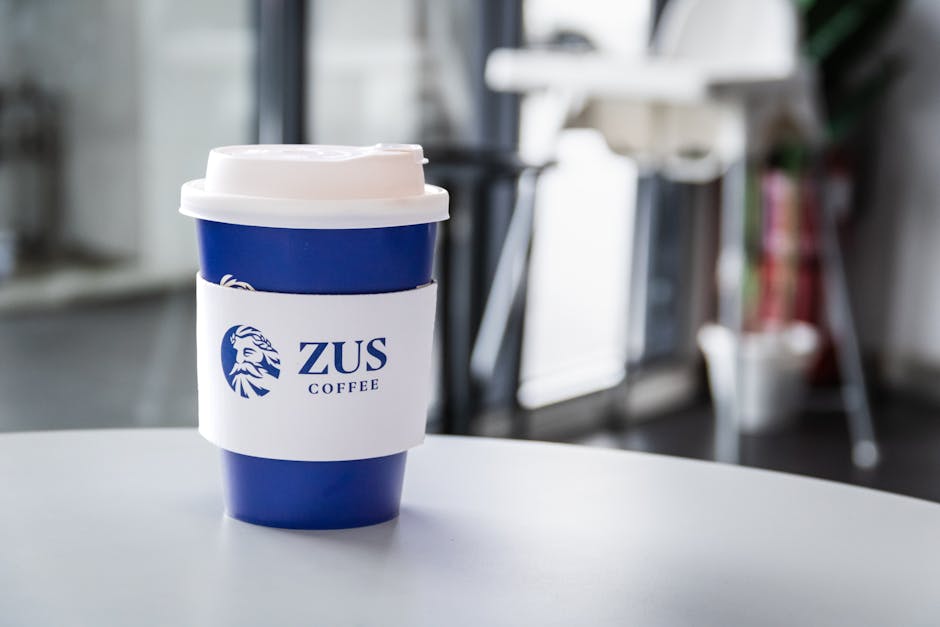
From Kopitiam to Code: How Malaysian Coffee Brands Built a Digital Playbook for Global Expansion
In the heart of Southeast Asia, a revolution is brewing in Malaysia’s coffee sector. Once defined by the humble “kopitiam”—traditional coffee houses rooted in local neighborhoods—the industry has catapulted into a new era of digital-first innovation. Today, homegrown Malaysian coffee brands are rewriting the playbook for global beverage growth, leveraging advanced technology, data-driven personalization, and incisive cultural localization to outmaneuver established Western giants. As younger, tech-savvy demographics fuel consumption and brands like ZUS Coffee and Luckin Coffee mark record expansions, Malaysia is fast becoming a blueprint for beverage disruption in emerging markets worldwide. This exposé unpacks the strategic framework and real-world implications behind this transformation—offering decision-makers a unique lens on the future of foodservice globalization.
The Malaysian Coffee Market: Where Tradition Meets Transformation
Once, coffee in Malaysia was a local affair, deeply embedded in the social fabric through traditional kopitiams. Over the past decade, however, rapid urbanization and rising middle-class affluence have redefined coffee as both a daily ritual and a lifestyle statement—especially among Millennials and Gen Z. With per-capita consumption alone forecasted to jump from 110 to over 140 cups annually by 2030, and market volume surging from 13.7 million kg in 2025 to 18.2 million kg by the decade’s end, the sector is experiencing an unprecedented transformation.
New entrants, new playbook. It’s not just the numbers that are changing—so is the competitive architecture. Brands like ZUS Coffee have overtaken international heavyweights in store count, reaching 743 outlets in Malaysia and outpacing Starbucks’ 320 (as of April 2026). Meanwhile, Chinese powerhouse Luckin Coffee stormed into the market in 2026, selling 5.42 million cups and posting RMB100 million in launch revenue—outperforming even its China debut. Such tectonic shifts are driven not by product innovation alone, but by the integration of localized technology, data science, and retail reinvention.
Digital-First DNA: Reinventing Revenue and Relationships
The “Super App” as Coffee Command Center
Gone are the days when a mobile app was just a digital menu or loyalty stamp card. For Malaysia’s rising coffee brands, the mobile app is the engine room of commerce and intelligence. Take Luckin Coffee: its “app-first” ordering system captures a trove of transactional, geolocation, and behavioral data. This data is then deployed by AI to fuel hyper-personalized offers, optimize inventory, and trigger geo-fenced flash sales that have driven revenue jumps up to 41.5% year-over-year.
ZUS Coffee follows a similar trajectory, blending retail and technology through a “New Retail” model—where enterprise communication tools like Lark ensure that operational excellence scales alongside outlet growth. Opening 30+ stores monthly while safeguarding quality is no accident; it’s the byproduct of robust digital infrastructure, real-time coordination, and transparency.
Data as Competitive Moat
Today, the most defensible edge is rooted in data architecture. Brands are no longer competing on sourcing or logistics alone, but on the sophistication of their first-party data, AI-driven personalization, and behavioral economics. By investing in these capabilities early, Malaysian players are outperforming incumbents who still rely on analog or siloed models—and are creating a virtuous cycle where richer data begets smarter growth decisions.
Loyalty 2.0: From Points to Platforms
Building financial ecosystems, not just punch cards. Malaysia’s coffee loyalty programs have evolved into “financial instruments” that span the entire household shopping journey. ZUS Coffee’s hybrid approach delivers café perks, supermarket rewards, and home-use credits through partnerships with major chains like Jaya Grocer and AEON. API-powered cross-redemption means buying a jar of instant coffee at the supermarket earns you café credits—and vice versa. This “insulation strategy” not only multiplies customer touchpoints, but also yields deep behavioral data, normalizing repeat transactions far beyond the traditional café setting.
Luckin’s “Luckin Card” operates in the same vein, further blurring the lines between at-home and on-premise consumption. These loyalty ecosystems embed brands so seamlessly into household routines that exiting the “coffee loop” becomes frictionless—and far less likely.
Regulatory and Cultural Localization: The Non-Negotiable Moat
Halal certification and hyper-local taste adaptation are not just boxes to tick, but core pillars of sustainable competitive advantage. International entrants have learned this the hard way: operating in Malaysia (and the wider region) means aligning with deep-rooted cultural, religious, and institutional expectations.
Luckin Coffee’s partnership with Bursa-listed Hextar Industries’ Global Aroma Sdn Bhd is a masterclass in institutional integration—achieving regulatory clarity and cultural resonance from the outset. Meanwhile, ZUS Coffee’s “local hero” status is multiplied through its visible commitment to job creation, local sourcing, and events such as Malaysia Brand Day 2026.
For business leaders, the lesson is clear: market entry “costs” are as much about cultural and regulatory alignment as about physical infrastructure. Those who relegate these factors to afterthoughts risk repeating the missteps of less attuned global brands.
Supermarket Integration and Household Penetration
From café counter to kitchen counter. The partnership model pioneered by ZUS Coffee and its peers with leading supermarket chains signals a strategic repositioning—from beverage retailer to lifestyle platform. By plugging loyalty programs directly into supermarket ecosystems via API, these brands secure a presence during household grocery runs, not just café visits.
This omnichannel approach unlocks two key benefits. First, it captures data on household purchase patterns that can inform future product development and marketing. Second, it slashes customer acquisition costs by piggybacking on supermarket foot traffic. It’s a far cry from the siloed, transactional days of single-channel retail.
Regional Expansion: Malaysia as Springboard, Southeast Asia as Testbed
Sequenced market entry, not shotgun expansion. Malaysia’s digital-first coffee champions treat Southeast Asia as a proving ground, carefully targeting markets where global chains like Starbucks remain “premium-positioned” and thinly spread. Thailand’s 2026 debut for ZUS Coffee (50 stores planned within the year) is a case in point: Starbucks’ limited presence there creates white space for mid-priced disruptors. The Philippines, with 190-200 outlets on the horizon, exhibits similar pre-disruption demographics.
In Singapore, Luckin hit 32 outlets in just one year; in neighboring Indonesia and Brunei, both brands are laying the groundwork for future launches. The logic is disciplined: each expansion is grounded in competitive gap analysis and demographic targeting—especially in countries with rising, smartphone-literate middle classes.
Comparative Insights: Malaysian Innovation vs. Global Incumbency
Not competing for the same customer. While Starbucks and Western chains maintain “luxury urban” positions—dominating high-income city centers—Malaysian brands are making a play for mass accessibility. By saturating middle-income neighborhoods and secondary cities, ZUS Coffee establishes itself as the de facto choice for Millennials and Gen Z.
Digital engagement trumps ambiance. Whereas a Starbucks visit may emphasize physical ambiance and consistency, Malaysia’s disruptors are winning via digital convenience: app-based ordering, gamified rewards, and hyper-localized messaging. Specialty cafés now post growth rates as high as 8–10% CAGR, driven by digital-native cohorts.
Cultural and regulatory moats are stickier than décor. Halal certification, local flavor innovation, and genuine community engagement are strategic insulators that Western chains cannot easily replicate. Embedding with local institutional partners (as Luckin did with Hextar) offers a speed and legitimacy advantage that standalone models simply cannot match.
“Competitive advantage in emerging markets is no longer about being first on the ground, but about building invisible moats through data, regulatory alliances, and cultural belonging before global incumbents scale their playbook.”
Operational Infrastructure: Scaling Without Breaking
Systems before sprawl. Rapid growth exposes the cracks in traditional operational models. ZUS Coffee’s 8,000-person regional team and its partnership with Lark, an enterprise communication platform, are vital for maintaining quality across 1,000+ stores. Real-time decision-making, transparent information flow, and seamless cross-store coordination are not luxuries—they are the new baseline for expansion-minded brands.
Forward-thinking leaders are investing in operational platforms before bottlenecks appear. Those who wait until after expansion often find themselves fighting fires that could have been avoided with proactive systematization.
Data-Driven Financial Innovation: The Revenue Model Evolves
Margin from prediction, not just product. Brand growth is no longer strictly proportional to supply chain efficiency or price optimization. The digital-first Malaysian model proves that behavioral prediction—driven by AI-personalized offers and time-sensitive promotions—can generate higher margins and stickier relationships than the old playbook of product markups.
Luckin’s global explosive growth (21,343 outlets, with 1,382 new in Q3 2024 alone) isn’t just a testament to scale, but to the compounding effects of intelligent data utilization.
Future Frontiers: Functional Beverages and AI-Infused Personalization
Health-tracking coffee and functional RTD beverages are the new arms race. As brands cement their place in household routines, they are layering on AI-enriched flavor profiles, wellness infusions, and limited-edition variants tailored to individual tastes.
This shift is not cosmetic, but strategic: as commodity coffee becomes ubiquitous, premiumizing through functionality and personalization defends against commoditization and margin erosion. Health-conscious consumers are willing to pay a premium for coffee that “does more”—and Malaysian brands are first movers in this emerging space.
Community-Centricity: Beyond Transactional Branding
From chain to champion. ZUS Coffee’s community-first philosophy—evident in local sourcing, job creation, and visible participation in citywide events—reframes what a “chain” can mean in the modern era. Instead of standardized sameness, the emphasis is on local resonance, impact, and cultural storytelling.
In a region where consumer loyalty is earned, not assumed, this approach is a bulwark against global consistency. It signals to international aspirants: “Standardization alone is no longer enough—winning hearts requires showing up locally.”
Key Benchmarks & Strategic Takeaways
- Malaysia coffee consumption (2025): 13.7 million kg; forecast (2030): 18.2 million kg
- Specialty café growth CAGR: 8–10%
- ZUS Coffee (Malaysia): 743 outlets; Starbucks: 320
- ZUS Southeast Asia team: 8,000+ staff, 1,000 outlets (2025)
- Luckin Coffee Malaysia launch: 5.42 million cups sold, RMB100 million revenue
- Revenue boost from geo-fenced flash sales: 41.5% YoY
- Regional expansion: Thailand (50 stores, 2026), Philippines (200), Singapore (32 in 1 year), Indonesia and Brunei next
Strategic Recommendations: A Roadmap for Decision-Makers
1. Prioritize data infrastructure and AI capability before rapid expansion—develop mobile apps and first-party data systems that capture behavioral insights, enable cross-channel engagement, and power individualized offers.
2. Integrate regulatory and cultural adaptation early in market entry planning—secure halal certification, local partnerships, and flavor customization as strategic, not cosmetic, moves.
3. Forge B2B and supermarket alliances to insulate against single-channel risk—API-driven loyalty integration and data sharing normalize household penetration and multiply customer touchpoints.
4. Sequence expansion by demographic and competitive analysis—target geographies with under-served, digitally literate consumers and thin global chain presence.
5. Build operational systems before scale exposes the cracks—adopt enterprise platforms for real-time, transparent, and coordinated growth.
The Malaysian Model: A Blueprint for Global Foodservice Disruption
Malaysia’s tech-driven coffee brands have turned their domestic market into a dynamic laboratory—testing and scaling innovations in digital commerce, community engagement, and regulatory alliances that will shape the next decade of global food and beverage competition. Their successes (and occasional stumbles) offer a replicable framework for business leaders seeking to expand in emerging markets: build digital moats, localize authentically, and embed into the fabric of household life.
As the sector matures, those who mistake coffee for a commodity—or who underestimate the power of hyperlocal adaptation—will be left behind. The frontier is not just in the cup; it’s in the code, the community, and the culture.
Conclusion: The Future Brews in Kuala Lumpur—And Beyond
Malaysian coffee brands are reshaping the definition of “competitive advantage” for the global beverage category. Their rise demonstrates that in fast-evolving markets, winning is less about first-mover status or international franchise muscle—and more about agile technology integration, deep data acumen, and authentic institutional relationships. As the world’s beverage battlegrounds shift south and east, the lessons of Kuala Lumpur will echo in boardrooms from Jakarta to Johannesburg.
Strategic imperative: Brands that act now to invest in digital architecture, community engagement, and regulatory fit will not only capture market share—they will redefine the very terms of the competition.