
How Singapores Post-2026 HDB Supply Boom Will Transform Private Rental Yields In Toa Payoh, Outram, Tampines & More
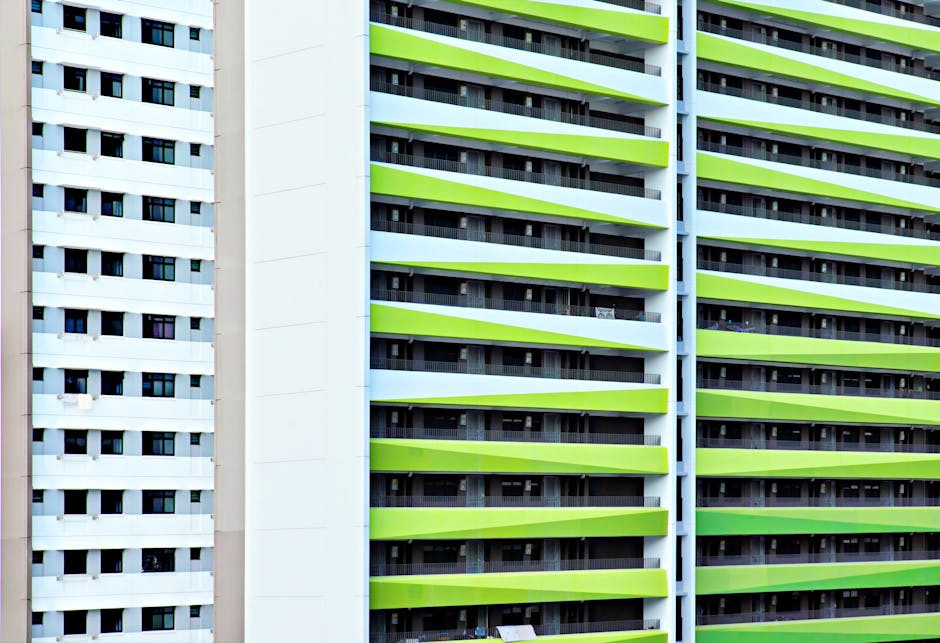
Singapore’s HDB Supply Surge Beyond 2026: The Tipping Point for Private Rental Markets
Singapore’s housing landscape is entering a pivotal era. For decades, the Housing & Development Board (HDB) has shaped urban living through subsidized flats, consistently balancing affordability, accessibility, and social cohesion. Yet, as the city-state grapples with shifting demographics, evolving family structures, and market volatility, the government’s aggressive post-2026 supply strategy is rewriting the rules—impacting not only residents, but also private landlords, developers, REIT managers, and investors watching for seismic shifts.
Set against the backdrop of moderating resale prices, rising urban density, and policy recalibrations, this exposé probes the real-world implications of Singapore’s massive HDB push. It connects statistical insights with strategic vision, revealing a story of resilience, risk, and reinvention. As the public sector intensifies its footprint and private rental dynamics recalibrate, we ask: What does the future hold for one of Asia’s most stable yet dynamic real estate markets?
Rethinking Urban Density: From 40 to 60 Storeys—and the Socioeconomic Ripple Effect
Historical Foundations and New Ambitions. HDB’s evolution—from low-rise blocks in the 1960s to today’s 40-storey towers—has been driven by Singapore’s land scarcity and population growth. The 2026 plan, however, signals an unprecedented leap: 60-storey BTO blocks, debuting at Pearl’s Hill in Outram, will offer 50% more flats per site than current norms. This shift isn’t just architectural; it’s a strategic gambit to maximize land, contain urban sprawl, and boost supply without sacrificing accessibility.
Scaling Supply to Meet Demand. With a baseline of 55,000 BTO flats for 2025-2027 and a projected 19,600 annual launches in 2026 and beyond, HDB is betting on volume as the antidote to market overheating. Construction innovations—including modular builds and fast-track projects—are targeting sub-3-year waits for more than 4,000 units each year. The pipeline now boasts 127 concurrent projects, a 15% year-on-year capacity boost, outpacing previous surges.
Targeting Diverse Demographics. The new paradigm is not just about families. With seniors and singles representing one in six households, the two-room flexi supply will rise by 50% from 2026-2028. This inclusivity drives retention within public housing—curbing spillover demand for private rentals, especially in small-unit condos. The segmentation into Standard, Plus, and Prime BTOs ensures affordability across the S$0-14,000 monthly income range, enhancing social mobility without inflating competition for private stock.
Market Moderation: The Cooling Effect of Robust Public Supply
Resale Prices as the Leading Indicator. The HDB resale market is cooling, marked by a 0.1% decline as of mid-February 2026—a stark contrast to 2.9% growth in 2025 and explosive gains in 2021. Four rounds of cooling measures and expanded supply anchor this moderation. While million-dollar flats retain allure, overall price momentum has flattened, mirrored by subdued growth in private residential prices.
MOP Wave and Its Implications. Completion of 19,600 BTO flats in 2025 (median 4-year wait) initiates a massive influx into the resale ecosystem in 2026—the “MOP” (Minimum Occupation Period) effect. This flood amplifies price stabilization, reduces speculative upgrades, and dampens demand for private rentals at the entry-to-mid tier. Application rates for first-timers have dropped, but the surge in non-family applicants has prompted flexi flat increases, signaling shifting household preferences.
Data-Driven Forecasts. Analytics reveal that HDB supply’s price-dampening effect is directly relevant for rental yield forecasts. As supply scales, rental vacancy rates are expected to rise by 1-2% in mass and premium segments, with yields compressing 0.5-1%. Geographic analysis shows mature estates (Toa Payoh, Ang Mo Kio) vulnerable to rental premium dips of 5-10%, while non-mature towns (Sembawang, Yishun, Tampines, Woodlands) see entry-level yields drop towards 3-3.5%.
Private Rental Market Dynamics: The Power of Retention and Spillover Suppression
Fast-Track Retention. The promise of sub-3-year BTO waits—backed by over 4,000 fast-track units—effectively cuts the “waiting pain” that has historically pushed residents towards interim private rentals. Improved application success rates (projected 1-2x) further boost retention, reducing churn and stabilizing occupancy within public housing.
Senior/Single Segmentation. With the flexi two-room supply rising by 50%, the needs of 1-in-6 single households are addressed more directly. This strategy reduces small-unit private demand (1-2 bed condos), freeing up private stock for higher-income tenants or foreigners.
Resale Moderation and Geographic Balance. The HDB price signals (“flat/slight decline”), combined with targeted supply injections (Caldecott BTO in Toa Payoh, tall builds in Outram), ensure that rental pressure in adjacent private enclaves is eased. Regional breakdowns show city fringe rents softening (2-bed condos: S$4,500-6,000/month), while yields in non-mature towns stabilize at lower levels.
Quantitative Impact. Historically, HDB spillover comprised around 10% of demand in the private rental space. With post-2026 supply growth, this drops to 5%, translating to approximately 15,000 fewer private rental seekers from the 55,000 flat pipeline. This reduces rental market competition, moderates rents by 2-4% in the mass segment, and increases vacancy rates.
Policy Catalysts: Conditional Liberalization and Its Risks/Rewards
Policy Reviews on the Horizon. Minister Chee Hong Tat’s announced expansions are tied to a series of policy reviews: raising income ceilings, lowering singles’ eligibility age, and possibly lifting the 15-month private-to-HDB wait. Implementation hinges on post-supply stability. If realized, these shifts could increase HDB applicants by 10-20%, but flexi capacity buffers the impact.
VERS and Tall Build Frameworks. The Vacated En Bloc Resale Sites (VERS) framework, piloted in Pearl’s Hill, lays the groundwork for future urban renewal and densification. As these policies scale across the early 2030s, they will further integrate public and private sectors, shaping a hybrid urban fabric.
Rental Outlook Under Liberalization. Should policy liberalization occur, HDB inflow accelerates and private rental demand contracts by 5-15%—especially in 2027-2028. This creates risks (higher vacancy) and opportunities (repositioning of private rental stock to premium segments).
Strategic Recommendations for Investors, Developers, and REIT Managers
Premium Segment Prioritization. High-income tenants (>S$14k/month) remain immune to HDB supply shifts; developers and investors should pivot towards Orchard and CBD condos with stable yields (2.5-3%).
Non-Mature Arbitrage Opportunity. Pre-2027 investment in towns like Sembawang and Yishun offers arbitrage as HDB supply lags in premium private tiers; expect rent holds of +3-5% CAGR.
MOP Resale Wave Strategies. The 2026 MOP wave undervalues HDB-adjacent private properties—creating short-term flipping opportunities post-stabilization.
Geographic Diversification for REITs. Fund managers should diversify portfolios, targeting 40% exposure to non-mature districts, and avoid oversupply risk in mature estates (e.g., Toa Payoh, -10% rent risk).
| Strategy | Target Metric | Projected ROI Impact | Risk Level |
|---|---|---|---|
| Premium Shift | >S$6k rents | +1-2% yield stability | Low |
| Non-Mature Buy | 3-3.5% yields | +5% appreciation | Medium |
| MOP Arbitrage | Resale flats | 8-12% short-term | High (policy) |
Risk Mitigation Practices. Tactical responses include monitoring Q2 2026 BTO application ratios (demand persistence signals rental upside), tracking policy reviews for liberalization (potential vacancy spikes), and investing in capacity flex (HDB’s 10-20% annual scale-up ensures sustained pressure on private markets).
Emerging Patterns and Tactical Shifts: Real-World Implications
Demographic Realignment. The shift towards smaller households, aging populations, and singles is more than a trend—it’s a structural transformation. By expanding flexi-flat supply, HDB not only meets immediate needs but also engineers long-term demand retention, increasingly locking residents into subsidized housing.
Urban Renewal Through Tall Builds. The Pearl’s Hill 60-storey prototype isn’t merely about height—it’s about setting a replicable standard for land efficiency. As tall builds proliferate in the early 2030s, Singapore’s skyline will reflect both density and inclusivity, signaling to developers the necessity to rethink premium offerings.
Rental Market Segmentation. With HDB absorbing low/mid-income groups, private rental markets must pivot towards premium tenants—expats, high earners, and hybrid demand near urban renewal sites. This creates a bifurcated rental landscape, where mass-market yields compress but luxury segments retain stability.
Comparative Perspectives: Old Versus New Viewers
Legacy View: Private Dominance. Historically, private rentals thrived on HDB’s supply limitations, catering to families in waiting, singles without eligibility, or those priced out by subsidized quotas. Investors banked on persistent spillover—riding the waves of urban scarcity.
New View: Public Sector as Stabilizer. Today’s market narrative is radically different. HDB’s scale, speed, and segmentation dampen price volatility, compress yields, and mitigate vacancy risk for all but the premium private tiers. For newcomers, the opportunity lies not in chasing yield, but in anticipating demographic-driven equilibrium, urban renewal, and policy shifts.
Market Competitor Analysis. Private launches face intensified headwinds—oversupply, HDB affordability, and shrinking speculative demand. Yet, by partnering with HDB-adjacent enclaves or innovating hybrid developments for residual demand, developers can carve out viable niches.
Forward-Looking Insights: The Crossroads of Policy, Supply, and Market Equilibrium
“Singapore’s post-2026 HDB expansion is more than a supply intervention; it’s a strategic recalibration that stabilizes private rental markets, fosters demographic resilience, and ensures urban sustainability. The future belongs to those who anticipate the equilibrium—and invest not just in assets, but in adaptive, inclusive communities.”
Long-Term Outlook (2026-2030). The combined effect of 127 projects, tall builds, and flexi segmentation is a sustainable equilibrium: prices flat, wait times under four years, and application ratios stabilizing at 1-2x. Urban renewal integrates private and public domains, while HDB’s dominance caps rental growth at 2-3% annually.
Condo Oversupply and HDB Buffer. Market whispers of a 2026 crash in private condo prices highlight the buffer value of HDB’s calibrated expansion. By anchoring lower-income groups and absorbing demographic shifts, HDB creates a soft landing zone for the broader market.
Key Metrics Dashboard. Strategic decisions will hinge on tracking supply growth (15% project increase, 50% flexi growth), price signals (HDB resale -0.1%, flat private rents), and rental metrics (vacancy +1-2%, yields 3-3.5% mass, 2.5% premium). Deployment of capital should be responsive to BTO application ratios—hold at >2x, deploy at <1.5x.
Conclusion: HDB’s Calibrated Expansion—The New Standard for Singapore Real Estate
Singapore’s post-2026 HDB supply strategy is more than a technical solution to housing shortages—it sets a new standard for real estate equilibrium. By combining volume, speed, and targeted segmentation, HDB has redefined the competitive landscape, positioning itself not as a disruptor, but as a stabilizer of private rental markets.
Data-driven scenarios and policy catalysts point towards a future where urban density, demographic diversity, and affordability coalesce. The implications for business leaders are profound: those who adapt portfolios, anticipate policy shifts, and invest in premium or hybrid niches will thrive.
Ultimately, Singapore’s housing future is one where public and private sectors are interlocked in a dance of equilibrium. For stakeholders across the spectrum—from investors to policymakers—the call to action is clear: Embrace the new rhythm, harness the stabilizing forces, and build for resilience. The story is not just about flats and rentals—it’s about shaping communities, cities, and a sustainable urban future.
For further detailed insights and ongoing policy updates, readers can consult authoritative sources such as Business Times coverage, Maxthon’s BTO case studies, and Straits Times outlooks.