
How Starbucks AI-Driven Deep Brew Personalization Outpaces McDonalds And Competitors: Key Metrics & Strategies For Business Growth (2025-2026)
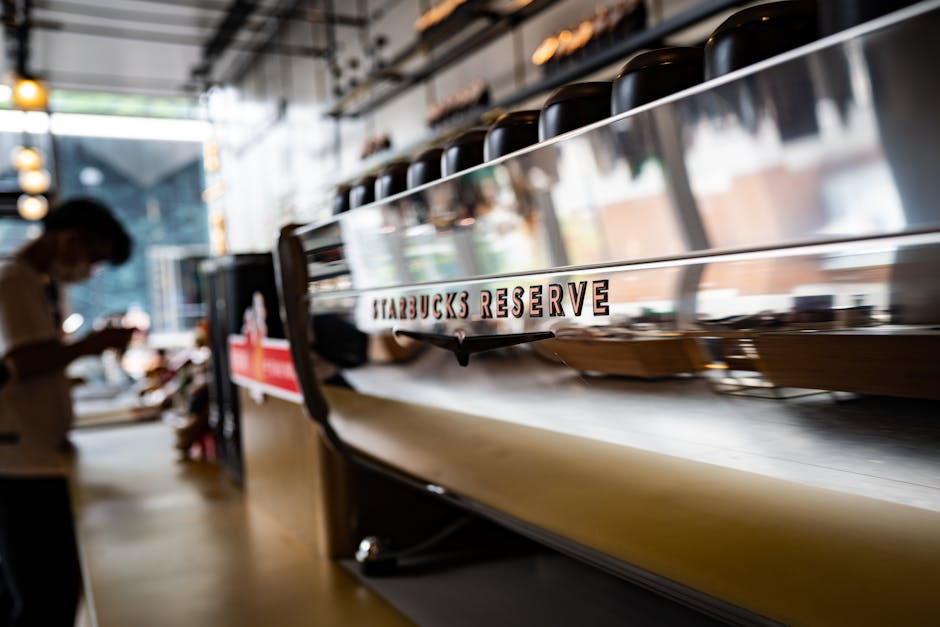
The Starbucks AI Revolution: Deep Brew’s Playbook and the Future of Predictive Personalization in Food Service
Coffee is no longer simply an indulgence—it’s a ritual, an identity, and, increasingly, a data-driven opportunity. In the global race to capture customer loyalty and operational mastery, Starbucks has emerged as the orchestrator of a profound AI strategy, one that redefines what it means to “know the customer.” As artificial intelligence personalizes and optimizes everything from digital menus to barista workflows, Starbucks’ proprietary platform—Deep Brew—serves as both engine and playbook, nudging the industry toward a future where predictive engagement is the ultimate competitive moat.
From Loyalty to Loyalty Flywheel: The Decade-Long Data Advantage
Starbucks’ Data Legacy: In a sector where many players have only recently embraced digital rewards or customer analytics, Starbucks stands apart with its decade-old Rewards program. This isn’t just a point-earning scheme—over ten years, it has built a robust, first-party dataset enabling one-to-one personalization at a scale competitors can only envy. Every mobile order, app interaction, in-store visit, and seasonal preference feeds the Deep Brew platform, teaching it not just what customers buy, but when, how, and why.
Network Effects in Action: With over 35,000 stores worldwide and hundreds of millions of weekly interactions, Deep Brew leverages data as a flywheel. Each recommendation or personalized nudge refines the algorithm, generating feedback loops that accelerate the model’s learning and deepen customer relationships.
[Source]
Deep Brew: The “Full-Stack” AI Operating System
Vertically Integrated Personalization: Unlike the bolt-on solutions common among competitors, Starbucks’ Deep Brew is embedded across every layer of its operations, from marketing and product development to supply chain and labor management. This allows for holistic, predictive personalization—think offers for pumpkin spice lattes timed to caramel macchiato fans’ typical morning orders, or dynamically adjusting store menus based on real-time inventory and weather.
Omnichannel Impact: The effect is tangible: in Deep Brew-heavy locations, Starbucks reports a 12% average increase in ticket size and a 4% rise in same-store sales. Notably, this growth is not the result of blanket discounts or campaigns, but of individualized, context-aware suggestions that increase “food attachment” (upselling) by 7% without sacrificing the brand’s premium positioning.
[Source]
Green Dot Assist: Augmenting the Human Barista
Human-AI Synergy: While many fear AI as a job replacer, Starbucks demonstrates the power of human augmentation. The Green Dot Assist system, powered by large language models, is deployed directly to baristas via headsets and point-of-sale systems. Whether guiding a new staff member through complex recipes, ensuring allergen compliance, or localizing menus for regional preferences, Green Dot reduces errors and enhances the experiential premium customers expect.
Real-World Efficiency: Early case studies from 2025 cite measurable improvements in order accuracy and labor efficiency, particularly in high-volume or regionally diverse markets.
[Source]
Personalization in Practice: Recommendations, Menus, and Loyalty
App and In-Store Personalization: Deep Brew’s reach extends from your mobile screen to in-store digital menus. Customers are greeted not with generic promotions, but with contextually relevant suggestions—seasonal drinks for habitual buyers, breakfast add-ons for morning regulars, and regionally adapted options based on local events or inventory.
Loyalty Embedded in Routines: These experiences do more than drive orders; they embed Starbucks into daily routines, strengthening the loyalty flywheel and ensuring that data keeps compounding in value.
[Source]
Competitive Landscape: Cohorts, Fragmentation, and the Starbucks Edge
How Others Compete:
- McDonald’s leverages Dynamic Yield and Google Cloud for real-time drive-thru recommendations, but is constrained by newer cohort-based data and a growing (but still young) loyalty base. Their approach optimizes for operational context—weather, time, traffic—rather than individual history.
- Wendy’s utilizes loyalty analytics for upselling, focusing on repeat visits via in-app marketing, but lacks the depth and integration seen at Starbucks.
- Dunkin’ relies on outsourced, marketing-centric tools like HubKonnect and suffers from fragmented, franchise-led data, which limits both personalization and adaptation to nuanced local preferences.
Key Differentiator: While others patch together vendor solutions and chase broad operational gains, Starbucks’ proprietary system is a true “full-stack OS,” generating defensible moats through network effects, a mature 1-to-1 data model, and integrated operational insights.
[Source]
Table: AI Platform Comparison Across QSR Leaders
Dimension Starbucks McDonald's Wendy's Dunkin' Core AI Platform Proprietary Deep Brew Dynamic Yield + Google Cloud In-house loyalty analytics Outsourced (HubKonnect) Data Source 10+ years 1-to-1 Rewards history Newer loyalty, ops data Loyalty program Fragmented franchise Personalization Model Predictive, 1-to-1 Cohort/contextual In-app upsell Localized, reactive Outcome Metrics +12% ticket, +4% sales Drive-thru optimization Sales/loyalty (qualitative) Branch-level ads Scope Customer+Ops (full-stack) Operations-heavy Loyalty-driven Reactive marketing
Regionalization and the Power of Local Data
Tailoring the Experience by Market: Starbucks applies Deep Brew not as a monolith, but as a shape-shifting system that incorporates local preferences, cultural events, and regulatory nuances for each market. Whether supporting premium positioning in dense, high-growth urban locales, deploying sustainability-focused inventory models in emerging markets, or accelerating loyalty and app engagement in mature regions, Deep Brew processes regional data to optimize every segment.
Competitor Gaps: By contrast, McDonald’s cohort models cannot match Starbucks’ local nuance, and Dunkin’s fragmented systems further impede adaptation.
[Source]
Measuring What Matters: Key Performance Indicators and ROI
The Numbers Tell the Story:
- 12% increase in average ticket size from predictive recommendations.
- 4% rise in same-store sales in pilot programs, with projections for further growth.
- 7% lift in “food attachment” (upsells) through personalized offers.
- Documented reductions in labor errors and improved operational efficiency via Green Dot Assist.
[Source]
Emerging Patterns and Tactical Shifts
The Industry Is Watching: Starbucks’ success with Deep Brew has recalibrated expectations in the quick-service and coffeehouse sectors. Rivals now face pressure to invest in not just AI tools, but in proprietary, vertically integrated, and regionally intelligent platforms that can drive both customer and operational value.
From Reactive to Predictive: The sector is shifting from reactive analytics—responding after the customer acts—to predictive engagement, anticipating needs down to individual routines, micro-segments, or even moments of the day.
AI as an Ecosystem Asset: As generative models and licensing opportunities emerge, leaders like Starbucks are positioned not only as operators, but as technology vendors, offering AI-as-a-service to franchisees, partners, and potentially, competitors.
“Those who build proprietary data flywheels today will own the customer relationship—and margins—of tomorrow. Predictive personalization isn’t just an upsell tactic; it’s the competitive infrastructure for a new era of food service.”
— Starbucks AI Strategy Analysis, 2026
Challenges and Considerations: The Road Ahead
Data Privacy and Trust: As regulatory scrutiny intensifies, especially in regions with strict data protection laws, maintaining transparency and customer trust around data usage will be paramount.
App Dependency vs. In-Store Equity: The risk of over-indexing on digital engagement—potentially alienating non-app or infrequent in-store customers—must be balanced by ensuring that AI-powered personalization enhances, rather than replaces, the human experience.
Scaling and License Play: The question for Starbucks and its peers will be whether cutting-edge AI platforms remain a proprietary moat or become a licensable asset, opening new models for monetization and ecosystem growth.
Recommendations: Playbook for Decision Makers
Build, Don’t Buy (Yet): Decision-makers are advised to invest in integrated, proprietary AI systems rather than relying solely on vendor solutions, targeting at least a 10% uplift in ticket size as a benchmark for success.
Data Maturity Is Everything: Cultivate and protect first-party, longitudinal data—ideally through robust loyalty programs—aiming for a 10-year horizon to enable meaningful predictive insights.
Relentless Regionalization: Use AI to micro-segment and adapt to local preferences, supporting dynamic pricing, menu innovation, and sustainability.
Human-AI Partnership: Deploy tools like Green Dot not as replacements, but as supports for staff, measuring improvements in both efficiency and customer experience.
Ecosystem and ESG Leverage: Explore AI licensing for partners and double down on environmental, social, and governance (ESG) goals through smarter inventory and energy optimization.
Conclusion: The Future of Predictive Personalization—Starbucks Sets the Standard
We are witnessing the emergence of a new strategic imperative in quick-service hospitality: become a predictive, adaptive, and experience-driven enterprise or risk irrelevance. Starbucks’ Deep Brew is not merely a technology—it is a philosophy, operationalized at a scale that creates both defensible competitive moats and new business avenues. As rivals scramble to assemble similar capabilities, the gap will remain for those who lack the data, integration, or customer-centric vision to compete.
The call to action for business leaders is clear: Proprietary, vertically integrated AI is now table stakes. The brands that combine data flywheels, regional intelligence, and human-AI synergy will not only drive higher tickets and margins but redefine the very meaning of customer loyalty in the AI era.
As the market hurtles toward 2026 and beyond, Starbucks’ model foretells a landscape where the coffee you’re offered tomorrow isn’t just a function of what’s in stock or what’s trending—it’s a precise, predictive answer to who you are, what you value, and what you’re likely to crave next.
For those ready to invest in this future, the reward is nothing less than category leadership—and a seat at the table where customer relationships, and revenue, are continually reimagined.