
How Starbucks Can Win Emerging Asian Markets: AI-Driven Personalization, Deep Brew Strategy, And Local Partnerships For Explosive Growth
Brewing the Future: How Starbucks’ AI Personalization Revolution Is Transforming Coffee Culture in Emerging Asia
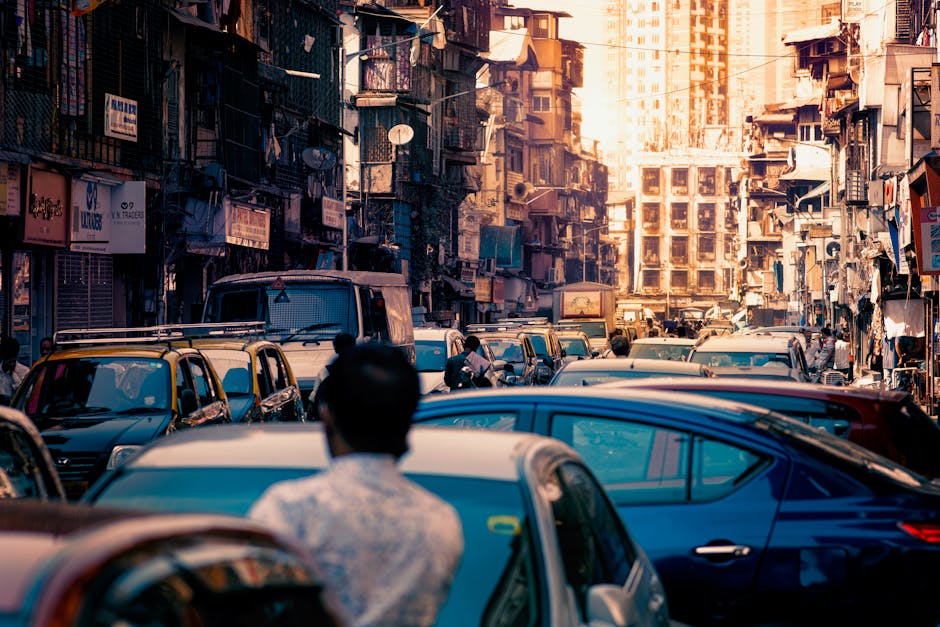
In the bustling cities of Mumbai, the chaotic streets of Jakarta, the vibrant lanes of Ho Chi Minh City, and the digital playgrounds of Manila, a new battleground is emerging for the world’s most coveted coffeehouse. Starbucks, the global icon synonymous with premium coffee, is now waging a high-stakes campaign to win over a billion new digital-first consumers in Asia. At the heart of this campaign lies an ambitious bet: leveraging the “Deep Brew” artificial intelligence (AI) engine to hyper-personalize every aspect of the Starbucks experience—menu, service, rewards, and even store design—at a level never before seen in global food retail.
But this is more than a tech upgrade; it is a radical reimagining of the coffeehouse as an AI-powered, hyper-localized platform. As Starbucks executes this strategy, it faces not only technological hurdles but intense price competition, diverse local tastes, and the evolving demands of Asia’s digitally native youth. This exposé unpacks how Starbucks is deploying next-generation AI to seize market leadership in India, Vietnam, Indonesia, and the Philippines, and why this approach is set to redefine customer experience—and market power—across emerging Asia.
AI Personalization on a Global Scale: From Deep Brew to Digital Flywheel
Deep Brew: Starbucks’ Secret Weapon. Launched as a cornerstone of digital transformation, Starbucks’ Deep Brew AI engine sifts through millions of data points—from loyalty app interactions and online locations to granular order histories. By 2025, Deep Brew forms the brain of the company’s “Digital Flywheel,” orchestrating over 30 million digital connections and delivering tailored experiences such as real-time menu suggestions based on weather, push notifications for a customer’s favorite seasonal drink, and even dynamic drive-thru menus that update based on local events.
China as a Living Laboratory. Nowhere has this strategy been tested more rigorously than China, Starbucks’ crown jewel in Asia, where the company operates 7,828 stores as of mid-2025. Here, Deep Brew integrates seamlessly with local super-apps like WeChat and Alipay, enabling predictive ordering, mobile gifting, and location-based promotions via Amap. Over 20 million digital customer engagements—matching the population of a small country—are driven annually, helping Starbucks turn back aggressive competition from disruptors like Luckin Coffee.
Why Asia’s Emerging Markets Are the Next Frontier
Untapped Opportunity at Massive Scale. While the digital sophistication of Starbucks’ China operation sets a high bar, the company’s penetration of emerging neighbors—India, Vietnam, Indonesia, and the Philippines—remains in early innings. Yet, the stakes are enormous: Collectively, these markets represent more than 1.8 billion people, surging digital adoption, and coffee sectors growing at 8–12% annually.
- India: Coffee culture is still nascent, but with urban millennials numbering over 400 million, digital payments like UPI enjoying 90% penetration, and a total market projected at $1.5 billion by 2028, the upside is compelling.
- Vietnam: As the world’s second-largest coffee producer, Vietnam boasts over 500 Starbucks locations and a homegrown café scene. Yet, smartphone penetration (70%) and fast-growing digital wallets (e.g., MoMo, ZaloPay) make AI-driven personalization an attractive lever.
- Indonesia and the Philippines: Home to massive youth populations and rapid urbanization, these archipelagos show annual coffee spend growth of 8–9%, with mobile payment systems (GoPay, GCash) and tech-forward consumers primed for digital engagement.
How Starbucks’ AI Playbook Is Crafted for Local Realities
Hyper-Localization as Differentiator. Unlike its legacy in Western markets, Starbucks’ approach in emerging Asia is radically local. Deep Brew is not just translating the Starbucks app—it is being rebuilt for each market’s unique digital infrastructure, payment systems, and flavor preferences.
India’s Urban Expansion. In India, Deep Brew analyzes not only Starbucks’ own app and Rewards data but also external platforms such as Jio and Reliance, surfacing localized favorites like masala chai lattes or cold brews—blending American coffee culture with Indian tradition. Integration with hyper-popular payment apps Paytm and PhonePe aims to replicate the digital engagement seen in China, with a goal of reaching 5 million app users within the first year.
Vietnam’s Café Culture. In Vietnam, where robusta phin coffee and coconut brews reign, Deep Brew ingests real-time data from ZaloPay and MoMo to tailor predictions—such as pushing coconut coffee recommendations based on time of day or urban traffic patterns. This not only boosts loyalty in a fiercely competitive café scene but shortens wait times in Ho Chi Minh City’s notorious traffic.
Indonesia and the Quest for Halal. In the world’s largest Muslim-majority nation, Deep Brew accounts for halal preferences and local rituals. By tracking proximity to mosques during Ramadan, Starbucks can send timely iftar specials and recommend regional favorites like gula melaka lattes, all through local apps like GoPay and OVO.
Innovative Practices: The AI-Powered Store of Tomorrow
From Menu Innovation to Operational Efficiency. Starbucks’ AI transformation is not limited to apps. In 2025, the company began piloting “Green Dot Assist,” an AI virtual barista built on Microsoft’s Azure OpenAI, in select North American stores—reducing service times to four minutes and boosting order accuracy by 15%. The next phase? Deploying this tech in 20 flagship stores per market across Asia, serving as a showcase for what a frictionless, data-driven café can become.
Dynamic Store Layouts and Inventory. Deep Brew doesn’t just stop at customer personalization. AI-powered analytics optimize store layouts by analyzing foot traffic, adjust staffing levels dynamically, and even predict inventory needs based on sales cycles and local events. In regions like the Philippines, where urban density and social media adoption are sky-high, these efficiencies translate to more than just cost savings—they create viral customer experiences and a true sense of local relevance.
Comparative Insights: East vs. West vs. Emerging Asia
China’s Blueprint vs. Western Conservatism. China stands as the gold standard for Starbucks’ AI personalization. Integration with all-encompassing super-apps, rapid menu localization, and high-frequency digital engagement (20 million digital users) have powered 8% quarterly revenue growth despite market disruptions.
In contrast, the US and Japan/South Korea focus on speed and convenience (predictive ordering, local payment integration), while Europe lags due to stricter data privacy regulations and a culture of slow adoption. Emerging Asia straddles these worlds: it offers the openness and digital savvy of China, the youth-fueled demand of the US, and the cultural specificity of Europe—all in one. The challenge for Starbucks is to move fast, localize deeply, and comply with a patchwork of data privacy norms such as India’s DPDP Act and Indonesia’s PDP 2022.
Competitors: Local Chains and Digital Disruptors. In each market, aggressive local chains threaten to box out Starbucks with low prices and homegrown flavors. Yet, as witnessed in China’s Luckin Coffee saga, AI-driven premium personalization is proving a more defensible moat than scale or price alone. Starbucks’ goal is not to undercut on price, but to drive 20–30% higher ticket sizes and 20% greater retention by making every visit—and every digital interaction—feel tailor-made.
Phased Action Plan: Turning AI Vision into Asian Reality
Phase 1: Laying the Digital Foundation (Months 1–6). Starbucks invests $50 million per market to deploy the Deep Brew core engine, integrate with local payment APIs, and pilot Green Dot Assist in 20 flagship stores. Early focus is on menu localization—testing 10–15 new items adapted to local palates—and driving 10% app download growth alongside a 15% improvement in order accuracy.
Phase 2: Lighting Up Personalization Engines (Months 7–12). The next wave unleashes predictive ordering and dynamic marketing, such as sending push notifications for a mango float frappuccino during Manila’s hottest days or rain-inspired cold brews in Mumbai’s monsoon. Loyalty features like “My Starbucks Barista” remember repeat preferences, and dynamic menu boards in drive-thrus personalize offers based on time, location, and purchase history.
Phase 3: Scale and Optimization (Months 13–24). The final stage scales winning innovations, opening 500 new stores per market—including smaller, AI-optimized locations in Tier-2/3 cities—and forging local partnerships (e.g., Tata in India, VinGroup in Vietnam) for operational excellence. Expansion into AI-driven inventory and staffing delivers anticipated cost reductions of 10–15%, paving the way for 8–10% year-over-year revenue growth and a 25% market share gain over local competitors.
Comparative Matrix: Key Metrics and Market Potential
| Market | Stores (2025) | Coffee Market Size / CAGR | Digital Payments Penetration | Signature AI Opportunity |
|---|---|---|---|---|
| India | 400+ | $1.2B / 12% | 90% (UPI) | Tier-2 personalization, chai blends |
| Vietnam | 500+ | $800M / 10% | 70% (MoMo) | Predictive robusta orders |
| Indonesia | 100+ | $500M / 8% | 65% (GoPay) | Halal, regional flavors |
| Philippines | 100+ | $400M / 9% | 75% (GCash) | Youth gifting, fruit fusions |
| China (Benchmark) | 7,828 | $10B+ / 5% | 95% (WeChat) | 20M digital users, 8% QoQ growth |
From Digital Engagement to Financial Impact: ROI Projections
Putting Numbers on the Vision. Starbucks anticipates that, following the full deployment of Deep Brew and related AI tools, each market will see digital user numbers jump from 1–2 million to 10 million, retention rates climb from 40% to 60%, and revenue growth more than double (from 5% to 12–15% annualized). Store counts are projected to multiply at least twofold, with an eventual regional footprint of 15,000–20,000 stores—mirroring the scale and profitability now seen in China.
AI as a Growth and Efficiency Engine. Beyond headline growth, AI unlocks operational savings of 10–15% through more efficient inventory management, demand-driven staffing, and smarter marketing allocation. Capital expenditures of $200 million are partially offset by strategic local stake sales, modeled after Starbucks' China playbook, potentially yielding a $500 million valuation uplift across the region.
Risks, Regulatory Hurdles, and Mitigation Tactics
Competition and Price Sensitivity. Local chains and digital disruptors remain formidable; the Starbucks approach is to transform personalization from a feature into a value proposition—commanding a 20% premium ticket and higher loyalty.
Data Privacy and Compliance. With each market operating under its own data protection regime (such as India’s DPDP Act 2023 and Indonesia’s PDP 2022), Starbucks builds in GDPR-style consent frameworks and localizes data storage as needed.
Cultural Fit and Menu Innovation. The path to success is paved with agility: Starbucks’ AI pilots test over 50 menu variants per market, discarding underperformers quickly and scaling hyper-local hits.
Execution. The importance of talent localization is not lost—a minimum of 500 local data scientists and engineers will be onboarded and trained on Deep Brew to ensure the strategy is led by local insight.
Strategic Alliances, Technology, and Local Stakeholders
Platform and Cloud Stack. The digital muscle is powered by Deep Brew and Microsoft Azure OpenAI, but the secret sauce is seamless integration with local partners—Tata Alliance (India), Vinamilk/Highlands Coffee (Vietnam), Alami Group (Indonesia), and Ayala Corp (Philippines).
Data and Intelligence. Real-time analytics from app engagement, Nielsen, and local census sources are used to dynamically adjust products, pricing, and store footprints. Starbucks also closely tracks digital competitor activity—analyzing rivals like Luckin Coffee in China via platforms such as SimilarWeb—to anticipate and counter new trends.
Funding Models and Value Creation. With $200 million earmarked for this digital acceleration, much of the risk is mitigated by selling 20–30% minority stakes to local operators—a move that has already produced impressive returns in China.
A New Vision for Customer Experience—And Market Leadership
“Personalization at scale will not only win loyalty but redefine what it means to be a global brand in a local market. In Asia’s emerging economies, where every order is both an expression of identity and a data point, the company that unites AI with cultural soul will own the future of food retail.”
Conclusion: Brewing Asia’s Next Billion-dollar Opportunity
Starbucks’ AI-driven personalization blitz in emerging Asia is more than a play for digital engagement—it is a master class in adapting global strategy to local reality. By localizing menu offerings, payment integrations, and customer experiences, Starbucks is poised to leapfrog market entrants and entrench itself as the premium choice, even in price-driven economies.
The numbers tell the story: If executed at scale, this blueprint—rooted in real-time data, local alliances, and relentless experimentation—can add more than $5 billion in annual revenue by 2030 and cement Starbucks’ position atop the Asian foodservice hierarchy.
The lesson for other global consumer brands is clear: The future belongs to those who can integrate AI not only as an efficiency tool but as a cultural translator—an engine that listens, learns, and adapts to the hopes, tastes, and rituals of each market it enters.
For business leaders and strategists, the Starbucks case is both inspiration and warning: In the new digital Asia, the battle will be won by those bold enough to blend technology and tradition—one hyper-personalized cup at a time.
For further details, see original research at GrowthHQ, Monexa AI, and AINVEST.