
How Starbucks Global-Local Playbook Can Revolutionize Skincare In Southeast Asias Humid Markets: Critical Strategies For Thailand, Vietnam, Indonesia, Malaysia, Singapore & The Philippines
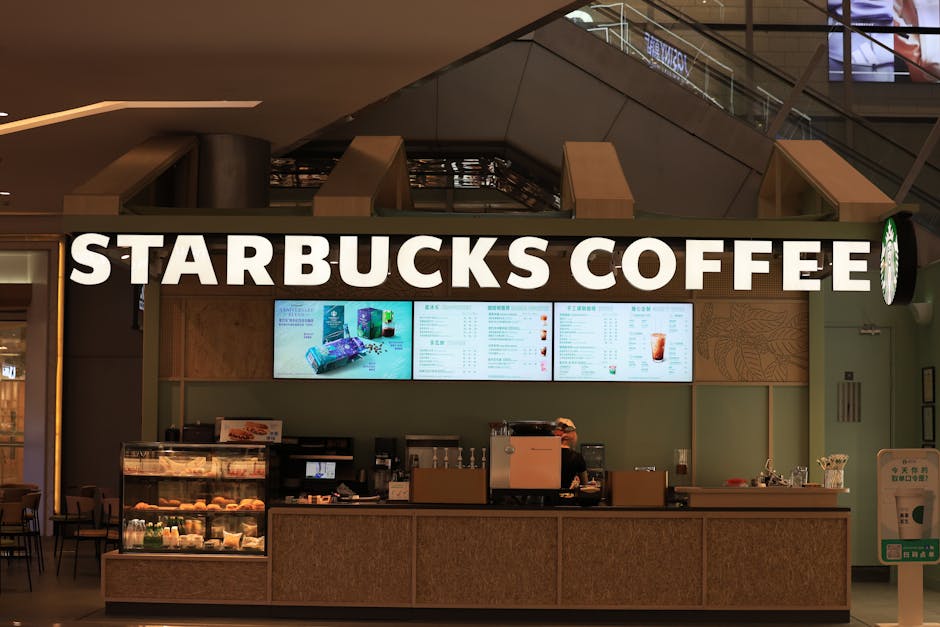
How Starbucks’ Global Playbook is Rewriting the Future of Skincare in Southeast Asia’s Humid Markets
In the late 20th century, Starbucks revolutionized how the world drinks coffee—expanding from the streets of Seattle into a $100+ billion global phenomenon. But its true legacy may lie beyond coffee, in the way it redefined “localization” as a competitive art form. Today, in the fast-paced, high-stakes world of Southeast Asian skincare, Starbucks’ adaptive strategy offers an audacious, data-backed blueprint for brands willing to question old assumptions and design for the realities of heat, humidity, pollution, and cultural complexity. As the region’s beauty and personal care market barrels toward a projected US$30–35 billion valuation by the late 2020s, the lessons of Starbucks are not only timely—they may determine which brands rise or vanish in this new climate-first era.
Rethinking Localization: Starbucks as an Unexpected Template for Skincare Strategy
From Coffee Cups to Skin Carepots: A Strategy of Phased Expansion and Deep Integration
When Starbucks entered Asia, it was not the world’s first coffee chain. Its rise came from a relentless commitment to phased market entry—first conquering flagship cities, then scaling rapidly into second-tier locations (Strategy Institute). In China, this meant Shanghai alone boasted over 600 stores by 2017. More critical, though, was how Starbucks “mined the aesthetics of traditional tea houses” in China, introduced localized menu items for Japan’s omotenashi culture, and used joint ventures to navigate regulatory and cultural thickets until it was ready to buy out partners for full control.
Translating Playbooks: A Skincare Industry at a Crossroads
The Southeast Asian skincare sector faces an existential mismatch: while consumer sophistication soars, most global brands still push temperate-climate formulations—heavy creams, occlusive textures—into hot, humid markets. The results? Poor product fit, customer churn, and a gap exploited by nimble regional upstarts. Starbucks avoided exactly this fate by treating “localization” as a design principle, not a marketing garnish. In the words of one industry strategist, “In Southeast Asia, ‘localization’ is not a buzzword; it’s the difference between rapid adoption and irrelevance.”
Climate as Destiny: Environmental Pressures and Skin Health in the Modern Tropics
The Southeast Asian Reality: Not Just Hot, but Hyper-Specific
Across Thailand, Vietnam, Indonesia, Malaysia, Singapore, and the Philippines, relentless average temperatures of 28–32°C combine with 70–90% relative humidity, an “extreme” UV index, and urban air pollution (PM2.5/PM10 frequently above WHO guidelines). Skin behaves differently here: excess sebum and shine, persistent acne, dehydration below the oily surface, hyperpigmentation, and chronic barrier damage from pollution and frequent cleansing are the norm.
Demographic Gold: Young, Digital, and Demanding
Over 50% of the region’s population is under 35, making for a lifelong customer base. Consumers are increasingly “clinical”—demanding evidence-based actives and visible results—mirroring the shift from generic blends to “single origin” and premium design in coffee. Yet, too many skincare players simply retrofit Euro-centric formulas, missing the sensorial and cultural targets that drive repeat purchase and trust.
Starbucks’ Adaptation Playbook: Translating Coffee Lessons to Custom Skincare Formulations
Building ‘Resilient Skin Systems’: Learning from Climate-Resilient Coffee
Starbucks treats climate change as a structural threat to its core product, investing in climate-resilient varietals and over 450,000 farm partnerships (ASEAN-EU Coffee Summit). Skincare must do the same, making heat, humidity, UV, and pollution foundational R&D inputs. This means:
- Testing under >80% humidity and high heat
- Designing lightweight, barrier-first moisturizers
- Developing SPF products with high UVA defense and anti-pollution actives
- Building “skin innovation farms”: R&D hubs in Bangkok or Ho Chi Minh City, running trials on local skin phototypes and sensorial expectations
From Green Tea Frappuccinos to Fitzpatrick III–V: Culturally Sensitive Design
Just as Starbucks launched mooncakes and localized beverages, skincare brands must craft products with sensorial, shade, and fragrance profiles attuned to Southeast Asian preferences. No more “one-size-fits-all”: think non-tacky gels, sweat- and sebum-friendly finishes, fragrance cues tuned to Thai or Filipino tastes, and SPF that leaves zero white cast on melanin-rich skin.
Community and Supply Chain: Building the Local Advantage
Starbucks’ “Community Stores” and sustainability-first Greener Stores now serve as retail anchors in Thailand and beyond (Strategy Institute Analysis). Skincare brands can mirror this by pairing clinical actives with local botanicals, building traceable farmer partnerships, and running community skin health initiatives—positioning themselves as both high-science and high-integrity.
Comparative Segment: Global One-Size Vs. Southeast Asia-First
The Old Guard: Global Standardization
For decades, legacy beauty brands have relied on global “hero” products—often developed for cooled, dry European or North American climates—then simply translated packaging and messaging for Asia. The result: heavy creams that suffocate skin in Jakarta, or SPF with white cast on Bangkok streets.
The Starbucks-Inspired Challenger: Localization by Design
Now, the new breed of Southeast Asia-first brands is flipping the script: formulating with local humidity, UV, and cultural preferences as first-order considerations. They invest in localized R&D, flexible supply chains, and data-driven personalization, using feedback loops that resemble Starbucks’ global agronomy network. Market share is shifting; as consumers experience products built “for here, not elsewhere,” loyalty and LTV soar.
Market-by-Market: Blueprinting Success using Starbucks’ Local Tactics
Thailand: Sustainability and Community at Scale
Starbucks’ ambitious push to 800 stores by 2030 in Thailand is anchored in “Greener Stores” and drive-thru formats. For skincare, this means:
- Flagship “skin labs” in Bangkok offering climate-adapted diagnostics
- Tier-2 expansion with refill kiosks and community education programs
- Products: pollution-shielding SPF, oil-control gels, PIH serums—tested and certified “Bangkok-tough”
Vietnam: Backward Integration and the Local Ingredient Renaissance
As Starbucks looks to local farm acquisitions to buffer supply chain shocks, skincare brands should:
- Partner with rice, tea, and herbal farms for extraction and product development
- Run R&D satellites in Ho Chi Minh City to test acne and PIH solutions for the street-level pollution reality
- Launch Tet-themed limited editions to embed products in cultural rituals
Indonesia, Malaysia, Singapore, Philippines: Omnichannel and Personalization
In these diverse markets, Starbucks’ staged expansion and mobile integration point to:
- Halal-certified, non-alcoholic, sweat-proof formulas for Indonesia/Malaysia
- “Clinic-in-app” diagnostics with immediate, climate-aware product recommendations
- Eco-certified refill stations and impact labeling in Singapore/Malaysia
- Philippines: brightening and oil-control ranges, with digital and mass retail distribution
Embedding Sustainability: Beyond Greenwashing to Core Business
Starbucks’ Greener Stores and Climate-Resilient Sourcing
With a target of 10,000 Greener Stores globally by 2025 (NRN), Starbucks treats sustainability as a competitive lever—backed by investments in water efficiency, renewable energy, and regenerative agriculture. Similarly, skincare brands must:
- Source ingredients locally and traceably, supporting regenerative farming
- Publish water and energy intensity, and set time-bound reduction targets
- Adopt recyclable, refillable packaging and support community waste programs
- Invest in farmer trainings and community skin health education
The result is not only a reduced environmental footprint—it is a stronger, regionally differentiated brand that regulators and consumers will reward.
Forward-Looking Insights: The Engineered Loop of Data, Tech & Continuous Localization
Tech as a Multiplier: Personalization, Feedback, and R&D Cycles
Starbucks’ farm-to-cup insight chain is mirrored in the new model for Southeast Asian skincare. Leading brands are embedding feedback loops—via product reviews, in-app diagnostics, and climate-linked user data—to refine offerings and build a “living” library of market insights, just as Starbucks uses data from its 450,000+ farm network to drive varietal innovation.
Mobile-First, Partnership-Driven: The Next Leap
Expansion is staged and strategic: flagship launches in anchor cities, partnerships for regulatory and cultural fit, and a gradual shift to control as operational depth increases. Everywhere, technology—mobile diagnostics, real-time delivery, micro-influencer networks—amplifies speed and reach.
“Brands that treat Southeast Asia’s hot, humid, and polluted environments as first-order design constraints—embedding climate, culture, and continuous feedback into every stage of R&D and go-to-market—will build the most resilient, trusted, and scalable skincare platforms of the next decade.”
Risks, Tensions, and the Imperative of Deep Localization
Supply Chain Shocks and Regulatory Flux: Starbucks’ experience with trade disruptions and currency swings in Vietnam is a warning: diversify suppliers, localize production, and maintain agility to withstand shocks.
The Peril of ‘Best-Seller Syndrome’: Over-standardization—shipping bestsellers from global markets without adaptation—invites irrelevance in Southeast Asia’s distinct climate and cultural settings.
Brand Integrity vs. Local Relevance: Starbucks succeeded by maintaining its “third place” identity while flexing on local aesthetics and products. Skincare brands must similarly hold non-negotiable pillars (science, dermatology, safety) while fluidly adapting when and where the customer demands.
Conclusion: The Future Is Climate-Fit and Culture-First—Will Your Brand Lead or Follow?
The Starbucks story is not just about coffee. It is the chronicle of an organization that understood global scale hinges on local mastery. For Southeast Asian skincare, the stakes are even higher: brands must design for a region where the climate punishes complacency, the youth demand proof, and the culture is ceaselessly evolving.
Those who invest in tropical-first R&D, continuous data streams, flexible local partnerships, and visible community impact will not simply win today’s market share—they will set the standard for what 21st-century, climate-fit beauty looks like. The Starbucks model proves that true localization outsmarts both disruption and commoditization. In the skin care renaissance of Southeast Asia, this is not just a best practice—it is the minimum ticket to play.
For more on the business implications of Starbucks’ international strategy and adaptation insights, see this detailed case study and recent market analyses provided by Reportlinker.