
How Starbucks Is Harnessing AI For Real-Time, Transparent Sustainability Tracking Across Its Global Coffee Supply Chain
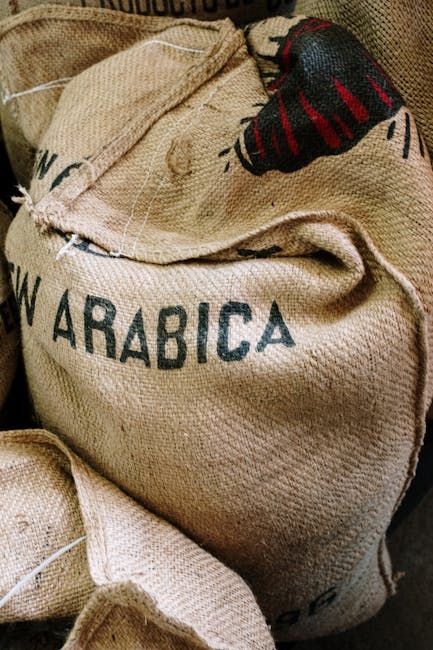
Brewing the Future: How Starbucks Can Leverage AI for Real-Time Sustainability Tracking in Global Coffee Sourcing
In the rapidly evolving world of consumer goods, the coffee industry stands at a crossroads—where tradition meets technology, and sustainability is no longer an aspirational buzzword but a regulatory and existential imperative. Starbucks, the global coffee powerhouse with over 11,000 stores and a supply network spanning more than 200,000 wet mills, exemplifies the complexity and promise of modern supply chain management. Yet, beneath the surface of every cup lies a story of environmental stewardship, farmer livelihoods, and data-driven innovation. With mounting pressures from regulations like the EU Deforestation Regulation and increasingly discerning consumers, the company faces a defining challenge: transforming fragmented digital infrastructure into a unified, AI-powered ecosystem for real-time sustainability tracking. This exposé explores how Starbucks can—and must—reimagine its sourcing operations for the next era of transparency and resilience, serving not only coffee but also actionable hope for a regenerative future.
The Digital Groundswell: A Historical Perspective on Starbucks' Sustainability Journey
Origins of Innovation marked Starbucks' ascent in global coffee sourcing. The brand's early commitment was not just about superior beans, but about embedding sustainability at every touchpoint—from farm to cup. Over the years, Starbucks pioneered technologies like blockchain traceability to empower consumers and farmers alike. Bean-to-cup transparency became more than a promise; it was operationalized through digital tools that let consumers scan a bag and instantly unlock detailed origin stories. Yet, as the scale ballooned, so did the challenges.
Fragmented Ecosystems emerged as Starbucks expanded. The deployment of proprietary AI like Deep Brew revolutionized demand forecasting and inventory management, yielding metrics such as a 22% reduction in replenishment lead time and 9% energy savings per pound roasted. However, these advances ran parallel to, rather than integrated with, other systems—blockchain for traceability, Atlas for global inventory, and IoT for environmental monitoring. Each innovation excelled within its silo, but the lack of cross-system integration hindered holistic sustainability visibility.
The Tech Imperative: Patterns and Practices Shaping Modern Sustainability
Emergence of AI-Driven Operations at Starbucks is best exemplified by its Deep Brew platform. This machine learning system not only predicts demand by parsing through sales patterns, weather data, and local events, but also slashes product waste—cutting rework from 4.5% to 1.8% and saving $11.4 million annually. This has direct implications for both environmental impact and operational efficiency, showing how AI can drive dual value streams.
But the real story lies in converging digital infrastructure. Starbucks’ blockchain-enabled traceability, developed with Microsoft Azure, allows customers to trace beans to their farms and empowers farmers with market insights and recognition. The Atlas system manages global inventory with real-time visibility, while IoT devices monitor temperature and storage conditions during transport. Together, these form the substratum of sustainability—but to truly lead, integration is key.
Innovative Practices in Data Management are now the strategic frontier. For Starbucks, this means moving from fragmented data flows to a unified enterprise platform—where data from Deep Brew, Atlas, IoT sensors, and blockchain records converge in cloud-based lakes, governed rigorously and accessible for analytics. Such an ecosystem promises 40-60% improvements in data accuracy and lays the groundwork for predictive sustainability analytics that can anticipate risks before they manifest, not merely report them after the fact.
Beyond Compliance: The Stakes of Real-Time Sustainability in the Age of Regulation
Regulatory Dynamics have shifted the stakes. The EU Deforestation Regulation, for instance, compels companies to trace products down to individual farm plots and demands auditable records of environmental impact. For Starbucks, compliance is not optional: failure risks fines, interrupted supply, and reputational damage. Today’s systems, while advanced, do not fully meet these granular requirements. Integrated, AI-powered traceability is not just a strategic advantage but a license to operate in tomorrow’s markets.
Real-World Impact extends far beyond policy. Each percent of energy savings, each ton of waste avoided, and each batch traced with environmental metrics represents quantifiable improvements: more stable supply chains, higher farmer retention (a projected 30% decrease in climate-related defection), and $85-115 million in annual benefits at full scale. Most critically, this unlocks the ability to offer premium pricing for high-sustainability coffees, creating direct economic incentives for farmers to invest in regenerative practices.
The Starbucks Blueprint: Tactics, Gaps, and Strategic Shifts
Current Tactical Landscape is rich but siloed. AI optimizes store-level operations and inventory; blockchain delivers consumer-facing transparency; IoT ensures product quality en route. Yet, as shown in recent analyses, the lack of a unified data architecture and integrated sustainability scoring leaves Starbucks vulnerable to blind spots—particularly at the farm and batch level, where regulatory and consumer pressures converge.
Critical Gaps Identified include:
- Data Integration Fragmentation: Systems like Deep Brew and Atlas do not natively communicate, limiting actionable analytics.
- Sustainability Metrics Coverage: Operational efficiency is tracked, but granular environmental impact remains elusive.
- Predictive Analytics Deficit: Monitoring is often reactive; true resilience requires forward-looking insights into climate risks and compliance gaps.
- Farmer-Level Insights: While blockchain identifies farmers, AI does not yet assess their individual sustainability performance or predict yield impacts.
Comparative Perspectives: Starbucks vs. Industry Norms
Starbucks’ Leadership Position is clear: the brand has outpaced rivals through investments in proprietary AI, blockchain, and agronomic research (most notably at Costa Rica’s Hacienda Alsacia). Many competitors remain at the stage of basic digitalization, struggling to even meet plot-level traceability standards now mandated by global regulations.
Emerging Industry Standards are shifting. As the EU and other jurisdictions raise the bar, features like batch-level environmental accounting and AI-powered supply chain resilience are fast becoming minimum requirements. Starbucks is poised to convert its early investments into sustained competitive advantage—but only if it moves decisively to integrate and enhance these systems before the window closes.
Consumer Expectations are evolving in parallel. Transparency and ethical sourcing are no longer perks but prerequisites. Brands that can reliably demonstrate real-time sustainability—down to the batch and farm level—will command both loyalty and premium pricing.
The Roadmap Ahead: Recommendations for AI-Driven Sustainability Mastery
Unified Data Architecture forms the backbone of future capability. By consolidating data streams from Deep Brew, Atlas, blockchain, IoT, and external sources (such as weather and satellite imagery), Starbucks can unlock holistic visibility. This enables continuous real-time monitoring, eliminates data reconciliation overhead, and establishes a foundation for system-wide predictive analytics.
AI-Powered Farmer-Level Scoring transforms raw data into actionable intelligence. Machine learning models can dissect historical yield data, environmental practices, and climate exposures to assign sustainability scores at the individual farmer and cooperative level. This fosters precision support interventions and early risk mitigation.
Real-Time Environmental Impact Accounting leverages IoT sensors and transactional analytics to quantify water usage, carbon footprint, and soil health for every batch. These metrics, integrated with blockchain for consumer transparency, empower customers to make sustainability-informed purchasing decisions and create new market dynamics for differentiated pricing.
Predictive Climate Risk Modeling integrates IPCC projections, crop simulation, and weather analytics to forecast regional production risks 12-36 months ahead. Proactive adaptation—such as the deployment of climate-resistant coffee varieties—becomes possible, strengthening supply chain resilience and economic stability for farmers.
Stakeholder Transparency Dashboards democratize sustainability information across the organization—from farmers to executives and investors. Role-based filtering and real-time alerts align operational decisions with sustainability goals and regulatory compliance, while drastically reducing reporting burdens.
AI-Enhanced Cooperative Development uses clustering algorithms and predictive modeling to optimize support interventions at the cooperative level, maximizing the impact of investments in eco wet mills, soil conservation, and value-added processing.
Regional Realities: Costa Rica, Colombia, Rwanda—Pilots for a Global Model
Pilot Implementation in Costa Rica leverages the innovation hub at Hacienda Alsacia. Starbucks can integrate unified data architecture and deploy farmer-level scoring where digital maturity is highest. This establishes proof of concept and facilitates rapid iteration.
Expansion to Colombia and Rwanda extends these capabilities to major sourcing and emerging relationships, scaling learnings and optimizing interventions based on local conditions. By the end of Phase 4, all major sourcing regions would be brought under the AI-powered sustainability umbrella, meeting regulatory and operational needs at a global scale.
Financial and Strategic Implications: ROI, Risks, and Mitigation
Quantifiable Returns underscore the case for investment. With $88-138 million required over 24 months, Starbucks stands to realize $85-115 million in annual quantifiable benefits—through waste reduction, energy savings, supply chain velocity, farmer retention, and risk mitigation. Add strategic gains (market premium pricing, brand loyalty, investor confidence), and the payback window narrows further.
Risk Landscape is multifaceted:
- Data Privacy: Robust consent frameworks and security measures are essential for farmer-level data collection.
- Technology Dependency: Human oversight remains vital; AI must augment, not replace, expert judgment.
- Implementation Complexity: Phased, regionally targeted rollout and dedicated change management are required to navigate technical and organizational challenges.
- Data Quality at Source: Early focus on digitally mature cooperatives ensures reliability, with investments made to raise the capabilities of lagging partners.
Forward-Looking Insight
“True sustainability in the coffee supply chain is found at the intersection of data, empathy, and empowerment. By harmonizing AI-driven analytics, blockchain traceability, and collaborative agronomy, companies don’t just comply with regulations—they redefine the value proposition of every cup, building trust with customers, resilience with farmers, and stewardship for the planet.”
Strategic Call to Action: Seizing the Opportunity for Regenerative Leadership
The Time to Act Is Now. Starbucks possesses unrivaled digital capabilities and global reach, but real transformation demands bold integration and visionary leadership. The next era of coffee is not simply about sustainable sourcing—it’s about embedding sustainability at the core of every process, every partnership, and every customer interaction. By moving urgently to unify its AI, blockchain, and IoT systems, Starbucks can set the gold standard for real-time sustainability in coffee—and chart the course for the entire industry.
The Future Is Regenerative, Transparent, and Data-Powered. Competitors will inevitably follow; regulatory compliance will become table stakes. But the true advantage lies in leveraging technology for transparent, regenerative operations that create direct economic incentives for every actor in the supply chain. This vision is within reach—and the returns, both financial and social, are profound.
As Starbucks embarks on the journey from siloed excellence to unified impact, the world watches. The question is no longer whether real-time sustainability is possible, but who will lead the way. For Starbucks, the answer will hinge on its willingness to invest, integrate, and innovate—ensuring that every cup of coffee not only delights, but also delivers measurable hope for the planet and its people.
Learn more about Starbucks’ AI journey and why the future of coffee is being brewed in data lakes, not just wet mills.