
How Starbucks Is Revolutionizing Customer Experience With AI Personalization By 2025: Deep Brew Success Strategies For The US, UK, China & Sydney
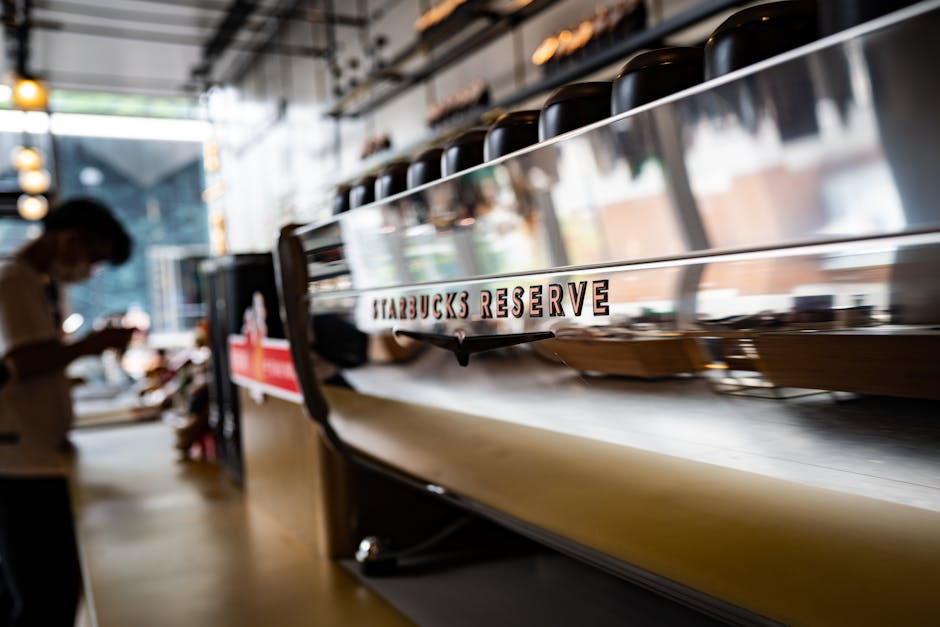
How Starbucks is Defining the Frontier of AI-Driven Personalization by 2025
In the ever-evolving landscape of global retail, few stories epitomize the intersection of data, technology, and customer experience quite like Starbucks. Once lauded for its “third place” ethos—a sanctuary between home and work—Starbucks now finds itself at the vanguard of a fresh revolution: the AI-powered personalization of everyday coffee culture. By 2025, Starbucks is expected to deliver measurable returns and operational excellence, not just through ambiance or premium beans, but through its mastery of artificial intelligence. This exposé unpacks the company’s multilayered playbook, revealing how AI is rewriting the script for customer loyalty, operational efficiency, and the future of the high-stakes food service sector.
From Analog to Algorithm: The Evolution of Starbucks’ Customer Experience
The Digital Flywheel’s Genesis:
Historically, Starbucks redefined retail by personalizing the in-store experience—knowing a customer’s name, favorite drink, and preferred ambiance. But as consumer expectations soared, and digital adoption accelerated, the limitations of analog personalization became clear. In this crucible, the “Digital Flywheel” emerged: a grand strategy that fuses mobile apps, loyalty rewards, and point-of-sale (POS) systems into a singular, data-rich engine. By 2025, this Flywheel has matured into a self-reinforcing feedback loop, enabling Starbucks to ingest over 90 million weekly app purchases and deploy Deep Brew, its proprietary AI platform, at a global scale.
Reinforcement Learning Meets Real Coffee:
Central to this revolution is Deep Brew—a platform harnessing reinforcement learning to decode customer preferences, anticipate operational bottlenecks, and orchestrate thousands of micro-interactions daily. Starbucks’ “third place” advantage is now algorithmic: from predicting a London commuter’s penchant for chai latte on rainy afternoons, to offering a Shanghai executive a matcha alert during morning rush hour. The digital transformation is not cosmetic; it is core to business—delivering a 30% ROI, boosting repeat visits by 25%, and cutting waste by up to 20% in flagship urban markets.
Emerging Patterns: Data-Driven Personalization at Unprecedented Scale
Hyperlocal Isn’t Hype—It’s Strategy:
Uniformity fades at scale. With over 38,000 stores in 80+ countries, Starbucks cannot (and does not) impose a one-size-fits-all model. Instead, Deep Brew leverages regionally nuanced data—weather, location, time of day, and even local events—to fine-tune recommendations. In the US, the platform capitalizes on heatwave patterns in Memphis to push frappuccinos, while in China, matcha and oolong dominate AI-driven suggestions during urban peak hours. As data flows from mobile, delivery, and in-store interactions, Deep Brew’s precision only sharpens.
Operational Intelligence as Competitive Moat:
On the back end, AI-fueled tools like Smart Queue and Master Baker AI balance order flows and predict menu demand with surgical accuracy. Inventory is managed down to the ingredient, baristas receive real-time recipe prompts and pairings via Green Dot Assist (one of Starbucks’ OpenAI-powered barista aids), and staffing is dynamically adjusted by Atlas based on hyperlocal forecasts. This digital choreography doesn’t just please customers—it slashes waste by 15–20%, guarantees product freshness, and empowers employees to focus on hospitality over triage.
The ROI Equation:
For decision-makers, the calculus is irrefutable. Year-one returns from Deep Brew deployments range from 20–30%, with digital engagement increasing 15% and repeat visits surging 25%. In the US, 17 million app users now drive a quarter of all transactions—a milestone that cements digital as the primary gateway for Starbucks’ future growth. By freeing baristas from manual legwork and automating granular decisions, Starbucks is amplifying both customer happiness and shareholder value.
Tactical Shifts: From Transactional to Predictive Interactions
Concierge-Like Digital Touchpoints:
AI has blurred the line between physical and digital customer service. The “My Starbucks Barista” feature, for instance, uses natural language processing to field orders, answer queries, and make timely, personalized recommendations—acting as a true digital concierge rather than a glorified order form. Critically, the system is designed to enhance, not replace, the human touch, mitigating the risk of “over-automation” that could erode Starbucks’ trademark warmth (a balance maintained through the 80/20 AI/human rule).
AI-Driven Loyalty and Gamification:
In the US, the Odyssey NFT initiative ushers loyalty into the web3 era, rewarding repeat customers and increasing basket size via blockchain-backed digital collectibles. By 2025, these initiatives are less novelty and more necessity—fueling a competitive moat that few direct rivals can match. Engagement isn’t just measured by app opens, but by high-frequency, high-value interactions that boost both emotional and transactional loyalty.
Comparative Insights: Regional Adaptation and Differentiation
In a brand as universal as Starbucks, regional adaptation isn’t ancillary—it’s existential. Here’s how AI personalization manifests across four flagship regions:
United States
Data-Driven Depth: With over 17 million app users and 25% of all transactions flowing through digital channels, the US is Starbucks’ proving ground for predictive ordering, Smart Queue orchestration, and ROI-driven experimentation. Repeat visits rise 25%, engagement lifts 15%, and waste falls by 15–20%, with real-time weather and geofencing steering everything from inventory to promo targeting.
United Kingdom
Peak-Hour Optimization: In the UK, the focus is on throughput: AI links app data with POS to push contextual staffing alerts and weather-driven menu recommendations, particularly during London’s caffeine rushes. The result? Shorter queues, 15–20% waste reduction, and a 20% boost in operational efficiency.
China
Digital-First, Mobile-Only: China’s urban professionals demand rapid, relevant suggestions. Here, Deep Brew excels at matching fast-paced routines with time- and weather-sensitive alerts for drinks like oolong and matcha, driving a 15% lift in new menu sales and cutting inventory waste. The AI adapts to both hypergrowth and market density, ensuring expansion doesn’t cannibalize existing stores.
Sydney (Australia) Region
Geospatial Intelligence: Mirroring US and UK best practices yet tuned for Australian preferences, Sydney leverages geofencing and weather data to highlight iced drinks during heat waves and nudge repeat visits. With projected ROI at 30% and repeat visits up 25%, Smart Queue and Green Dot Assist are pivotal in balancing high delivery/mobile order surges without compromising café ambiance.
Innovative Practices: Starbucks’ Phased AI Playbook
1. Laying the Data Flywheel Foundation:
Starbucks’ journey begins with data—auditing loyalty app and POS systems to surface 90 million-scale insights. By integrating cloud machine learning (ML) tools (think AWS SageMaker), the company trains Deep Brew on location, seasonality, and customer preferences, launching with basic but effective personalized suggestions.
2. Deploying the AI Engine:
Weeks 5–12 see Deep Brew’s reinforcement learning and natural language modules (“My Barista”) come online, synchronized with in-store systems for real-time alerts. Green Dot Assist is piloted with baristas, driving immediate operational enhancements and capturing feedback for rapid iteration.
3. Activating Predictive Features:
Location-aware ordering, Smart Queue, inventory forecasting, and predictive promos go live in phase three. The focus here is multi-channel harmony—geofenced offers for US heatwaves, peak-hour UK staffing, and regional menu innovation in China and Sydney. Marketing, supply chain, and support teams are looped in for synchronized execution.
4. Optimization and Scaling:
Finally, operational dashboards track ROI, repeat visits, and waste rates. Iteration is relentless: customer feedback, barista input, and regional distinctions shape continual model tuning. As automation is extended to customer support and supply chain forecasting, the AI/human interface is finessed for optimal blend.
Tools and Technology Stack: Under the Hood of Deep Brew
At the core are reinforcement learning platforms (Google Cloud AI, Azure ML), OpenAI-powered barista aids, and robust data warehousing (Snowflake for raw data; Tableau for KPIs). Integration with POS systems (like Toast) and external data streams (weather APIs) enable context-sensitive predictions. On the user-facing side, Flutter and React Native underpin the “My Barista” NLP interface, ensuring natural, timely, and frictionless communication.
Critical Metrics: The Numbers That Matter
- ROI: 20–30% in year one; 30% in mature markets
- Digital Engagement: 15% lift, with 25% of transactions occurring through digital channels
- Operational Efficiency: 15–20% waste and inventory reduction, barista errors plummeting with AI assistance
- Adoption & Loyalty: 17M+ active US app users, 25% repeat visit surge
- Risk Management: Strict adherence to GDPR, CCPA, and an 80/20 AI/human interaction rule ensures brand authenticity isn’t sacrificed at the altar of automation
Comparative Perspectives: A New Viewer’s Dilemma
Traditionalists vs. Technologists:
For those steeped in Starbucks’ original “third place” philosophy, the rise of AI risks diminishing the café’s role as a haven for human connection. Yet, as demonstrated, the orchestrated balance of predictive AI and empathetic staff can actually enhance the experience—delivering frictionless, personalized service without sacrificing warmth. Critics might fear a “robotic” future, but Starbucks’ model is as much about freeing humans for meaningful engagement as it is about computational efficiency.
Globalization vs. Localization:
A new viewer might expect a monolithic AI rolling out uniform recommendations. Instead, Deep Brew’s genius lies in its flexibility, enabling global consistency in operational excellence while allowing for local flavor—both figuratively and literally. In Shanghai and Sydney, the AI isn’t just an imported script, but a locally attuned assistant.
“The future of Starbucks is not just in serving coffee, but in serving the right coffee, at the right time, to the right customer—seamlessly blending the art of hospitality with the science of prediction.”
Real-World Implications: What Starbucks’ AI Revolution Means for the Industry
For Retailers:
Starbucks’ results are not limited to coffee. Their model signals a broader transformation: any brand with substantial data, a multi-channel presence, and a commitment to rapid experimentation can emulate these gains. The “digital flywheel” principle is readily portable—leverage, iterate, localize, and scale.
For Employees:
Rather than rendering baristas obsolete, AI liberates them from repetitive tasks. With Green Dot Assist and operational automation, staff are empowered to focus on high-value, emotionally resonant service. The “third place” is more vibrant than ever—just more seamlessly run.
For Customers:
Personalization no longer requires conscious customer input. Context-aware nudges, rewards, and recommendations mean fewer missed favorites, shorter waits, and an always-on concierge in your pocket. Privacy remains paramount, with Starbucks setting the bar for ethical AI and transparent data governance.
For Decision-Makers:
The Starbucks case is a clarion call: invest in your digital platform now, or risk irrelevance. With $1 invested returning $3–4, and AI creating defensible strategic moats, the question is not if, but how quickly, competitors can catch up.
Conclusion: The Strategic Mandate for AI-First Personalization
Starbucks’ AI transformation is not a passing fad—it is the blueprint for the next decade of customer experience. As Deep Brew and its counterparts extend into menu innovation, supply chain resilience, and HR optimization, the competitive stakes grow higher. The fusion of operational intelligence, emotional loyalty, and regional adaptation make the Starbucks model uniquely defensible.
In the final reckoning, the brands that thrive will be those that master the paradox: automating the routine, so the human can flourish. For business leaders, now is the time to lay the digital flywheel foundation, invest decisively, and architect for hyper-personalized, AI-enhanced engagement. The future is brewing—and it’s personalized, predictive, and profoundly human.
For a data-driven deep dive and actionable benchmarks, visit GrowthHQ and explore the latest executive playbooks. Decision-makers looking to replicate Starbucks’ competitive edge must act now—the ROI is real, the risk of inertia existential, and the window for leadership closing fast.