
How Starbucks Is Transforming Customer Experience With AI: Real-World Insights From Seattle To Shanghai (2026 Edition)
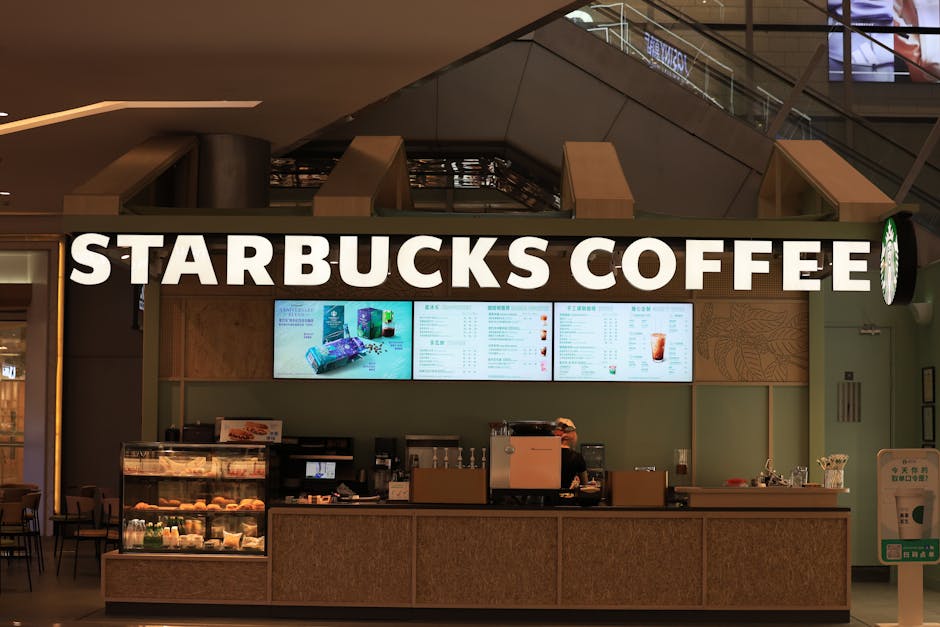
How Starbucks Is Brewing the Future with AI: A Global Exposé on the Digital Transformation of Customer Experience
When the first Starbucks opened in Seattle’s Pike Place Market in 1971, few could have imagined that a humble coffeehouse would become an international juggernaut, weaving itself into the daily rituals of millions. Yet, as consumer tastes evolve and technology disrupts every sector, even this iconic brand must innovate relentlessly. Today, Starbucks stands not merely as a purveyor of lattes but as a laboratory for artificial intelligence in retail—using AI not just as a tool, but as a force multiplier in redefining the human experience across thousands of stores worldwide.
The Coffeehouse as a Digital Platform: Starbucks’ Strategic Leap into AI
From Counter Service to Code-Driven Journeys: The last decade has witnessed a seismic change in how Starbucks interacts with its customers. Moving beyond its roots, Starbucks has reimagined itself as a digitally sophisticated brand. The introduction of the My Starbucks Rewards program, mobile ordering, and personalized offers marked an initial step. However, it is with the introduction of proprietary AI frameworks like Deep Brew—deployed across more than 38,000 stores—that the company shifted from isolated digital features to orchestrated, end-to-end, data-driven customer experiences.
Emergence of Deep Brew: Deep Brew is not a buzzword; it’s Starbucks’ AI backbone, interpreting billions of data points from the Starbucks app, loyalty interactions, purchase behaviors, and even real-time weather to anticipate, recommend, and execute transactions with uncanny intuition. This allows individualized recommendations—like offering oatmeal with an Americano on a cold Monday—at massive scale.
By 2026, multiple AI tools are converging: Green Dot Assist guiding baristas, Smart Queue orchestrating real-time store flow, and predictive twins reducing inventory waste—all while driving tangible outcomes: 33% lower wait times, a 23% engagement boost, and a 14% uplift in average transaction size.
Emerging Patterns: The Anatomy of an AI-Driven Coffee Empire
Hyper-Personalization at Scale: Starbucks’ greatest weapon is data—transformed through AI into a curated experience that feels custom-built for each guest. The “Just For You” carousel in the Starbucks app is a real-world manifestation of this, curating offers based on hyper-granular segmentation by season, weather, and behavioral trends. Globally, this drives a 23% higher level of customer engagement and a 14% increase in average check size, as offers feel “intuitive, not intrusive.”
AI on the Frontline: The Green Dot Assist system, powered by Microsoft Azure OpenAI, is not just a technical curiosity but a real answer to operational stress. In 35 North American pilot locations, it slashed wait times by a third and cut order errors by 19%. Far from replacing jobs, it eases workloads, assists in onboarding, and supports baristas through real-time suggestions for recipe modifications, troubleshooting, and even shift backfill coordination—a strategic shift towards AI as an enabler, not a disruptor, of human work.
Tactical Shifts: Regional Adaptations and Their Implications
North America: Efficiency as Strategy: In the heartland of Starbucks’ empire, AI is synonymous with throughput and operational reliability. Green Dot Assist’s expansion comes as a direct response to persistent labor shortages. By lightening the cognitive load on baristas and introducing smart queue management, Starbucks delivers a faster, more reliable customer journey while signaling job security and growth opportunities for its workforce. Deep Brew’s real-time personalization is credited with generating $1.6 billion in digital sales value annually in the region.
Europe: Harmonizing Data Innovation and Privacy: In Europe’s 3,500+ stores, the stakes are different. Here, GDPR and data privacy sensitivities demand tech solutions that protect individual rights. Starbucks’ use of federated learning—trained on regional data without centralization—offers a template for ethically aligned innovation. AI-driven inventory management aligns with EU mandates on sustainability, while personalized product offers (like chai in the UK and croissants in France) respect local tastes and privacy alike.
Asia-Pacific: Cultural Adaptation and Precision at Scale: Asia-Pacific’s 7,000+ Starbucks, concentrated in high-density hubs like China (6,500 stores), use AI to reconcile scale with cultural nuance. Deep Brew integrates with popular local platforms (e.g., WeChat in China, suggesting oolong infusions during festivals), while Smart Queue and Green Dot Assist enable lightning-fast service in Japan’s competitive market. AI-driven gamification and loyalty mechanics have lifted repeat visits by 18%—a lifeline in a region defined by both fierce brand loyalty and fluid competition.
Emerging Markets: Scalability and Accessibility: In rapidly expanding regions like India and the Middle East, AI’s role is to make sense of sparse, less-structured data while reducing supply chain volatility. Tools like NomadGo optimize inventory, and loyalty algorithms adapt to growing digital wallet usage, driving a 23% boost in engagement even where traditional data flows are weaker.
Comparative Perspectives: Global Diversity, Unified Vision
The Starbucks AI journey is not monolithic. Each region adapts based on regulatory, cultural, and operational realities:
North America focuses on operational efficiency, targeting wait time cuts and labor support with Green Dot Assist. Europe balances innovation with privacy, leveraging federated AI to comply with GDPR while championing sustainability. Asia-Pacific perfects hyper-local personalization by fusing AI with native social platforms and festival trends. Meanwhile, emerging markets prioritize scalable, low-data AI to power expansion and digital engagement.
"The next frontier in retail is anticipatory commerce—knowing a customer's desire before they've spoken it. Starbucks' investment in reinforcement learning and multimodal AI isn't just catching up with trends; it's quietly scripting the future of service, making every interaction frictionless, predictive, and uniquely human."
Innovative Practices: What’s Brewing Next for Starbucks’ AI Playbook
Reinforcement Learning and Anticipatory Commerce: By 2026, Starbucks is piloting reinforcement learning models that forecast orders before they’re even spoken, using subtle cues from user’s in-app activity, historic behaviors, and even weather data. This anticipates customer intent, making ordering effortless and deeply personalized.
AR-Driven Workforce Transformation: The Green Dot Assist 2.0 rollout introduces augmented reality overlays for baristas, turning recipe cards and troubleshooting guides into real-time, hands-free tools. This cuts training time by up to 50%, empowering new staff to perform at peak within weeks rather than months.
Edge AI and Multimodal Intelligence: Starbucks is extending AI to the edge—allowing real-time inference at remote or connectivity-limited stores using Azure, ensuring that offline locations are not left behind. Smart Queue now integrates sensors, vision, and voice analytics, accurately forecasting surge times with up to 95% accuracy.
Predictive Twins for Sustainability: With tools like NomadGo and Master Baker, Starbucks simulates daily store operations virtually, enabling 20-30% reductions in food and inventory waste—a crucial gain in a world increasingly conscious of resource use.
Storytelling from the Frontlines: Real-World Impact and Critical Metrics
The Human Touch, Augmented: Baristas at pilot sites report that Green Dot Assist is like having “a manager, trainer, and recipe coach all in one.” Staff can focus on genuine customer engagement, confident that AI is handling the technical details and troubleshooting. In high-volume North American drive-thrus, Smart Queue has become an invisible conductor, reducing peak-hour chaos and lifting Net Promoter Scores.
Loyalty Engine Gains: The “Starbucks for Life” program leverages AI gamification, driving a 35% increase in lifetime customer value. Birthday rewards and personalized incentives generate repeat visits (+18%) and lift overall check sizes.
Operational Excellence with Cost Discipline: Inventory and food waste, long the bane of high-frequency QSR chains, are now being tamed. Predictive AI means less spoilage, fewer menu outages, and a more sustainable operation—a win for both margins and mission.
Diverging Opinions: Between Optimism and Uncertainty
Employee and Consumer Buy-In: While AI augments, it doesn’t always reassure. Roughly 20% of unionized staff initially resist the new tech, fearing increased surveillance or job reduction. Yet pilot data and analyst reports suggest that AI supports roles and accelerates promotions into higher-skill positions.
Data Privacy and Trust: Customer reactions to AI are nuanced—while personalization increases engagement, up to 25% express concern about data use. Opt-in rates are high (90%+), but “creepy” factors prompt 10-15% to opt-out in some regions, especially where privacy sensitivities are sharper, such as the EU.
Financial Considerations: The adoption curve is steep, with $2M per location for initial pilots and global rollouts topping $50M per technology layer. The upside? ROI materializes quickly (within 6-12 months), with projections of an additional $2-3 billion in annual revenue by 2027 as AI matures across the network.
Forward-Thinking Insights: Strategic Recommendations for Decision Makers
1. Place Bold Bets on High-Impact Pilots: Instead of blanket rollouts, Starbucks targets 20% of high-traffic stores in each region for AI deployment, using these as learning labs to iterate and optimize.
2. Invest in Personalization as a Core Marketing Strategy: With Deep Brew driving 14% transaction lifts, allocating 5-10% of the marketing budget to AI-powered offers is now a baseline, not a luxury.
3. Localize and Comply: Leveraging federated learning enables AI to be both powerful and privacy-sensitive. Integrating local messaging apps (WeChat, WhatsApp) maximizes relevance and reach.
4. Measure Relentlessly: ROI requires scrutiny. Key metrics—Net Promoter Score (NPS), waste reduction, opt-in rates—must be tracked regionally and reviewed quarterly to avoid blind spots.
5. Upskill the Workforce: Training at least 80% of frontline staff ensures AI isn’t a barrier but an enabler, while pairing these efforts with internal promotion programs enhances retention and morale.
6. Monetize IP and Scale Sustainably: With Deep Brew’s licensing potential, Starbucks can consider new revenue streams by packaging its frameworks for industry partners, all while targeting 50% AI-enabled stores by 2027—especially in emerging, high-growth markets.
7. Prioritize Trust and Bias Management: Making AI opt-in (targeting 90%+ consent) and auditing systems quarterly for bias ensures that personalization never devolves into exclusion or exploitation.
Conclusion: Toward the Sentient Coffeehouse—Why Starbucks’ AI Transformation Matters Now
The Starbucks story is no longer just about coffee—it’s about reimagining hospitality for a new age. By integrating AI not as a replacement, but as an augmentation of both customer and employee experience, Starbucks offers a powerful blueprint for every consumer-facing brand navigating a tidal wave of digital disruption. The metrics are clear: faster service, fewer errors, higher engagement, and better margins. Yet, the intangible wins—the feeling of being “understood, not sold to,” the pride of a workforce equipped for tomorrow—are what will define the next era of retail.
As competition intensifies and consumer expectations rise, AI is no longer optional. For Starbucks, the challenge is not just to deploy smarter technology, but to do so ethically, inclusively, and at global scale. This journey, still unfolding, signals a tectonic shift in what it means to serve—with every interaction honed by data but delivered with humanity.
The future of Starbucks—and of retail at large—belongs to those who can listen, learn, and adapt at digital speed. The moment to act is now, before the last wave of innovation passes by. For decision makers, the lesson is clear: invest early, measure outcomes, and never lose sight of the human connection that, ultimately, makes every cup worth sharing.
For deeper insights and ongoing developments, explore analyses from Growth HQ and case studies at Fortune.