
How Starbucks Predictive AI Is Transforming Coffee Culture In NYC, Seattle, And Toronto: Latest Insights For Business Leaders
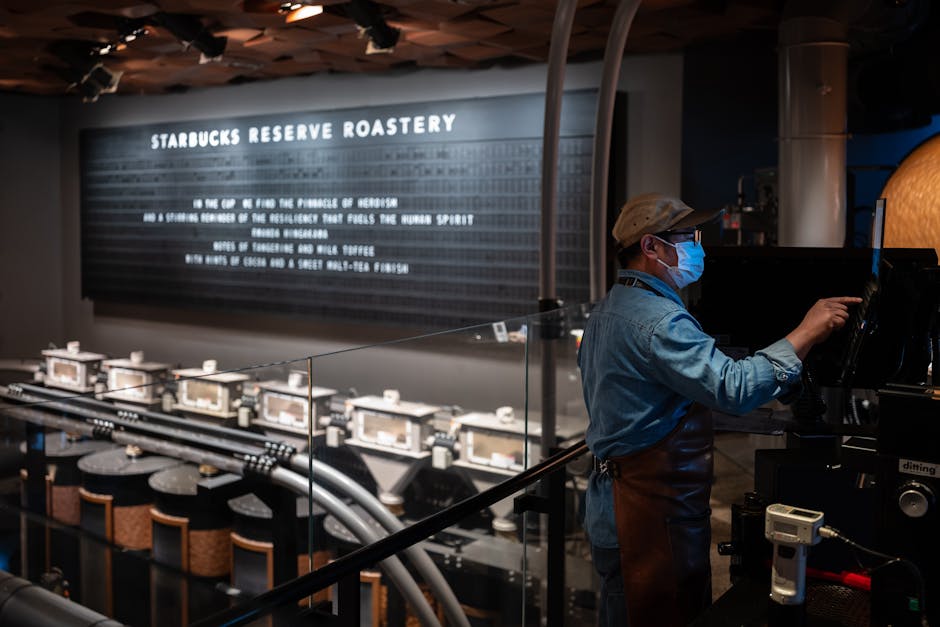
Predictive AI in Starbucks Apps: Catalyzing Local Coffee Culture Across North America
In the ever-evolving world of coffee retail, where speed, personalization, and community engagement converge, Starbucks stands at the threshold of transformation. The introduction of predictive artificial intelligence (AI) into Starbucks’ operational core—manifest in tools like Green Dot Assist and Deep Brew AI—signals a new chapter, not just for a coffee giant but for the very DNA of local coffee culture in influential markets such as New York City, Seattle, and Toronto.
The Rise of Predictive AI in Coffee Retail: Historical Perspective and Industry Shifts
From Manual Craft to Machine Intelligence: Starbucks, a name synonymous with the third-wave coffee movement, has long celebrated the artistry of baristas and the ritual of the café. However, with mounting pressures from quick-service competitors and shifting consumer expectations, the company recognized the necessity to blend human touch with machine intelligence. This evolution reached a pivotal point in 2025, when Starbucks expanded its AI-driven operational pilots, culminating in enterprise-wide adoption by 2026, as highlighted in Fortune’s exclusive coverage.
Driving Forces: At the intersection of urbanization and digitalization, foot traffic in dense metropolitan centers like NYC, Seattle, and Toronto required a scalable, adaptive approach. Predictive AI offered the promise of smoothing out operational kinks—queue bottlenecks, order errors, inconsistent upselling—while enabling hyper-local customization.
Inside Starbucks’ Predictive AI Toolbox: Mechanisms, Metrics, and Real-World Functions
Green Dot Assist and Deep Brew AI—The Digital Barista’s Toolkit: The Green Dot Assist chatbot brings real-time guidance to frontline baristas, supporting drink preparation, equipment troubleshooting, and workflow orchestration. Its rollout, piloted in June 2025 and widely adopted by late 2025, coincided with a surge in operational efficiency—most notably, order verification times shrinking to under 200 milliseconds and handoff errors declining by 15–20%. These advances, showcased at Dreamforce 2025 and subsequent 2026 case studies, embody the AI-driven ambition to “assist, not replace,” as CEO Brian Niccol underscored.
Seamless, Anticipatory Ordering: Driven by the Deep Brew platform, Starbucks’ app now analyzes a blend of proprietary data—historical orders, weather, location, and inventory—to surface contextually relevant prompts and pairing suggestions. Whether it’s advising a Toronto customer on a maple-infused beverage during peak fall or nudging a New Yorker toward a warming latte in March chill, the system is designed not merely for transactional efficiency but for sensory alignment with local tastes.
Voice AI: The Next Frictionless Frontier: Integrating voice-activated ordering (“Hey, I need my Starbucks order. I’ll be there in 10 minutes.”) marks a leap towards accessibility and reduced cognitive load. This innovation, especially vital in diverse, urban landscapes, leverages advanced speech recognition to handle accent variability—critical in multicultural Toronto and fast-paced NYC.
Emerging Patterns: How AI Is Reframing Local Coffee Culture
Urban Acceleration, Human-Centric Service: The core question—can predictive AI sustain community-rich coffee culture?—finds nuanced answers in the field. In Starbucks’ Seattle heartland, Green Dot pilots complement rather than erase the craftsmanship ethos, freeing up baristas to focus on “third place” hospitality as order prep and queue management gain precision. Similarly, NYC’s round-the-clock energy is matched by dynamic Smart Queue software, transforming peak-hour chaos into orderly flow while preserving small gestures—remembered customizations, targeted recommendations—that anchor local rituals.
Toronto’s Multicultural Mosaic: Strategic Store Siting: In Toronto, AI-fueled site selection and geospatial analysis guide new store placement into thriving neighborhoods like Kensington Market, blending Starbucks’ global footprint with a respect for independent, local flavors. The upshot: a 5–10% growth in foot traffic and a measurable reduction in underperforming locations, per enterprise-wide data. Machine learning models power not just inventory and staff allocation, but seasonal menu tweaks that resonate with Canada’s diverse communities.
Quantitative Proof Points: Upsell prompts powered by AI contribute to a 20–30% lift in average ticket value. Predictive algorithms, drawing from dozens of data streams, cut order errors and reduce NYC/Seattle rush-hour waits by up to 20%. These metrics, while enterprise-averaged, are especially potent in high-traffic, culturally rich urban cores.
Comparative Perspectives: Traditional Versus AI-Augmented Operations
| Aspect | Traditional | AI-Enhanced (Starbucks) | Business Gain |
|---|---|---|---|
| Order Prediction | Manual history recall | Machine learning on history, weather | 25% faster preparation |
| Queue Management | Static sequencing | Dynamic Smart Queue | No bottlenecks |
| Site Selection | Gut + basic demographics | Geospatial ML models | Higher store success rate |
| Personalization | Generic menus & offers | Real-time, tailored suggestions | 20% upsell increase |
The Critical Difference for New Viewers: What sets the AI-infused model apart isn’t only speed or margin improvement, but its capacity to reinvest saved time and predictive power into curating local experiences. Traditional operations relied on intuition and generic processes; AI, by contrast, customizes every customer interaction, localizes site strategy, and brings efficiency gains that can be redirected towards community-building efforts.
Challenges, Limitations, and the Path to Ubiquity
Data Gaps and Learning Curves: Despite its promise, Starbucks’ predictive AI journey is not without friction. City-specific performance metrics for NYC, Seattle, and Toronto remain undisclosed, compelling analysts to extrapolate from enterprise benchmarks. As CEO Brian Niccol noted in October 2025, the company remains in a “learning and experimentation” phase, mindful of regional variances and customer privacy sensitivities.
Privacy and Ethical Considerations: The sophistication of Starbucks’ recommendation engines rests on the aggregation of sensitive customer data. Ensuring robust compliance measures will be instrumental for broader deployment and enduring trust—a lesson for any quick-service retailer seeking to emulate Starbucks’ advances (GoCanopy analysis).
Real-World Impact: Local Stories and Statistical Insights
Seattle: AI Meets Artisanal Heritage: In the brand’s hometown, Starbucks leverages Green Dot Assist to orchestrate seamless handoffs and synchronize with local trends. The result: faster service with time freed for dialogue and discovery—a boon for Seattle’s vibrant roaster community.
New York City: Personalized Rituals at City Scale: In Manhattan and Brooklyn, baristas now rely on Deep Brew’s data-driven queue, slashing wait times during rushes and using weather-linked prompts to nudge lattes on cold mornings. Anecdotes suggest that regulars are greeted with more timely, relevant suggestions—AI’s invisible hand enhancing the city’s micro-cultures.
Toronto: Diversity-Infused Recommendations: In Toronto’s cosmopolitan enclaves, Starbucks’ AI not only recommends the latest maple beverage, but adapts offers and greetings to the city’s linguistic richness. Accent-adaptive voice ordering yields fewer errors, and site selection models ensure new outlets dovetail with local demand, not disrupt it.
Strategic Recommendations for Decision Makers
1. Grow with Hybrid AI-Human Models: Implement tools resembling Green Dot Assist to support, not supplant, baristas; focus on voice features for frictionless ordering in urban markets.
2. Prioritize Predictive Analytics in Expansion: Leverage geospatial and competitor analytics, as Starbucks does in Toronto, to optimize site placement and drive incremental traffic.
3. Integrate Multi-Channel Queue Management: Streamline cross-channel operations—app, drive-thru, in-store—especially critical as consumer ordering preferences fragment.
4. Double Down on Data Integration: Blend historical, inventory, and weather data to refine demand forecasting, following Starbucks’ 25% accuracy improvement.
5. Rigorously Measure ROI: Track KPIs—upsell lift, wait-time reductions, site performance—against Starbucks’ industry benchmarks for accountable innovation.
6. Customize Regionally: Tailor AI-driven recommendations to local tastes and trends to foster authentic community engagement.
7. Prepare for Privacy Scrutiny: Build transparent, customer-centric data policies as predictive features deepen.
“The AI-powered coffeehouse of the future is less about automating away the human experience, and more about augmenting it—empowering baristas with predictive insight, freeing them to connect with customers, and enabling local coffee culture to thrive within a global framework.”
Forward-Thinking Outlook: The Trajectory of Predictive AI in Coffee Retail
By mid-2026, Starbucks’ predictive AI systems are on track for full integration across US and Canadian markets, delivering projected efficiency gains of 20–30% and redefining customer expectations (Delish News). The transformation underway is not a zero-sum contest between technology and tradition; rather, it’s a synthesis poised to set industry benchmarks for the decade ahead.
For business leaders, the Starbucks case is both an inspiration and an imperative: the time to explore, pilot, and refine predictive AI is now. Those who move strategically—customizing for regional nuance, prioritizing ethical transparency, and keeping the customer-barista relationship central—will be best positioned to win the new loyalty wars in quick-service retail.
Conclusion: AI’s Enduring Role in Local Coffee Culture—A Strategic Imperative
The evidence is mounting: predictive AI, deftly applied, does not erode but enriches the culture and commerce of coffee. Starbucks’ ongoing trajectory, from the original Pike Place Market to multi-channel hubs in Toronto and New York, illustrates a crucial lesson—AI is a tool for amplification, not alienation. In the hands of thoughtful decision makers, these systems offer the opportunity to grow business outcomes while nurturing local spirit.
As predictive technologies become ubiquitous, the real differentiator will be not who adopts AI, but who does so with regional intelligence, operational discipline, and a relentless focus on the customer experience. Starbucks’ journey is a masterclass for any brand with ambitions at the intersection of innovation and authenticity.