
How To Build A Smart Home In Singapore Under $500 (2026 Guide): Affordable Automation, Top Devices & Step-by-Step Strategy
Singapore Smart Homes Under $500: The 2026 Playbook for Affordable Automation
In just a handful of years, the vision of a fully automated smart home has shifted from being a speculative luxury to an accessible, everyday reality for Singaporean households—thanks to technological leaps, aggressive market competition, and strategic price cuts post-CES 2026. Where once only the most tech-savvy or affluent could dream of voice-activated lights and intelligent appliances, a new wave of plug-and-play solutions now promises meaningful automation for under $500 USD (about SGD $700). For the budget-conscious Singapore homeowner, this transformation is not just about convenience; it marks a fundamental shift in how homes are valued, lived in, and future-proofed. This exposé unpacks the layers of this revolution, revealing how real-world economics, ecosystem strategy, and DIY ingenuity are drastically re-writing Singapore’s residential landscape.
The New Baseline: Market Disruption and Changed Expectations
Historical Price Pain and the 2026 Price Reset
Until recently, smart home technology in Singapore was synonymous with premium pricing—SGD $1,000 for even basic setups, and multi-thousand-dollar investments necessary for full coverage. This pricing structure mirrored global trends but carried a Singaporean twist: higher import costs, a smaller market, and a preference for branded reliability. However, the CES 2026 announcements and subsequent market response shattered this paradigm, triggering an unprecedented 25% reduction in smart device prices across major brands. Suddenly, the talk of a complete smart home for SGD $1,200—and starter packs for under $700—became not marketing hype, but a pragmatic, achievable target.
Emerging Patterns: Modular, Incremental Upgrades
Crucially, brands have shifted from lock-in renovation models to modular, plug-and-play offerings. This means homeowners can phase purchases over months, scaling up from essential lighting and appliance control (“basic automation”) to climate management and security, all without invasive rewiring or structural works. The intersection of “phased implementation” and aggressive device bundling by online retailers has shifted buyer expectations: functional automation is now a journey, not a single transaction.
Dissecting the Singapore-Specific Cost Landscape
Component Economics: Where the Money Goes
The path to affordable automation is paved with strategic choices, not merely counting devices. Singapore’s historical premiums still echo in current prices: Smart Switches average SGD $70 per unit, door locks command $700+, and even curtain motors hover around SGD $500. Yet, essential nodes like smart hubs ($60), aircon controls ($34), and sensors ($26) are now well within reach. The biggest shift: mid-range brands are closing the value gap with imported budget options, diminishing the “pay-just-for-the-brand” penalty that hamstrung earlier generations of buyers.
Practical Spending Profiles: Breaking the Price/Value Barrier
Current analysis shows clarity among “realistic budget tiers”: While the “full automation dream” still costs SGD $3,000+, a meaningful starter kit is available at SGD $700—precisely the sub-$500 USD bracket. This figure accommodates not just a hub and bulbs, but foundational smart plugs, basic security, and the all-important thermostat integration. What was once “entry-level” is now “full suite for small flats”.
The Tactical Shift: Phased, Strategic Acquisition Over Impulse Buying
Phase 1: Core Automation—Control and Lighting
No longer is the promise of automation fulfilled by a bulk purchase. Instead, homeowners, following the 2026 playbook, begin with a voice assistant or hub (Amazon Echo Dot, Google Nest Mini, or HomePod Mini)—a single choice that forever defines their device compatibility universe. For $50 USD, this hub is the beating heart of the system. Next, four smart bulbs (Philips Hue or TP-Link Kasa, at $10-$15 each) deliver immediate, visible ROI in living and frequently used spaces. The upshot: within $110 USD, users gain remote, voice, and schedule-based lighting, laying a foundation for layering in other categories.
Phase 2: Security & Appliance Control
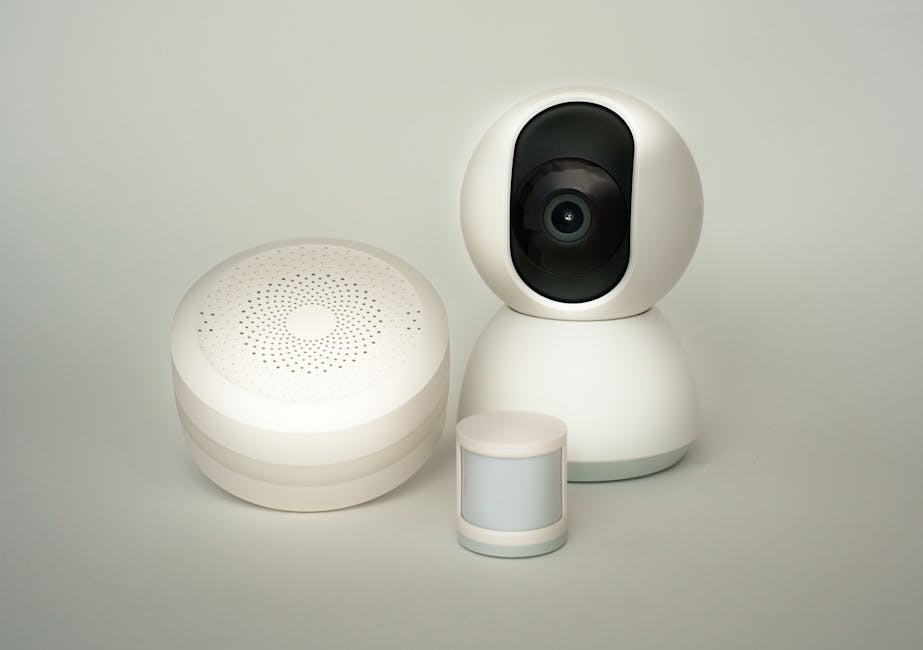
Within months, a stepwise budget ($75-$150) unlocks 3-4 smart plugs and a basic smart camera or doorbell. Suddenly, major pain points—“Did I switch off the iron?”, “Who’s at the gate?”—are neutralized by automation. Importantly, smart plugs rank highest in user satisfaction, not for tech flashiness, but for their tangible impact on safety and utility savings.
Phase 3: Climate Management—Singapore’s Hidden ROI Engine
Climate control is not merely “nice to have”; in Singapore’s year-round heat, smart thermostats, now available for as low as $70, are the engines of ongoing energy ROI. Households typically recoup their investment in 18-24 months, thanks to optimized aircon usage and granular utility monitoring. For many, this energy payback is the rationale turning smart tech from “cool” to “compulsory”.
Phase 4: Advanced Sensors and Integration
The final months see the addition of motion sensors, extra bulbs, and entertainment integration—filling functionality gaps, but, importantly, only after the homeowner has tested comfort and workflow suitability with earlier investments. This staged, evidence-based approach reduces buyer’s remorse and ensures every dollar delivers real, lived value.
Real-World Implications: Case Studies and Consumer Behavior Insights
Transforming HDB Flats: From Theory to Practice
Singapore’s HDB flat owners—often working within tight physical and budget constraints—are the key beneficiaries. With standardized layouts, one $700 kit can blanket an entire 3-room flat with intelligent lighting, remote appliance shutdown, and basic entry monitoring. Importantly, online retailers like Seconds.sg, Luxus Digital, and Mowe Smart Home have responded by curating size-appropriate packages—removing guesswork, bundling discounts, and offering integration guarantees that were unheard of in earlier DIY-only eras.
Non-Traditional Buyers: The Rise of DIY Tinkerers
A parallel revolution is underway for the technically inclined. Microcontroller platforms (Arduino, Raspberry Pi, ESP32/8266) mean that for as little as $25 per project, enthusiasts can craft custom moisture sensors for gardens, environmental monitors for bedrooms, or even motion-triggered lighting—cutting costs by 40-60%. These systems, though requiring more technical investment, are no longer the sole domain of engineers; robust online communities and ready-made kits are democratizing access. The result: Singaporeans now choose between commercial ease and DIY customization, with hybrids frequently emerging as the optimal middle way.
Comparing Ecosystems: The Battle for the Singaporean Living Room
Amazon Alexa: Dominance Through Compatibility
Alexa reigns supreme in Singapore’s budget segment, primarily due to its vast third-party device support and aggressive local pricing. With the Echo Dot at $50, and a deep pool of compatible bulbs, plugs, and security gear, Alexa is often the recommended default for those seeking maximum future-proofing.
Google Assistant: AI Smarts, Growing Reach
While Google Assistant lags slightly in device availability, its AI strengths and deep integration with existing Google services make it highly attractive for Android-centric households. Adoption is rising, and ecosystem gaps are narrowing each year.
Apple HomeKit: Premium Niche
HomeKit’s privacy and seamless iOS integration earn it loyalty among the Apple faithful, but higher device price floors (HomePod Mini at $99) and limited compatible accessories constrain its mass appeal. For those prioritizing privacy above all, however, it remains the gold standard.
Interoperability: The Matter/Tuya Revolution
Importantly, new protocols like Matter and Tuya are dissolving old walls, enabling devices to work across ecosystems. This is a boon for risk-averse consumers who fear “platform lock-in”—and signals an even more flexible future where ecosystem choice is less binding.
Risk Management: Avoiding the Pitfalls of Smart Home Transformation
Ecosystem Lock-In
No decision is more critical than choice of hub/voice assistant. To mitigate regret, savvy buyers validate that future purchases support their chosen system—or opt for “agnostic” devices with Matter support.
Recurring Subscription Costs
Cloud storage fees for cameras or advanced automation features can silently erode savings. A proactive owner budgets an extra 10-15% for subscriptions over a three-year span, and always inquires about local storage alternatives.
Device Proliferation vs. Real Utility
The temptation to buy “one of everything” is strong, but true value lies in clearly documented, desired automations. Setting 5-10 workflow goals before any purchase ensures that each device solves a real problem, not just scratches a tech itch.
WiFi Limitations
Many automation headaches trace not to devices, but to spotty WiFi—especially in larger flats. Homeowners are advised to conduct rigorous signal strength checks, investing in mesh systems (SGD $100-$300) where necessary, to safeguard reliability.
"Singapore’s 2026 smart home revolution is not merely about cheaper gadgets—it's a transformation in how utility, comfort, and sustainability interlock. Strategic, phased investment now yields paybacks that compound: immediate daily convenience, measurable energy savings, and a home that evolves with its occupants—not despite them."
Energy, Sustainability, and the Smart ROI Equation
Year-Round A/C, Year-Round Savings
Singapore’s tropical climate makes smart thermostat adoption uniquely compelling. Unlike temperate markets, where energy savings are seasonally bounded, Singaporeans extract 18-24 month paybacks on thermostat upgrades—often even faster in older, less efficient flats. This dovetails perfectly with national sustainability goals, aligning homeowner self-interest with carbon reduction targets.
Granular Monitoring, Tangible Results
2026-era thermostats come with advanced analytics, allowing users to identify and correct wasteful patterns—right down to the device level. This not only strengthens the business case for smart adoption, but creates data-driven habits that persist beyond the hardware’s first lifecycle.
Retail Channels and the Triumph of Online-First
Battlefield Shift: From Showrooms to Clicks
While major brick-and-mortar outlets like Courts and Harvey Norman still carry smart home staples, their budget selections remain limited, and prices are often higher due to overhead. The true revolution is online, where specialists like Seconds.sg, Luxus Digital, Koble.sg, and Mowe Smart Home offer curated bundles, integration support, and frequent discounts. The upshot: enhanced transparency, better value, and faster shipping—critical for buyers wanting to test-drive technology before fully committing.
The Bundled Solution: Reducing Cognitive Barriers
By packaging hubs, switches, and bulbs in ready-to-run kits, retailers help consumers leapfrog compatibility FOMO and decision overload. Particularly for buyers skeptical of smart home complexity, these “essential” packs provide low-risk gateways to the automation universe.
Forward-Thinking Insights and Practical Adoption Timeline
Six-Month Blueprint: Pragmatic, Satisfying Progression
True to the phased model, Singaporeans are advised to invest sequentially:
Months 1-2: Hub + 4 bulbs + 3 plugs (SGD $120-$160) — Core control and utility.
Months 3-4: Camera/doorbell + extra bulbs (SGD $80-$140) — Security and lighting expansion.
Months 5-6: Smart thermostat (SGD $120-$180) — Unlocking energy savings and climate control.
Months 7-8: Motion sensors, smart lock, or media integration (SGD $100-$200) — Advanced automations.
Within 8 months, most households reach full functional coverage for SGD $420-$680—comfortably beneath the $500 USD threshold, but with room for future expansion as needs or budgets evolve.
Comparative Analysis: Singapore vs. Global Benchmarks
Why Singapore is Unique
While international guides often cite $150-$500 USD setups, Singapore’s pricing is shaped by higher import duties, smaller economies of scale, and regulatory quirks. Yet, the narrowing price gap—with mid-range brands now feasible—means the local market is catching up rapidly.
The Modular Mindshift
Globally, smart home adoption often meant extensive renovations or specialist installers; in Singapore, plug-and-play is king—no hacking walls, no “contractor lock-in,” just incremental upgrades guided by real user feedback.
Policy Synergies
Singapore’s energy strategy and HDB’s retrofitting programs intersect with smart home adoption, amplifying the personal and infrastructure-level benefits of embracing automation, unlike countries where energy is less costly and policy less coordinated.
Strategic Recommendations for Business Decision Makers and Policymakers
Emphasize Modular On-Ramps
Entry-level hub + lighting kits at SGD $150-$250 are the ideal “on-ramp,” lowering commitment anxieties and driving mass-market adoption.
Leverage the DIY Ecosystem
Support for maker platforms in public education and community hubs can democratize smart home tech, seeding a generation of local innovators.
Align with Sustainability Initiatives
Smart thermostat subsidies, energy monitoring grants, and support for interoperable standards (e.g., Matter) further accelerate uptake while ensuring investments remain relevant as technology evolves.
Conclusion: The Strategic Imperative and Trajectory Ahead
The 2026 smart home marketplace is not an evolutionary step—it is a leap. For Singapore, where urban density meets high energy costs and progressive policy, the fusion of aggressive pricing, open ecosystem design, and phased adoption makes sub-$500 smart homes not just possible, but inevitable. This is no longer the domain of gadget enthusiasts or luxury buyers; it is the new normal for value-focused, sustainability-minded households.
Business leaders and policymakers should note: the window for leadership in this domain will close as quickly as it opened. Proactive investment in education, open standards, and bundled solutions will separate the innovators from the followers. In the years ahead, the real competition will not be over who has the fanciest gadgets, but who can build the most resilient, adaptable, and intelligent living spaces for the broadest swath of Singaporeans.
The smart home revolution is here—quiet, modular, and within reach. The bold will not just ride this wave—they will shape the tomorrow where automation is the expectation, not the exception.