
How Vietnamese Startups In Hanoi & Ho Chi Minh Are Turning US Tariff Shocks Into Global Investment Wins Across EU, India, Japan, And ASEAN
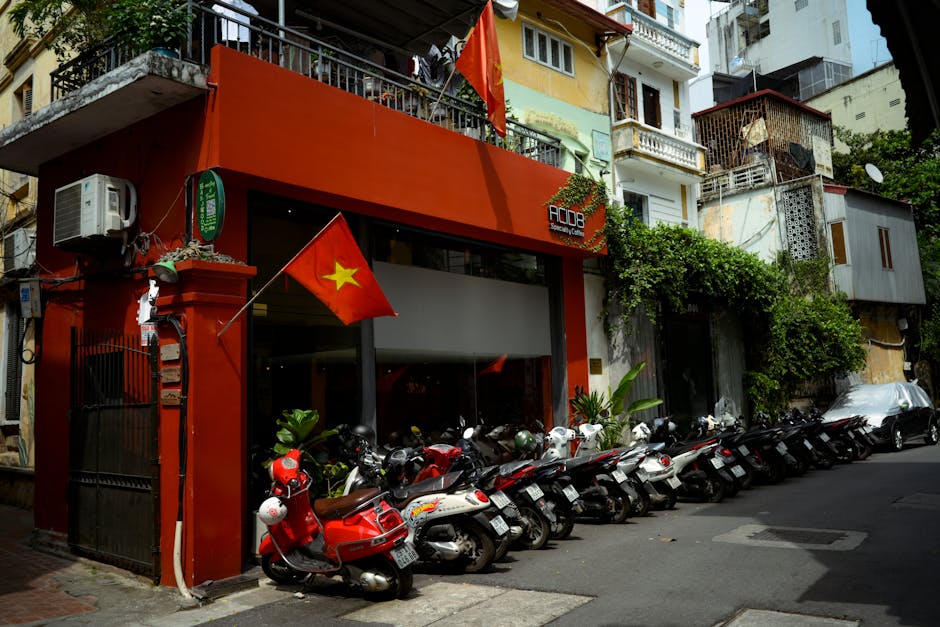
From Tariff Shock to Tech Renaissance: How Vietnamese Startups Are Rewiring Global Investment Pathways
For decades, Vietnam has been emblematic of Asia’s emergence as a tech manufacturing powerhouse—a vital link in electronics supply chains, a rising player in semiconductors, and a springboard for innovative startups scaling the digital future. Yet in 2025-2026, the ground shifted dramatically: the US, long a key export partner, leveled unprecedented reciprocal tariffs, threatening to erase up to $25 billion in exports and fracture a $21.45 billion semiconductor market overnight. But instead of yielding to economic headwinds, Vietnam’s vibrant startup ecosystem pivoted—sparking new patterns of resilience, regional engagement, and innovation that now serve as a blueprint for crisis-born opportunity.
The Tariff Quake: Quantifying Shockwaves and Exposing Fault Lines
Historic Tariff Escalation. In early 2025, the US imposed a "blanket" 10% tariff on Vietnamese tech and electronics imports, with semiconductors, smartphones, and EV components facing an initial, nearly paralyzing 46% tariff—though later negotiated down to a still-punitive 20% bracket (RMIT; The Asset). The effect was immediate and profound: UN estimates forecasted up to $25 billion in lost exports, with US-bound shipments slashed by 20% and global supply chains straining under cascading costs.
Vulnerable Sectors. The semiconductor industry, projected at $21.45 billion for 2025 (Statista), bore the heaviest brunt—the new tariffs rendering US market play nonviable for most startups. Electronics giants like Samsung and LG faced 25% rates on smartphones, halting Bac Ninh expansion plans (YouTube), while Vietnamese EVs and chip components exposed to Chinese supply origins were subjected to a staggering 100% tariff penalty.
Startup Squeeze. For smaller, resource-limited hardware and IoT entrepreneurs, the impact was doubly severe. Startups reported a 10–34% tariff increase on imported parts, especially from China, Taiwan, and South Korea (The VC Corner). Margins collapsed by 20–30%, with many delaying launches by up to six months. Foreign direct investment, which historically hovered above $20 billion annually, stalled for the first time in years. The specter of lost competitiveness loomed large, sparking existential questions for both founders and investors.
Emerging Patterns: Reinvention Amid Crisis
From Export Reliance to Diversified Growth
Pivot to Regionalization. The most dynamic Vietnamese startups responded not with retrenchment, but with a radical pivot. Recognizing the US market’s heightened risk, founders and VCs shifted strategic focus to high-growth, low-tariff regions—specifically the EU, India, Japan, and ASEAN. Here, new-generation trade agreements like the CPTPP (Comprehensive and Progressive Agreement for Trans-Pacific Partnership) and EVFTA (EU-Vietnam Free Trade Agreement) provided a decisive edge, slashing tariffs to as low as zero for 70% of EU-destined goods (Vietnamnet).
Comparative Export Performance. While the US market contracted, Vietnam’s exports to Germany, Canada, and Australia surged by 15–20%, fueled by trade pacts and compliant supply chains. India’s electronics import boom (up 25%) created new outlets for sensors and hardware, while Japan’s stable 8% tech demand and ASEAN’s 18% intra-regional trade expansion opened alternative growth corridors. In effect, Vietnamese startups rewrote their go-to-market strategies overnight—demonstrating that agility was not just a buzzword but a survival imperative.
Innovative Practices: Building Tariff-Resilient Supply Chains
Tech as Insulation. Sensing the fragility of global supply chains, a new class of “resilience startups” emerged, building tools specifically designed to absorb or sidestep tariff shocks. Blockchain-based origin tracing became essential: by documenting local content and certifying Vietnam-compliant inputs, tech firms could avoid or reduce 20% tariffs tied to Chinese-origin goods (The Investor).
Supply Chain AI. Artificial intelligence entered the fray as both a cost-cutter and a compliance enabler. Predictive analytics tools not only trimmed supply chain waste by up to 15% but also helped founders adapt procurement and logistics for multi-market resilience. Startups that developed these platforms—be they for onshoring manufacturing, automating trade finance, or optimizing cross-border fulfillment—found themselves courted by a new wave of global venture investors.
Investment Flows: The Rise of the “Resilience Premium”
Valuation Dynamics Shift. Before the tariff wave, Vietnam’s tech sector boasted $28 billion in FDI (2024) and a robust $2.1 billion in startup funding (2025). Though Q1 2026 saw a contraction (down 12% overall), capital quickly rerouted to niches positioned for post-tariff growth. Startups leveraging supply chain software, onshore manufacturing, and trade AI saw a 30–40% jump in VC interest, often commanding up to 25% valuation premiums over legacy hardware players.
Region-Specific Venture Platforms. The most successful fundraising now originates from regionally aligned platforms. For the EU, Dealroom.co connects resilience-focused founders to German-led capital. India’s hardware and EV funds, via Inc42, are pouring into supply chain tech. Japan’s Global Brain favors semiconductor and AI plays, while Golden Gate Ventures emerges as ASEAN’s hub for trade software and manufacturing scale-ups.
Deal Examples. In May 2026, a Hanoi-based AI-chip startup closed a $15 million Series A via Golden Gate Ventures—expressly focused on ASEAN market expansion. Ho Chi Minh’s leading IoT firm landed EU-destined funding through Dealroom.co, leveraging full EVFTA compliance for tariff exemption. For investors, the calculus is clear: backing “tariff-resilient” Vietnamese tech can yield as much as 20% margin recovery within twelve months, offsetting short-term valuation shocks (RMIT).
Comparative Perspectives: Beyond the Immediate Crisis
Incumbents vs. Disruptors. Established hardware exporters and FDI-dependent manufacturers often face greater inertia, struggling to rebuild supply chains and rebrand for new markets. By contrast, software-driven startups, digital trade platforms, and blockchain-enabled exporters adapt more nimbly—turning crisis into competitive differentiation. Whereas multinationals like Samsung or Foxconn pause investment or retrench, local champions and “born-diverse” startups win VC premiums and policy support.
Global Investor Calculus. For foreign investors, Vietnam’s tech landscape now offers a split-screen view: on one side, legacy players discounted up to 15% due to tariff exposure; on the other, high-return opportunities in AI chips, trade finance software, and resilience tech—often with built-in access to high-growth regions and consistently improving ESG/IP frameworks.
“Vietnam’s tariff crisis is not an endpoint but a pivot. Those who can leverage regional partnerships, compliance technology, and diversified capital will not only survive but lead the next era of global tech innovation.” — Synthesis from The Asset, RMIT, and regional VC interviews
Actionable Insights: Building for the Next Era
For Vietnamese Startups:
• Diversify Immediately: Prioritize the EU, India, Japan, and ASEAN, using CPTPP/EVFTA for access to zero- or low-tariff markets. Germany, Australia, and Canada show record growth rates for compliant Vietnamese exports.
• Deploy Resilience Tech: Invest in AI-driven logistics, blockchain for input tracing, and onshore manufacturing capabilities. These draw premium VC attention from resilience-focused funds.
• Leverage Platforms: Seek capital via Dealroom.co (EU, deep tech), Inc42 (India, hardware/EV), Global Brain (Japan, semiconductors), and Golden Gate Ventures (ASEAN, supply chain).
• Accelerate Governance Reforms: Emulating the Mexico model—with IP and ESG transparency—adds up to 25% in US/EU investor interest, even amid macro turbulence.
For Global Investors:
• Act Now: The next twelve months present rare entry points—both on discounted, tariff-exposed assets and high-growth resilience startups.
• Bet on Reinvention: The most promising returns lie in Vietnam’s rapid pivot—from legacy export dependence to software-driven, multi-market leadership.
Conclusion: Vietnam’s Tariff Crisis—A Catalyst for Tech Sovereignty and Regional Leadership
The US tariff shock of 2025–2026 may represent the steepest challenge to Vietnam’s tech ascendancy in a generation—but history will likely remember it as a crucible for reinvention. The emergent narrative is neither defeat nor simple adaptation, but one of strategic acceleration: from mono-market export models toward a diversified, resilient, and innovation-led economy. Vietnamese startups, armed with blockchain transparency, AI-driven supply chain intelligence, and new capital partnerships, are already reclaiming lost ground—not just surviving the storm, but re-charting the map of global technology investment.
The lesson for business leaders and investors is clear: in an era of persistent geo-economic volatility, the winners are not those who cling to past advantages, but those who see crisis as catalyst—leveraging networks, data, and regional blocs to rewrite the rules of engagement. For Vietnam, the future is not about weathering shocks, but about leading the next wave of global tech transformation. Decision makers, founders, and investors: the time to pivot—and profit—is now.