
How ZUS And Luckin Coffee Are Outpacing Starbucks In Malaysia And China: Hyper-Local AI, App Innovation, And ROI Insights For 2025
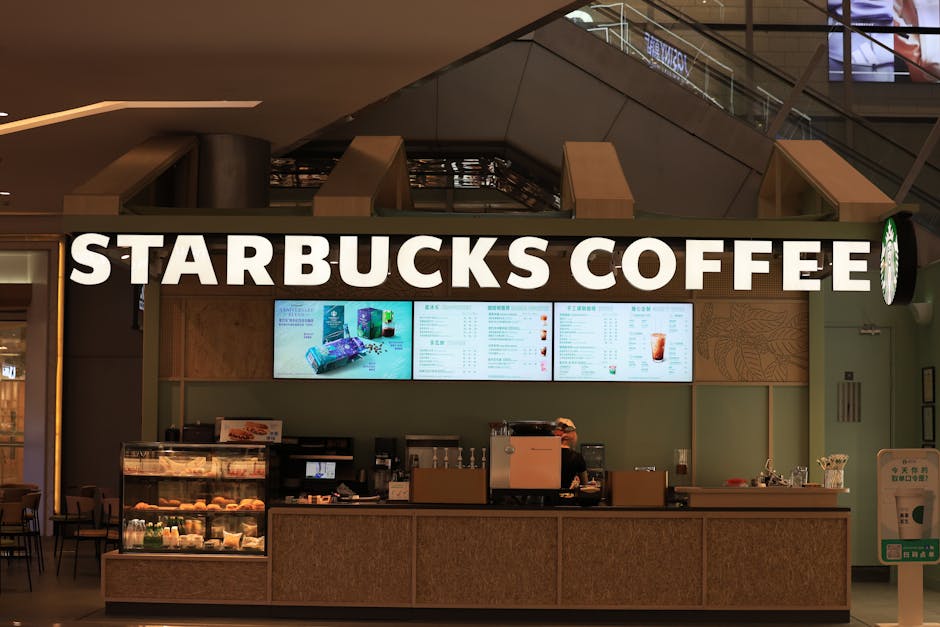
Competing Angles: How Regional Challengers Are Outpacing Starbucks with Hyper-Local AI & App-Driven Models
Starbucks, the global juggernaut synonymous with café culture, faces a tectonic shift in the competitive landscape as 2025 unfolds. Once unrivaled in its mastery of coffee and customer loyalty, the Seattle-based chain now contends with a new breed of digital-native contenders in Asia-Pacific who are redefining the rules of engagement. These competition dynamics, underpinned by hyper-local artificial intelligence, machine learning, and advanced mobile ecosystems, represent more than a geographic skirmish—they signal a transformation in how chains scale, personalize, and operationalize experience. From Malaysia’s ZUS Coffee to China’s meteoric Luckin Coffee, regional players are rapidly outpacing Starbucks on their home turfs by deploying technology as a force multiplier. As Starbucks fights to modernize its vast empire, the battle lines are drawn not just over coffee, but over the DNA of the future digital café.
From Market Leader to Digital Challenger: Setting the Stage
The Starbucks playbook has long been defined by global expansion, premium branding, and operational efficiency, culminating in its current 36,000+ store empire. Yet, beyond the visible storefronts, the real contest is unfolding in invisible code—algorithms predicting demand, AI optimizing inventory, and apps forging digital loyalty. The impetus for Starbucks’ AI-driven supply chain overhaul is clear: defend market share, mitigate labor and stockout losses, and futureproof the business.
According to GrowthHQ (2025), Starbucks’ Deep Brew and NomadGo AR technologies were rolled out to 11,000 North American stores by the end of 2025, reducing stockouts by 30–40%—protecting $300–$400 million in revenue, shaving 8–10 hours of labor per store per month (totaling $1.5–2.5 billion in savings), and cutting waste by 10–15% (another $150–225 million saved). These numbers suggest operational brilliance, but the real test lies in how these investments translate to relevance and growth when regional rivals are winning the hearts—and thumbs—of a new generation of digital-first customers.
The Rise of Regional Digital Disruptors: ZUS Coffee and Luckin Rewrite the Script
ZUS Coffee: Data-Driven Disruption in Malaysia
In Malaysia, a market once considered a Starbucks stronghold, ZUS Coffee has rapidly become the fastest-growing chain, eclipsing Starbucks’ local presence with over 400 stores versus Starbucks’ 200+ by Q4 2025. The secret sauce? Hyper-local AI and App-Driven Personalization. ZUS's mobile app leverages machine learning for 95% order prediction accuracy, enabling dynamic menu tweaks—like algorithmic variations on beloved local flavors such as teh tarik. This approach drives 40% repeat orders through tailored experiences, a figure that more than doubles Starbucks’ digital engagement in Malaysia.
Revenue reflects the model’s potency: ZUS saw a staggering 300% year-on-year growth to RM500 million ($115 million USD). A remarkable 70% of sales are digital, compared to Starbucks’ 25%. By integrating IoT-powered real-time inventory management, ZUS not only achieved 99% inventory uptime but slashed stockouts by 50% without the massive capital expenditure of its global rival. With low-overhead kiosks and a flexible tech stack, ZUS now enjoys a 45% margin, further compounding its advantage. (Forbes Asia, 2025)
Luckin Coffee: App-First Dominance in China
Luckin Coffee’s rise is nothing short of meteoric. Now at 41,000+ stores across China and Southeast Asia, Luckin’s digital infrastructure is the engine of its scale. The “Luckin Algorithm” personalizes 80% of orders with contextually intelligent features (think weather-triggered beverage suggestions), boosting customer lifetime value by 35% and same-store sales by 22%.
Luckin’s supply chain AI rivals, and arguably surpasses, Starbucks’ Deep Brew, featuring drone deliveries for 20% of urban orders—slashing stockouts to below 1% versus Starbucks’ pre-AI 4% baseline. Returns are correspondingly robust: quarterly AI-driven revenue in China hits $4.1 billion, tripling Starbucks’ China take. With over 410% store growth since 2020 and plans for 50,000 outlets by 2026, Luckin stands as the archetype of app-first retail expansion (Reuters, 2026).
Competing Paradigms: Inventory AI vs. Hyper-Personalization
Starbucks’ Deep Brew: Mastering Supply Chain Complexity—But at What Cost to Experience?
While Starbucks’ investments in AI supply chain optimization are bearing fruit in traditional metrics—stockout reduction, waste minimization, and labor efficiency—the chain’s digital journey is outpaced by local champions in app engagement and personalization. Deep Brew’s 92% accuracy in demand forecasting and real-time inventory visibility (99% with NomadGo AR as of September 2025) set the gold standard for operational control (AInvest, 2025).But even as Starbucks marks a 30% ROI in key markets ($200–300 million incremental revenue) and slashes R&D cycles with its FlavorGPT module, the competitive gap is clear: only 25% of Starbucks’ global sales are digital, versus Luckin’s and ZUS’s 70%-plus.
In China, personalized app orders deliver a 28% uplift, but that lags Luckin’s 35% boost to customer lifetime value. Equipment efficiency gains (from 72% to 86%) and cost savings are impressive, yet the wave of consumer-centric innovation is, for now, cresting elsewhere.
Dissecting the Gaps: Where Starbucks Lags and Why It Matters
Digital Loyalty: The New Growth Lever
Both Luckin and ZUS treat their apps as primary points of sale and data collection, not mere loyalty add-ons. This orientation yields powerful network effects: higher frequency, agile product launches, and near-frictionless inventory balancing—tools that are especially potent in fragmented, rapidly urbanizing Asian markets.
Starbucks’ 25% digital sales ratio spotlights the gap. While its app is popular in the U.S. and select Asian metros, it lacks the deep contextual personalization seen with regional leaders. Luckin’s ability to trigger weather-sensitive recommendations, or ZUS’s dynamic local flavor profiles, demonstrate what is now possible with AI-first, app-centric design.
Capital Efficiency: Small Store, Big Impact
The operational models adopted by challengers further stress Starbucks’ disadvantage in capital allocation. ZUS and Luckin rely on low-overhead kiosks and micro-outlets, maximizing reach with minimal real estate costs. ZUS, for instance, leverages “Coffee 2.0” technology—integrating IoT sensors with a modular platform—allowing for rapid scaling at 45% operating margins, surpassing even Starbucks’ global average.
Comparative Landscape: The New Playbook for Scalability
Below is a snapshot comparison of key players highlighting contrasting strategies and their resulting impact:
- Starbucks (36,000 global stores): Leaning on inventory optimization (Deep Brew AI), with a 30% ROI and $2B labor savings in North America. Lags in digital engagement, with only 25% of global sales via digital channels.
- ZUS Coffee (400+ Malaysia stores): Combines machine learning for hyper-local personalization and IoT-driven real-time inventory. Achieves 45% profit margins, 300% YoY revenue growth, and 70% digital sales—twice Starbucks Malaysia’s footprint.
- Luckin Coffee (41,000+ APAC stores): App-first business powered by advanced recommendation algorithms and drone-enabled logistics. Generates over 30% ROI on $1B AI investment, drives 22% same-store sales uplift, and achieves near-zero stockouts (<1%).
Starbucks remains a template for global operational excellence, but the emergent pattern is clear: the next era of café retail will be defined by dynamic, digital-first ecosystems, not just backoffice efficiency.
Real-World Implications: What the Numbers Reveal
Revenue and Return on Investment Speak Loudly
The financials are stark. Starbucks’ $2B labor savings and $150–225 million in waste reduction in North America are milestones in traditional operational ROI. Yet, in the new paradigm, ZUS and Luckin’s app-driven business models generate outsized top-line growth (ZUS: 300% YoY; Luckin: 410% store growth in just five years), all while sustaining gross margins that challenge industry norms.
For investors and operators, these numbers highlight an existential question: Is operational cost-cutting enough when digital challengers define new consumer behaviors and scale at breakneck speed?
Customer Experience Reimagined
Personalization—the holy grail in the digital economy—moves beyond CRM. With Luckin and ZUS, AI-driven recommendations are not theoretical: they are native, unintrusive, and integral to daily routines. Starbucks has made strides in this direction (e.g., 28% uplift in China app orders), but its approach is still layered over a legacy model rather than built into the core.
“Starbucks’ supply chain AI delivers world-class efficiency, but as ZUS and Luckin demonstrate, winning the next decade requires translating operational prowess into emotionally resonant, digitally-anchored experiences that customers cannot find elsewhere.”
Patterns and Tactical Shifts: Lessons for Global Brands
Hybridization: Merging Inventory Intelligence with Digital Loyalty
The future is not binary. The optimal playbook likely combines Starbucks’ AI-driven inventory mastery with the digital engagement and hyper-personalization of Asia-Pacific upstarts. According to Periscope (2025), retailers that hybridize these models—deploying real-time supply chain AI alongside mature digital loyalty ecosystems—can unlock ROI upwards of 40%.
Agility Over Scale
ZUS’s approach—rapid R&D cycles (new SKUs in weeks, not months), micro-location flavor innovation, and minimal capex expansion—offers a template for how even legacy brands can reinvent around tech-driven agility.
Perspectives for New Viewers: What’s Different Here?
For legacy operators or Western observers, Starbucks’ story often stands as the archetype of global retail execution. For a new generation of founders, investors, or tech-native consumers in emerging markets, however, the playbook looks different:
- App as Core Business, Not Sidecar: Luckin and ZUS have made their digital apps the brand’s primary interface, not a bolt-on loyalty scheme. This redefines the chain’s scope of engagement—data flows, personalized offers, and operational triggers all originate from app-first design.
- Hyper-Local AI vs. One-Size-Fits-All: Instead of standard menu rollouts, these challengers let algorithms customize at the city or even neighborhood level, ensuring relevance and repeat business.
- Tech-Enabled Capital Efficiency: Kiosks, IoT integration, and drone logistics mean challenger chains can reach more consumers, faster, and with lower up-front investment than traditional store formats.
These perspectives challenge conventional wisdom. For Starbucks’ next chapter—and for global rivals seeking playbook inspiration—success means blurring the lines between operational excellence and digital intimacy.
Forward-Looking Insights: What’s Next in the Battle for Café Supremacy?
From AI-Enabled Inventory to AI-Orchestrated Experience
The next stage of competition will move beyond matching stockouts to less than 1% or eking out more labor savings. The ultimate prize is capturing the “digital moment”—being so intimately present in the customer’s daily life that choosing a competitor seems unthinkable.
Starbucks’ Deep Brew and real-time AR inventory mark a technical high-water mark. But as ZUS and Luckin demonstrate, data’s true power lies in orchestrating taste, mood, and context at the individual level—and doing so across vast, rapidly changing markets.
For global brands, the race is now on to integrate inventory and personalization AI, harness micro-location data, and close the gap in digital engagement. Those who hybridize best—fusing operational mastery with frictionless, emotionally resonant digital journeys—will not only win market share but set the standard for the next decade of retail.
Conclusion: The Strategic Imperative for Starbucks and the Industry
The fierce competition between Starbucks and its Asia-Pacific challengers transcends coffee. It’s a real-time laboratory for the digital transformation of global retail. The lesson is clear: mastery of inventory and operations, as Starbucks demonstrates, is necessary but no longer sufficient.
Retail’s new frontier is won through digital intimacy, hyper-localization, and app-first ecosystems. Regional champions like ZUS and Luckin prove that with the right mix of AI, agile tech, and capital efficiency, even global giants can be unseated. For Starbucks and industry peers, the gauntlet has been thrown: evolve or risk fading into irrelevance as the digital-native wave redefines what it means to “have a coffee.”
Investors, executives, and technologists should heed the call. The hybrid model—where supply chain AI meets emotionally intelligent personalization—will separate tomorrow’s leaders from laggards. The café wars of 2025 are a microcosm for a wider truth: whichever brand wins the app, wins the future.