
How ZUS Coffee Dominated Southeast Asia: Hyperlocal Partnerships Fueling Explosive Growth In Malaysia, Philippines, Thailand, And Beyond
ZUS Coffee’s Hyperlocal Disruption: How Malaysia’s Giant Is Rewriting Southeast Asia’s Coffee Playbook
In a region long dominated by multinational giants, a homegrown challenger is rapidly redrawing the competitive map of Southeast Asia’s coffee industry. ZUS Coffee, founded in late 2019 as a humble delivery kiosk in Malaysia, has surged to become the region’s fastest-expanding coffee chain—with 1,000 stores and a blueprint that may change how coffee is brewed, delivered, and experienced across ASEAN. This exposé unpacks ZUS’s explosive growth, its hyperlocal partnership strategy, and what its meteoric ascent means for global players, local competitors, and the very future of retail foodservice in the digital age.
The Ground Zero: Malaysia’s Brewing Revolution
From Underdog to Market Leader: When ZUS Coffee opened its first outlet in late 2019, few could have predicted its present dominance. As of Q4 2025, ZUS boasts 743 Malaysian stores, eclipsing Starbucks’ 320 and taking a commanding lead in its home market. The core advantage? A hyperlocal, partnership-driven model that infiltrates neighborhoods and leverages existing micro-infrastructures.
Pandemic-Era Opportunity: The COVID-19 crisis redefined consumer patterns, supercharging online demand and giving ZUS an unexpected tailwind. By blending physical outlets (often just 100 sqm or less) with app-driven delivery and pickup, ZUS achieved unbeatable density and efficiency—often with 40-50% lower costs versus traditional cafés.
Financial Muscle: The outcome is not just top-line expansion, but impressive profitability: ZUS closed 2024 with RM37 million (US$8.6 million) in net income, proof that asset-light growth can indeed scale sustainably while outpacing asset-heavy competitors.
The company’s dramatic growth aligns with its viral marketing moments—like the October 2025 1,000th-store stunt, where 999 outlets temporarily closed, sending app engagement through the roof and cementing ZUS’s reputation as both innovator and disruptor.
Hyperlocal Partnerships: The Secret Sauce
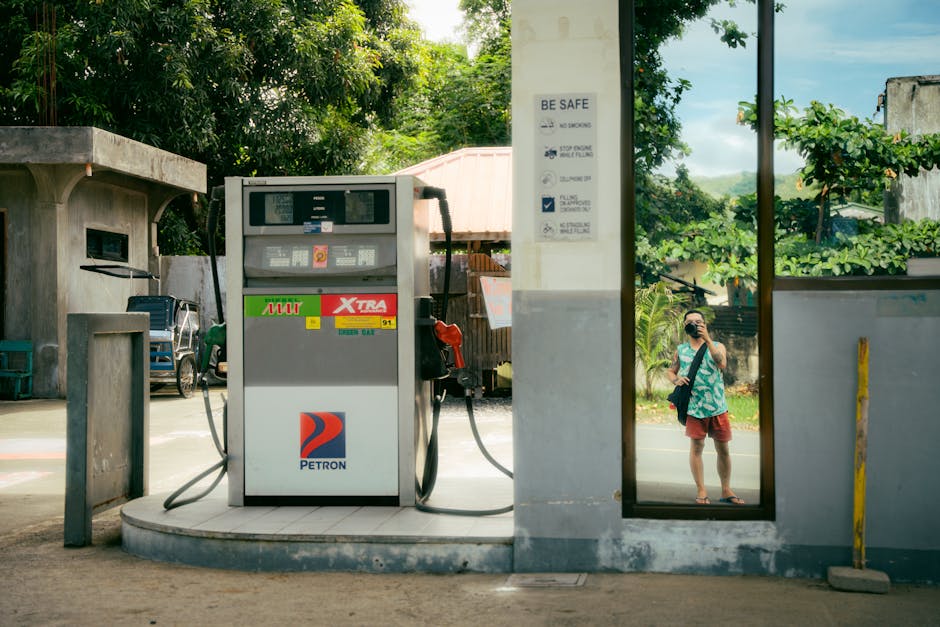
Reimaging Retail Footprints: Unlike Starbucks—whose iconic outlets can demand capex of US$500,000 or more—ZUS partners with local entrepreneurs, real estate groups, and delivery platforms, typically opening stores at a fraction of the cost (under US$50,000). In Malaysia, for example, alliances with petrol stations, convenience store chains, and neighborhood kiosks ensure low rent and high visibility.
Neighborhood First: ZUS does not seek expensive flagship real estate. Instead, it saturates urban and suburban areas through hyper-dense networks that bring coffee within walking distance of most consumers. The company’s hyperlocal model is built on integrating into existing ecosystems—think partnerships with 7-Eleven analogues, condominium retail strips, and even warungs (small shops) in Indonesia.
Operational Leverage: These partnerships fuel agility. With 70% of stores franchised or locally partnered, ZUS harnesses local knowledge and grassroots promotion. Owners leverage regional digital platforms (like WeChat and Grab), driving delivery sales that account for approximately 60% of total revenue.
Regional Rollout: Tactics by Country
Malaysia: The Control Benchmark
Dominance by Density: In Malaysia, ZUS’s homegrown advantage is overwhelming: 743 stores as of end-2025—more than double Starbucks and a threat to traditional Kopi Tiam players. Hyperlocal alliances with convenience stores, high-rise residentials, and local micro-entrepreneurs have drastically lowered operating and capital expenses, enabling ZUS to undercut competition by 20-30% at the register while still realizing robust profitability.
App Economy Integration: By plugging into GrabFood and similar superapps, ZUS ensures seamless order and delivery experiences—further scaling network effects and cementing customer loyalty.
Philippines: Delivery-First Domination
Pioneering Early: Having entered the market in September 2023, ZUS rapidly established 200 stores by late 2025, with an aggressive plan to add 80 more the following year. The Filipino rollout leverages strategic partnerships with mall operators and the sari-sari (village store) network, embedding ZUS’s digital infrastructure at the true grassroots.
Competitive Thrust: By pricing lattes 25% below incumbents like Figaro and Bo’s Coffee and integrating with GCash for loyalty, ZUS is poised to capture urban millennials and digital natives in a new kind of retail ecosystem.
Thailand: Urban Aggression
Bangkok as a Pilot Ground: ZUS’s Thailand strategy is tightly focused: just two stores at entry in 2025, but a plan for 50 by end-2026, specifically targeting high-traffic zones like BTS stations and condo complexes. Local alliances with Chatime kiosks and platform integration via Line app are poised to turn ZUS into the dominant affordable café for Bangkok’s urban youth.
Financial Outlook: With US$10 million revenue forecasted for 2026 and an urban density strategy, ZUS aims for a rapid ROI, mirroring its home market’s trajectory.
Indonesia: The Ultimate Test
High Stakes, High Potential: Indonesia, the world’s fourth-largest coffee market, is a fiercely competitive landscape dominated by local behemoth Kopi Kenangan (1,000+ outlets). ZUS’s plan—launching its first store in 2025, targeting 100 by 2026—relies on converting warungs and integrating seamlessly with Gojek/Grab for delivery.
Market Differentiation: A halal-certified brand push and hyperlocal alliance strategy are expected to carve a niche among Muslim-majority urban consumers, putting ZUS head-to-head with both global and entrenched local chains.
Singapore & Brunei: Testing Premium Waters
Selective Entry: Singapore’s affluent, cosmopolitan market and Brunei’s Sharia-compliance standards require a tailored approach. Here, ZUS explores partnerships with hawker centers and mosque-adjacent sites, with 6 new Singapore stores planned for 2025 and the first Brunei shop debuting the same year.
Focus on Affordability: Even in these higher-cost, more regulated environments, ZUS hopes its value-driven proposition will disrupt Starbucks’ ubiquity by offering café experiences at half the price.
The Comparative Play: ZUS vs. Global and Local Titans
Starbucks: Asset-Heavy, Brand-Rich: With an estimated 2,500 outlets across Southeast Asia, Starbucks remains the benchmark for café prestige. Yet, its cost structure—driven by large, brand-centric outlets—renders it vulnerable to an agile, asset-light disruptor. ZUS’s prices are 20-30% lower, and it matches Starbucks’ regional store additions at just one-third the capital expenditure.
Luckin Coffee and Regional Natives: New entrants like Luckin pursue tech delivery, but lack ZUS’s community integration. Indonesian chains like Kopi Kenangan leverage local knowledge, but not the region-wide scale—yet.
ZUS’s Delivery-Tech Edge: With 60% of sales via delivery, and most outlets under 100 sqm, ZUS maximizes profit per square meter while extending its reach deep into local communities. Its flexible model adapts easily to regulatory, cultural, and economic conditions—vital in the fragmented Southeast Asian market.
Growth Patterns, Tactics, and Lessons for Global Retail
Hyperlocal Agility: ZUS’s rise is a case study in the power of hyperlocal partnerships: by working alongside thousands of small entrepreneurs, kiosk owners, and platform partners, ZUS achieves what traditional asset-heavy chains cannot—ultra-fast, low-risk scale. The model is bolstered by a franchise-first approach: 70% of stores are operated by partners who share revenue and handle local operations.
Tech-Enabled Standardization: Operational consistency is ensured through proprietary apps for franchisee training, supply chain management, and AI-powered site selection. By using local footfall data, ZUS identifies optimal locations years ahead of slower-moving global competitors.
Viral Marketing and Loyalty: ZUS’s marketing culture is digital-native and nimble. The 1,000th-store stunt, which saw nearly all outlets close for a day, triggered a viral spike in app downloads and social media engagement—turning a massive operational risk into a brand-defining moment.
Competitive Pricing: By reducing cost per outlet and delivery friction, ZUS sustains prices 20-30% below the industry standard—making “premium” café culture available to a wider base of Southeast Asian consumers. This democratization of coffee shop experiences is a major driver of brand affinity and local market share.
Real-World Implications and Strategic Insights
For Entrepreneurs: ZUS demonstrates that high-impact consumer brands no longer need deep pockets or global resonance to scale. Instead, scalable tech platforms, hyperlocal partnerships, and community-driven promotion can deliver faster, more profitable growth than the flagship-store model.
For Investors: The model’s capital efficiency is hard to overstate: opening a ZUS outlet typically requires one-tenth the investment of a Starbucks, and partners bear much of the operational risk. With projected group revenues of US$50M in 2026, ZUS is on a path to become a Southeast Asian unicorn—if it maintains growth velocity and operational quality.
For Policymakers and Urban Planners: The rapid proliferation of ultra-small coffee outlets raises questions about urban retail mix, rental markets, and traffic patterns. ZUS’s success suggests that cityscapes designed for flexible, multi-purpose retail will be the big winners in the next decade.
For Technology Providers: ZUS sets a benchmark for the integration of AI-driven site selection, delivery APIs, and mobile loyalty systems. This tech backbone isn’t just the “support”—it’s the engine that enables hyperlocal retail at scale.
“ZUS Coffee’s rise proves that hyperlocal partnerships, driven by data and empowered by tech, can outperform even the most entrenched global chains—offering a blueprint for 30% Southeast Asian market share by 2028.”
— Adapted from GCR Magazine
Diverging Perspectives: Newcomers, Incumbents, and Skeptics
For Newcomers: The ZUS model is compelling but not yet universally proven outside Malaysia. Its hyperlocal approach may face structural, regulatory, or cultural resistance, especially in markets with established beverage and snack traditions or onerous franchise rules.
For Incumbents: Global giants—Starbucks, Luckin, Coffee Bean—may view ZUS’s growth with both alarm and skepticism. While their scale and brand equity remain unchallenged for now, their higher cost base and slower adaptation cycles could see market share erode in key urban and youth segments.
The Skeptic’s View: Some analysts caution that ultra-fast scaling, especially with a partnership-heavy model, could compromise quality control, brand consistency, and customer service. The durability of ZUS’s asset-light platform during future economic downturns or regulatory shocks remains to be fully tested.
Forward-Thinking: What Comes Next?
Market Consolidation: ZUS’s next logical step is acquisition—especially in the Philippines and Thailand, where purchasing a 100-store local rival could instantly deepen its footprint.
Menu Diversification: With coffee representing 80% of today’s revenue, expanding deeper into foodservice (sandwiches, desserts, local snacks) and premium beverages can insulate ZUS from market saturation and broaden appeal.
Regulatory Navigation: Countries such as Indonesia require halal certification, and Brunei enforces Sharia-compliance. ZUS must continuously adapt menus, store formats, and digital services to align with evolving rules and consumer expectations.
Technology Arms Race: The battle will intensify around mobile loyalty, AI-powered delivery, and superapp integration. As ZUS refines its proprietary systems, global chains will be forced to accelerate their own tech investments—or risk irrelevance among younger ASEAN consumers.
Conclusion: The Future of Coffee Is Local—And Digital
ZUS Coffee’s rapid rise is more than a business story; it’s a paradigm shift for Southeast Asian retail and the global coffee industry. By fusing hyperlocal partnerships, an asset-light expansion model, and an obsession with tech enablement, ZUS has achieved what global giants can only envy: market leadership, viral brand engagement, and sustainable profitability—within just six years.
This model is not without risks—quality control, cultural adaptation, and regulatory exposure will be critical variables. Yet, the lesson for decision-makers is clear: In the next decade, the winners in food and beverage will not be those who own the most expensive real estate or the most recognizable logo, but those who build genuine community ties, leverage local entrepreneurship, and create digital ecosystems tailored to Southeast Asia’s dynamic urban populations.
As competition intensifies, ZUS’s story will serve as both an inspiration and warning: adapt, partner, and localize—or face a slow fade into irrelevance. For those willing to embrace the hyperlocal future, the next “ZUS moment” may be just around the corner.
For deeper analysis and supporting data, see: Asia Food & Beverages, World Coffee Portal, and GCR Magazine.