
How ZUS Coffee Surpassed Starbucks In Malaysia: The App-First, Halal-Centric Strategy Fueling Southeast Asia’s Coffee Revolution
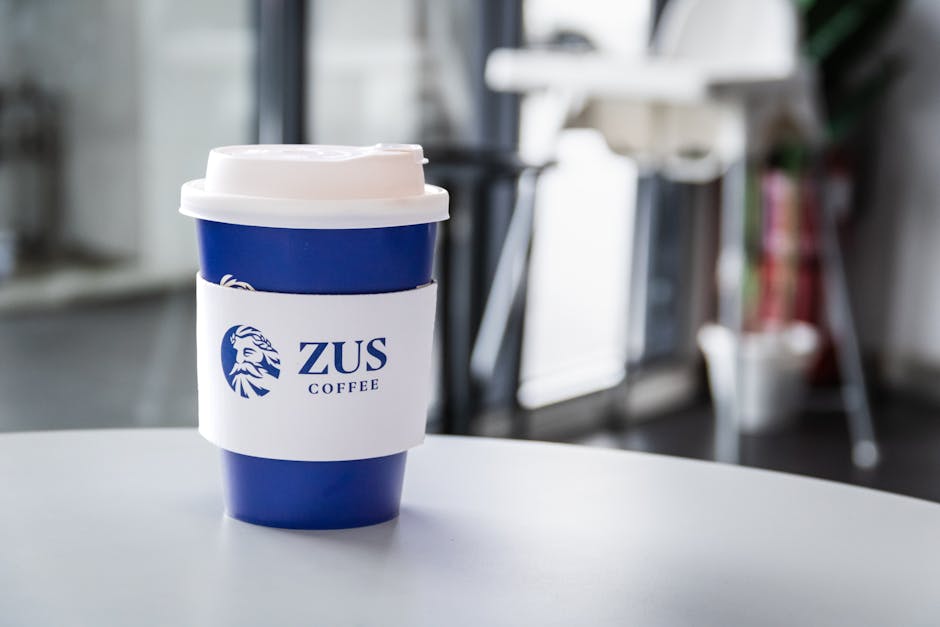
The Anti-Starbucks Playbook: How ZUS Coffee Used Price, Halal Trust, and Digital Mastery to Dethrone a Global Giant in Malaysia—and Set Southeast Asia’s Coffee Wars Ablaze
In 2019, when ZUS Coffee quietly opened its first outlet in Kuala Lumpur, few would have wagered it could challenge—let alone topple—the Starbucks behemoth in Malaysia. Just six years later, the upstart not only overtook Starbucks’ store count in its home market but also charted a new course for coffee retail across Southeast Asia. This exposé traces the meteoric rise of ZUS Coffee, unpacks the factors behind its triumph over global incumbents, and offers forward-looking lessons as Southeast Asia's coffee wars go digital, local, and uniquely regional.
Rewriting Coffee’s Playbook: From Seattle to Southeast Asia
Global Brands, Local Realities: For decades, Starbucks’ ascent was a story of exporting the “third place”—a premium, experience-first coffeehouse—across the world. In Malaysia, its green mermaid logo became synonymous with Western aspiration, with over 320 stores by early 2024. But even as Starbucks grew, so too did local tensions: price inflation, occasional insensitivity to cultural nuances, and a retail experience that began to feel both expensive and impersonal to younger, digitally native consumers.
The Entry of ZUS Coffee: Founded in 2019 by a team of Malaysian entrepreneurs, ZUS Coffee flipped the playbook: Rather than mimic Starbucks’ aspirational aura, it bet on three levers Starbucks found hard to match—price, halal trust, and an app-driven, frictionless customer journey. Within six years, ZUS surged to 743 stores in Malaysia, making it the country's largest chain and shifting the locus of Southeast Asian coffee innovation from imported glamour to regional fluency [4].
The Three Levers Starbucks Couldn’t Pull
1. Price as a Weapon, Not a Problem: While Starbucks positioned itself as “affordable luxury,” ZUS used price accessibility as both a differentiator and a data-generation tool. By leveraging bulk purchasing, streamlined operations, and a “mass premium” model, ZUS delivered high-quality drinks at lower prices, even as raw coffee costs fluctuated [4].
2. Halal as Trust Infrastructure: In a Muslim-majority nation like Malaysia, halal certification isn’t just regulatory—it’s a powerful trust signal. ZUS doubled down, making halal compliance front-and-center in its branding and operations. This cultural fluency wasn’t an afterthought but a core element of customer acquisition, driving both trial and repeat visits [5].
3. The App as Flagship Store: Where Starbucks poured capital into flagship outlets and décor, ZUS understood that for mobile-savvy Southeast Asians, the digital interface is the store. Its app-first experience enabled real-time offers, weather-triggered promos, flavor voting, and seamless ordering—creating a sticky funnel that scaled far faster than brick-and-mortar investments ever could [3].
Your Coffee, Your Culture: The Power of Hyperlocalization
Beyond One-to-One—Welcome to One-to-Culture: Personalization is usually framed as a one-to-one endeavor: tailoring messages or products for the individual. ZUS, however, went further, using data and local insight to enable one-to-culture personalization at national and citywide scales.
Examples in Action: In Malaysia, ZUS’s menu included palm sugar-infused beverages; for the Philippines, purple yam (ube) coffee reflected local tastes. As it expanded to Singapore, Brunei, and now Thailand and Indonesia, ZUS built a library of regional flavor archetypes, tested through rapid digital feedback loops and A/B menu experimentation [4].
Community Co-Creation: Users could vote for new flavors, suggest seasonal drops, and shape store-level menus, transforming customers into collaborators. This not only increased brand loyalty—it drove a sense of local ownership, blunting the “cookie-cutter” feel that often plagues global chains.
The Digital-First, Data-Driven “Coffee OS”
ZUS as a Software Company with a Physical Network: Rather than thinking of itself as a mere coffee seller, ZUS operates more like a new-age F&B platform—leveraging a “Coffee OS” that uses data at every layer:
- Site Selection: Location decisions are informed by app demand heatmaps, not just foot traffic studies.
- Inventory & Staffing: Store-level forecasting aligns labor and stock to dynamic, hyperlocal demand patterns, minimizing waste and stockouts.
- Promotion Engine: Contextual, data-triggered offers (such as “rainy-day perks” pinged during downpours) drive both conversion and habit formation.
- Menu Innovation: Localized R&D, tested in rapid in-app pilots, enables quick pivots in hit-driven food culture.
Comparative Lens: Starbucks vs. ZUS—Two Paths to Coffee AI
Starbucks: Mastering Complexity at Scale
The American giant’s investments in AI—such as its Deep Brew platform—focus on global optimization: supply chain, inventory, labor scheduling, and menu forecasting across 80+ markets. The goal? Reduce stockouts, optimize inventory flow, and smoothen labor costs, generating strong ROI via incremental efficiencies.
ZUS: Concentrating Advantage for Hypergrowth
By contrast, ZUS’s AI and data playbook is about orchestrating local demand, targeting personalized promos, and optimizing micro-inventory at the store or city cluster level. With end-to-end app data, it personalizes outreach, runs dynamic menu experiments, and predicts repeat-purchase rates—all in markets where digital payments, e-wallets, and superapp behaviors are already entrenched [5].
The Strategic Divergence: Starbucks’ “machine” is built for global consistency and resilience; ZUS’s, for local fit and rapid scaling. One is a battle of optimization; the other, of orchestration. The winner? In Malaysia, at least, the numbers are clear: ZUS has 743 stores to Starbucks’ 320 [4].
The Southeast Asian Coffee Flywheel: Trust, Data, and Digital Rails
Riding the Region’s Consumer Infrastructure: ZUS’s rise is inseparable from the broader Southeast Asian digital ecosystem. Its “app-first” philosophy didn’t reinvent the wheel—it rode existing rails:
- Halal certification enabled instant trust in Muslim-majority contexts.
- E-wallets and superapps made frictionless payments and loyalty possible from day one.
- Social platforms fuelled word-of-mouth, especially among young professionals and students.
Operational Efficiency as Differentiator: By focusing on bulk purchasing and streamlined supply chains (instead of signature store interiors), ZUS could undercut competitors and scale rapidly, aiming for 1,300 outlets by end-2026, with a workforce already exceeding 8,000 [1].
Markets in Motion: Testing the Model Across Southeast Asia
Beyond Malaysia—The Regional Expansion: Today, ZUS operates over 1,000 outlets across Malaysia, the Philippines, Singapore, and Brunei—and is targeting the crowded markets of Indonesia and the mature terrain of Thailand [4]. Each expansion is a testbed: Can the same blend of digital, halal, price, and hyperlocal menu magic work where local brands are entrenched and coffee culture is deeply layered?
Thailand as a Proving Ground: With a plan to launch 50 outlets in Thailand in 2026, ZUS faces what World Coffee Portal calls “one of Southeast Asia’s most mature coffee markets.” The metrics for success—app downloads, repeat order rates, local flavor adoption—will determine if ZUS can be more than a Malaysian phenomenon.
ZUS is teaching a generation of retail strategists that in Southeast Asia, the future isn’t about copying the West—it’s about orchestrating local trust, digital depth, and cultural agility faster than the competition can react.
Emerging Patterns and Innovative Tactics
1. App-Centric Customer Relationships: ZUS’s “app-first” approach allowed it to bypass traditional advertising for high-frequency, low-CAC (customer acquisition cost) engagement. In-app ordering, rewards, location-aware offers, and social voting made the ZUS app the main interface for the brand, not the store experience itself.
2. Strategic Use of Halal Certification: Certification was not just legal compliance—it was a trust multiplier, giving ZUS a built-in advantage among Muslim consumers across Southeast Asia and easing regulatory entry into new markets [5].
3. Bulk Operations as Value Engine: By consolidating supply chains and negotiating at scale, ZUS could maintain affordable prices even as coffee commodity prices became volatile, a cost pressure that hit premium players much harder.
4. Digital-First Cross-Border Playbook: Instead of launching splashy stores, ZUS seeded its digital presence and social buzz well before physical expansion, building demand heatmaps and local anticipation before committing CapEx.
5. Community-Driven Innovation: By crowdsourcing menu ideas and allowing in-app voting on seasonal flavors, ZUS turned product development into a participatory, “owned” process for its most engaged customers.
Comparing New and Incumbent Perspectives
The Incumbent’s Blind Spots: Global coffee giants often approach Southeast Asia as another “emerging market” for plug-and-play expansion. They double down on global brand cues, flagship store formats, and imported menu templates, underestimating the cultural specificity and price sensitivity that define local consumer behavior.
The Challenger’s Edge: ZUS, along with other homegrown players, recognized that digital-first meant more than online ordering: It was about building a two-way data pipeline, using regionally resonant product development, price innovation, and app-powered trust-building to outmaneuver slower, less context-driven rivals.
Forward-Looking Insights: Where the Coffee Wars Head Next
Platformization Beyond Coffee: There are signs that ZUS is not content to remain a coffee brand. With deep payment data, daily routine integration, and youth-focused community features, ZUS is poised to layer on food, beverages, merch, and even non-F&B services—positioning itself as a Southeast Asian everyday consumption superbrand [4].
From Local Chain to Regional Platform: The transition from a single-country chain to a regional operator is fraught with risk. Success in Malaysia may not easily translate to markets where halal is less of a differentiator, or where digital rails are more fragmented. But ZUS’s systemized approach—a blend of hyperlocal R&D, digital-first operations, and cultural agility—offers the clearest playbook yet for retail challengers across Southeast Asia.
Conclusion: The Strategic Imperative—Adapt Locally, Orchestrate Digitally, Win Regionally
ZUS Coffee’s ascent from 0 to 1,000+ stores in under seven years represents more than a case of disruptor versus incumbent. It is a masterclass in leveraging Southeast Asia’s unique digital, social, and religious infrastructure to build defensible, locally-loved brands with regional ambitions. For any exec seeking to emulate ZUS—or defend against it—the message is clear: The old retail formulas of imported experience and global branding are no longer enough.
Instead, the winners in the next decade of Southeast Asian retail will be those who can combine granular cultural insight with digital mastery, turning local trust and data-driven innovation into a perpetual growth engine. For Starbucks and other global icons, the challenge is not only how to optimize at scale—but how to localize and orchestrate as nimbly as the region’s new digital champions. In the emerging coffee wars of Southeast Asia, the lesson is unmistakable: Adapt, orchestrate, and localize—or be left behind.