
How ZUS Coffees Data-Driven Loyalty Strategy Is Transforming Retail Engagement Across Malaysia, Singapore, Indonesia, Thailand, And The Philippines
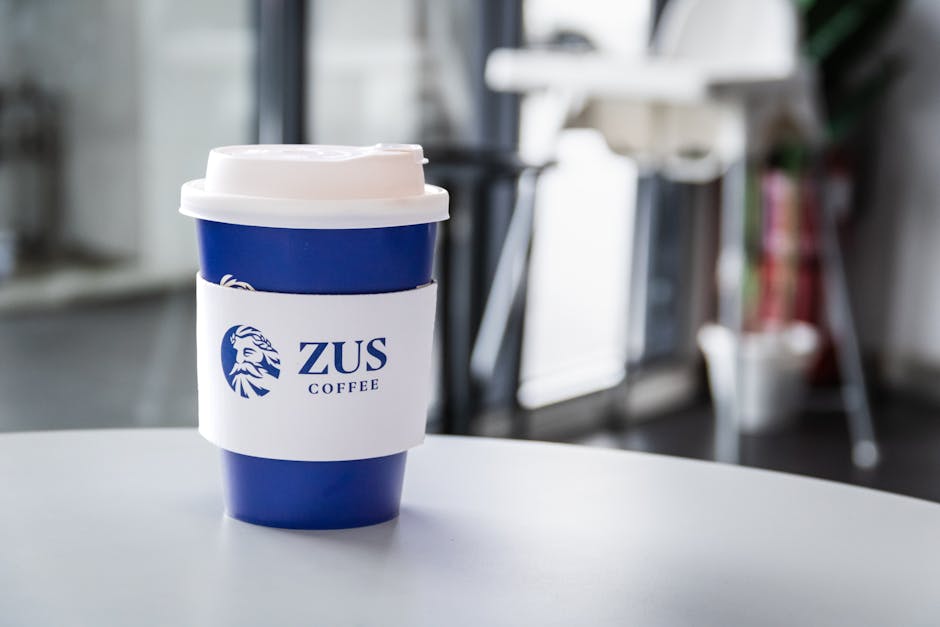
ZUS Coffee and the Rise of Data-Driven Retail: Southeast Asia’s Loyalty Revolution
Once a battleground of jostling discounts and generic stamp cards, Southeast Asia’s retail landscape is transforming at record speed. In Malaysia’s thriving café scene, chains like ZUS Coffee have parlayed digital tools not just for customer convenience, but as engines for insight, repeat business, and a new brand of “intelligent loyalty.” As shoppers from Singapore to Indonesia embrace mobile discovery and personalized service, the real currency is no longer the points themselves but the depth of understanding that brands can harvest—and translate—into consistently superior experiences.
This exposé examines how ZUS Coffee is setting the pace for app-led, data-centric engagement in the region, what their disruptive playbook means for rivals and partners, and why the rules of loyalty and CRM are being fundamentally rewritten. With over 700 stores in Malaysia and an expanding Southeast Asian footprint, ZUS is more than a case study: it is a harbinger for retailers navigating the digital age.
From Punch Cards to Personalization: The End of “Points Alone”
Historical context: Asia’s modern retail loyalty programs emerged in the 1990s with supermarket stamp cards and airline frequent flyer schemes. For years, these systems—offering points for purchases, redeemable for discounts or freebies—were sufficient in attracting and retaining consumers. But as digital commerce accelerated (particularly post-pandemic), a profound shift occurred: Southeast Asian shoppers became both more digitally connected and more demanding in their expectations.
Digital acceleration: According to recent reports, one in four consumers in ASEAN now uses generative AI tools to discover new products and services when shopping online (Retail Asia). This trend, while catalyzed by mobile-first markets, signals the end of siloed, points-only engagement. Loyalty is evolving into a multi-dimensional, experience-led proposition—one that intertwines digital touchpoints, personalization, and seamless omnichannel journeys.
ZUS Coffee’s Digital Playbook: Unifying Loyalty, CRM, and Personalization
Architecting the stack: ZUS Coffee’s engagement model is neither accidental nor superficial. At its core lies a concerted investment in customer data architecture—anchored by two critical platforms:
- Klaviyo as ecommerce CRM: Adopted in 2023, Klaviyo serves as ZUS’s primary orchestrator for ecommerce CRM, leveraging direct integrations with Shopify and Meta. This enables advanced segmentation, automated marketing flows, and the ability to drive acquisition, retention, and higher average order value (AOV) through personalized sign-up forms and campaigns (Klaviyo Case Study).
- Antsomi CDP 365 for 360° customer view: To avoid fragmented customer profiles, ZUS deployed Antsomi’s CDP 365, allowing for unified customer IDs across touchpoints and a comprehensive, actionable view of behaviors, preferences, and channel usage (Antsomi Case Study).
Operational implications: This approach empowers ZUS to move beyond blast promotions, focusing instead on lifecycle marketing: nurturing new sign-ups with targeted welcome series, recovering abandoned orders, launching app-exclusive bundles, and reactivating lapsed customers through tailored offers. The stack is designed for scale—driving consistency across more than 700 stores in Malaysia—and for agility, supporting rapid testing of localized incentives and rewards.
Centralized digital collaboration: With fragmented communication an endemic issue in retail operations, ZUS’s adoption of centralized digital feedback and task tools further accelerates decision-making and campaign execution, tightening the loop between customer data, frontline feedback, and marketing innovation.
The Southeast Asian Context: Why This Model Matters—Now
Consumer behavior is shifting: In markets like Malaysia, Indonesia, Thailand, Singapore, and the Philippines, consumers increasingly expect:
- Mobile-centric engagement—with apps as primary purchase and discovery platforms.
- Personalized recommendations and offers—not one-size-fits-all incentives.
- Integrated omnichannel experiences—where ordering, rewards, and feedback flow seamlessly between offline and online.
AI-powered engagement is rising: The infrastructure underpinning ZUS’s transformation is no longer rare. Capillary Technologies recently partnered with MR D.I.Y. in Malaysia to deploy Loyalty+, CDP+, and Insights+ for real-time personalized engagement (Business Insider). Aurora Mobile and Exabytes signed a multi-year MoU to accelerate AI-driven customer engagement across the region. In this context, ZUS is not an exception but an early mover in a data-unified, app-centered retail environment.
Comparative Perspectives: Old-School vs. Data-Driven Loyalty
Traditional view: Most legacy chains have long defaulted to “points-for-spend,” supported by basic email marketing and social media offers. Rewards are generic, redemption is static, and customer data—if captured—is fragmented across multiple systems. The result? Diminishing marginal returns, lower retention, and high promotional cost.
Modern, ZUS-style practice: Today’s leaders capture first-party data at every touchpoint, link it in CRM/CDP systems, and deploy automated, context-driven communications. Loyalty is measured by behavior—repeat visits, AOV uplift, share of wallet—not simply by enrollment. This is not just a matter of systems integration; it’s a sea change in mindset and operating model.
Country nuances: What works in Malaysia (halal trust, habitual morning purchases) may not port directly to the Philippines (social mobile acquisition) or Thailand (wallet integrations). As ZUS demonstrates, hyper-localization within a unified data infrastructure is key.
Actionable Insights for Retail Decision Makers
1) Build the customer data layer first: Fragmented data is the enemy of personalization. ZUS’s journey shows that connecting POS, app, ecommerce, and campaign touchpoints—and standardizing customer IDs—lays the foundation for sustainable engagement (Antsomi).
2) Design loyalty around behavior, not just points: Modern consumers crave recognition for frequency, experimentation, and advocacy—not just spend. Tiered perks, exclusive app drops, and member-only bundles drive differentiation. Experience is the new reward.
3) Automate lifecycle marketing: Automation (e.g., Klaviyo’s triggered flows) releases operators from repetitive manual campaigns and ensures every customer receives relevant, timely nudges—improving conversion and driving repeat orders.
4) Localize by country, not just by language: App translation is a baseline, not a differentiator. The adjacency between offers, payment methods, and lifestyle preferences is what unlocks conversion across fragmented Southeast Asian markets.
5) Track the right KPIs: Forget vanity metrics like downloads or total program sign-ups. Focus on install-to-registration rates, repeat purchase windows, campaign-driven AOV lift, and reactivation of lapsed customers for a true read on impact (GrowthHQ).
Market-by-Market: Translating ZUS’s Playbook Across Southeast Asia
Malaysia: As ZUS’s home market, Malaysia illustrates how an app-first approach, CRM segmentation, and value bundling can be scaled for speed. Integrated payment, feedback automation, and halal-certified trust further drive frequency.
Singapore: Higher digital maturity and a premium culture favor precision-triggered offers over mass discounting. Micro-segmentation and frictionless user journeys are non-negotiable.
Indonesia: Experience-led loyalty is overtaking pure points. Leading retailers leverage apps around convenience, inventory transparency, and dynamic bundles to maintain stickiness.
Thailand: Conversion hinges on a blend of wallet-friendly incentives, in-app ordering, and culturally relevant engagement—tying digital payment partners to lifestyle aspirations.
Philippines: Here, social discovery and mobile messaging eclipse static loyalty. Smart CRM hooks new customers via social onboarding and automates subsequent retention.
Real-World Impacts: ZUS Coffee’s Results & Regional Ripples
Scale and velocity: In less than a decade, ZUS Coffee has eclipsed 700 stores nationwide—a testament to both operational discipline and the compounding effect of digital engagement. Its omni-stack reduces marketing waste, sharpens campaign ROI, and sustains a loyal, app-driven base. Regional peers are taking note as ZUS’s methods prove repeatable across urban and suburban formats.
Competitive responses: Players from MR D.I.Y. to UNIQLO are doubling down on CRM/CDP integration, AI-powered insights, and personalized app journeys. Martech solution providers report surging demand for plug-and-play data unification tools, and industry events increasingly center loyalty, churn, and digital reactivation as board-level priorities.
Limitations and lessons: ZUS’s journey is not without challenges—data privacy, integration complexity, and the need for continuous content-localization demand persistent investment and learning. But the evidence is clear: the era of “spray and pray” marketing is ending.
The future of Southeast Asian retail will be decided not by the size of a store network, but by the intelligence and agility of its data-driven engagement—where loyalty is earned daily through understanding, personalization, and seamless digital touchpoints.
Forward-Looking Insights: What Comes Next?
Unification and orchestration: As AI and machine learning mature, retailers will move from segmented, rule-based campaigns to truly orchestrated customer journeys—anticipating intent and friction in real time. The brands that unify loyalty, CRM, and digital experience will dominate revenue per user and long-term share.
Role of AI: The next phase will see retailers and solution partners (e.g., Aurora Mobile, Exabytes, Capillary) accelerating adoption of AI-powered segmentation, predictive churn modeling, and auto-optimization of offers—not just for early adopters but mainstream chains. Data privacy and ethical use, however, will require stronger governance and transparent communication.
Hyper-localization and experience engineering: What ZUS pioneered is only the starting point. Winning brands will localize not just language or payment, but entire journeys and product bundles—tailoring experiences for micro-segments, not demographic averages.
Conclusion: The Strategic Imperative for Southeast Asian Retailers
ZUS Coffee’s meteoric rise demonstrates a new paradigm: digital loyalty is not a bolt-on to marketing, but the central nervous system of sustainable growth. In retailer boardrooms across Malaysia, Indonesia, Singapore, Thailand, and the Philippines, the message is clear—app-first, data-unified engagement drives both scale and resilience.
The strategic playbook for Southeast Asia is now set: collect and unify first-party data, invest in cloud-native CRM/CDP stacks, design for locally-relevant journeys, and measure repeat behavior as the ultimate currency. Those who lag behind risk losing not just today’s customers, but tomorrow’s market relevance.
To win in this transformative era, retailers must treat loyalty, personalization, and automation as a single, orchestrated system—continuously evolving, relentlessly customer-centric, and guided by the right metrics. The ZUS blueprint is both proof of concept and a call to arms for leaders ready to shape the next chapter of Southeast Asian retail.