
Humidity-Proof Skincare In Southeast Asia: How Climate-Engineered Brands Are Redefining Beauty For Singapore, Bangkok, And Manila (With Indie-Game Funding Lessons)
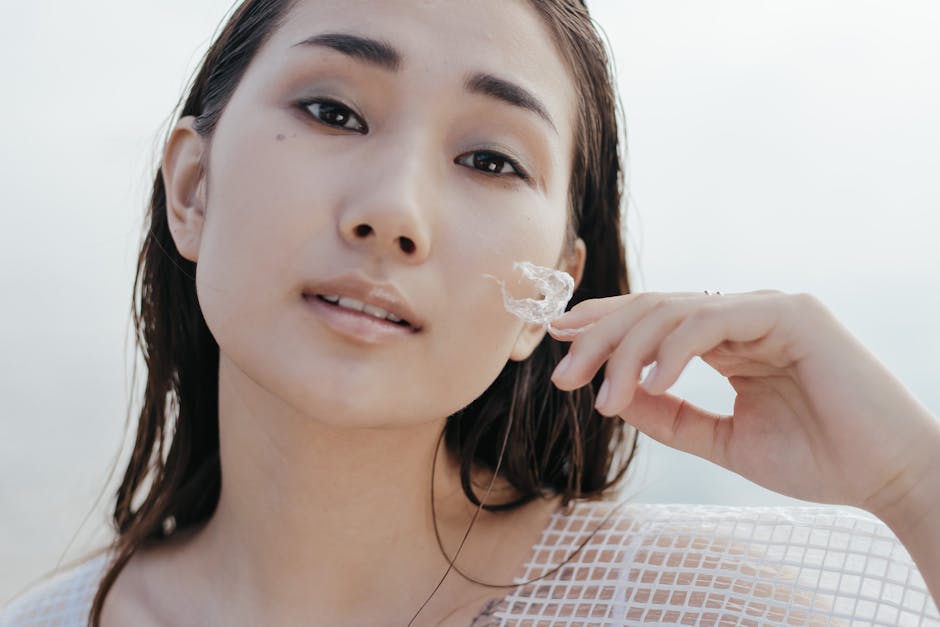
Humidity-Shaped Skincare in Southeast Asia: Breaking the Old Molds, Building the Future
In the heart of Southeast Asia, from the glistening streets of Singapore to the bustling avenues of Jakarta and Manila, a quiet but profound revolution is underway. The region’s unyielding humidity, relentless sun, and surges of urban pollution have long forced consumers to improvise—layering global brands not built for their climate, enduring breakouts, sticky skin, and fleeting comfort. Today, however, a new wave of science-led “SEA-Beauty” startups and even global powerhouses are re-engineering the very fabric of skincare, turning the tyranny of tropical weather into a crucible for innovation. Their playbook? Cross-pollination of rigorous climate data, speed-driven product iteration reminiscent of indie-game publishing, and a community-driven approach that shatters the “one-size-fits-all” legacy of Western and East Asian imports.
Let’s explore how Southeast Asia’s steamy climate is forging the world’s next beauty epicenter—and what executives, founders, and investors must do to win in this new terrain.
The Climate Constraint: Where Skincare Science Meets Everyday Sweat
Humidity as the Unyielding Rule
Market analysis anchored by AURA Skin Lab and World Bank climate data paints a stark picture: Southeast Asian megacities sustain upwards of 80% average relative humidity year-round, with daily temperatures often topping 30°C. Urban heat islands and sky-high UV indices aggravate the atmospheric “pressure cooker.”
For the skin, this means:
- Heavy, petrolatum-based creams—formulated for dryness and chill—become liabilities, trapping sweat and sebum, clogging pores, and leaving an unyielding sticky film.
- High humidity naturally reduces water evaporation from the skin, making occlusive “water-lock” routines both irrelevant and harmful, catalyzing a surge of “tropical acne” and chronic, low-grade inflammation.
- Sweating is not sporadic but perpetual, mixing with city grime to test the boundaries of every skincare formula.
There’s a shared chorus from consumer testimony and scientific literature: Western and even many East Asian products, designed for the needs of “central heating and cold wind,” simply do not work. They ball up on application, exacerbate oiliness, and deliver poor comfort, while imported sunscreens often run with sweat and leave visible residues on deeper skin tones.
Emerging Patterns: SEA-Beauty as the Vanguard of Climate-Engineered Skincare
Science-Backed, Climate-Native Brands Take the Lead
Enter a new cohort: brands like AURA Skin Lab (Singapore-Manila-Bangkok), Skintific, Wardah, and Mistine are reversing the tide. Their formulas are not mere adaptations—they are purpose-built from molecule up for 80%+ humidity, sun, pollution, and the lived experience of local users.
Key Principles in Action
- Gel-serum matrices, fast-absorbing aquaglycerin systems, and light, non-occlusive lipids that vanish into skin even at maximum humidity—leaving no shine, no pilling.
- Hard clinical claims: Lifter serums boasting +25% collagen I/III in four weeks, barrier gels resolving redness 40% faster than 1% hydrocortisone (measured under humidity), and sweat-resistant sunblocks that never sting or streak.
- Skin compatibility: Products are patch-tested and achieve 95% non-irritating performance, critical for sensitive, stressed skin made more vulnerable by pollution and heavy cleansing.
SEA consumers, often overburdened with global 10-step routines, are rapidly converging on a new minimalist code—focusing on sun protection, barrier maintenance, and hydration that doesn’t overwhelm.
Differentiating Perspectives: Old-World Assumptions vs. Humidity-Native Realities
Western/East Asian “Cold Climate” Templates
These legacy products fundamentally misunderstand:
- Why occlusives (e.g., petrolatum, shea butter) backfire, amplifying sebum by up to 20% in humid climates (Clinical, Cosmet. Invest. Dermatol. 2023, as cited by AURA).
- Why SPF products fail: non-sweat-stable chemistry, white cast on medium and deep Asian tones, and poor comfort for daily use.
- The missed opportunity in “lift-and-shift” strategies—simply repackaging foreign bestsellers without local re-engineering.
Brands like AURA, Wardah, and Mistine weaponize their insider climate intelligence. They:
- Test every product under real-world tropical conditions, iterating until absorption, oil control, and comfort meet strict KPIs.
- Utilize modern filters and mattifying agents, such as Hydro-Guard™, silica spheres, and microsponges, that preserve the skin’s breathability and barrier.
- Embrace local botanicals (Centella, Mugwort, Aloe) for soothing, alongside leading-edge actives for aging and defense.
“No ingredient padding, no marketing smoke and mirrors—just science-backed skincare built for Asian skin in hot, humid climates.”
Real-World Implications Across Southeast Asia’s Major Markets
Singapore: The Regional Laboratory
With ultra-high humidity, sophisticated consumers, and a strong derm-cosmetics legacy, Singapore is the ideal R&D and premium launchpad. It’s here that barrier-first brands run clinical-style pilots, position against Western incumbents, and establish new benchmarks for absorption, irritation, and climate-stable results.
Bangkok/Thailand: Sweat-Proof, Outdoor-Ready Innovation
Thailand’s market—dominated by color cosmetics and SPF-pivoting lifestyles—demands sweat-resistant sunscreens and skin-makeup hybrids built for outdoor workers and commuters. The success of Mistine’s “Yellow Cap” SPF, tested for indestructible photoprotection during the Thai summer, is a testament to this focus.
Manila/Philippines: Democratized Beauty and Social Proof
Price sensitivity and intense social media influence guide the Filipino segment. Climate-native, affordable barrier gels and anti-acne cleansers—pitched as solutions for “tropical acne” and pollution—are rapidly gaining traction.
Indonesia/Malaysia: Halal and Climate Compliance
Brands like Wardah are proof that Islamic principles and climate engineering are not mutually exclusive. Halal-certified, mass-premium products built for local weather are surging in popularity, underpinned by advanced ingredient delivery technologies that do not compromise on faith or comfort.
Vietnam: Botanical Integration on the Rise
With rapid urbanization and a surging middle class, Vietnam is becoming fertile ground for botanical-driven, locally adapted SEA-Beauty lines—often merging international best practices with indigenous formulations and consumer aspirations.
Rewriting the Rules: Borrowing from Indie-Game Funding and Development
Prototyping as a Growth Model
What if launching a skincare line felt less like a grand unveiling and more like the “early access” of an indie game? Pioneering SEA brands and investors are doing exactly this, creating limited “beta builds” of climate-specific formulas. Cohorts of core users in cities like Singapore or Bangkok become collaborators, not just consumers.
- Products are rapidly iterated based on structured feedback—absorption rates, oil control, real-world sweat resistance—eliminating capital risk and maximizing problem-solution fit before mass production.
- Community engagement mirrors gaming: Telegram, Discord, and private forums become hotbeds for co-design and direct voting on next-gen features and pain points.
Just as indie games de-risk development through Kickstarter, climate-specific skincare lines are pre-sold via regional crowdfunding or direct pre-order campaigns. The process validates both concept and technical merit—for example: “Humidity-Proof Sunscreen for Hijabi Commuters in Jakarta” or “Heat-Barrier Serum for BPO Night Shifts in Manila.” Stretch goals are hard technical deliverables: sweat-stable SPF, zero white cast, or quantifiable redness reduction.
“Publisher-Style” Strategic Partners
Borrowing from the gaming world, brands are also courting “publishers”—regional e-commerce platforms, airport duty-free retailers, or local FMCG giants—who provide marketing muscle, cash, or regulatory cover in exchange for revenue shares. This hybrid approach de-risks expansion and accelerates testing across different micro-climates in the region.
Metrics That Matter: Turning Climate Engineering from Art to Science
Clinical, Not Just Cosmetic, KPIs
The new generation of brands and investors are obsessed with measurables:
- Sebum output in 80–85% humidity—targeting reductions of 10–15% versus heavy creams, echoing clinical studies cited by AURA Skin Lab.
- Absorption within 60–90 seconds, zero pilling, and shine control over 4–8 hours (validated by consumer panels in climate-controlled cabins).
- TEWL (trans-epidermal water loss) and stratum corneum hydration improvement, tracked objectively over multi-week intervals.
- Redness resolution, with the bar set by Centella and panthenol gels outperforming standard hydrocortisone under tropical conditions.
- SPF performance—maintaining full protection after simulated sweating, and residual-free wear on diverse skin tones.
Brands now monitor reorder rate within 60–90 days, country-specific conversion funnels (awareness to repurchase), and differential retention during “very hot” versus “rainy but humid” scenarios—ensuring climate-fit at both the product and go-to-market level.
Tactical Shifts and Innovative Practices: Playbook for Decision-Makers
For Brand Owners and Founders
- Climate-First R&D: Build for 80%+ humidity, 30°C+ heat—prioritizing gel-serum matrices, aquaglycerin systems, and barrier-friendly lipids, not petrolatum or heavy butters.
- Evidence-Led Storytelling: Use hard climate and performance data as the spine of your brand story—collagen boosts, sebum control, redness resolution, all benchmarked against legacy imports.
- Early Access and Crowdfunding: Launch prototypes to controlled early adopter panels; treat consumers as beta-testers and co-designers. Every batch is a “patch.”
- Deep Localization: Go beyond language—map urban, rural, hijab-wearing, and outdoor worker clusters; create tailored SKUs (“MRT Sweat-Proof SPF,” “Scalp Mist for Motorbike Riders”).
- Modular, Risk-Managed Portfolios: Start with 1–3 core climate-fit SKUs per country—test, iterate, and only expand what wins. Kill underperformers ruthlessly, as a game studio would cut misaligned features.
- Category Recognition: Understand SEA-Beauty as its own innovation vertical, not a sidecar to Western or K-Beauty operations.
- Moats That Matter: Prioritize brands with in-climate data, sweat-stable SPF, non-occlusive day creams, and proven city-level traction in the region’s “pressure cooker” climates.
- Indie-Style Funding: Back agile, community-powered startups that iterate quickly and validate demand through crowdfunding and “early access.” Structure deals as publisher-operator partnerships.
- Portfolio Diversification by Micro-Climate: Invest across coastal, inland, and religiously nuanced segments—Halal in Indonesia/Malaysia, urban pollution in Manila, etc.
- Travel Retail as Proving Ground: Use platforms like iShopChangi to showcase, test, and build urgency around humidity-fit essentials before wider retail launches.
Comparative View: From Old-World Imports to Next-Gen SEA-Beauty
Legacy Imports
- Product DNA: Built for dryness, chill, and seasonal skin stress.
- Consumer Experience: Sticky, pore-clogging, breakout-prone in humid Southeast Asian cities.
- Go-to-Market: One-size-fits-all, global hero SKUs, minimal local feedback loop.
- Product DNA: Tuned for >80% humidity, constant sweating, chronic high UV, and pollution.
- Consumer Experience: Fast-absorbing, breathable, clinically validated for oily, sensitive, pigmented skin.
- Go-to-Market: Iterative, data-driven “builds” released to engaged communities; rapid feedback and localized co-design.
- From betting on monolithic, globally scaled products to assembling agile portfolios, each tested against the unforgiving climate metrics of cities like Bangkok or Singapore.
- From copy-paste funding to publisher-style, milestone-based partnerships, echoing the economics of indie game development.
Future Trajectories: The Strategic Importance of Humidity-Shaped Skincare
A Regional Epicenter with Global Reverberations
The strategic lesson is unequivocal: climate is not a secondary consideration—it is the root engineering constraint for every formula, every marketing story, and every market entry strategy in Southeast Asia. The brands that lead are not those who localize language or packaging, but those who re-architect ingredient systems, iterate rapidly, and build “fit for humidity” as their competitive moat.
Implications for the Global Beauty Sector
The “SEA-Beauty” surge is not a local anomaly. As climate change drives more regions into humid extremes, the playbook written in Manila, Bangkok, and Singapore will increasingly serve global audiences. The obsession with clinical validation—sebum control, sweat-stable SPF, and barrier fortification—will become the new minimum globally.
Cross-Industry Lessons
Perhaps most provocatively, the region’s winners are showing that beauty, like gaming, thrives when you treat every launch as an experiment, every customer as a co-designer, and every iteration as a chance to outpace both legacy giants and fickle trends. The convergence of indie game funding and rapid, data-driven skincare is more than a metaphor—it is an operational mandate for the decade ahead.
Conclusion: The Humidity-Rich Future—SEA-Beauty’s Moment on the World Stage
Southeast Asia’s relentless humidity has long been a source of compromise and discomfort for millions. That era is ending. Powered by real-world data, barrier-first science, and community-centric iteration, a new wave of SEA-Beauty brands are redefining what it means to thrive in the tropics. For decision-makers—whether founders, formulators, or financiers—the path forward is clear: engineer for the climate, validate every claim, and build with your community in the loop. The old world of global imports, “close enough” products, and top-down launches is fading. The future belongs to those who treat humidity as both challenge and inspiration—a crucible in which Southeast Asia’s next global icons will be forged.
For deeper exploration and resources, readers are encouraged to review original insights and brand case studies at AURA Skin Lab, V10 Plus, VMAN SEA, MS Artisan, iShopChangi, and Grazia Singapore.
The smart money—and the smartest minds—should be rushing towards the heat and humidity, not away from it.