
Humidity-Responsive Skincare Innovation In Southeast Asia: How Bangkok, Manila, And Jakarta Consumers Can Now Verify Serum Claims Through ASEAN Patent Data
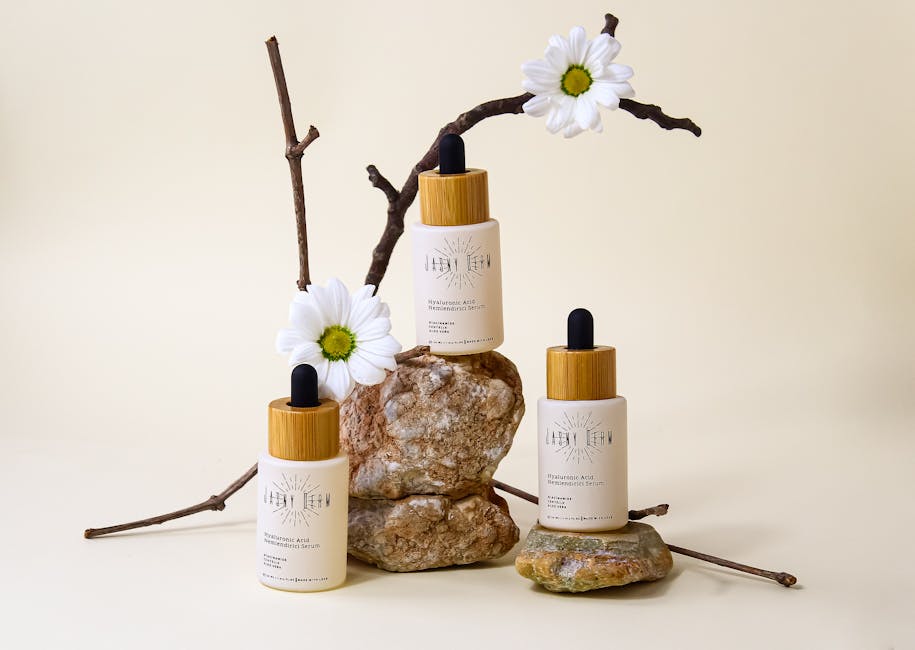
Humidity-Responsive Skincare in Southeast Asia: From Aspirational Claims to Verified Innovation
For the skincare-literate consumer navigating the relentless humidity of Bangkok, Manila, or Jakarta, finding a product that truly fits is no longer a game of chance. The landscape of skincare for humid climates is shifting from marketing-driven wishful thinking to a rigorously patent-verified science. As formulation claims of "humidity-adaptive hydration" or "best sunscreen humid weather" multiply, so does the frustration among those with oily-dehydrated, sensitive, or barrier-compromised skin types. When it comes to lightweight sunblock for Southeast Asia, soothing gels for redness in high humidity, or anti-aging serum for humid climates, the question is simple: what actually works— and how can you prove it?
Thanks to a new era of technical innovation, regional regulatory scrutiny, and the arrival of the ASEAN IP Register, it’s possible for Southeast Asian consumers to cut through the noise and choose products based on formulation logic, clinical grounding, and a demonstrated adaptability to real-world environmental stress.
Key Trends and Strategies in Humidity-Responsive Skincare
From Marketing Myths to Patent Reality
Historically, most beauty brands distributed formulations designed for temperate climates, tweaking their messaging for tropical launches but rarely their ingredient science. The catch? High humidity, UV exposure, and urban pollution create unique challenges—accelerated water loss, diminished humectant efficacy, texture breakdown, and an increased risk of breakouts and irritation. While terms like "climate-intelligent formula" or "Korean Japanese skincare for tropical skin" have flooded the market, few were substantiated beyond clever copywriting.
That is changing. In the last three years, a surge of patent activity at Thailand's Department of Intellectual Property, Indonesia's DGIP, and Malaysia's MyIPO—now accessible through the ASEAN IP Portal—demonstrates a new level of intentionality. Brands and ingredient houses are filing patents on:
- Hygroscopic polymer networks and "moisture-buffering" agents that adjust hydration delivery as humidity rises or falls
- Encapsulation systems that release actives—think soothing gel for redness humidity—at specific moisture thresholds
- Silicone elastomer blends and new emulsion systems for lightweight sunblock Southeast Asia that avoid the "sticky" feel above 75% RH
- Crosslinked acrylate copolymers and chelating agents to repair skin barrier humidity and stabilise antioxidants
Infrastructure and Regulatory Evolution
The recent launch of the centralized ASEAN Intellectual Property Register and expansion of the ASPEC examination initiative mean a patent filed in one country can now serve as prior art and regulatory validation regionwide. The effect? Aspirational claims are facing scrutiny; products must now provide formulation evidence and humidity-specific test results to support their "climate-adapted" promises (see here). For brands, this is both a compliance hurdle and an opportunity to justify higher price points with real substantiation.
Performance Parameter Precision
Recent filings show a new era of claim specificity. Where patents once described "hydrating serums for tropical environments," current applications specify ingredients (e.g., "hygroscopic polyol blend, 8–12% w/w"), performance targets ("viscosity increase under 75% RH not exceeding 15% of baseline"), and even humidity range optimization (e.g., "spreadability stable between 40–90% RH"). This precision allows discerning users to verify if a lightweight sunblock Southeast Asia, or a soothing gel for redness humidity, truly offers what it claims.
Consumer Verification & Clinical Validation
With the ASEAN IP Portal, anyone can now search a product’s patent, inspect whether it includes humidity-specific composition or claims, and see examiner comments. Products boasting clinical validation now reference ISO-standard humidity chamber studies, skin hydration maintenance, and barrier function under real Southeast Asian conditions. This transparency is set to become a baseline expectation among AURA’s audience.
State and Recommendations: Action Points for Skincare Firms
- Embed Humidity-Parameterization Early: Design all new serums, SPFs, and barrier-repair routines with humidity range and skin microclimate adaptation as a core criterion, not an afterthought.
- File Patent Applications Proactively: Use the ASEAN IP Register for broad, region-wide protection and regulatory substantiation.
- Integrate Clinical Testing into Patent Disclosure: Include humidity chamber, spreadability, barrier integrity, and makeup compatibility data in every patent specification.
- Align Marketing with Patentable Performance: Ensure every "humidity-adaptive," "barrier-repair," or "anti-aging" claim can be directly mapped to a documented patent parameter—avoid aspirational language that doesn’t match the science.
- Invest in Breathable, Layerable Systems: Shift away from heavy occlusives toward breathable, modular serums and light gels; empower routines that address both short-term comfort and long-term barrier resilience.
- Educate Retailers and Consumers: Offer resources on how to verify patent claims via the ASEAN IP Portal—turn transparency into a loyalty driver.
- Monitor Regulatory Harmonization: Prepare for ASEAN-wide substantiation requirements referencing patent data and performance metrics.
Comparison Table: Rethinking Formulation and Routine Logic
| Heavy Occlusive (Western) Products | Breathable, Layered (ASEAN-Inspired) Systems | |
|---|---|---|
| Formulation Logic | High in petrolatum, waxes, or thick silicones; locks in moisture but risks congestion and discomfort in 80%+ RH conditions | Uses humidity-buffering polymers, silicone elastomers, and lightweight gels for dynamic water balance and comfort |
| User Experience | Feels sticky or heavy; can worsen oiliness and breakouts under humid weather | Breathable, absorbs quickly, can be layered for personalized routines |
| Skin Adaptation | Short-term occlusion, often leading to long-term barrier weakening | Supports barrier repair and adaptation, better for long-term resilience |
| Claim Substantiation | Rarely references local humidity in patent filings or marketing | Patent-backed humidity ranges, performance claims, examiner validation |
Segmentation: Challenges & Opportunities by Consumer Type
Climate-Aware Skincare Users
Opportunity: This segment seeks fully-integrated routines—think lightweight sunblock Southeast Asia paired with anti-aging serum humid climate—that work in synergy, not isolation.
Challenge: Distinguishing between patent-verified innovation and mere marketing; opportunity to build trust through claim transparency and patent education.
Sensitive or Compromised Skin
Opportunity: Responsive formulas that buffer against extreme humidity swings and pollution can restore barrier function and reduce flare-ups.
Challenge: Many “soothing” claims are poorly substantiated; need for products with proven repair skin barrier humidity performance and low irritancy, verified via patent and clinical data.
Oily-Dehydrated, Combination, and Reactive Skin Types
Opportunity: Targeted serum for oily dehydrated skin using hygroscopic polymers and smart emulsifiers can address the oil/water imbalance unique to high humidity.
Challenge: Avoiding occlusive, comedogenic ingredients; demonstrating hydration without excess shine or stickiness.
Early Anti-Aging (25–40 years)
Opportunity: Formulations that maintain hydration, barrier integrity, and antioxidant stability specifically in humid climates—like Korean Japanese skincare tropical skin—can slow premature aging.
Challenge: Many anti-aging actives degrade quickly in humidity; patents must prove stability and performance, not just inclusion in the INCI list.
Urban Southeast Asia
Opportunity: Pollution-shielding, rapid-absorbing, and non-greasy protection—like the best sunscreen humid weather—is now achievable with humidity-adapted film-formers and delivery systems.
Challenge: Overcoming skepticism from past underwhelming launches; opportunity to use patent data and clinical validation as proof points.
Comparison Segment
While all segments demand routines rather than isolated fixes, their main pain points differ: oily-dehydrated types want comfort minus excess shine, sensitive users seek barrier-supportive routines, and anti-aging consumers require clinically verified, humidity-stable actives. What unites them is a rising expectation: formulation logic, not trend, must underpin every claim—and patent evidence is now the litmus test.
As ASEAN’s patent system matures and consumers gain access to specification-level detail, verified humidity-responsive skincare will move from niche innovation to the new routine baseline—demanding transparency, substantiation, and adaptive design at every step.
Conclusion: Strategic Imperative & Next Steps
The era of generic hydrating serums is over for Southeast Asia’s skin-savvy audience. Patent-backed, humidity-responsive skincare—spanning serums for oily-dehydrated skin, anti-aging serums for the humid climate, best sunscreen for humid weather, and repair-focused routines—is no longer a distant promise. Thanks to ASEAN’s centralized IP infrastructure and evolving regulatory focus, brands must now deliver formulation logic, clinical validation, and open access to specification data—not just clever marketing.
What comes next? Over the next 18–36 months, expect harmonized regulatory substantiation guidelines, the proliferation of humidity-responsive innovation beyond serums into entire routines, and the entry of ingredient supply chains built for tropical realities. The "humidity-responsive" label will become a regulated, clinically-anchored claim, not a loose marketing phrase. For Southeast Asian skincare users, this means less guesswork and more confidence—choosing routines that are not only adaptive, but proven, for your skin and your climate.
Brands that seize this trajectory—by investing in patent-driven R&D, transparent communication, and climate-specific performance—will set the pace. Those that don’t risk irrelevance in a market that now values proof as much as promise.