
Microsofts ARM-First Revolution: How Windows 11 And Xboxs 2026 Roadmap Transforms Gaming, Performance, And IT Buying Decisions
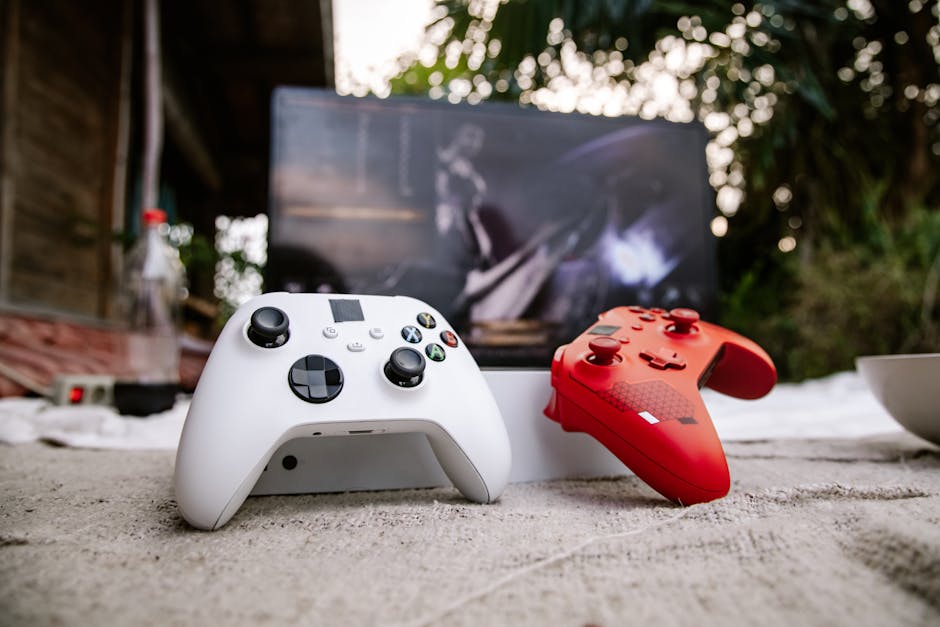
Microsoft’s ARM-First Gambit: Disrupting Windows 11 and Xbox for a New Era of Computing
The year is 2026, and Microsoft has thrown down the gauntlet with its boldest infrastructure bet yet: the ARM-First strategy. Arriving amid a market clamoring for low-power, high-performance mobility and seamless gaming, this move echoes tectonic shifts reminiscent of the industry’s migration from 32-bit to 64-bit, and the early days of Intel’s Centrino. But instead of slow, iterative steps, Redmond is enacting a decisive realignment where silicon, software, and cloud all converge—with IT buyers at the tip of the spear.
Strategically, this is more than a hardware refresh. The deployment of Windows 11’s 26H1 update—an ARM-prioritized, gaming-optimized milestone—signals that Microsoft is betting not only on the technical ascent of ARM, but also on its power to reshape device fleets, procurement models, and the long-standing x86 hegemony. As global organizations eye modernization, a new Microsoft-Xbox ecosystem emerges, aiming to balance innovation, risk, and the competitive urgency of 21st-century IT.
The Rise of the ARM-First Philosophy: Patterns in Platform Evolution
Tracing the Path to ARM Dominance
Since the introduction of Copilot+ PCs, Microsoft has laid the groundwork for ARM’s ascendance. What began as cautious experimentation with ARM-powered Surface devices and Snapdragons has matured into a comprehensive roadmap (Windows Business Roadmap) that privileges ARM in every critical phase. By January 2026, the Bromine core and build 28000—optimized for Snapdragon X2 Elite and the nascent Nvidia N1X—are seeded to OEMs. This staged progression pivots on emulation breakthroughs, NPU acceleration, and deep ecosystem partnerships, reshaping not just form factors, but the DNA of Windows itself.
From Mobile-First to ARM-First: A Cultural Inflection
The ARM-First strategy is more than a technical milestone—it’s a philosophy. Mirroring the early 2010s “mobile-first” revolution, Microsoft’s shift is both a technological and operational inflection, compelling enterprises to revisit core assumptions about compatibility, upgradability, and lifecycle management. With ARM prioritized in the 26H1 release, x86—a mainstay for decades—becomes a secondary wave (promised for 26H2), forcing IT leaders to rethink timing and leverage.
Emulation as a Bridge, Not a Crutch
The Prism emulator, supporting AVX/AVX2 and cutting translation overhead by 30-40%, is the linchpin. With the ability to play 1,200+ titles at 1080p/30+ FPS, ARM PCs narrow performance gaps that once kept them relegated to niche roles. This isn’t theoretical: load times in Avowed drop 80%, while Call of Duty Black Ops 7 launches 95% faster, thanks to Advanced Shader Delivery (ASD). Anti-cheat advances (kernel-mode BattlEye, Denuvo ports) unlock multiplayer titles like Fortnite natively, eroding a long-standing blocker for ARM in the enterprise and pro gaming space.
Tactical Shifts: Procurement, Rollout, and the New Economics of Windows and Xbox
Staggered Rollout—A New Playbook for IT Procurement
ARM-First means ARM OEMs and select enterprise pilots get early 26H1 access at premium pricing, while traditional x86 cohorts must wait until 26H2. This “pay-to-play” model forces a reevaluation of asset turnover and refresh cadence. Savvy IT buyers are benchmarking ARM performance in Q1 2026 to build business cases around projected 30% efficiency gains, waiting for the June fiscal year-end to strike deals for broader x86 and ARM adoption—at volume discounts and attractive trade-in rates.
Pilots in the Global Arena
Regions with high growth trajectories are prioritized for {COUNTRIES}-specific pilots, aligning with Microsoft Volume Licensing programs. For organizations with distributed workforces, the recommendation is clear: run controlled pilots early, hone procurement strategies for post-GA incentives, and negotiate hard when mass deployment windows open.
The Xbox Factor—Ecosystem Synergy Becomes Table Stakes
Xbox is no longer a consumer-only proposition—it’s an enterprise “ecosystem driver.” In 2026, the Xbox PC app supports local ARM installs, next-gen hardware relies on AMD, and real-time Wi-Fi optimizations target latency that blurs the line between local and cloud gameplay. The “Full Screen Experience” bridges console and PC, unifying content, controller, and network paradigms. For IT, this means one hardware stack, many use cases—from edge computing and training to gaming labs and employee engagement initiatives.
Innovation in Action: Core Mechanics and Technical Pillars
Prism: Redefining x86-to-ARM64 Compatibility
Unlike legacy emulation architectures that crippled performance, Prism’s AVX/AVX2 support and deep link with the Bromine core unlock near-parity for the majority of the Windows gaming library. The leap is measurable: 1,200+ titles validated by WorksOnWoA.com, including AAA titles long out of reach for non-x86 hardware. The efficiency dividends extend to productivity and high-performance computing workloads as well—crucial for anyone seeking TCO improvements in the age of AI.
AI Upscaling and ASD—The New Frontiers
AI-based Auto Super Resolution (Auto SR) allows Copilot+ PCs to sustain 1080p/30+ FPS with lower native GPU loads, and its public preview on AMD’s ROG Xbox Ally X marks a critical cross-vendor win. ASD’s shader preloading cuts install to play delays by up to 95% on launch day for major franchises—an innovation soon to be as standard as SSD boot drives were five years prior.
Security and Compliance: Anti-Cheat as a Strategic Enabler
Native support for leading anti-cheat solutions (BattlEye, Denuvo, Easy Anti-Cheat, and XIGNCODE3) relieves endemic headaches for both corporate and academic buyers. Previously, the lack of robust anti-cheat support held ARM back from esports and secure multiplayer scenarios, but Microsoft’s kernel-level integration closes that gap at last.
Comparative Perspectives: Windows 11 vs. Xbox—Two Roads, One Ecosystem
From Desktop to Console: Divergent Priorities, Shared Wins
While Windows 11 and Xbox share a technical foundation, their journeys to ARM-native excellence expose key differences. Windows 11’s 26H1 rollout is a proving ground for ARM in productivity and gaming. Early adopters access premium pricing and pilot ground, but must navigate software compatibility and emulation risks. Conversely, Xbox, with its consumer focus, leverages these advances to deliver hybrid play—local for indies, cloud for AAA—with seamless controller integration and latency-sensitive network stacks.
Side-by-Side: Key Metrics and Experience
Both platforms see substantial uplift: Windows 11 ARM hardware can play 1,200+ games at 1080p/30+ FPS, while ASD on Xbox cuts load times for tentpole titles like Avowed and Call of Duty Black Ops 7 by up to 95%. For IT buyers, the distinction matters less than the shared benefits: cross-platform parity, procurement leverage, and ecosystem efficiency.
“In 2026, ARM’s decisive leap forward for Windows and Xbox is more than a technical milestone—it’s the catalyst for an enterprise ecosystem where performance, mobility, and security coalesce. Early movers will not just adopt but help shape the next era of hybrid cloud-local computing.”
For those new to this convergence, the message is clear: the line between workstation and console is blurring, and strategic alignment now means capturing value across both.
Real-World Implications: What IT Buyers and Organizations Must Do Now
Benchmark Early, Negotiate Late, and Hedge Risks
The playbook for IT decision-makers in 2026 is clear. Use ARM-first pilots in Q1 to capture real-world metrics—target 30-40% efficiency gains for business cases. Validate workloads and stress-test games for emulation gaps, especially in CPU-heavy, niche verticals. The broad release in 26H2 unleashes competitive pricing: those who wait can leverage mass discounts, while those who pilot early control the innovation narrative inside their organizations.
Strategic Alliances and Vendor Negotiations
Prioritize Snapdragon X2 for both Windows and Xbox pilots and secure commitments from OEMs like Asus (ROG) for early access to the most advanced hardware (e.g., ROG Xbox Ally X). Engage Microsoft and its partners through Volume Licensing to capitalize on fiscal-year-end incentives, and align endpoints with emerging cloud-to-edge scenarios.
Risk Mitigation via Ecosystem Partnerships
The maturity of Prism, NVIDIA integration, and the Bromine core—combined with a multi-year commitment from Microsoft—reduces uncertainty for long-term device and app strategy. Ongoing native porting (Adobe, Autodesk, Unity) ensures that creative and computational workloads won’t be left behind, further de-risking broader ARM adoption.
Forward-Thinking Insights: The Next Three Years and Beyond
The 2026-2027 Refresh Cycle: Handhelds, Hybrids, and New Incentives
Xbox’s adoption of ARM principles—from handhelds to hybrid cloud streaming—heralds a device refresh cycle where compute locality is determined by workload, not form factor. By 2027, Wi-Fi optimizations and NPU-enabled upscaling will power real-time experiences as seamless in the field as at the desk. Microsoft’s ARM-first momentum—amplified by its Qualcomm and Unity alliances—positions Redmond to challenge Apple’s M-series dominance and drive industry-wide change.
Ecosystem Health and Investor Confidence
According to analysts, investor confidence in Microsoft/Qualcomm’s strategy is high, with ARM now viewed as a challenger in high-performance, portable computing—a domain once monopolized by x86 giants. As adoption metrics climb (and as more organizations publish success stories from pilots and phased rollouts), the virtuous cycle of compatibility, performance, and cost improvement will accelerate.
Conclusion: ARM Ascendant—Why IT Must Lead in the New Device Renaissance
Microsoft’s ARM-First strategy is not a footnote—it’s the opening chapter of a new device era. With quantifiable gains in gaming, productivity, and energy efficiency, and with the cultural and technical convergence of Windows, Xbox, and the cloud, ARM is poised not just to catch up to x86 but to chart its own course—one defined by flexibility and performance at scale.
IT leaders who act now—by running pilots, securing fiscal-year leverage, and building cross-functional partnerships—will win not just on cost or performance, but on strategic relevance. The tactical shifts underway demand both courage and pragmatism: hedge risks by testing early, but seize the buying power and ecosystem advantages to come. The next frontier is here—and those who embrace the ARM-First future will write the rules for everyone who follows.
To stay ahead, monitor Microsoft’s roadmap, maintain flexible procurement strategies, and seek alliances with partners at the cutting edge. The device renaissance is real—don’t be left on the sidelines.