
Singapore Coastal Protection Bill 2026: What Tuas, Jurong Island, And Industrial Landowners Need To Know
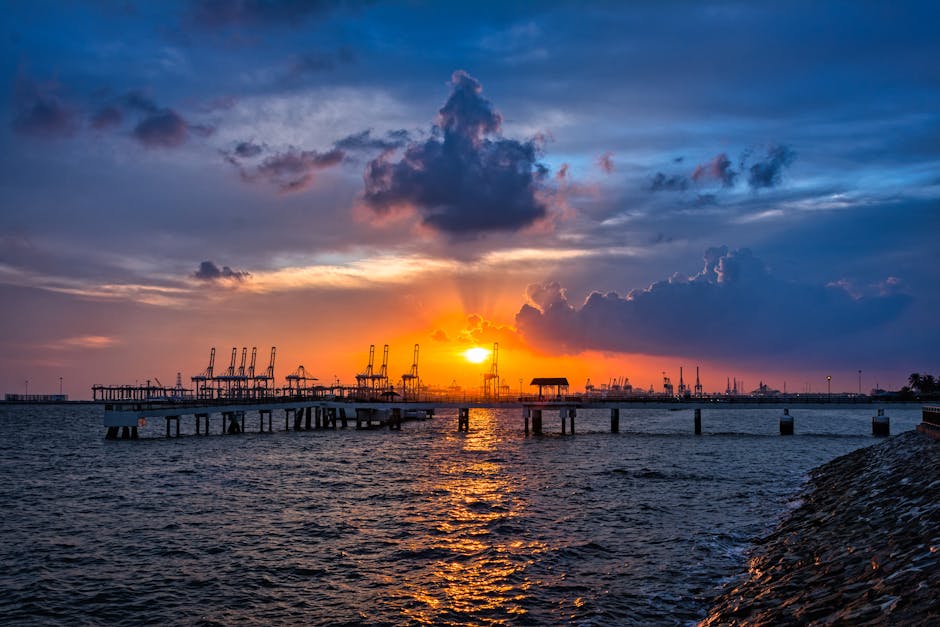
Singapore’s Coastal Protection Bill 2026: Industrial Frontlines, Residential Resilience, and the Unseen Forces Shaping Tomorrow
Singapore stands at the confluence of ambition and adversity—a city-state whose coastline is both a gateway to the world and a frontline against nature’s rising threats. As the specter of climate change grows, so too does the urgency to adapt. The passage of the Coastal Protection and Other Amendments Bill in March 2026 marks a watershed moment, crystallizing a new era of collective defense. Yet, beneath the urgent headlines, an intricate story unfolds: while industry braces for transformation, private homeowners watch from afar, untouched but not uninvolved. This is the anatomy of Singapore’s evolving resilience—a narrative defined by data, disruptive policy, and the far-reaching ripple effects of a rising sea.
Historical Memory and Market Momentum: Why Now, Why This Bill?
Singapore’s Vulnerable Edge:
With over 30% of its land less than 5 meters above sea level, Singapore’s vulnerability is no abstract threat. Flashbacks to the 2010 Orchard Road flooding and the specter of a 1.15-meter mean sea level rise by 2100 catalyzed years of study and incremental action. Yet, it was not until the convergence of international climate science and local engineering that the government laid down its most ambitious marker—the Coastal Protection Bill.
Origins in Engineering and Economics:
Long anchored by public infrastructure, Singapore’s approach now recognizes the critical role of its 100-odd private industrial landowners—stewards of some 30% of the coastline—in the collective shield. The remainder, nearly 70%, is held by government, including reclaimed mega-projects and essential infrastructure.
Who Bears the Burden? Drawing the Line Between Industry and the Individual
Industrial Landowners in the Spotlight:
The law’s reach is surgical. Shipyards, port operators, oil and gas majors, and advanced manufacturing facilities—concentrated in Tuas, Jurong Island, Pioneer, and Senoko—now occupy the compliance frontlines. These entities are tasked with a blend of engineering rigor and financial planning: erecting seawalls, cultivating mangrove barriers, deploying advanced hydraulic shields, and collaborating seamlessly with neighboring plots.
Private Residents: Out of Scope, Yet in the Picture:
Conversely, private homeowners are explicitly exempt. Urban planning and years of land reclamation have left virtually all private residences well inland or behind government-managed defenses. PUB and the Ministry of Sustainability and the Environment reiterate: “no obligations apply” to residential homeowners, and compliance actions are reserved for “private firms – mainly shipyards, ports, industrial operators” (Straits Times).
Strategic Shifts and Operational Realities: The Bill from the Inside
Advance Notice, Heavy Lifting:
Affected landowners will receive formal notices as early as the 2030s—with a decade to plan, design, and budget for defenses, followed by five years to implement. This phased approach is designed to balance urgency with operational flexibility, yet the compliance bar remains high: failure means up to two years imprisonment and a S$200,000 fine. Emergency powers granted to PUB ensure that public safety can override private recalcitrance.
Integrated Defense and Cross-Boundary Challenges:
New obligations include connecting defenses with neighboring landowners, appointing certified Flood Protection Managers, and submitting to ongoing PUB audits. Significantly, government grants support up-front studies, construction, and essential diversions—with disbursements calibrated to actual inflation and phased progress.
Emerging Patterns: Collaboration, Technology, and Ecological Innovation
From Soloists to Symphony:
Industrial players are being nudged into novel forms of collaboration. Defenses must be physically connected—elevated seawalls and shared green corridors demand inter-company coordination and a pooling of risk. The PUB functions as both regulator and convener, setting technical standards and mediating disputes.
Nature-Based Solutions on the Rise:
Amid the engineering, there is a notable push towards ecological buffers: mangrove belts, oyster reefs, and permeable tidal barriers. These hybrid solutions not only absorb surges but enhance biodiversity—signaling Singapore’s twin commitment to climate action and environmental quality.
Risk and Opportunity in Capital Spending:
Industry analysts estimate a 10-15% increase in capital expenditure for affected sectors in the years following notification (see CWR). These outlays, while steep, may yield reputational and insurance dividends for early adopters, placing climate resilience at the heart of ESG narratives.
A Comparative View: Private Homeowners vs. Industrial Responders
Clarity in Exclusion:
While international examples sometimes conflate residential and commercial obligations, Singapore draws a clear line. Homeowners face “zero action required” (Wild Shores): their vulnerability will be managed by state-led infrastructure and macro-level policy, not parcel-by-parcel mandates.
The Industrial Mandate—Unique Pressures and Potential Windfalls:
Industrials must grapple with retrofitting, new construction, regulatory reporting, and cross-jurisdictional works. Yet, government grants defray much of the investment, and the resulting infrastructure promises to future-proof operations in a region that remains acutely exposed to global supply chain disruptions.
Resilience by Design: Forward-Looking Practices and the Road Ahead
ESG and Reporting Innovations:
The regulatory impetus is already cascading into integrated climate risk modeling, new flood resilience metrics, and sector-level ESG reporting. Singapore’s approach is being watched by ports and industrial clusters from Rotterdam to Houston for its blend of technical precision and public-private partnership.
Anticipatory Governance as a Model:
By providing advance notice, capital support, and clear technical standards, Singapore is rolling out a living template for balancing economic vitality with existential risk—one that may be adapted by other vulnerable cities in the coming decade.
Singapore’s Coastal Protection Bill is less about the floodwaters we confront today than the adaptive capacity we build for tomorrow—future-proofing not only property, but also trust in the institutions that shield life, capital, and continuity.
Implications for Stakeholders: More Than Meets the Eye
For Industrial Operators:
Budgeting for compliance is not optional; it is a matter of operational continuity and social license. Appointing a Flood Protection Manager and leveraging PUB grants are now strategic imperatives, as is mapping climate risk across long-term contracts and insurance.
For Residential Homeowners:
The absence of direct obligations is a boon, but not an excuse for complacency. Homeowners may find indirect advantages—rising property values as risk recedes, or enhanced government protection—but must also stay alert to broader climate adaptation dialogues and insurance developments.
For Government and Society:
This is a test of systems thinking and statecraft: the ultimate performance review for long-term governance in an age where the seas themselves are variable costs.
Conclusion: Building Trust, Shaping Destiny
Singapore’s Coastal Protection Bill 2026 is an experiment in targeted resilience—a recognition that the contours of vulnerability and responsibility are neither universal nor fixed. By sparing private homeowners while enlisting industrial landholders as the backbone of a fortified coastline, Singapore is betting on the power of focus, flexibility, and future-oriented design. The true measure of success will not be the absence of floods alone, but the emergence of a society capable of recalibrating its defenses as the climate, economy, and cityscape evolve.
Strategic Outlook: As the rest of the world scans the horizon for models of practical, equitable adaptation, Singapore’s approach offers a singular lesson: resilience is not just a matter of engineering, but of trust—trust in institutions, in shared purpose, and in the promise that the rising tide need not lift risk for all. For business leaders, policymakers, and citizens alike, the call is clear: stay informed, remain agile, and help shape the lines that will define not just where the water ends, but where the future begins.