
Singapores Coastal Protection Bill 2026: What Business Owners In Tuas, Jurong, And Pioneer Must Know About Compliance, Grants, And ESG Strategy
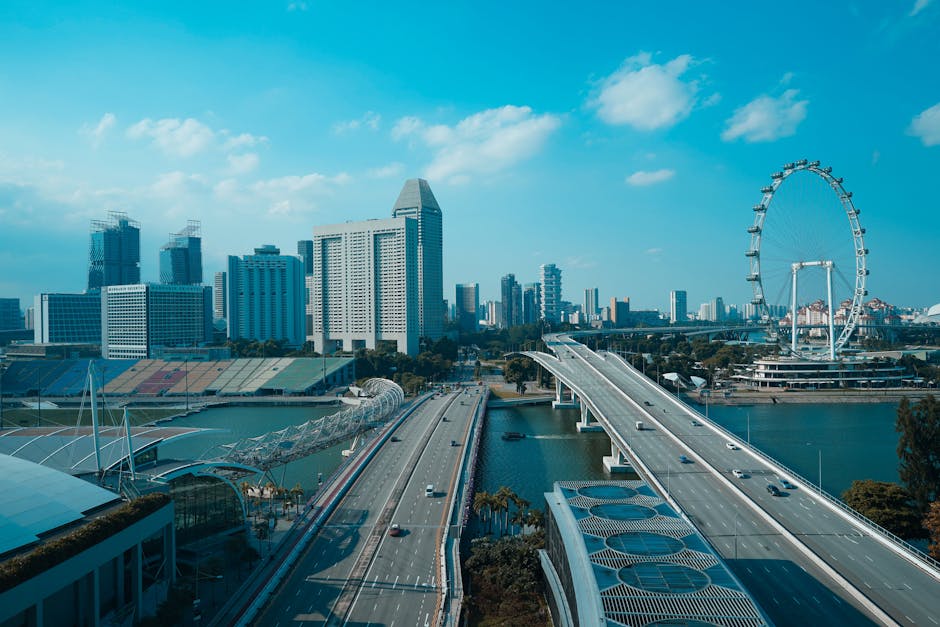
Singapore’s Coastal Protection Bill 2026: From Risk to Resilience on a Nation’s Edge
In the shadow of rising seas, Singapore stands at a crossroads—one defined by the unyielding march of climate change and a national commitment to survival and progress. On March 6, 2026, Parliament approved the Coastal Protection and Other Amendments Bill, rewriting decades-old flood management law and redrawing the lines of responsibility along the nation’s storied coastline. As Southeast Asia’s economic linchpin, Singapore’s S$100 billion journey over the next century signals not merely local adaptation but the evolution of coastal urbanism and industrial strategy worldwide. This exposé delves into the law’s roots, its immediate and future impacts, and the critical choices facing businesses, residents, and policymakers as the Lion City remakes its boundary with the ocean.
The Rising Tide: Historical Backdrop and Imperatives
Echoes of Vulnerability. The interplay between Singapore’s survival and the sea isn’t new. From the founding years—when coastal swamps were carved into industrial nodes—to the technocratic leap of the 1999 Sewerage and Drainage Act, water management has been existential. Today, the threat isn’t just monsoonal floods but the inexorable climb of the ocean itself. The Third National Climate Change Study in 2024 projected up to 1.15 meters of sea-level rise by 2100, with the specter of 5-meter storm surges and high-tide scenarios. As global warming raises the stakes, Singapore’s SDG commitments—and its economic lifeblood—demand a radical rethinking of risk and resilience.
From Flood Barriers to Absolute Boundaries. The 2026 Bill amends the 1999 framework into the Sewerage, Drainage and Coastal Protection Act (SDCPA), mandating a continuous "absolute protection boundary" (APB) along the nation's coast. This is not just bureaucratic redistricting: it empowers the Public Utilities Board (PUB) to designate, gazette, and enforce hard protective measures, requiring landowners—private and public alike—to shield Singapore’s rim from a watery future.
Business at the Water’s Edge: New Imperatives for Coastal Owners
Who Bears the Mandate? At first glance, every HDB resident or city dweller may wonder: does this affect me? The answer is nuanced. While almost 80% of Singaporeans live in HDB flats—largely inland or on raised terrain, insulated from sea surges—the Bill’s focus lies sharply on coastal industrial and commercial entities. Approximately 100 private landowners (30% of the coastline)—shipyards, ports, oil and gas facilities, and manufacturers, especially in Tuas, Jurong Island, and Pioneer—now carry direct compliance obligations. Public sector and statutory boards, which manage the other 70%, are equally bound but arguably better positioned in terms of resources and planning.
Major Timelines and Penalties. The law offers clarity—if no comfort—on deadlines: a 10-year notice period before full mandate, followed by a 5-year build window. Failure can result in fines up to S$200,000 and jail terms of up to two years. The message is unmistakable: coastal defense is no longer optional, nor is it someone else’s problem.
Grants and the Cost of Protection. To temper the economic impact, the government promises full grants for compliance—covering everything from hydrodynamic studies and utility diversion to wall construction. The quantum remains to be finalized, but the intent is unmistakable: facilitate rapid upgrades, remove barriers to action, and keep Singapore’s port and industry competitive. As environmental observers note, this is one of the most significant public-private partnerships in urban flood risk history.
HDB Residents: Security by Geography, Not Mandate
Minimal Resident Impact—But Not Irrelevance. For the majority of Singaporeans, especially those living in HDB estates, the Bill has minimal direct regulatory impact. HDB blocks are generally sited inland or on elevated ground, designed to withstand present-day floods. The government has not announced integration of APB measures with HDB upgrading programs such as SERS or HIP. Existing modernizations remain separate, and residents can expect continuity in daily life.
Industrial HDB Units—A Unique Exception. However, for a subset of businesses leasing industrial flats near coastal zones (not residential), obligations are direct and substantial. These tenants must install connected, PUB-approved measures—or face the same compliance and penalty regime as private coastal landowners. The implication is clear: it’s the nature (and location) of the enterprise, not the mere existence of HDB tenure, that triggers the law.
Comparative Perspectives: Navigating New Compliance Ground
Business vs. Residential Mindsets. The coastal protection mandate illuminates divergent perspectives. For private businesses—especially asset-heavy, high-value facilities—this is a capex, operational, and strategic inflection point. From oil refineries on Jurong Island to shipyards at Tuas, compliance means blending physical investment with business continuity, ESG reporting, and in some cases, rethinking locational risk. For HDB households, the story is one of indirect benefit: a safer, drier Singapore, but little day-to-day change or financial outlay.
Public Sector Advantage. Statutory boards overseeing major port and logistics infrastructure have long operated under robust risk management mandates. The Bill codifies and accelerates these practices but with the weight of explicit legal sanction—and a requirement for systemized, PUB-approved planning and ongoing performance.
Global Eyes Watching. Singapore’s approach is not happening in a vacuum. From the Netherlands’ Delta Works to New York’s post-Sandy infrastructure, cities worldwide are engaged in the same existential calculus. What makes Singapore distinctive is the scale (a S$100B, 100-year view), the codified timeline, and the cross-sector public-private cost-sharing—all unfolding in one of the world’s densest cities.
Inside the Bill: Key Provisions and Tactical Shifts
Continuous Absolute Protection Boundary (APB). The backbone of the law is the mapping and enforcement of a digital, continuously updated APB encircling Singapore’s coast. PUB will now regularly gazette which stretches of coast are subject to new requirements, backed by regional hydrodynamic and climate studies. The process begins with public mapping—free for property owners to check exposure—and ends with formal notice, then a compliance clock.
Three-Step Mandate for Businesses. The Bill’s compliance framework is both prescriptive and adaptive:
- Assess Exposure: Immediately consult the PUB’s Coastal Protection Interpretation Plan to identify whether—and to what extent—assets fall within the APB. This is a zero-cost initial step, but for technical flood studies, specialized engineering expertise is needed (grant-eligible).
- Apply for Grants & Plan Compliance: By end-2026, businesses must submit for capital grants and develop comprehensive flood response and engineering plans, subject to PUB review and approval. Early application is incentivized (first-come, first-serve for studies and utilities diversion).
- Execute & Monitor: Over the following decade, entities must construct, connect, and maintain defensive measures in line with the yet-to-be-released PUB Code of Practice, with ongoing compliance audits and emergency readiness drills
Penalties as Last Resort. While the regime is fundamentally enabling, persistent non-compliance is met with severe sanctions: not only S$200K fines and jail time, but also emergency powers for the PUB to enter properties and unilaterally deploy barriers in extreme weather.
Innovation on the Front Lines: Technology, ESG, and New Models
Moving Beyond Walls—Integrated Resilience by Design. The Bill’s scope catalyzes innovation. Coastal defense is no longer about building taller concrete walls; it’s about integrated, smart systems—sensor-linked barriers, tidal surge gates, adaptive urban drainage, and even “nature-based” defenses like mangrove regeneration. Grant eligibility encourages businesses to go beyond compliance, weaving coastal protection into operational and ESG frameworks.
ESG as Strategy, Not Sideshow. Early compliance offers more than risk reduction—it signals resilience to investors, insurers, and global supply chains. As legal analysts note, integrating coastal readiness into Environmental, Social, and Governance (ESG) reporting soon moves from voluntary disclosure to mandatory proof of ongoing stewardship. There is a competitive edge for those who move first.
Case Studies: Real-World Scenarios at Singapore’s Coastal Edge
Jurong Island: The Oil Sector’s Test Case. Home to Asia’s largest petrochemical complex, Jurong Island is ground zero for climate risk. The law now requires every major operator—from multinationals to SMEs—to submit bespoke engineering plans, overseen by the PUB and tied to the APB. With potentially billions in assets at stake, early movers are already seeking grant-backed partnerships, exploring not only physical measures but also digital modeling and AI-enabled flood prediction tools.
Tuas Mega Port: Maritime at the Forefront. As the world’s largest fully automated port comes online, Tuas must not only function but withstand extremes. The 2026 Bill leverages Singapore’s port modernization program, embedding resilience into every aspect of expansion—from quay wall heights to inland drainage redesign, all under public sector oversight but with direct private operator execution.
Senoko/Pioneer: SME Readiness. Less visible but equally vital, clusters of manufacturing and logistics SMEs in northern and western Singapore face new compliance costs but also government support. Industry groups are organizing joint studies to maximize grant efficiency and share lessons as the first APB notifications roll out.
The Silent Majority: HDB Residents and the Social Compact
While the drama plays out on the industrial shore, ordinary Singaporeans remain largely insulated. Yet the Bill’s deeper purpose is social stability—a “silent” dividend in the form of uninterrupted power, food supply, and urban life even as seas rise around Southeast Asia. The absence of direct costs for HDB residents is as much a product of design as of geography; in truth, the true value of the law may be measured in what does not happen—a city sustained, not submerged.
Comparative Outlook: Singapore and the World
National Scale, Regional Lessons. Few countries possess the fiscal strength or state capacity to mount a S$100B, 100-year climate defense, but Singapore’s path will echo far beyond its borders. The Bill’s mix of mandates, carrots, and oversight may become the benchmark for port cities globally—from Hong Kong’s harbor to Miami’s waterfronts—where climate risk and economic vitality intersect.
Unique Features and Challenges. Singapore’s integrated approach—government as both regulator and grantor, businesses as partners rather than adversaries, and a legal clock that compels timely action—contrasts with the piecemeal, often reactive policies seen elsewhere. Its compact geography is a blessing and a challenge: what works here may not scale, but the principle—that resilience requires whole-of-society action—transcends size.
Forward-Looking Insights: Unlocking Opportunity Amidst Risk
“The coastal edge is where climate risk, innovation, and strategic foresight become inseparable. Singapore is not just building walls—it’s building a new covenant with the future, one where resilience is as much about readiness as about concrete.”
Cross-Functional Value and Opportunities. For decision makers, the Bill’s ultimate value lies in its ability to unite discrete domains: compliance, capital planning, ESG, engineering, and business continuity. Early adopters enjoy regulatory goodwill, easier access to grants, and smoother insurance negotiations. Those who delay risk not only fines but reputational and operational shocks in a more uncertain world.
Emerging Patterns. Already, industry forums are seeing new models: joint ventures on coastal works, pooled data analytics to model risk, and bespoke insurance products linked to compliance milestones. The government’s real-time digital mapping provides unprecedented transparency, while the forthcoming PUB Code of Practice is expected to spur a market for advanced engineering and environmental consultancy.
Critical Recommendations for Leaders
1. Audit—Now. Don’t wait for a formal PUB notification. Use the digital Coastal Protection Interpretation Plan to assess all coastal assets, exposures, and supply chain nodes. Engage with professional engineers to quantify risks and opportunities.
2. Apply Early—Secure Grants and Expertise. The full grant regime will not last forever. Early applications receive priority. Collaborate across sectors (e.g., shipyards, chemical plants, logistics hubs) to propose scaled solutions that maximize funding and minimize disruption.
3. Integrate for Advantage. Don’t treat compliance as a box-ticking exercise. Build resilience into capex planning, ESG reporting, and workforce training. Leverage insurance markets—many are shifting from disclosure to proof of readiness, and rates will soon reflect it.
Conclusion: Singapore’s New Coastal Covenant—A Strategic Imperative
When the tides rise, only those prepared stand firm. Singapore’s 2026 Coastal Protection Bill does not merely seek to keep water out; it redefines the nation’s relationship with climate, risk, and collective action. The S$100 billion commitment signals seriousness and permanence, a line drawn not just on maps but through policy, technology, and the social fabric of the island state. For business leaders, the challenge is to move beyond compliance to opportunity—turning risk into competitive edge, and mandates into innovation.
The future trajectory is clear: Singapore’s coastline, ringed by absolute protection, will become the frontier of urban climate adaptation. The choices made in the next decade—by every port operator, industrial lessee, and policymaker—will echo through generations. In a world increasingly shaped by the intersection of nature and human ingenuity, Singapore’s example is both a warning and a beacon. The edge, it seems, can be not just where danger lies—but where vision begins.