
Singapores Green Loans & Humidity-Proof Skincare: The Ultimate Strategic Guide For Climate-Adaptive Brands In Southeast Asia
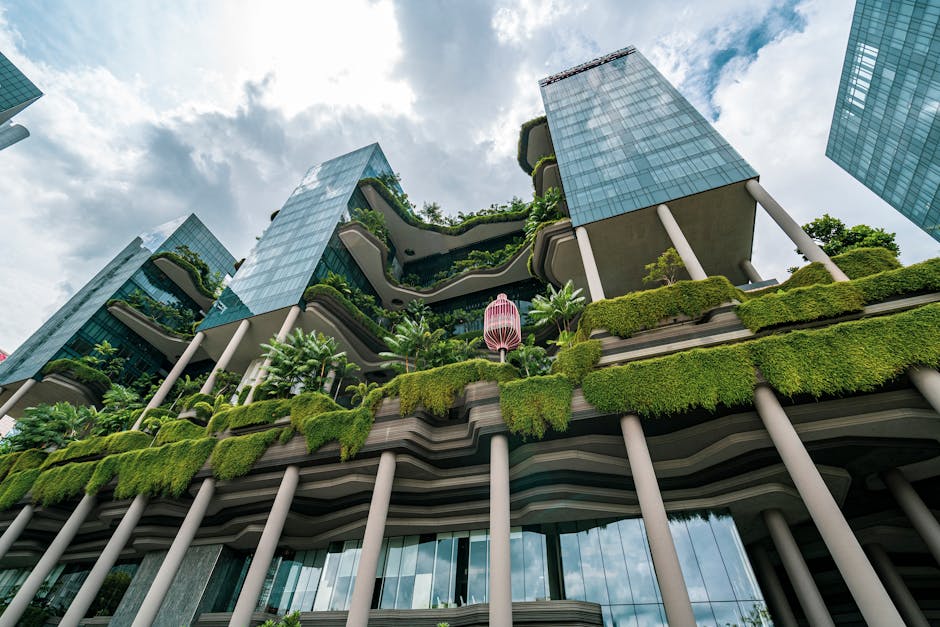
Singapore’s Humidity-Proof Skincare Revolution: A Playbook Inspired by Green Finance
Singapore, a city-state renowned not just for its global financial prowess but also as a testbed for cutting-edge sustainable policy, is quietly shaping the next frontier in consumer health and beauty. The city’s relentless humidity—hovering relentlessly in the 80–90% range—and its innovative Sustainable Loan Grant Scheme (SLGS) under the Monetary Authority of Singapore (MAS) may appear worlds apart. Yet, within this intersection lies an actionable blueprint: the disciplined, data-validated, and outcome-based structures of green finance now illuminate the path for humidity-resilient skincare portfolios, setting a new, institutionalized standard for Southeast Asia's booming personal care industry.
The Convergence of Climate and Capital: Why Singapore Matters
From Survival to Strategy: Singapore’s geographic DNA has always meant adapting to relentless tropical humidity. Skincare in this environment is not a matter of pampering—it's a structural market need. But what distinguishes Singapore isn’t just its weather; it’s the strategic rigor with which it approaches emerging challenges, as seen in its financial markets. The SLGS doesn't just support sustainable finance—it systematizes it. It mandates frameworks, requires third-party validation, anchors incentives to key performance indicators (KPIs), and transparently reports outcomes.
A Dual Transformation: The core insight is this: the playbook that made Singapore a reference for green loans can—and should—be reapplied by beauty and consumer health brands to build portfolios that truly perform in humid, tropical climates. The opportunity is more than cosmetic. For leaders in Southeast Asia, this is a chance to industrialize humidity resilience as a strategic asset, not just a marketing claim.
Patterns Emerging from the Humid Tropics
Consumer Behavior Is Data-Driven—But Hungry for Standards: Decades of local observation, clinical guidance, and market feedback converge on a strikingly consistent formula for skincare success in Singapore and its neighbors (VidaSkin Clinic, Urban Hair). Sweat, sebum, and shifting environments between air-conditioning and sun-drenched commutes demand:
- Lightweight, non-comedogenic, gel-based moisturisers (especially those with hyaluronic acid and niacinamide).
- Broad-spectrum, sweat-resistant sunscreens, with high PA++++ ratings.
- Barrier-protective, minimalist routines that avoid heavy creams, oils, and aggressive exfoliants.
Clinical Alignment and Retail Reality: Professional clinics and mass-market retailers agree. VidaSkin’s clinical prescriptions align almost point-for-point with Urban Hair’s oily-skin guide: gentle cleansers, targeted actives like niacinamide, and avoidance of occlusive or alcohol-heavy products. These are not high-concept recommendations—they are empirically validated, daily-use, and crossover both price and demographic boundaries.
Strategic Innovation: Borrowing from Singapore’s Green Loan Architecture
Standardisation as Strategic Differentiator: The MAS Sustainable Loan Grant Scheme didn’t merely subsidize ‘green’ aspirations—it enforced a shared language. For skincare, this means creating a mutually recognized “humidity-resilience taxonomy”: formal categories, explicit performance claims (e.g. “non-comedogenic in 85% RH”), and product tiers (HR-Core, HR-Plus, HR-Pro).
Third-Party Validation—Translating Financial Audit into Skincare Science: SLGS mandates external reviewers; skincare brands can deploy independent clinical trials, humidity-chamber testing, and dermatologist co-signs. Imagine a “Humidity Performance Opinion” for a flagship gel moisturiser—a move that vaults humidity adaptation from marketing to measurable standard.
KPI-Linked Performance Incentives: Green loans tie interest rates to KPI achievement (e.g., emissions cuts). Similarly, brands can set quantifiable targets: percentage reduction in acne lesions under high-humidity trials, consumer-reported improvements in comfort, lower product return rates in Singapore/Malaysia. Meeting—and reporting—on these KPIs is rewarded with enhanced marketing budgets, retailer incentives, or even ESG-linked borrowing.
Institutionalising De-Risked Innovation: As SLGS de-risks sustainable finance for first-movers, skincare majors can invest in pilot programs, co-funded validation, and “Humidity-Smart” retail sections. For regional leaders, this is the opportunity to tie sales force messaging, product launches, and even capital allocation to a climate-adaptive framework.
Contrasting Narrative: Humidity as a Niche vs. Humidity as Infrastructure
Legacy Branding—A Missed Strategic Opportunity: For years, global skincare giants entered Southeast Asia with a one-size-fits-all portfolio. “Hydrating,” “brightening,” “anti-aging”—these are claims developed in temperate labs for temperate markets. Humidity concerns were addressed ad hoc, relegated to the “Asia” section of the marketing deck.
Humidity-Resilience as Core Product Infrastructure: By contrast, the emergent view—modeled on Singapore’s financial discipline—treats climate adaptation not as a bolt-on but as core operational infrastructure. Here, “humidity resistance” is as foundational as “sustainability compliance” in banking: defined, measured, externally validated, and consistently incentivized across the value chain.
Comparative Market Impact: This underlying shift is reflected in consumer outcomes. Brands institutionalizing humidity testing see higher repurchase rates, lower returns for stickiness or breakouts, and improved clinical outcomes for local skin types (Growth HQ analysis). Those clinging to generic claims risk growing irrelevance and reputational drag.
The future of skincare in Southeast Asia will be defined not by borrowed trends, but by frameworks that integrate climate realities, verified outcomes, and transparent performance—for both consumers and capital markets. The only question is which brands will choose to lead, and which will be forced to adapt.
Blueprint for Action: Designing the Humidity-Resilient Portfolio
Phase 1 – Diagnose & Define: In the next three months, conduct a rigorous portfolio audit: which SKUs align with humidity needs? Which feature heavy creams, strong fragrances, or lack sweat-resistant SPF? Draft your own “Humidity Performance Framework,” setting HR-Core and HR-Plus benchmarks, with the same discipline as a green loan taxonomy.
Phase 2 – Design & Validate: Within a year, reformulate and validate. Launch pilots of gel cleansers, niacinamide serums, and sweat-resistant sunscreens. Partner locally (e.g., with VidaSkin or a hospital lab) to run humidity chamber and real-world sweat tests. Publish “Humidity Performance Opinions”—not as a vanity exercise, but as a proof point for retailers, regulators, and increasingly climate-aware consumers.
Phase 3 – Scale & Finance: In the following 12–24 months, move from pilot to mainstream. Co-label “Humidity-Smart” retail sections, incentivize channel partners with higher margin or marketing support, and, where applicable, tie new product R&D to SLGS-backed sustainability loans. Annual reporting can mirror green loan disclosure, with KPIs on sales mix, consumer outcomes, and external validation rates.
Market Implications and Strategic Outcomes
Differentiation Through Data: Positioning portfolios as “Humidity-Smart” or “Tropics-Optimised”—anchored in regional climate realities, third-party lab data, and clinical co-signs—moves brands from price competition to value leadership. This is the Southeast Asia equivalent of the sustainability premium in European finance.
Risk Reduction and Reputation Management: Humidity-inappropriate formulations are a liability, leading to breakouts, negative social feedback, and channel conflict due to elevated returns. Quantitative, humidity-specific KPIs pre-empt these risks and demonstrate operational maturity to both consumers and capital markets.
ESG and Sustainable Finance Integration: For conglomerates already engaging in green finance, aligning skincare R&D and launch with climate adaptation goals opens doors for SLGS-backed financing. This is not just regulatory check-the-box—it’s a business accelerator and a public proof of “net positive” portfolio adaptation.
Competitive Moat: Eventually, the discipline and transparency of a “humidity performance framework” will become table stakes; first-movers set the definitions, shape consumer expectations, and lock in channel loyalty. The laggards will be left competing for leftover market segments less sensitive to climate realities.
Concrete Recommendations and Forward-Looking Insights
1. Institutionalize Humidity Performance: Move from ad hoc claims to a systematic “Humidity-Resilient” taxonomy, with explicit, validated performance thresholds mapped to local market needs.
2. Validate and Communicate: Invest in third-party clinical validation—humidity chamber testing, dermatologist reviews, local consumer studies. Publish “Humidity Performance Opinions” to set a new standard of trust.
3. Tie Incentives to Measurable Outcomes: Implement KPI-linked rewards for channel partners, sales teams, and even product development cycles, mirrored on successful sustainability-linked finance models.
4. Integrate with Sustainable Finance Where Applicable: Especially for regional conglomerates, channel R&D and launch spend for humidity-adaptive lines through SLGS or related green finance structures. Report transparently, both internally and through public investor channels.
5. Communicate From the Ground Up: Anchor all B2B and B2C messaging in the lived reality of humidity—using the language of clinics, the data of local labs, and the testimony of trusted micro-influencers.
Conclusion: Humidity as the New Strategic Standard
Singapore’s story is instructive: what was once an environmental constraint is now a source of strategic distinction, both in finance and in consumer markets. By institutionalizing a framework for humidity-resilient skincare—rooted in taxonomy, validation, and KPI-driven execution—regional players can set a standard for all of Southeast Asia and beyond. This is more than a tactical refresh; it is the blueprint for future-proofing portfolios, mitigating climate-adaptation risks, and capturing the loyalty of a generation of consumers who demand both efficacy and transparency.
The future of Southeast Asian skincare will not be written in the language of borrowed global trends, but in the precise, validated, and standardised frameworks that reflect our climate, our consumers, and our capital markets. For decision makers, the path is clear: institutionalise humidity resilience, or be left behind as the market—and the climate—change around you.
The next decade belongs to those who see humidity not as a problem to be navigated, but as the defining context in which leadership is forged.