
Starbucks AI-Powered Comeback: How Deep Brew, CX, And Premium Service Are Redefining The Global Coffeehouse In 2025
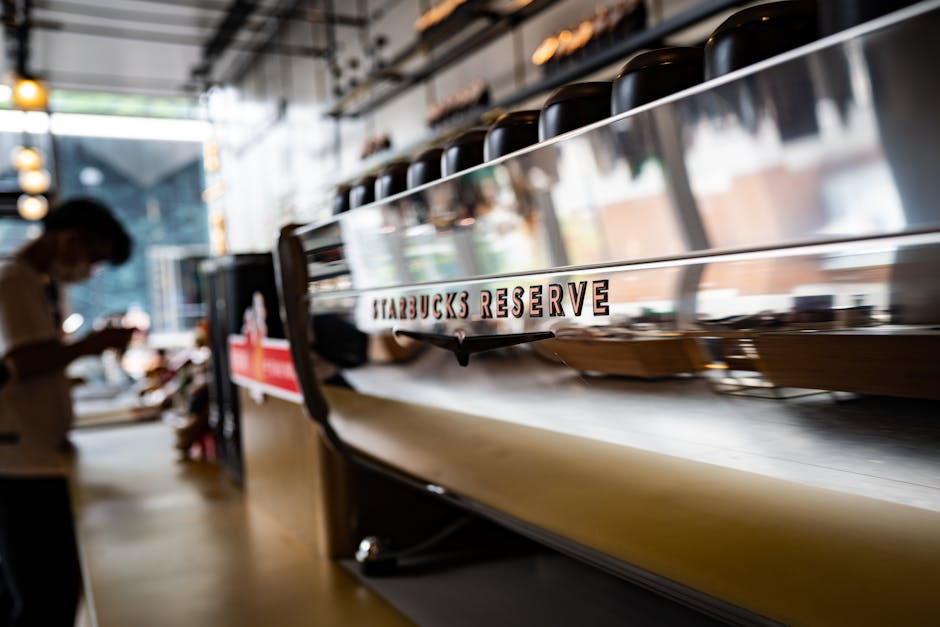
Starbucks’ AI Renaissance: How Deep Brew, Craft, and Customer Experience Are Rebuilding the Third Place
Starbucks, the ubiquitous green siren of the global coffeehouse scene, entered 2025 facing unprecedented headwinds. A sales slump, intensifying competition from nimble drive-thru upstarts, and the growing specter of consumer price sensitivity threatened the very foundation of the coffee giant’s “third place” legacy—a space between home and work that Starbucks had famously made its own. Yet, under CEO Brian Niccol, a bold turnaround strategy emerged, one that wove together the company’s storied focus on human connection with an ambitious deployment of AI-driven tools and personalization. The goal: not a quest for automation for its own sake, but a reimagined, technology-enabled version of “hospitality, craft, and connection” that could justify premium pricing, improve operational resilience, and make Starbucks, in Niccol’s words, “the defining customer-service company in the world.” This is the story of how Starbucks is reengineering not just coffee, but the entire customer experience—with implications that ripple far beyond the café.
From Coffeehouse to Customer-Experience Powerhouse: Setting the Stage
Historical Perspective and Market Turbulence. Starbucks defined the modern café—a space for lingering, working, socializing, or simply sipping. The “third place” concept became shorthand for community and comfort, a distinct advantage in a fast-food landscape dominated by drive-thrus and counter-service chains. However, by 2024, cracks were evident. Aggressive rivals like Dutch Bros and 7 Brew began eating into Starbucks’ market share with faster, cheaper, car-centric formats. Pandemic shifts accelerated the rise of digital ordering, but also created bottlenecks and diluted store atmospheres. Consumer price sensitivity spiked amidst global economic uncertainty. Crucially, the old model—high complexity, high labor, and a sprawling menu—strained both operations and customer satisfaction.
Strategic Inflection Point: “Back to Starbucks.” Recognizing these pressures, Niccol’s team launched the 2024–2026 “Back to Starbucks” plan—not a mere cost-trimming exercise, but a customer experience (CX) turnaround. The thesis: Starbucks could win by restoring its emotional resonance while using technology as “an enabler, not a replacement.” The stakes were high: global comparable store sales had fallen 2% year-on-year in Q3 2025. Yet, by Q4, the strategy showed green shoots, with global comp sales positive for the first time in seven quarters, signaling that the reinvention was gaining traction [Starbucks Q4 2025 Earnings].
The Anatomy of Starbucks’ Turnaround: Where AI Meets Hospitality
Deep Brew’s Quiet Power. Introduced in 2019, Deep Brew—Starbucks’ proprietary AI platform—had long operated behind the scenes, personalizing offers and optimizing inventory. But in the 2025 playbook, its role is more integral than ever, even as the language shifts toward customer experience over tech for tech’s sake. Deep Brew orchestrates mobile order sequencing, predicts foot traffic, and powers personalized recommendations inside the Rewards app. Crucially, AI is now also shaping labor scheduling, menu simplification, and even store layouts, all calibrated to free baristas for more guest interaction rather than mere throughput.
Re-centering the “Third Place.” Niccol doubled down on the physical store as differentiator. “Around 60% of transactions still include an in-store element, even as digital and drive-thru are critical,” he noted [Fortune 2025 Interview]. Store redesigns now prioritize ambient seating, functional outlets, and visible “craft moments”—espresso shots pulled by hand, names handwritten on cups—to signal care and connection. Tech supports, but does not supplant, the human touch.
The Green Apron Service Standard. At the heart of the turnaround is the Green Apron Service initiative, re-instilling the hospitality ethos through training, standards, and measurement. Customer connection scores are up; complaints are down, both quarter-on-quarter and year-on-year. According to the data, value perceptions are at near two-year highs, supported especially by Gen Z and millennials, who collectively account for more than half of Starbucks’ customer base.
Operational KPIs That Matter. Starbucks has set clear, tech-enabled service targets: in-person orders within four minutes; mobile orders within 12–15 minutes. These metrics are tracked as “north stars” for both stores and digital channels, directly informing process improvements and investment priorities.
AI-Enabled Operations: From Workflow to Menu Simplification
Behind-the-Counter Automation—With Limits. Starbucks deploys automation and AI for order sequencing, labor planning, and congestion management, not for barista displacement. “Robot-made espresso is soulless,” Niccol insists, affirming that “craft and connection are central to the brand identity” [Restaurant Dive]. Deep Brew’s predictive tools now help forecast demand down to the daypart, guiding labor schedules, inventory levels, and preparation sequences.
Pared-Down Menus, Smarter Upselling. In a significant tactical shift, Starbucks is streamlining its menu, focusing on high-momentum items that reinforce quality and efficiency. Here, AI does dual duty: supporting simplification (reducing operational drag) and powering personalized upsell prompts through the app. This approach aims to deliver the “right product, right person, right time” while avoiding the operational chaos of uncontrolled customization.
Investing in People, Place, and Technology: The Three Pillars of Value Recapture
Labor and Leadership Stability. Starbucks is investing $500 million in hourly labor and $150 million in store remodels to support the new experience model. Store leader turnover stands at about 20%, well below industry norms, and hourly partner churn is around 50%—a “good” figure for the quick-service sector. This stability supports better continuity in customer relationships, a base for improving repeat visits and loyalty.
Physical Upgrades and Ambience Restoration. The company is adding “hundreds of thousands of seats” and repairing outlets across its network, balancing space between mobile pickup and in-café seating. The goal is to “fix the physical” alongside the digital, restoring the inviting third place that once set Starbucks apart.
Trading Margins for Momentum. These investments weigh on short-term margins, but Starbucks is betting that stronger CX, enabled by AI and staff investment, will drive loyalty, pricing power, and revenue recovery beyond 2026. This is a strategic, not tactical, bet—a deliberate choice to prioritize experience over near-term cost-cutting.
Comparative Perspectives: Starbucks vs. Its Newest Rivals
Drive-Thru Disruptors. Brands like Dutch Bros and 7 Brew have surged by focusing on speed, lower prices, and compact drive-thru footprints. Starbucks’ leadership is blunt in its analysis: “We will not compete on pure throughput. They are soulless compared to a true coffeehouse atmosphere.” Instead, Starbucks leverages café ambience, visible craft, and tech-powered hospitality to stand apart.
Global QSR and Boutique Contrasts. Compared to QSR giants like McDonald’s and Dunkin’, Starbucks justifies its premium positioning through deeper customization, a “third place” ambience, and digital sophistication. Against boutique specialty brands, Starbucks aims to blend consistency and scale with re-emphasized “craft moments” and personalized digital journeys.
Four Ps Reinvented: Product, Price, Place, and Promotion in 2025
Product: Crafted, Personalized, Managed by AI. The Starbucks menu remains rooted in espresso-based beverages, cold drinks, and seasonal LTOs. AI drives menu optimization (streamlining for speed and quality) and surfaces personalized, high-conversion recommendations in the app. The “experience as product” comes to the fore—hospitality, craft visibility, and the sensory dynamics of café life become explicit differentiators.
Price: Premium, But Justified by Value. Starbucks maintains a clear premium over mass-market QSR coffee. However, AI data allows for nuanced value management—personalized deals targeted to price-sensitive segments, without undermining core product pricing. Customer value perceptions now approach two-year highs, thanks to improved service, speed, and personalization.
Place: The Third Place, Reinforced. With 60% of sales involving an in-store component, Starbucks’ renewed emphasis on cafés as “third places” is central. Store redesigns, smart mobile order sequencing, and operational KPIs aim to blend efficiency with comfort, reducing crowding and restoring social space.
Promotion: Experience as Marketing. The Starbucks comeback narrative is built around hospitality and connection, not just coffee quality. Green Apron Service, hand-written names, and improved internal metrics take center stage in both digital and word-of-mouth marketing. The company also leverages AI-driven CRM to send personalized offers—especially to the fast-growing Gen Z and millennial user base.
Competitive Moats: Brand, Data, and Human Connection in an AI World
Scale and Data as Differentiators. Tens of millions of Rewards members, high mobile adoption, and extensive behavioral data give Starbucks a significant edge. Deep Brew-style AI and digital integration make predictive operations and personalization the new baseline, raising the bar for rivals.
The Experience Moat. As predictive tools become industry table stakes, Starbucks’ real moat is the consistent, branded experience—hospitality, ambience, and human connection delivered at scale. This is the aspect competitors (especially those chasing speed or price) will struggle to replicate.
Porter’s Five Forces: A 2025 Reality Check
Threat of New Entrants: Moderate. While off-the-shelf AI and mobile platforms lower barriers, Starbucks’ scale, brand, and operational data still offer robust defenses.
Bargaining Power of Suppliers: Low to Moderate. Commodity volatility is partly offset by Starbucks’ buying power and AI-optimized procurement.
Bargaining Power of Buyers: High. Consumers can switch for price or convenience. Starbucks must continually reinforce value and emotional loyalty, using both service and digital personalization.
Threat of Substitutes: High. At-home coffee, energy drinks, and ready-to-drink (RTD) beverages offer alternatives. Starbucks leans on the “social experience and human touch” as non-replicable assets.
Industry Rivalry: Very High. With McDonald’s, Dunkin’, and drive-thru chains in the mix, only consistent differentiation can sustain pricing and traffic.
Customer Metrics and Business Impact: Early Signs of Recovery
Measuring What Matters. In Q3 FY2025, global comp store sales still fell 2% YoY, but total net revenue rose 4% to $9.5 billion. By Q4, Starbucks reported its first positive comp sales in seven quarters. Notably, customer connection scores improved; complaints declined both quarterly and annually. Value perceptions were at their highest since 2023, giving credence to the strategy’s impact.
Demographic Tailwinds. Gen Z and millennials now represent over half of Starbucks’ customer base—a critical shift. These cohorts value both digital convenience and authentic, human-centric experiences—a duality Starbucks is uniquely positioned to deliver.
Opportunities and Threats: Navigating the Road Ahead
Opportunities. Deeper AI and automation will enable more precise labor deployment, inventory management, and real-time menu optimization. International growth beckons, especially via localized digital formats and the export of the Green Apron/experience playbook. Gen Z and millennial loyalty, powered by AI-personalized journeys, promises lifetime value.
Threats. Fast-growing drive-thru competitors, platform-powered delivery aggregators, and AI commoditization could erode Starbucks’ share if experience differentiation falters. Regulatory and labor pressures around automation and wages require careful balancing of progress and partnership.
Comparing Old and New Viewpoints: Lessons for Decision Makers
From Automation First to Human-Centric Tech. The earlier wave of retail tech chased cost trimming and labor reduction. Starbucks’ 2025 approach is deliberately different: AI is framed as a tool to empower, not replace, frontline partners. This orientation may seem counterintuitive in an age of “robot cafés,” but it delivers uniquely on emotional loyalty and perceived value.
Customer Experience as the Ultimate KPI. Whether for driving loyalty, justifying premium pricing, or outmaneuvering rivals, Starbucks stakes its future on CX—supported by, but not subordinate to, technology. In a world where predictive offers and personalized journeys are becoming table stakes, “brand meaning and human touch” could prove the most durable source of competitive advantage.
The next era of retail won’t belong to those with the fastest algorithms, but to brands that make technology invisible—seamlessly supporting a compelling, human-centered customer journey. At Starbucks, AI is not the barista, but the enabler of moments that matter.
Real-World Implications: Lessons for Retail, QSR, and Consumer Brands
AI as a Strategic Lever, Not a Silver Bullet. For decision makers across retail, QSR, and hospitality, Starbucks’ example underscores the importance of subordinating technology to a clear customer outcome. AI and automation deliver maximal impact when harnessed for speed, accuracy, and personalized hospitality—not when used as a veil for cost cutting alone.
Physical Spaces Still Matter. Even in a digital-first world, physical stores remain powerful levers for differentiation and loyalty. Starbucks’ heavy investment in ambience, comfort, and visible craft is a direct response to the dehumanizing tendencies of pure drive-thru or app-only models.
Invest in People for Sustainable Differentiation. Training, wages, and cultural initiatives—like Green Apron Service—are as important as data models. Consistent, human-delivered experiences are critical to justifying premium positioning and maintaining pricing power.
Conclusion: The High Stakes of Starbucks’ CX and AI Gamble
The Starbucks of 2025 is a company in active reinvention, navigating treacherous terrain with a playbook that rejects both soulless automation and nostalgic complacency. By fusing Deep Brew AI with a redoubled focus on human connection, Starbucks is charting a path toward operational excellence and brand resonance that few rivals can easily match. The journey is not without risk—margin pressures, commoditizing tech, and nimble upstarts all threaten the status quo. But if the bet pays off, Starbucks will not only reclaim its third place mantle, but set the competitive standard for customer experience in retail and foodservice worldwide.
The future belongs to brands that can make technology invisible, using it to empower people and elevate experiences. For Starbucks, and for every brand with premium ambitions, the lesson is clear: invest boldly in both AI and human value—because in the end, it is people who define the soul of a company, and who turn a cup of coffee into a lasting relationship.