
Starbucks Vs. ZUS Coffee In Malaysia: Why AI Alone Won't Win The 2025 Global Coffee Experience Revolution Amid TikTok Shop Disruption
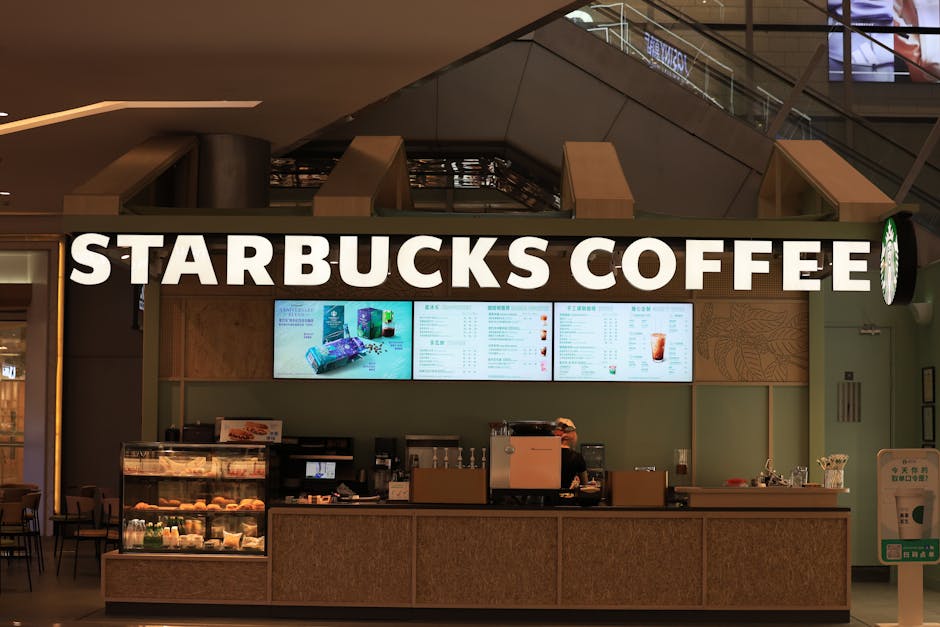
Starbucks in 2025: Revolution or Recovery? The Real Story Behind Coffee’s AI-Fueled Transformation
In 2025, Starbucks stands at a pivotal crossroads, grappling not just with the echoes of its own legacy but with the relentless march of technology, fierce competition from nimble regional upstarts, and the disruptive surge of social commerce behemoths. The narrative of Starbucks as a trailblazer in customer experience is compelling—but beneath the surface, the story is fraught with operational complications, uneven innovation, and a race for relevance in a world where AI, localization, and Gen Z consumer behaviors are rewriting the rules of engagement. This exposé unpacks the mythos, exposes the cracks, and charts the global currents reshaping the future of coffee—and retail itself.
Reframing Starbucks’ AI “Revolution”: Evolutionary Gains Amid Internal Struggles
The Deep Brew Promise vs. Operational Reality
Starbucks’ flagship Deep Brew AI system, launched in 2019 and scaled by 2025, powers everything from supply chain analytics to real-time inventory tracking with computer vision. The measurable gains are undeniable: a reported 30% return on investment from supply chain optimizations, reduced food waste, and frictionless multi-channel ordering all demonstrate AI’s potential. Yet, as GrowthHQ notes, these benefits represent incremental progress rather than true disruption.
Bottlenecks and Recovery—Not Revolution
Under CEO Brian Niccol’s stewardship, innovative tools like the “green dot” AI barista—capable of troubleshooting equipment issues—and “smart Q” system for sequencing multi-channel orders, have improved throughput. However, the need for such tools highlights legacy mismanagement and operational chaos, not a bold leap forward. As Niccol himself admits, these solutions tackle bottlenecks exposed during his arrival—a sign that AI is a recovery tool for Starbucks, addressing systemic inefficiencies rather than spearheading radical innovation (Fortune).
Balancing Automation with Human Touch: Lessons from Early Missteps
Restoring the “Third Place” Experience
Starbucks’ legendary “third place” vibe—the sense of community beyond home and work—suffered during early AI rollouts. Initial automation eroded the human touch, with staff feeling sidelined and customer interaction diluted. This prompted a strategic pivot: while Deep Brew continues personalizing offers from app data and even anticipates orders via voice activation, Starbucks now emphasizes restoring human elements as a core value.
Menu Simplification for AI Scalability
In July 2025, Starbucks began testing the “Starting 5” simplified menu, directly admitting that previous menu bloat hindered speed and AI scalability. This tactical retreat underlines the limitations of tech-led transformation; operational complexity had to be addressed before AI could scale efficiently, challenging claims of seamless global leadership (Harvard Business Review).
SWOT Analysis: Strengths, Weaknesses, and the Global Coffee Battlefield
Starbucks’ Strategic Profile—2025 SWOT
| Factor | Strengths | Weaknesses | Opportunities | Threats |
|---|---|---|---|---|
| AI/Operations | Deep Brew optimizes staffing, personalization at scale | Bottlenecks in order sequencing required “smart Q” fix | Predictive app for frictionless ordering | Rising labor costs, AI integration errors |
| Market Position | 80+ countries, loyalty data moat | Menu bloat slowed service | Menu simplification, voice AI | Regional upstarts like ZUS Coffee |
| Trends | Personalization, supply chain agility | Human-AI balance challenges | Digital economies in Asia/Europe | TikTok Shop’s AI-localized e-commerce surge |
Emerging Global Patterns
AI-driven forecasting cuts stockouts and waste, enabling Starbucks to adapt inventory based on weather or local demand spikes. App-based personalization dominates in North America and Europe, while sustainability and premium pricing pressures in emerging markets have empowered data-savvy local rivals to exploit gaps Starbucks cannot easily fill.
Localization is Key—But Far from Seamless
Though Deep Brew offers China-specific recommendations and menu tweaks, rollout remains uneven globally. ROI statistics often mask the nuanced realities: in post-COVID regions, resilience needs have outpaced AI’s ability to deliver seamless experience (COSupport).
Competing Angles: Regional Rivals and the Rise of Social Commerce Giants
ZUS Coffee: Malaysia’s Data-Driven Disruptor
In Malaysia, ZUS Coffee has surpassed Starbucks as the fastest-growing chain. Their secret? Superior data strategies, hyper-local menus, and rapid app personalization. ZUS uses supply chain AI to achieve three times faster growth, lower prices, and viral social integration—exposing Starbucks’ vulnerabilities in emerging markets where its premium model and brand equity offer limited protection.
Local Agility vs. Global Scale
Starbucks’ massive footprint (over 80 countries) and loyalty data moat seem formidable, but local upstarts like ZUS, who can pivot quickly and integrate real-time feedback, are proving more adept at serving dynamic, price-sensitive markets. This agility gives them an edge against Starbucks’ slower, globalized adaptation strategies, as exemplified by localized menu innovations and zero-waste operation models.
ByteDance’s TikTok Shop: Disrupting Gen Z Coffee Culture and Retail
TikTok Shop’s Hyper-Localized E-Commerce Surge
ByteDance’s TikTok Shop leverages advanced AI not just to predict viral trends, but to automate fulfillment and drive hyper-localized commerce across Southeast Asia, Europe, and Japan. Live-stream sales in Southeast Asia have exploded by 300% year-over-year, and features like AR try-ons in Japan and creator-driven discovery in Europe are reshaping digital economies (CMSWire).
Impact on Starbucks—Physical vs. Digital Footfall
While Starbucks’ app ecosystem counters with loyalty programs and predictive ordering, it lacks the scale and viral engagement model of TikTok Shop. Starbucks’ “prediction” is limited to coffee orders; TikTok’s is for viral consumer trends—including coffee, food, and merchandise—which increasingly captures Gen Z spend and erodes physical cafe visits. In Asia especially, localization and social commerce are king, and Starbucks risks commoditization if it fails to match the fluidity and creativity of social AI platforms.
AI in the Supply Chain: Real Gains, Relative Limits
Predictive Models vs. Real-Time Adaptation
Starbucks’ supply chain AI has reduced inventory waste, mitigated stockouts, and driven measurable ROI. However, at 30%, its returns trail pure-play tech firms and regional chains like ZUS Coffee, who use real-time data for “zero-waste” operations. No 2025-specific figures confirm Starbucks’ dominance; instead, the chain faces continual pressure to evolve as competitors refine their models faster and more locally.
Personalization as a Competitive Moat
Starbucks retains an edge in app-based personalization and multi-channel customer engagement, but these advantages are under siege as rivals deploy social and commerce AI at scale. The strategic imperative is clear: Starbucks must prioritize “human recovery”—restoring community and authentic connection—over unchecked automation.
Comparative Perspectives: Challenging the Starbucks Narrative
Starbucks’ Evolution versus Regional and Social Disruptors
- Starbucks: AI enables operational improvements, menu simplification, and personalized offers, but these are evolutionary corrections for legacy issues.
- ZUS Coffee: Data-first, hyper-local approach results in faster growth, price competitiveness, and social virality, demonstrating the limits of Starbucks’ premium model in emerging regions.
- TikTok Shop: Social AI shapes demand in real-time, bypassing traditional retail entirely and redefining customer experience through creator-led content and commerce.
For new viewers: The competing angles reveal a broader transformation: the shift from centralized, brand-driven retail to decentralized, customer-driven, and social platform-powered commerce. Starbucks leads in scale and data, but rivals excel in speed, local relevance, and cultural agility.
“In the age of AI and hyper-local social commerce, global brands like Starbucks must redefine their ‘third place’ not as a location, but as a living ecosystem—blending technology, community, and culture into seamless, adaptive experiences that evolve with their customers.”
Real-World Implications: What Does This Mean for Customers and Stakeholders?
Customer Experience—Beyond Coffee
The battle for customer loyalty is no longer just about the product; it’s about convenience, community, and cultural resonance. Starbucks must reconcile its vision of the “third place” with the realities of digital-first, AI-driven economies. For consumers, the choices expand—between global consistency, hyper-local innovation, and immersive social shopping.
Operational Excellence—The New Baseline
AI-driven efficiency is now table stakes. Inventory management, app personalization, and predictive ordering are no longer competitive differentiators, but baseline expectations. Starbucks’ ongoing menu simplification, staff augmentation via AI baristas, and supply chain agility are necessary—yet insufficient—steps in a marketplace where nimble rivals and platform giants set the pace.
Stakeholder Strategy—The Risk and Reward
For investors and partners, Starbucks’ adaptability is under scrutiny. Premium pricing and sustainability concerns persist; local chains and social commerce platforms appear poised for greater ROI and viral growth. Strategic focus must shift toward deeper localization, cross-platform integration, and authentic community-building.
Forward-Thinking Insights: Where Is the Global Coffee Market Headed?
The Fusion of AI, Localization, and Social Commerce
The next phase of retail—and coffee culture—is defined by fusion. AI powers operational excellence; localization tailors experience; social commerce connects and amplifies communities. Starbucks’ Deep Brew is no longer a disruptor, but a foundation for iterative improvement. The real disruptors—like ZUS Coffee and TikTok Shop—are reshaping the concept of “customer experience” by blending real-time feedback, hyper-local engagement, and viral content.
Actionable Takeaways for the Industry
- Global brands must prioritize local adaptation and rapid iteration.
- Operational automation is necessary, but must be balanced with meaningful human interaction.
- Data-driven personalization is a competitive must, but cultural relevance and community-building are the true differentiators.
- Physical retail must embrace hybrid models, integrating digital, social, and experiential elements to remain relevant.
Conclusion: The Future Trajectory—Adapt or Be Disrupted
Starbucks’ journey in 2025 is less about revolutionary transformation than about agile recovery and continual adaptation. As the global coffee market evolves, the real power belongs to those who can seamlessly blend technology, local nuance, and authentic community. The competitive threats—from regional data-driven upstarts and social commerce juggernauts—are real and accelerating. The challenge for Starbucks and its peers: to redefine customer experience not as a fixed narrative, but as a living, evolving ecosystem.
In the race for coffee supremacy, only brands that reconcile operational excellence with cultural agility, and blend AI with human touch, will thrive. The strategic importance of this issue extends far beyond coffee—it shapes the future of retail itself, and demands a relentless commitment to reinvention, relevance, and resonance.