
Tariff Shock: How Vietnam, India, And Mexico Are Becoming The Next Global Tech Powerhouses Amid U.S.-China Trade War
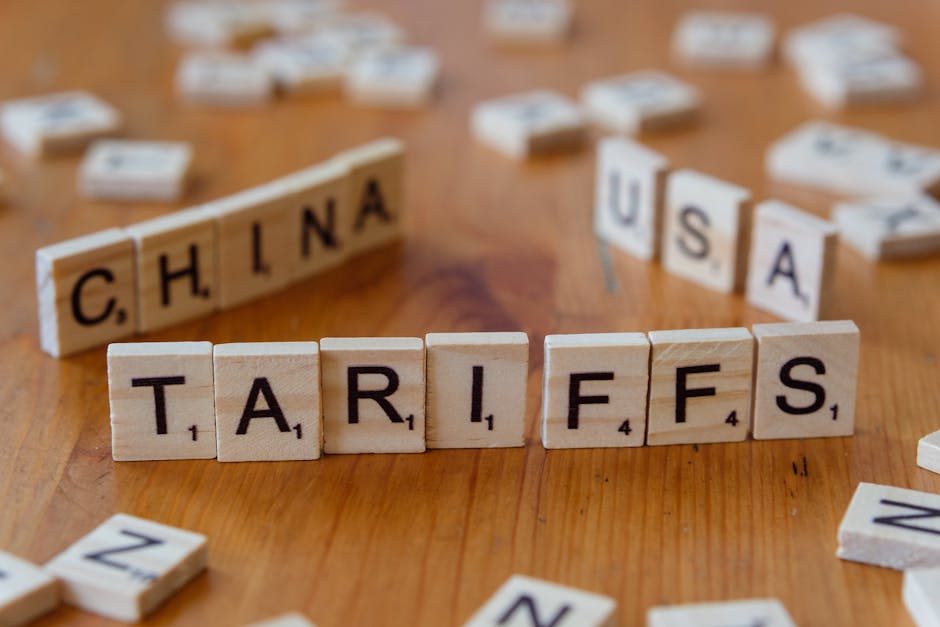
Will U.S.-China Tariffs Spark New Tech Hubs? Unpacking the Global Supply Chain Reformation and Investment Opportunity
In the spring of 2025, global technology markets faced seismic shifts as U.S.-China tariffs escalated to historic highs—145% on Chinese goods and reciprocal spikes to 125% from China. What first seemed a transitory disruption has blossomed into a paradigm shift, destabilizing familiar supply chains and spawning new tech manufacturing epicenters in Southeast Asia, India, and Mexico. This exposé explores the anatomy of this upheaval, tracing the ripple effects through finance, logistics, and innovation, and evaluates the profound opportunities awaiting decision makers and investors. In this new era, agility, diversification, and foresight are not merely competitive advantages—they are existential mandates.
The Tariff Tsunami: History, Impact, and Market Disruption
Origins of Tariff Escalation: The latest wave of tariffs originated from the Trump administration’s aggressive trade policy, intended to rebalance U.S.-China commerce. The policy commenced with a 10% baseline on all imports (March 4, 2025), rapidly intensifying: 20% on Chinese electronics, 34% reciprocal tariffs on critical sectors, and a punishing 50% on semiconductors, EVs, and robotics (Tech Policy Press).
Immediate Market Fallout: Financial markets reacted with unprecedented volatility. The S&P 500 suffered its worst day since 2020; the Dow plunged 1,600 points (4%), and Nasdaq shed 6% in a single session. Tech giants like Apple hemorrhaged $300 billion in market value, while semiconductor titans such as Micron and HP saw double-digit declines (Morningstar).
Supply Chain Shockwaves: As tariffs swept away cost certainties, companies scrambled for alternatives. China’s retaliation—tariffs rising from 48% to 125%—targeted U.S. tech exports and forced several firms to seek safer harbors. The removal of de minimis exemptions (May 2 for China/Hong Kong, July 30 for all countries) closed loopholes for low-value imports, further raising ecommerce costs for consumer goods like smartphones and laptops (DCL Corp).
Emergence of New Tech Hubs: Southeast Asia, India, and Mexico Take Center Stage
Strategic Diversification—The “China+1” Imperative: With 60% of smartphone and PC supplies originating in China, tariffs forced companies to embrace “China+1” strategies—relocating manufacturing while maintaining access to Chinese scale and expertise. The winners? Vietnam, Indonesia, India, and Mexico, each carving out strategic niches by leveraging labor cost advantages, improving infrastructure, and tariff insulation.
Southeast Asia: The Next Global Assembly Powerhouse
Vietnam’s Ascendance: Vietnam’s star has risen rapidly. Apple, facing 25–40% iPhone price spikes if reliant on China, shifted primary assembly to Vietnam, aiming for most U.S.-bound units to originate there by end-2026 (Qwegle). Foxconn and Samsung invested over $20B in Vietnamese plants since 2023, with projections that Vietnam will produce 50% of global smartphones by 2025.
FDI Surge and Infrastructure Metrics: U.S. foreign direct investment in Vietnam tech parks hit $15B in 2024; Bac Ninh province alone hosts over 1,200 factories, with EV component output up 40%. Critical figures: Southeast Asia’s tech FDI soared 28% in Q1 2025 following tariff hikes.
Indonesia’s Battery and EV Boom: Indonesia, rich with the world’s largest nickel reserves, has lured Tesla and CATL for battery gigafactories projected at $10B by 2027. Corporate investments in cloud infrastructure benefit from tariff-free ASEAN trade, with Google and Microsoft pouring $5B into data centers. While infrastructure lags compared to Vietnam (power outages 10% higher), the ROI potential remains robust: 25% cost savings versus China post-tariffs.
Investment Opportunities: Qualcomm’s $1B Vietnam semiconductor fab (operational in 2025) and sustained consumer electronics assembly growth (18% YoY) present attractive margins and insulation from tariff-induced risks.
India: The Software-Hardware Hybrid Hub
PLI Incentives and Hardware Scaling: India’s “Production Linked Incentive” scheme ($25B) is driving a projected $100B in electronics manufacturing by 2026. Apple plans to produce 25% of iPhones in India by 2025, targeting 60% of U.S. market supply by 2026—sidestepping China tariffs.
Semiconductor Renaissance: Government-backed investments include Tata’s $11B Assam fab (with PSMC) and Micron’s $2.75B Gujarat packaging plant, supported by a $10B government fund. India’s chip design talent pool exceeds 5 million engineers, fueling a 15% ICT growth forecast.
EV and Cloud Expansion: Tata-Ola’s alliance scales to a million units per year, leveraging domestic battery manufacturing and importing tariff-hit Chinese batteries via India hubs. AWS and Google data center investments ($15B combined) exploit tariff reductions on non-China imports.
Metrics and Risks: India’s exports to the U.S. rose 22% post-tariffs. Key data: smartphones ($30B PLI) growing at 25% YoY, semiconductors ($27B) could see 30% expansion by 2027, and EVs ($15B) project 40% growth. The main risk? Bureaucracy, with delays ranging from 6–12 months on approvals—but a 35% cost advantage after a 40% iPhone tariff.
Mexico: The Nearshoring Hub for Servers and Logistics
Server and PC Manufacturing: Mexico has emerged as the dominant import hub for servers into the U.S., outpacing Taiwan and China. Dell and HP have relocated 40% of PC production to Mexico, keeping server shipments stable amid global chaos. Nearshoring foreign direct investment surged 50% ($35B in 2025), thanks to USMCA tariff-free access.
EV and AI Hardware Localization: Tesla’s $10B Nuevo Leon gigafactory is now sourcing 70% of components locally, avoiding Chinese battery tariffs. Oracle and Softbank’s data center plans remain largely undampened, with Mexico providing expedited logistics—a two-day shipping window versus 30 days from Asia.
Investment Metrics: Cross-border warehousing reduces costs by 20% for Nvidia and Tesla. Consumer device manufacturing costs are down 10% via hybrid China-Mexico models. Crucially, server disruption from tariffs is less than 10%, compared to 60% for China-exposed PCs.
Comparative Analysis: Contrasting Emerging Strategies and Market Perspectives
Industry Perspectives—Resilience versus Risk: For seasoned observers, the tariff escalation resembles prior trade war cycles, but the scale and the cross-sectoral impact are unprecedented. Investors and multinationals differ in their approach: some view Southeast Asia as purely a labor arbitrage play, others see India’s hybrid tech model as the only strategy for long-term insulation. Mexico’s nearshoring is celebrated for logistics but sometimes overlooked for its innovation potential.
Impact on Sectors—Winners and Losers: High-risk sectors include smartphones and PCs (with 60% China exposure and price hikes from 7.6% to as much as 40%), while software and cybersecurity stand resilient due to their domestic U.S. and India focus. Cloud and AI remain growth engines, with China’s ICT sector forecast to grow up to 16% YoY under stimulus, but drop to 5.7% under a 50% tariff scenario.
Company Response—Hybrid Innovation: Tech giants exemplify adaptation: Apple leverages China for core manufacturing, Vietnam and India for U.S. assembly, achieving 25% cost savings. Nvidia reroutes AI hardware through Mexico and Taiwan, and Tesla cuts costs using Indonesia/Mexico battery paths. Chinese firms are offshoring 30% of electronics assembly to Southeast Asia, with AI-powered factories cutting waste by 15%.
Different Viewer Perspectives—Legacy vs. Disruptors: Legacy manufacturers lament margin erosion, while disruptors see an opening for agile, diversified supply chain models. For global investors, ETFs focused on Vietnam and other emerging hubs are yielding 18% YTD—a signal that tariff-driven pivots are rewarding those who move swiftly.
Innovative Practices and Tactical Shifts: The New Supply Chain Playbook
AI-Driven Factory Optimization: AI-powered factories, adopted by Chinese and global players, are reducing waste by 15% and increasing speed-to-market. Companies prioritizing digital twins, real-time tracking, and predictive maintenance are reporting agility gains and lower costs.
Direct Shipping and Logistics Tech: Firms investing in real-time logistics platforms—particularly those with cross-border warehousing in Mexico—enjoy 20% cost reductions. These platforms have become critical as supply chains fragment and shipping times from Asia to the U.S. extend from two days (Mexico) to over 30 days (Vietnam or India).
Strategic Portfolio Diversification: Market leaders now allocate portfolios across hubs: 40% to Southeast Asia, 30% to India, 20% to Mexico, and 10% to logistics tech. This diversification yields 15–30% ROI uplift and insulates against volatility.
Government Incentives and Infrastructure Development: Vietnam, Indonesia, and India are actively subsidizing tech parks, semiconductors, and EV manufacturing. Indonesia matches Chinese EV subsidies, while India’s PLI scheme and semiconductor fund drive billions in new investment.
Real-World Implications: Market Dislocation and Opportunity Windows
For Business Decision Makers: The tariff landscape compels executives to rethink sourcing, risk, and ROI. Opportunities abound for those investing early—Vietnamese fabs offer $1–5B scale with 9.1% ICT baseline growth, India’s PLI-backed semiconductors and electronics projects are surging, while Mexico’s nearshoring facilitates <10% disruption and scalable logistics.
Consumer Impact: Price hikes are the new norm: iPhone prices are expected to spike 25–40% in the U.S., driven by tariff costs on Chinese components. Companies are countering by offshoring assembly to Vietnam and India, but the era of ultra-low smartphone prices is ending.
Investor Insights: Optimistic scenarios hinge on Q2 2025 U.S.-China negotiations. Should tariffs roll back, China’s ICT spending could return to 9.9% growth. The baseline, however, assumes continued tariff persistence, rewarding agile and diversified investors.
Critical Numbers:
- Cost savings of 10–25% via offshoring
- Southeast Asia FDI up 15–28%
- India’s exports to U.S. up 22%
- Risk-adjusted returns: Software yields 12–15% CAGR, hardware faces 5–9% downside
“In an era of tariff-induced volatility, supply chain sovereignty will define which companies thrive and which merely survive. The rapid rise of new tech hubs is not a substitute for China, but the hallmark of a resilient, multi-polar world economy.”
Forward-Thinking Insights: Navigating the Next Decade
Strategic Imperative—Agility and Decoupling: The new supply chain playbook is clear: resilience, agility, and a “China+1” model are prerequisites for competitive advantage. Firms able to pivot production to Vietnam, India, and Mexico—and invest in logistics tech—will weather tariff storms and capitalize on emerging growth.
Risk Management: While Southeast Asia and India offer high growth, infrastructure gaps, bureaucracy, and regulatory risks remain. Mexico’s logistics edge is balanced by political risk, while China’s domestic subsidies continue to stabilize demand. Portfolio managers must prioritize risk-adjusted returns and monitor the regulatory landscape.
Technology as a Lever: AI-driven operations, direct shipping platforms, and real-time tracking tools are now core investment targets. Companies adopting these technologies report 20% demand spikes for logistics firms and 15–30% ROI uplift. The competitive moat is shifting from cheap labor to digital agility and supply chain intelligence.
Sector Outlook—Cloud, AI, and Hardware: Cloud and AI remain resilient, with China reporting up to 16% YoY growth in these domains. Hardware sectors face volatility, but those leveraging hybrid production models (China core, Vietnam/India/Mexico assembly) report cost savings and agility gains.
Conclusion: The Future Trajectory—Strategic Action Required
The 2025 U.S.-China tariff escalation has irrevocably changed the global tech supply chain. While volatility and uncertainty pose new risks, the opportunities for agile, forward-thinking business leaders and investors are immense. The rapid emergence of Southeast Asia, India, and Mexico as tech hubs offers supply chain sovereignty, cost savings, and unprecedented ROI potential. However, success demands discipline: diversify portfolios, invest in AI-driven operations, build real-time logistics capacities, and monitor regulatory shifts.
As technology markets continue to decouple, those who cling to old models will face margin erosion and disruption. The decisive advantage goes to companies and investors who treat the tariffs not as obstacles, but as catalysts for innovation, resilience, and strategic rebalancing.
Action is the new currency of leadership. In this decoupled world, investing in the right tech hubs—and the technologies powering them—will shape the next decade of growth.