
Unlocking Southeast Asias Skincare Success: How Supply Chain AI In Bangkok, Jakarta, Ho Chi Minh City, Kuala Lumpur, And Singapore Predicts Hyper-Local Skin Needs
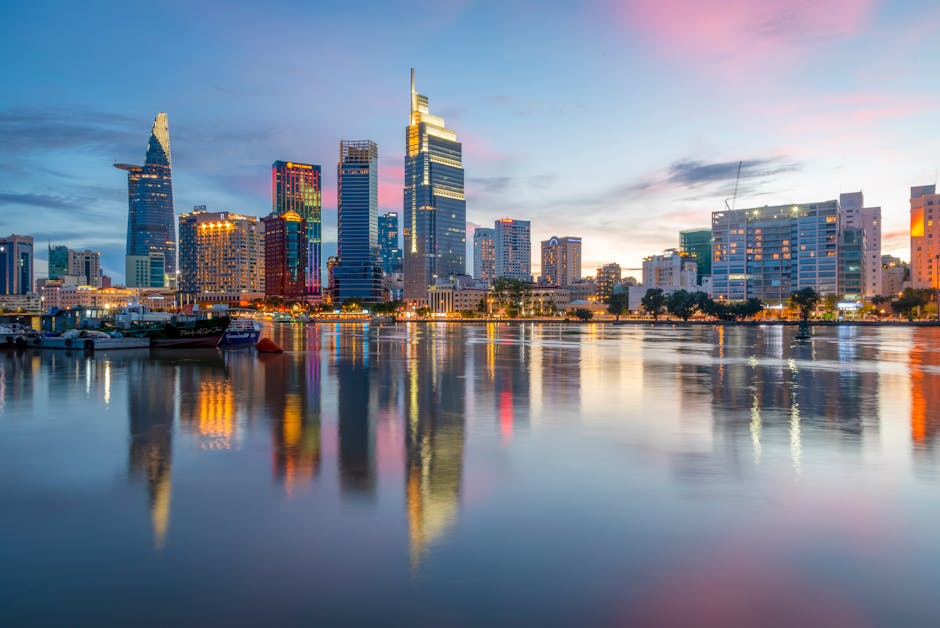
How Supply Chain AI Is Transforming Skincare for Southeast Asia’s Unique Skin Needs
Southeast Asia’s skincare market is at a strategic inflection point—one where explosive growth, digital disruption, and hyper-local consumer demands are rewriting the rules for global and regional beauty players. Long seen as a diverse region of “emerging markets,” Southeast Asia now commands a combined beauty and personal care spend of ~USD 36.1 billion in 2025, with skincare accelerating as a central pillar. This transformation is driven by rising disposable incomes, a widening middle class, and a new generation of digital-first consumers who expect instant relevance, not one-size-fits-all approaches. As the competitive landscape sharpens—with local champions, K-Beauty innovators, and Chinese manufacturers each claiming territory—the central question emerges: How can brands predict and fulfill Southeast Asia’s uniquely fragmented “skin needs” faster, smarter, and at scale? Enter Supply Chain AI: not just as a buzzword, but as the decisive lever to turn data complexity into competitive advantage.
The Stakes: Southeast Asia’s Skincare Market Rises to Global Prominence
From overlooked to essential: In just a few years, Southeast Asia has become a battleground for the world’s most ambitious beauty and skincare brands. The region’s overall market is projected at ~USD 36.1 billion by 2025. What’s more, the skincare segment is outperforming, forecasted to outpace other personal care segments backed by structural factors—rising urban middle classes, increasingly digital commerce, and a cultural boom in beauty awareness powered by social media.
K-Beauty as growth engine: Southeast Asia’s love affair with K-Beauty is more than just a trend. With K-Beauty’s regional market worth ~USD 4.4 billion in 2025 and rising, brands like Amorepacific and COSRX are moving aggressively to localize products and leverage high-impact digital channels. Thailand now stands as the largest K-Beauty market; Vietnam is the fastest-growing; Indonesia, Malaysia, and Singapore are classified as emerging markets with robust adoption.
Local champions and rising competition: The days of generic “Asian” strategies are over. Brands like Indonesia’s Wardah, Vietnam’s Cocoon, and Thailand’s Mistine succeed by fusing deep local knowledge with agile product launches and sharp pricing. The field is split between globally resourced K-Beauty giants—who rapidly adapt to local climates—and fiercely innovative regional brands who build for specific skin concerns down to the city level.
Differentiation or Disruption: Why “Hyper-Local” Is Non-Negotiable
Southeast Asia: Unity in diversity—or a market of markets? While some outside observers treat Southeast Asia as a monolith, real-world data points to granular segmentation by country, city, and even micro-climate. Consumption patterns in humid, mass-market Indonesia look nothing like Singapore’s affluent, premium-driven landscape. Further differentiation is driven by:
Religious and regulatory nuances: Halal certification is non-negotiable for Indonesian and Malay Muslim consumers, affecting ingredient selection, certification processes, and even manufacturing partnerships. Regulatory requirements vary dramatically—what’s compliant in Thailand may be blocked in Malaysia.
Skin biology and climate as strategic variables: Local skin needs are dictated by a complex interplay of humidity, UV exposure, air pollution, and lifestyle. Brands that fail to account for the difference between, say, Jakarta’s year-round stickiness and Vietnam’s seasonal transitions will see limited traction—or worse, brand backlash due to perceived irrelevance.
Social media and digital commerce as trend accelerators: With TikTok, Shopee, Lazada, and Instagram driving discovery and purchase, ingredient trends (niacinamide, centella asiatica, snail mucin) can explode overnight, requiring rapid demand sensing and equally fast supply chain response.
Supply Chain AI: Turning Data Chaos into Competitive Weaponry
From data points to demand signals: To win in Southeast Asia, brands must model skin needs not just from traditional sales data, but from multi-dimensional signals:
- Environmental & climate data: City-level humidity, UV index, and PM2.5 trends tightly correlate with spikes in demand for oil-control, brightening, and anti-pollution SKUs.
- Consumer & behavioral data: Real-time tracking of search trends (“halal skincare,” “acne,” “sensitive skin”) by local language and channel reveal sharp shifts in concern and purchasing intent.
- Retail & channel data: Modern trade (Watsons, Guardian), social commerce, and traditional chains have distinct inventory and pacing needs—demand must be predicted at the channel and city tier, not just country level.
- R&D and performance feedback: Clinical trials, reviews, and complaint data (e.g., “too oily in Jakarta,” “good for sensitive skin in Singapore”) create a closed loop for ongoing SKU refinement.
AI in action—real case studies: Leading K-Beauty brands like COSRX leverage machine learning to identify “skin need clusters” (e.g., acne-prone, brightening, calming), dynamically choosing what to launch where and when. Local champions like Mistine blend social listening with sales analytics to optimize launch timing and portfolio mix. Chinese OEMs such as Qiaomei highlight their own use of AI to customize climate-competent formulations for Southeast Asia’s unique needs.
Emerging Patterns and Tactical Innovations
Micro-climate segmentation: AI-driven demand forecasting no longer focuses solely on the national level. Instead, it incorporates environmental variables to predict swings in demand for specific benefits—anti-pollution serums during haze seasons in Bangkok, oil-control and hydration products during Indonesia’s wet months, or brightening segments where UV exposure drives hyperpigmentation.
Halal-by-design supply chains: In Indonesia and Malaysia, AI models not only optimize sourcing and logistics—they enforce halal compliance across every ingredient and touchpoint, minimizing costly errors that could destroy brand trust.
Dynamic sourcing and manufacturing: Brands increasingly split SKUs between Chinese OEM/ODMs for speed and scale, and local manufacturing partners for targeted agility and regulatory compliance. AI enables “smart dual-sourcing,” shuffling production between partners based on forecasted spikes, local constraints, and cost.
Real-time feedback loops: Reviews, social chatter, and complaint logs are now central to continuous product and supply chain iteration. When AI models detect a surge in comments like “too sticky in hot weather” or “no visible brightening,” brands can rapidly tweak formulations, update inventory mix, or sunset underperforming SKUs.
AI-powered launches: Launches are increasingly simulated and optimized before going live. Machine learning predicts not only the best SKU-country match, but also inventory staging, phased roll-out, and pricing—reducing launch risk in an ultra-competitive region.
Comparing Approaches: Local Champions Versus Global Powerhouses
Local champions (Wardah, Mistine, Cocoon): These brands win by embedding themselves in the cultural, climatic, and regulatory DNA of their home markets. They tap nimble R&D, local partnerships, and often outperform on pricing and relevance. Their playbook? Hyper-fast social listening, micro-batch launches, and closed-loop feedback between sales, reviews, and formulation teams—now increasingly powered by AI on home turf.
K-Beauty leaders (Amorepacific, COSRX): K-Beauty players stand out for aggressive adaptation: tweaking global best-sellers with oil-control, hydration, and calming benefits for the tropics, and redesigning communication for local platforms. Their edge is the integration of advanced R&D, digital-first distribution, and data-driven supply chain orchestration—often ahead of Western multinationals.
Chinese manufacturers (Qiaomei and others): Chinese OEMs/ODMs bring industrial scale, advanced R&D, and ever-increasing localization savvy. Many now explicitly market their supply chain speed, regulatory know-how, and climate-adapted customization for Southeast Asia. Their supply chain AI is becoming a competitive selling point in its own right.
Global multinationals: While historically advantaged by scale, size now risks slowness. Those that localize data, adapt portfolios rapidly, and leverage modular manufacturing (sometimes with Chinese partners) will survive—those who do not, risk ceding market share to far nimbler foes.
Country-by-Country: How AI-Driven Tactics Play Out in Southeast Asia’s Key Markets
Thailand—Largest K-Beauty Market: A fiercely competitive landscape led by Mistine and K-Beauty, where urban-rural differences and strong skin-whitening culture demand ultra-localized forecasting and launch strategies. City-level segmentation (Bangkok versus Chiang Mai) and real-time pollution data drive tactical inventory moves.
Vietnam—Fastest-Growing: A digital-first “growth spurt” market where ingredient trends move at light speed. AI models here prioritize social listening, rapid small-batch launches, and the integration of AI/AR diagnostic tools (in Vietnamese) to close the loop between R&D and direct consumer signals.
Indonesia—Halal, Value-Centric Giant: Religious requirements and price sensitivity are paramount. AI models must guarantee halal compliance, optimize pack sizing for mass retail (sachets, bottles), and orchestrate regionally distributed inventory given the archipelagic geography. Local manufacturing partners are key for true agility and regulatory fit.
Malaysia—Halal Cross-Border Bridge: Shares climate and regulatory DNA with Indonesia, but supports a higher mid- to premium-segment. AI here helps standardize formulations for scale, fine-tune for retail mix (mall, premium), and potentially hub inventory for e-commerce serving the region.
Singapore—Premium Innovation Testbed: Smaller in size but rich in influence, Singapore serves as the ideal launchpad for AI-driven, clinical, or premium lines. Inventory here is tightly managed for freshness and value, while consumer data from early adopters loops back to inform launches in other Southeast Asian markets.
Platform Choices: The AI Toolbox for Regional Success
Demand forecasting & inventory optimization: Market leaders such as o9 Solutions, Blue Yonder, and SAP IBP offer modular AI platforms to predict city-level demand, minimize out-of-stocks, and optimize inventory turns across fragmented channels.
Supply chain visibility and logistics optimization: Kinaxis RapidResponse, Project44, and FourKites support end-to-end visibility and cross-border lead-time prediction—critical for regions with diverse regulatory and shipping challenges.
Social listening & analytics for skin needs: Sprinklr and Brandwatch add a layer of AI-driven consumer intelligence, tracing ingredient and complaint trends by language and geography.
OEM/ODM partnerships: Qiaomei (QM) Cosmetic Factory typifies Chinese partners with embedded R&D and AI-ready manufacturing; regional players supplement for local compliance and speed.
Personalization and AR integration: ModiFace and Perfect Corp illustrate how AI/AR-powered skin diagnostics feed directly into AI-driven inventory and formulation decisions—closing the consumer–supply chain loop.
"To dominate Southeast Asia’s beauty market, brands must shift from static supply chains to AI-powered, regionally orchestrated ecosystems—transforming environmental, consumer, and local feedback signals into real-time, country-specific action, not just insight."
Real-World Impact: From Data Infrastructure to Market Leadership
What does transformation look like in practice?
- Unified data lakes: Brands now aggregate multi-source sales, e-commerce, and environmental data to support micro-climate and skin need forecasting.
- Pilot, then scale: Early wins in priority markets (e.g., launching brightening serums in Vietnam, oil-control lines in Indonesia) create templates for regional scale-up.
- AI-driven supply chain collaboration: Partners—both Chinese OEMs and local contract manufacturers—are integrated directly into AI models, with batch customization decisions triggered by near real-time data.
- Portfolio and launch rationalization: Instead of hundreds of “spray and pray” SKUs, brands leverage AI clusters to balance core regional SKUs with a select set of highly localized variants, improving inventory turns and reducing waste.
- Continuous innovation loop: Reviews, social signals, and performance data are mined, mapped, and cycled into new product development—tightening the feedback loop and driving up consumer relevance.
Comparative Outlook: Perspectives From New Entrants Versus Established Players
New market entrants: For global disruptors or K-Beauty aspiring entrants, the message is clear—Southeast Asian markets reward those who listen, localize, and iterate faster than the competition. The region’s “test and scale” ecosystem means that digital launches, backed by AI-driven insights, hold enormous upside for those willing to localize R&D and manufacturing.
Established regional brands: Local champions like Wardah and Mistine aren’t standing still—they’re scaling AI partnerships, investing in data infrastructure, and leveraging rapid R&D turnaround to cement their positions.
The risk of inertia: Brands that continue to operate with legacy, static supply chains—or treat Southeast Asia as a homogeneous block—will increasingly cede mindshare and margin to more agile, AI-equipped competitors, both regional and international.
Strategic Roadmap: Making the Leap from Insight to Action
Phase 1—Data Foundations and Pilots (0–6 months): Start with focused pilots in strategic markets (Thailand, Vietnam) and priority categories (e.g., brightening, acne care). Integrate local search, social, and e-commerce analytics. Onboard both Chinese OEMs and regional manufacturing partners, sharing demand signals and portfolio clustering logic.
Phase 2—Regional Scaling and SKUs Localization (6–18 months): Expand AI demand models across Indonesia, Malaysia, and Singapore, with built-in climate, halal, and retail channel logic. Optimize SKUs to minimize overlap but maximize local relevance. Implement dynamic sourcing.
Phase 3—AI-Enabled Ecosystem (18–24+ months): Deploy AI-powered skin diagnostics and AR tools to feed direct consumer skin data into product pipeline and supply chain models. Establish a Singapore-based regional control tower for scenario planning and cross-market governance.
Conclusion: The Future Belongs to the AI-Ready Beauty Brand
The once-marginal Southeast Asian skincare market has matured into a region that’s as complex as it is promising. Those who win will do so by building supply chains as localized, data-rich, and adaptive as the consumers they serve—where every climate shift, social trend, or regulatory nuance is rapidly translated into a tactical asset. Supply Chain AI is the linchpin for this transformation: compressing the feedback loop between demand sensing, R&D, and real-time supply response.
With K-Beauty alone now a multi-billion-dollar force and local/regional champions scaling at breakneck speed, the strategic imperative is clear: Invest now in building the AI-ready infrastructure that will enable the next era of growth, relevance, and market control. Those who hesitate will see their portfolios commoditized—outsprinted by both global K-Beauty giants and the new wave of Southeast Asian innovators.
The time to act is now. The future of Southeast Asia’s skincare landscape will be shaped not by size, but by those who make their supply chains as intelligent and adaptable as the markets they seek to win.