
US Tariff Hikes 2026: How Vietnam, India, And Mexico (Hanoi, Mumbai, Monterrey) Are Reshaping Global Manufacturing And Supply Chains
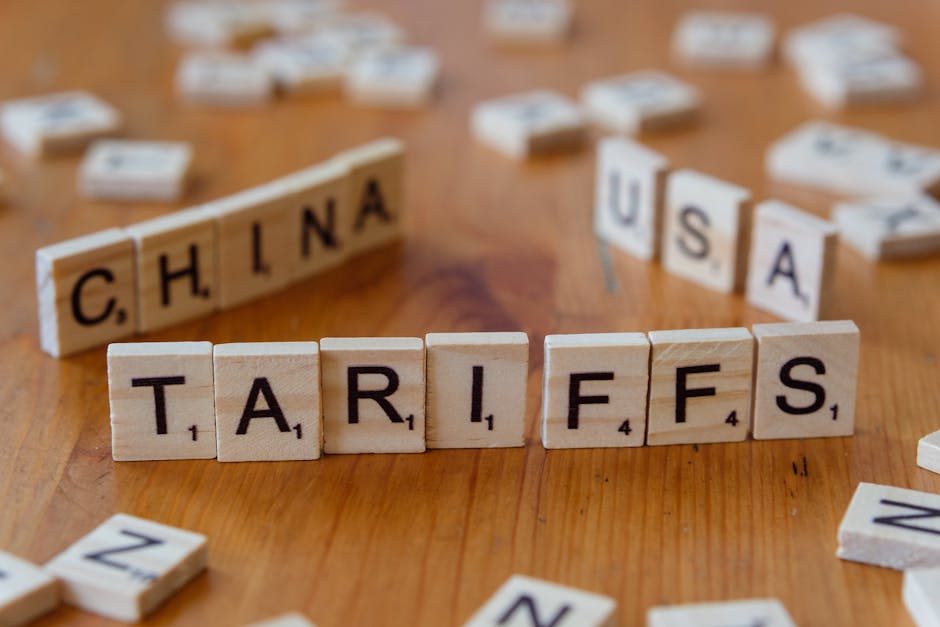
US Tariff Escalation Reshapes Global Manufacturing: Vietnam, India, and Mexico at the Crossroads
In early 2026, the world’s manufacturing landscape is being re-written. The United States, responding to years of trade imbalances and geopolitical concerns, has intensified tariffs on imported goods from China, cascading economic and operational repercussions across the globe. The result? Multinational companies are scrambling to redesign their supply chains, balancing opportunity with uncertainty. As the pressure mounts, production flows are being redirected to new regional nexuses—Vietnam, India, and Mexico. But with each shift comes a complex web of new costs, labor realities, and regulatory hurdles. This exposé explores how US tariff policy is reshaping everything from electronics sourcing in Hanoi to auto assembly in Monterrey, using fresh data and ground-level perspectives to chart the new world order of manufacturing.
Tariffs as the New Frontline: How US Policy Upended Global Sourcing
The 2026 Tariff Regime: A Costly Reset
The US’s latest tariff actions—especially under the evolving Section 301 and potentially expanded Section 122—have imposed substantial new duties on imports of metals, electronics, vehicles, and computers from China. These moves, as noted in the Yale Budget Lab, have driven up prices in the short term and ignited a structural reallocation of supply chains. Where the US once thrived on low-cost, high-volume imports, it now faces a reality of elevated consumer prices and a forecasted 0.3 percentage point increase in unemployment by late 2026. Longer-term, GDP is set to shrink by 0.1% annually—about $30 billion in 2025-dollar terms.
Expanding the Net: Section 301’s Global Reach
In a significant escalation, the new Section 301 investigation launched in 2026 pulls in not only China but also 13 other countries—including Vietnam, India, and Mexico—under scrutiny for “excess capacity” in key sectors. The probe’s focus stretches from autos and semiconductors to processed food, deepening compliance risks for companies betting on traditional China+1 strategies. If the probe finds evidence of unfair capacity buildup, tariffs could extend to today’s alternative manufacturing hubs, fundamentally altering long-term sourcing logic.
Operational Complexity: Beyond Cost and Tariffs
The ripple effect of these tariffs is multifaceted. Relocating production is no longer just about cost arbitrage. Companies face extended lead times, stricter rules of origin (demanding “substantial transformation” and local value-add as high as 75%), quality ramp-up delays, and rising labor and compliance costs. Each detour away from China unveils its own labyrinth of challenges, as real-world cases reveal.
Shifting the Map: Tracking Supply Chain Movement to Vietnam, India, and Mexico
Vietnam: The Agile Newcomer—With Strings Attached
Vietnam has fast become the poster child for China+1 relocation. US-bound electronics and apparel firms have flocked to industrial parks on the outskirts of Ho Chi Minh City and Hanoi, lured by relatively low wages and CPTPP trade benefits. However, the Section 301 probe flags Vietnam for “untethered” electronics and auto growth, wage suppression, and restricted market access. As Agilian Technology observes, companies relocating here face lead times that can be 20-50% longer than China’s, with quality stabilization requiring 3–6 months. Firms must prove a 35%+ local value-add to qualify as originating in Vietnam; miss this, and face a 25% US tariff as if made in China.
Case in Point: A US electronics importer moved PCB assembly from China to Vietnam. This shift led to a 30% increase in working capital needs due to slower cycles and forced the company to localize over 35% of value-add—at a 15% cost premium versus pre-tariff China. Even with logistics savings of 10–20%, the risk of retroactive tariffs remains high if Vietnam’s sector growth is deemed “overcapacity.”
India: Incentives, Infrastructure—and the Race Against Capacity
India’s “Make in India” gambit has made it a compelling hub for phone and apparel manufacturing, underpinned by government subsidies like the 6% Performance Linked Incentive (PLI). However, Section 301 scrutiny has begun targeting India’s subsidized auto and electronics exports. While India offers labor costs as low as $0.50–$1 per hour (a fraction of China’s $3–$5), the operational landscape is less forgiving: port delays are 2–3 times longer than China’s, electricity reliability is a perennial question, and initial cost increases hover between 20–40%. One apparel supplier serving US brands documented an 18% spike in short-term costs due to training and infrastructure gaps—but after nine months, their landed costs fell to 5% below tariffed China levels. The caveat: if India’s capacity expansion is deemed excessive, new tariffs loom.
Mexico: Proximity Pays—But with Trade-Offs
Mexico’s star has risen sharply as USMCA removes tariffs on qualifying goods and its logistics proximity trims shipping times by 70% compared to Asia. The auto and electronics sectors have led this charge, yet Section 301’s probe into Mexican “overcapacity” in vehicles and processed food threatens to upend nearshoring calculations. A US auto parts importer recounts transitioning wiring harness production from China to Mexico: though they circumvented 25% China tariffs and cut landed costs by 12%, lead times ballooned 40% during initial ramp-up due to labor shortages and quality ramp issues. Mexico’s appeal is clear, but so are the risks—especially amid ongoing labor shortages and episodic violence.
Comparative Insights: Contrasting New Manufacturing Frontiers
The pivot away from China is not a one-size-fits-all solution. Each destination—Vietnam, India, and Mexico—offers distinct advantages and exposes unique vulnerabilities. This comparative view distills the most critical differentiators.
Vietnam: Low labor costs and moderate logistics savings (10–20%) make it ideal for electronics and apparel, but firms face 20–50% longer lead times and a 3–6 month period for quality stabilization. US rules demand 35% or more local value-add, and Section 301 overcapacity risks are acute—particularly for electronics.
India: Powerful fiscal incentives (e.g., 6% PLI cashback) and sub-$1 per hour labor costs attract high-value manufacturing, especially in apparel and smartphones. Yet, initial landed cost premiums (18–40%) result from freight and infrastructure delays. Once operational, India’s cost base can undercut China (post-tariff) by about 5%. US scrutiny of subsidies and potential overproduction remains a threat.
Mexico: Geographic proximity delivers unmatched market access, and USMCA can eliminate tariffs entirely for products with 60–75% regional value content. Although labor is comparatively costlier and shortages can strain capacity, savings can reach 12–15% versus tariffed China. Section 301 risks are now focused on autos and food, potentially raising red flags for certain sectors.
| Destination | Key Advantages | Challenges & Costs | Tariff Risk (2026 Section 301) |
|---|---|---|---|
| Vietnam | Low labor, CPTPP access | Longer leads (+20-50%), 3–6 mo. quality ramp | High (esp. electronics overcapacity) |
| India | Subsidies, $0.50/hr labor | Infra delays, 18–40% init. cost | Moderate-High (autos, subsidies) |
| Mexico | USMCA, 70% lower shipping time | Labor shortages, 40% longer lead at start | High (autos, food, surpluses) |
Inside the Operational Realities of “China+1” Strategy
Partial Decoupling: Managing Risk vs. Reward
Amid the disruptions, most global manufacturers are not seeking full decoupling from China. Instead, they’re diversifying 20–30% of production to alternate sites—a “China+1” approach. This strategy hedges against political risk while maintaining scale advantages in China. However, the costs are significant—initial relocation premiums of 10–40%, doubled working capital requirements, and extended timeframes for quality control and logistics stabilization.
Substantial Transformation: The Legal Battleground
To avoid US tariffs, businesses must meticulously comply with “substantial transformation” rules. This typically requires at least 35% local value-add through assembly or part sourcing (up to 75% for autos under USMCA). Borderline cases are subject to US Customs and Border Protection (CBP) audits—which can retroactively reclassify product origin, triggering unexpected duty liabilities.
Working Capital and Lead Time Pressures
The shift away from China, as Agilian Technology puts it, is capital and time intensive: inventory ties up 2–3 times more capital, and the path to stable, high-quality output is measured in months. Logistics savings (notably in Mexico) are counterbalanced by limited labor pools and the challenge of rapid scaling, while India and Vietnam must overcome infrastructure deficiencies before reaping full rewards.
Sustainability Pressures Compound Complexity
European Union carbon border adjustment rules (CBAM) now add a further layer: companies with high emissions in their supply base can face additional charges, favoring locations like Mexico and India with lower-carbon manufacturing options. Sustainability is set to become a core pillar of cost and compliance calculations, potentially offering a 10–20% fee reduction for low-carbon operations.
Sectoral Winners and Losers: Who’s Thriving, Who’s Hurting?
US Manufacturing’s Modest Resurgence—At a Cost
Tariffs are driving some “reshoring” of select manufacturing to the US. According to Yale’s data, manufacturing output is projected to grow 2% in the long run, primarily in durable goods. However, this comes at the expense of construction (-2.4%) and mining (-1.1%), as capital and labor are reallocated.
Sectoral Pain Points and Hidden Risks
Downstream importers—especially in retail, automotive, and consumer electronics—face persistent inflation. Apparel, leather, and textile firms could be hit hard if Section 122 tariffs expand, further squeezing margins and limiting consumer choices. The semiconductor and electronics sectors, now under global scrutiny for overcapacity, must balance compliance with relentless innovation.
Case Studies: Supply Chain Transformation in Action
Vietnam Electronics: Cost, Capital, and Compliance
A US importer of printed circuit boards (PCBs) relocated their final assembly from China to Vietnam to dodge 25% Section 301 tariffs, only to find that longer cycle times (20–50% higher) demanded a 30% increase in working capital. To meet US origin requirements, over 35% of the product’s value was added in Vietnam—raising costs by 15% over China’s pre-tariff baseline.
India Apparel: The Long Game Pays Off
After moving apparel manufacturing from China to India, one supplier rode out an initial 18% cost surge due to lower labor productivity and port delays. But by month nine, local upskilling and streamlined operations brought landed costs to 5% below those of tariffed Chinese product. India’s $0.50/hr labor and PLI incentives provided an enduring edge—assuming no new tariffs hit.
Mexico Auto Parts: Borderline Breakthroughs
A major US auto parts buyer shifted harness production to Mexico, leveraging USMCA’s zero-tariff provision and regional value content thresholds. The move saved them 12% on landed cost compared to sourcing from China, even as lead times initially rose 40%. The lessons: proximity and duty-free treatment are invaluable—but vulnerable to Section 301’s next chapter.
“The next decade will not pit globalization against deglobalization, but demand smarter, more agile global strategies—where compliance, transparency, and regional resilience define competitiveness.”
Comparative Perspectives: Beyond the US-China Binary
While headlines often frame this as a purely US-China contest, the broader narrative is about global supply chain resilience and the rebirth of regional hubs. For decision-makers new to this space, it’s critical to appreciate the nuanced trade-offs:
- For established multinationals: The challenge is less about finding new factories and more about orchestrating multi-country solutions that can pivot as policy changes.
- For emerging brands and SMEs: Mexico, Vietnam, and India can offer sharp savings versus tariffed China, but require robust due diligence to avoid compliance traps and sudden regulatory headwinds.
- From a labor and economic development lens: The influx of jobs and investment in Vietnam, India, and Mexico creates dynamic growth—but also tests these societies’ infrastructures, labor rights, and environmental standards.
- In terms of global trade outlook: Despite the new barriers, the DHL Global Connectedness Report 2026 expects only a modest slowdown in goods trade—not a reversal of globalization, but a mutation toward greater regionalization and regulatory complexity.
Forward-Looking Strategies and Recommendations
1. Model Every Scenario
Use tariff modeling tools to quantify the true impact—factoring in not just direct costs, but also the knock-on effects of a 0.3% US unemployment rise and $30B annual GDP loss. Optimize footprints by sector: Mexico for autos, Vietnam for electronics, India for textiles and smartphones—if origin compliance is rock-solid.
2. Double Down on Origin Audits
Meticulously document value-add and assembly activities. Test every product line with CBP-style rulings to pre-empt reclassification risks, especially with 2026’s Section 301 outcomes still pending.
3. Diversify in Phases
Start with a 20% shift to alternative hubs, scaling as quality and compliance stabilize. Maintain multi-country final assembly options to hedge against ever-shifting tariff lines.
4. Invest in Operational Agility
Expect initial lead times to rise by 20–50% and capital requirements to double or triple. Mitigate with just-in-time inventory, supplier upskilling, and digital supply chain tracking.
5. Maximize Incentives—but Mind the Risks
Exploit India’s PLI and Mexico’s IMMEX benefits, but monitor for overcapacity flags that could trigger fresh tariffs. Sustainability investments will deliver both compliance and fee advantages under EU CBAM rules.
6. Build for Resilience, Not Perfection
Full decoupling from China is neither affordable nor speedy; instead, a hybrid regional model will maximize competitiveness (15–20% advantage possible) while defending against future shocks.
Conclusion: Strategic Stakes and the Road Ahead
As the US and its trading partners recalibrate the global trade apparatus, no company can afford complacency. The “easy” era of global manufacturing—anchored in a single low-cost center with simple cross-border flows—is gone. In its place is a new paradigm: regional clusters, intricate compliance demands, and an ever-present risk of policy shocks. The prize for those who adapt early is real: a 15–20% edge in cost, resilience, and regulatory agility. Yet the costs of missed steps—unexpected tariffs, delayed market entry, or reputational fallout—are greater than ever. The supply chain leaders of 2026 will be those who act with speed, data insight, and an unwavering commitment to transparency and flexibility. Not merely surviving the age of tariffs, but leveraging it to build smarter, more resilient—and ultimately more competitive—global businesses.
For every executive and strategist, the imperative is clear: audit your origins, invest in adaptive sourcing, and prepare for a future where flexibility is the ultimate currency of global trade.