
ZUS Coffee Vs. Starbucks: How Tech, Localization, And Value Pricing Made ZUS Malaysias Largest Coffee Chain In 2025
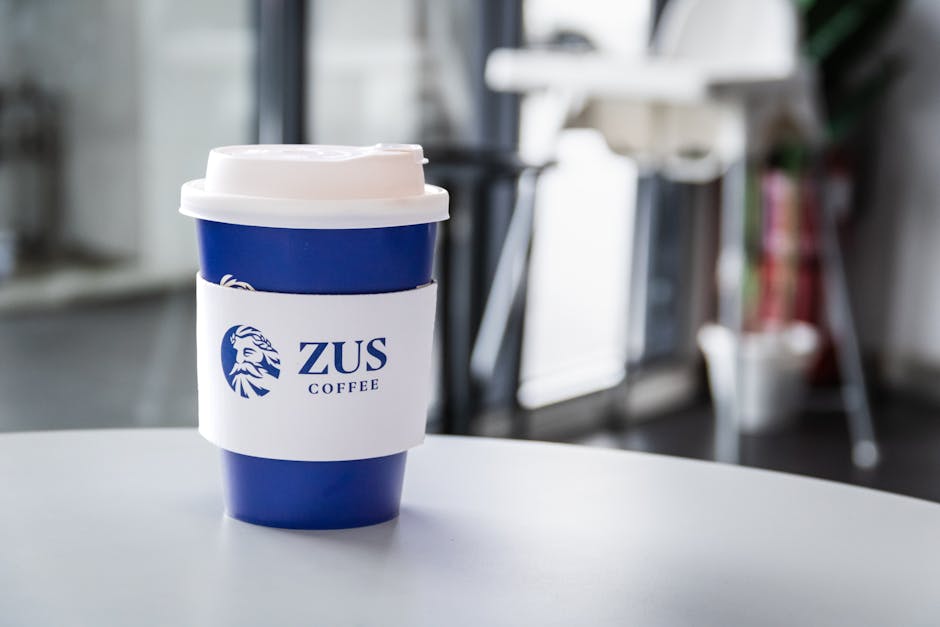
ZUS Coffee vs. Starbucks: How Southeast Asia’s Coffee Revolution Redefines the Global Chain Playbook
Southeast Asia's coffee chain wars have reached a dramatic inflection point. In a market once synonymous with Starbucks' green mermaid and the promise of aspirational café culture, an unlikely challenger—Malaysia’s ZUS Coffee—has not only overtaken the American giant in its home territory but also sparked a region-wide battle for the future of urban coffee. As of early 2026, ZUS commands 743 stores in Malaysia—more than double Starbucks’ 320—propelled by a disruptive blend of technology, value-driven pricing, and relentless expansion. This insurgency, unfolding amid rising per-capita consumption and tectonic cultural shifts, promises not just a new king of coffee, but an entirely new model for Southeast Asia’s fast-evolving foodservice landscape.
The New Coffee Chain Order: Legacy Meets Disruption
Historical Foundations and Shifting Dynamics: For decades, Starbucks set the bar across Asia. In Malaysia, its 1998 debut signaled a new era of third-wave coffee and cosmopolitan identity, blending Western luxury with local ambition. But in the post-pandemic world, the premium positioning that fueled Starbucks’ rise has increasingly become a liability. Rising inflation, pandemic-driven digital migration, and the emergence of value-conscious urban middle classes have catalyzed a reshuffling of consumer priorities. Enter ZUS Coffee: founded with a mission to democratize “everyday premium,” ZUS leverages technology and local insights to fill a growing value gap—delivering consistent quality at prices 10-20% lower than Starbucks, with menus tailored to local palates and lifestyles.
Explosive Market Growth: The stakes are enormous. The Southeast Asian coffee market is forecasted to expand at 5-6.2% CAGR, reaching RM1 billion by 2029. This surge is not merely about volume, but about who sets the tone for taste, access, and digital engagement in one of the world’s youngest, fastest-urbanizing regions. Where Starbucks once exported global cool, ZUS now embodies regional relevance—scaling at an unprecedented speed, emboldened by RM250 million in funding and an expansion roadmap targeting 1,000+ regional stores by the end of 2025.
Patterns of Disruption: Tech, Pricing, and Place
Tech-Enabled Local Leadership: ZUS’s ascent was no accident. Rejecting the traditional asset-heavy flagship café model, ZUS pioneered a cost-optimized kiosk-hybrid format, unlocking penetration in high-traffic urban centers and underserved neighborhoods. Technology forms the backbone: its data-driven apps power hyper-local loyalty programs, omnichannel ordering, and daily habit formation. Menu adaptation is surgical—think palm sugar lattes and halal certifications—creating an ecosystem where 70% of sales come from online delivery and pickup channels.
Contrast this with Starbucks’ more measured, globalized approach. While Starbucks has introduced Deep Brew AI for operational efficiency and global recommendations, it continues to lag behind ZUS in rapid localization and customer agility. The numbers speak volumes: by September 2024, ZUS surpassed Starbucks in Malaysia (566 stores to 411), then widened the lead with 743 outlets by year-end—adding international outposts in the Philippines (120) and Singapore (4), primed for further gains in Thailand and Indonesia.
Value Proposition: The Price-Quality Equation: ZUS’s model is acutely attuned to Southeast Asian realities. With a median coffee price point 10-20% below Starbucks, ZUS targets urbanites who want social cachet and daily indulgence—without the “luxury” tax. Rather than compete head-on with ultra-cheap convenience store coffee, ZUS positions itself as “affordable premium”—the sweet spot for a region with low per-capita coffee consumption but high aspirational drive. This mass adoption strategy is further turbocharged by aggressive online marketing, digital loyalty, and partnerships with food delivery aggregators.
Tactical Shifts: Scale, Speed, and Consumer Focus
Blitzscaling and White Space Capture: ZUS’s bold expansion—planned at another 107 Malaysian stores, 80 in the Philippines, 6 in Singapore, and 50 in soon-to-launch Thailand—is no mere land grab. The kiosk-hybrid infrastructure allows rapid deployment in density hotspots and suburban frontiers alike, seizing whitespace Starbucks is either too slow or too premium-priced to enter. With 70% of ZUS sales now digital, the chain leverages COVID-era shifts to anchor itself as a “micro-mobility social hub”—a gathering space not just for coffee, but for community, convenience, and digital engagement.
Starbucks, by contrast, is retrenching. Facing boycotts and social backlash over its alleged Israel links during the Gaza conflict, it is re-focusing on menu localization, select partnerships, and global loyalty strategies to stem market share erosion—especially in Malaysia, where it now trails ZUS’s 21% domestic share and faces sharp post-pandemic losses.
Hyper-Localization as a Competitive Weapon: Where Starbucks emphasizes consistent global branding, ZUS doubles down on localization. Whether through halal menus, new flavor profiles, or community-sourced innovations, ZUS’s approach exemplifies how regional insurgents can outmaneuver global incumbents. This strategy not only wins share in established markets, but also de-risks entry into culturally diverse frontiers like Indonesia and Thailand.
Comparative Perspectives: Not Just Another Coffee War
Regional vs. Global Playbooks: For new observers, the ZUS-Starbucks battle is not merely about who sells more lattes—it’s emblematic of a deeper shift in global consumer culture. “Premium” is being redefined—not as imported status, but as locally-embedded value. ZUS’s rise parallels a broader trend in Southeast Asia and other emerging markets, where indigenous brands (like Philippines’ Bo’s Coffee or Indonesia’s Kopi Kenangan) fuse Western operational playbooks with hyper-regional execution, often leapfrogging global giants in agility, relevance, and emotional resonance.
At the same time, Starbucks’ vast data assets and regional infrastructure are formidable. Pan-Asia, it remains the dominant global brand, wielding partnerships, supply chain efficiencies, and global trust—especially among affluent cosmopolitans and tourists less sensitive to price or local adaptation. Yet in Malaysia, the numbers are clear: ZUS leads penetration, sales growth, and brand “stickiness” among the middle class driving the region’s next consumption wave.
The Marketing Mix in a Rapidly Changing Arena
Product: ZUS delivers standardized quality with a signature local flair—halal, affordable, and frequently updated. Starbucks relies on globally consistent offerings, only slowly adding local spins.
Price: ZUS undercuts Starbucks by 10-20%, building mass habit and daily affordability. Starbucks maintains premium pricing, betting on its international halo.
Place: ZUS blitzscales with 1,000 outlets through flexible kiosks—dominating both high-traffic zones and neighborhoods. Starbucks continues its selective, experience-led approach focused on flagship urban centers.
Promotion: ZUS excels in digital loyalty, app engagement, and partnerships—70% of its sales are now online. Starbucks relies on brand trust and global-scale collaborations, though it continues to trial local experimentation.
Strengths, Weaknesses, and Rivalry: A Real-Time SWOT Analysis
ZUS Coffee
Strengths: Unmatched growth velocity—1,000+ regional stores by Q4 2025; 21% market share in Malaysia; profits between RM10.2 and 37 million; robust technology stack; and hyper-local menu engineering.
Weaknesses: Risk of overextension, with rapid scale straining quality control and operational depth; rising threats from new entrants like China’s Luckin Coffee and regional chains like Gigi.
Opportunities: Expansion into high-growth urban clusters in Thailand and Indonesia; further digitization; and deepening of the value segment as economic volatility makes premium chains vulnerable.
Threats: Margin compression from price wars, notably as Luckin targets 200 Malaysian stores by 2027 with ultra-low prices; potential market fragmentation.
Starbucks
Strengths: Global brand equity, international supply chain clout, deep data/loyalty ecosystems, and cross-market operational knowledge.
Weaknesses: Slow to adapt locally; perception challenges (e.g., boycotts hurt Malaysian business); high operating costs passed on in pricing.
Opportunities: Menu localization and partnership-driven rebound; leveraging global assets for regional nuance.
Threats: Rising challenger disruption (ZUS, Luckin, Gigi); fast-shifting consumer expectations.
The Southeast Asian Competitive Chessboard: Porter's Forces and Market Fluidity
Threat of New Entrants: Remains high, as kiosk and tech-first models dramatically lower barriers. Luckin’s entry with automation and price leadership is a case study.
Bargaining Power of Suppliers: Medium but rising. Coffee price volatility persists, but chain-scale procurement mitigates risk.
Bargaining Power of Buyers: High. Southeast Asia’s value-driven consumers can switch brands easily—brand loyalty is not absolute, especially in times of economic stress.
Threat of Substitutes: Very high. Convenience stores, bubble tea, and home brewers are all viable alternatives for the region’s cost-sensitive population.
Industry Rivalry: Extreme. ZUS’s blitzscaling and Luckin’s incursion make for a brutally contested landscape—Starbucks must fight a war on multiple fronts.
Main Product Line: Positioning for the Next Billion Cups
ZUS: Affordable Premium, Local Daily Rituals
ZUS’s signature hot and cold brews are designed for the daily ritual rather than the rare treat. Positioned as “reliable quality at value prices,” the brand capitalizes on mass habit, multi-time-per-day visits, and social shareability. By embedding local flavors (from gula melaka to herbal lattes), ZUS not only wins the price war but also forges cultural affinity—earning a place in the everyday lives of urbanites.
Starbucks: Global Luxury, Urban Prestige
Starbucks retains cachet among status-conscious segments and global travelers, leveraging its consistency, prime locations, and superior ambiance. While efficient and trusted, Starbucks faces a growing challenge in justifying its premium price gap in markets now favoring localized value and digital convenience.
Luckin & Local Upstarts: The region’s next wave of competition will be defined by Luckin’s hyper-automation/ultra-low pricing, and niche chains like Gigi, which target specialty segments. ZUS’s scale and loyalty edge will be tested as the field fragments and diversifies.
Real-World Implications: A Broader Lens on Southeast Asia’s Foodservice Future
Consumer Power and Cultural Evolution: The ZUS-Starbucks rivalry exemplifies a more profound consumer revolution in Southeast Asia. Urban, digital-first, and price-sensitive, new buyers care as much about convenience and relevance as about status. The democratization of “premium” is underway—a trend with implications far beyond coffee.
Urbanization and Social Infrastructure: As cities densify and mobility patterns shift, the coffee outlet of the future is as much a digital hub as a physical gathering spot. ZUS’s omnichannel model, blending rapid fulfillment with meaningful local engagement, offers a blueprint for next-generation retail across Southeast Asia.
Technology as Differentiator: The rise of loyalty apps, predictive menu engineering, and digital community-building is not just a tactical play—it’s a paradigm shift in how food and beverage brands acquire, engage, and retain users. The days of slow-moving multinational chains winning solely on brand are numbered.
The future of Southeast Asian coffee is not about who owns the most real estate—but who owns the consumer moment, in every neighborhood, every digital feed, every daily ritual.
Forward-Thinking Insights: What’s Next for the Coffee Chain Wars?
Regional Growth, Hyper-Local Relevance: ZUS’s expansion into Thailand and Indonesia will be a litmus test for the exportability of its tech-localization-value fusion. The competitive response from Starbucks (and arch-rivals like Luckin) will shape not just market shares, but also industry benchmarks for digital, operational, and menu innovation.
The Margin Squeeze and the Value Trap: Sustaining growth while preserving profit margins will be ZUS’s greatest challenge. As price wars intensify and labor/commodity costs fluctuate, the ability to maintain “affordable premium” without losing quality or brand trust will separate enduring champions from overextended upstarts.
Social, Geopolitical, and Brand Risk: Consumer perceptions in the age of boycotts and social activism cannot be underestimated. Starbucks’ experience in Malaysia illustrates how brand narratives—beyond product or price—can swing fortunes overnight in an increasingly politicized marketplace.
For readers, operators, and investors, the underlying lesson is clear: the next decade of Southeast Asia’s coffee market will be shaped not by the icons of yesterday, but by those who master the art of everyday relevance, local trust, and digital intimacy.
Conclusion: The Strategic Imperative—Embracing the Next Model of Growth
The battle for Southeast Asia’s coffee crown is more than a contest of cups and outlets—it is a crucible for the future of consumer business in the world’s most dynamic region. ZUS Coffee’s ascent—overtaking Starbucks in Malaysia and racing toward 1,000+ outlets regionally—is not an anomaly but a signal. The industry’s traditional playbooks must evolve: speed, digital depth, value, and the relentless pursuit of local resonance are now table stakes.
For Starbucks, the choice is existential: accelerate adaptation, or become a luxury relic in a market that now expects more for less. For ZUS, the challenge is to sustain its insurgent energy while navigating the perils of scale, margin compression, and new rivals. For both, the message from Southeast Asian consumers is unambiguous: redefine premium, or risk irrelevance.
The Southeast Asia coffee wars are reshaping not just what people drink, but how brands connect, serve, and earn loyalty in the digital age. Operators, investors, and policymakers alike should study this market as a living laboratory—because the innovations, risks, and rewards here will echo far beyond the region, setting precedents for global foodservice for years to come.
To track key developments, see [GrowthHQ’s analysis on tech, localization, and the coffee battle](https://www.growthhq.io/our-thinking/zus-coffee-vs-starbucks-in-malaysia-southeast-asia-how-tech-localization-and-pricing-fuel-the-2025-coffee-chain-battle){target="_blank"} and [further reports on Southeast Asian cross-border coffee growth](https://www.scmp.com/week-asia/lifestyle-culture/article/3345469/how-southeast-asias-coffee-chains-are-brewing-cross-border-success){target="_blank"}.