
ZUS Coffees Digital Disruption In Southeast Asia: Scaling 70% App Sales, Expansion Metrics, And Strategies To Empower Smallholder Farmers In 2025
ZUS Coffee’s Digital-First Retail Revolution and the Smallholder Opportunity in Southeast Asia
The coffeehouse is no longer just a place—it’s an interface, a transaction engine, and a digital community. Nowhere is this transformation more apparent than in Southeast Asia, where ZUS Coffee, a Malaysian upstart born in 2019, has rewritten the rules of café culture. Armed with a digital-first model and a vision to democratize quality coffee, ZUS has rocketed from delivery kiosks to the largest store network in Malaysia and a Southeast Asia expansion juggernaut. Yet beneath its technology-powered ascent lies a strategic gap: as ethical sourcing becomes a rallying cry for digital-native consumers, ZUS’s limited direct engagement with smallholder farmers signals both a vulnerability and a profound opportunity for lasting impact and sector leadership.
The Digital Overhaul: ZUS Coffee’s Surge Across Southeast Asia
Reimagining the Café Model
The ZUS blueprint diverges sharply from retail orthodoxy. Instead of starting with grand storefronts or prime real estate, ZUS launched as a delivery-focused kiosk—its “pre-physical” digital infrastructure anchoring every location. By late 2025, ZUS had amassed 743 stores in Malaysia alone, outstripping Starbucks’ density and proving that tech-driven models can outpace legacy brands.
Digital-First Sales Dominate
The company’s app—engineered for seamless ordering, hyperlocal menus, and gamified loyalty—now accounts for a staggering 70% of all sales, a number rarely seen in traditional F&B. Data analytics power everything from real-time inventory to personalized promotions, turning every customer into a datapoint and every transaction into a relationship opportunity.
Regional Expansion and the Cost Advantage
In 2025 alone, ZUS is set to open nearly 200 new stores regionally: 107 in Malaysia, about 80 in the Philippines, six in Singapore, and its first outposts in Thailand, Brunei, and Indonesia. This rapid rollout is underwritten by the savings of a kiosk-focused, tech-enhanced model—enabling ZUS to price its drinks at a 20% discount to Starbucks while still out-competing on convenience and digital engagement.
Local Flavor, Local Storytelling
ZUS’s digital backbone enables rapid menu innovation tied to local tastes—think palm sugar–infused lattes in Malaysia or vibrant ube lines in the Philippines. But as these narrative-rich drinks gain viral traction, there’s an emerging expectation: that “local” must also mean ethically sourced and traceable.
Spotlight: Smallholder Farmers and the Traceability Gap
Who Grows Southeast Asia’s Coffee Beans?
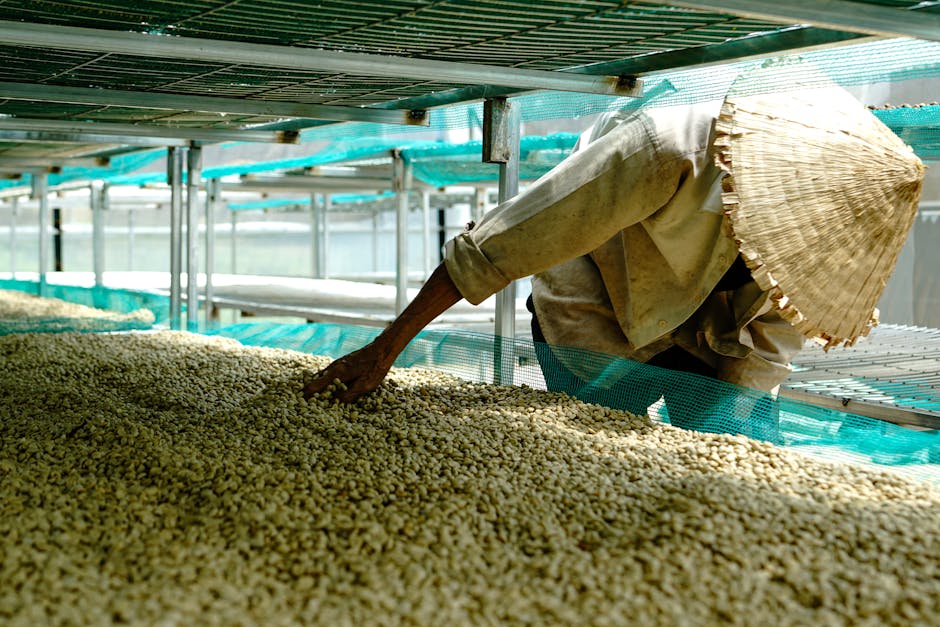
Southeast Asia’s coffee landscape is deeply rural and smallholder dominated. Across the region, farms under two hectares—often family-run—account for 90% of coffee production. In Indonesia and Vietnam alone, smallholder households number over 2.5 million. The broader specialty coffee boom in markets like the Philippines is also intertwined with smallholder livelihoods, particularly as urban consumers demand authenticity and impact.
ZUS’s Documented Practices—Promise and Limitations
While ZUS spotlights “local” in recipes and social content—such as ube lattes linked to Filipino farming culture or palm sugar drinks in Malaysia—there is, as of late 2025, no public evidence of direct partnership or formal traceability programs with smallholder producers. This stands in contrast to global peers who tout Rainforest Alliance or Fairtrade certifications and transparent supply chains. As ethical consumerism rises, especially among the region’s digital natives, ZUS’s current approach looms as both a gap and an invitation.
Consumer Pressure and Competitive Gaps
Recent data reveals that 58% of Southeast Asian consumers prefer coffee with visible traceability and social impact. Rival chains—both multinationals and regional specialists—are capitalizing on this, often leveraging their sourcing stories for premium pricing and customer loyalty. Without equivalent initiatives, ZUS risks reputational drag even as it surges in market share.
Emerging Patterns and Tactical Shifts: Where ZUS Excels, and Where It Lags
Disrupting Through Data and Localized Experience
From its origin, ZUS has thrived on the intersection of technology and hyperlocal experience. Its investment in digital infrastructure before physical expansion is now seen as a model for scalable retail. In markets like the Philippines, the brand's 120 stores are not just outlets; they are nodes in a viral, social media–driven ecosystem where recipes like the “ube latte” become cultural touchstones.
Indirect Smallholder Impact: The Phantom Effect
While ZUS’s menu innovation and local ingredient sourcing (e.g., ube and palm sugar) imply some level of farmer engagement, the impact is mostly indirect and anecdotal. Stories of farmer partnerships surface in social campaigns, but without systematic documentation or transparent supply chains tied back to smallholders. In this context, ZUS’s digital strength is under-leveraged: the same analytics that power its customer platform could, with strategic investment, be repurposed for farm-level traceability and empowerment.
Comparative Edge: Cost, Convenience—and the Next Frontier
What sets ZUS apart in the digital arms race is not just its cost advantage or transaction velocity, but its ability to acquire and retain customers through a seamless, gamified digital journey. However, as competitors integrate traceability and ethical sourcing into their own digital narratives, ZUS’s current lack of farmer-facing tech and supply chain transparency exposes it to the risk of copycat models and evolving consumer values.
Real-World Implications: From Digital Disruptor to Inclusive Value Chain Leader?
Business Metrics Reimagined
The potential for transformation is vast. Industry benchmarks suggest that supply chain localization and smallholder empowerment can drive not only resilience and social impact but also 10–20% operational efficiencies. Tech-enabled traceability, for instance, cuts out costly intermediaries, streamlines logistics, and unlocks premium pricing—especially when 70% of ZUS sales already flow through digital channels.
Country-Level Opportunities and Challenges
- Philippines (120 stores): With formalized digital engagement, ube and coffee farmers (over 50,000 households) could benefit from stable contracts and price discovery via a ZUS-branded “Farmer App.” Viral, geo-localized sourcing stories could further enhance loyalty and premium pricing.
- Malaysia (743 stores): As ZUS opens 107 new stores, palm sugar and coffee procurement hubs could be established to anchor supply and fortify social credibility.
- Indonesia/Thailand: With the 2025 market entry, ZUS could establish ethical sourcing as a competitive differentiator from day one, capturing both early adopters and ESG-minded investors.
Sectoral Trends: Ethical Sourcing as Table Stakes
The specialty coffee market in Southeast Asia is growing rapidly. Ethical and traceable coffee can command 10–15% higher margins—not just for producers but for innovative retailers who can tell an authentic story. Global brands have already proven this playbook, and as regulatory pressures mount (e.g., forced labor compliance, cross-border trade standards), supply chain transparency becomes more than just marketing—it becomes a license to operate.
Comparative Perspectives: Old Guard vs. New Wave—The ZUS Dilemma
Legacy Brands’ Playbook: Slow but Sure
Multinational coffee chains like Starbucks have invested over decades in direct-sourcing programs, farmer support centers, and traceability certifications. Their scale breeds complexity but also delivers globally recognizable ethical assurances—often at a price premium.
ZUS’s Disruption: Speed and Scale, But Strategic Gaps
ZUS, by contrast, leverages digital to reduce overheads, pass on savings, and grow explosively—almost 200 new stores per year regionally as of 2025 projections. Yet, its limited engagement with producers, despite strong consumer visibility and tech infrastructure, means it is only capturing part of the value chain. The company’s digital-first DNA offers a unique foundation to “skip” legacy headaches and become the first Southeast Asian brand to digitize the entire bean-to-cup journey.
Consumer Perspectives: Digital Natives Lead Demand Shifts
Today’s urban, connected Southeast Asian coffee drinker wants speed, style, and story. Increasingly, the story they care about is one that links their morning fix to real-world impact—climate resilience, farmer empowerment, and transparent sourcing. Brands who deliver on these values gain both loyalty and pricing power. Those who lag risk obsolescence.
Actionable Strategies: Transforming ZUS’s Digital Edge Into Smallholder Empowerment
1. Launch a ZUS Farmer App—Digitize Upstream Relationships (6–12 Months)
By leveraging its proven consumer app infrastructure, ZUS can launch a “Farmer App” for real-time pricing, direct contracting, and supply chain traceability. A pilot in the Philippines, tapping into ube and coffee smallholder networks, could reduce sourcing costs by up to 20% while boosting farmer loyalty and yield.
2. Establish Hyperlocal Sourcing Hubs (12 Months)
Locating tech-enabled aggregation hubs near key farm regions transforms ZUS outlets into value chain anchors. Digital contracts guarantee volumes and premiums, while the company’s data analytics inform both procurement and new menu innovation.
3. Data-Driven Training and Microfinancing (3–6 Months)
Integrate gamified learning, weather alerts, and microcredit facilities into the farmer platform via partnerships with regional banks and AgriTech startups. Such investments could lift farmer retention by 25% and shield ZUS’s supply from climate-linked volatility.
Groundbreaking Partnerships and Ecosystem Building
To catalyze this transformation, ZUS should prioritize cross-sector partnerships:
- NGOs and Certification Bodies: Collaborate with Rainforest Alliance and Fairtrade for rapid rollout of traceability and training.
- AgriTech Firms: Integrate tools from sector leaders like TaniHub (Indonesia) for aggregation and Hello Tractor for logistics optimization.
- Fintech Platforms: Use regional wallets (GrabPay, GCash) to facilitate transparent farmer payouts.
- Regional Government and Trade Networks: Partner with ASEAN Agri-Food Alliance to enable cross-border procurement and scale.
Comparative View: What If ZUS Does Not Act?
Risks of Inertia
Inaction would see ZUS quickly outflanked by legacy brands “going digital” and by younger competitors whose value propositions are built on transparent, ethical sourcing. Regulatory requirements around labor, environmental compliance, and cross-border food standards are only intensifying. The absence of a robust, direct smallholder strategy represents a reputational and operational risk in a market increasingly sensitive to ESG.
"As ZUS Coffee’s digital-first revolution enters its fifth year, the path to long-term market leadership is no longer just about faster, cheaper, or bigger—it’s about redefining value creation across the chain. Those who digitize not only the cup but also the farm will own both the narrative and the numbers."
— Synthesis, Southeast Asia Food Retail Insights 2025
Forward-Thinking Insights: End-to-End Value Chain Innovation
Amplifying the Digital Advantage
ZUS’s proven ability to scale its consumer-facing technology should not stop at the customer interface. By extending its CRM, data analytics, and loyalty engine upstream to the farm, ZUS can integrate end-to-end traceability and unlock new efficiencies and impact.
Realizing Financial and Social ROI
Industry data projects that ethical integration could add 5–10% to ZUS’s revenue through premiums and deeper loyalty. More importantly, it builds resilience in sourcing, ensuring that as ZUS expands across Malaysia, the Philippines, Indonesia, Thailand, Singapore, and Brunei, it does so on a foundation of shared prosperity.
The Roadmap: From Pilot to Scale
Immediate pilots in the Philippines and Malaysia can test digital traceability with local farmers, with KPIs for cost savings, traceability rates, and farmer livelihoods. By Q3 2026, the model can be rolled out to Thailand and Indonesia, aiming for at least 90% traceable coffee across the new regional network by year’s end.
Conclusion: ZUS’s Crossroads—Will the Digital Disruptor Embrace Inclusive Growth?
ZUS Coffee’s ascent is a masterclass in leveraging technology to disrupt old models and capture new demand. Yet, the next phase of retail leadership—and consumer relevance—lies in bridging the divide between digital convenience and authentic, ethical sourcing. In a region where smallholder farmers form the backbone of the coffee economy, ZUS faces a clear choice: remain a downstream disruptor, or become an end-to-end innovator whose technology empowers all participants in the value chain.
ZUS’s strategic importance to the region’s food ecosystem cannot be overstated. The decisions made at this crossroads—whether to invest in traceable, inclusive supply chains or double down on short-term cost advantages—will define not only its brand but potentially the future of Southeast Asian coffee retail. For business leaders, investors, and policy advocates, ZUS’s journey offers a blueprint for merging digital velocity with inclusive value creation—an opportunity too urgent, and too significant, to ignore.
To paraphrase the region’s emerging ethos: those who connect the app to the earth will reap not only profits, but legitimacy and leadership. The next iconic coffee brand won’t just be tech-enabled—it will be supply chain empowered, ethically grounded, and ready for the decade ahead.