
ZUS Coffees Hyper-Localization Playbook: How Kuala Lumpurs Data-Driven Chain Achieved 6X Revenue And 1,000 Stores Across Malaysia, Philippines, And Emerging Markets
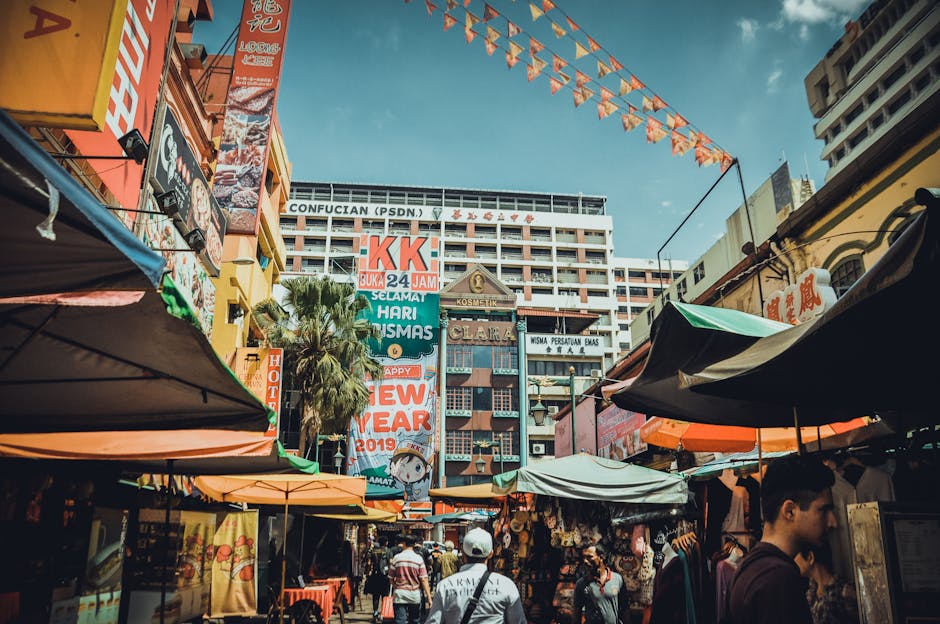
ZUS Coffee’s Hyper-Localization Revolution: Reshaping Customer Engagement in Malaysia and Beyond
In a landscape where global brands once dictated coffee culture from above, a dramatic shift is underway across Southeast Asia—led not by a multinational, but by Malaysia’s homegrown disruptor, ZUS Coffee. Founded less than a decade ago, ZUS has soared from a modest collection of outlets in Kuala Lumpur to over 900 stores region-wide as of late 2025, emerging as the region’s fastest-growing chain. The achievement is not merely a matter of rapid expansion, but a masterclass in leveraging hyper-localization—a blend of data-driven personalization, community focus, and nimble digital strategy that has delivered measurable impact: 6X revenue growth in Malaysian stores between 2023 and 2024, powered by smart targeting and unrelenting local relevance.
This exposé explores ZUS Coffee’s playbook, charting how the brand’s innovations in customer data management, app-powered campaigns, and regional adaptation have redefined what it means to scale a food & beverage (F&B) brand in a competitive, culturally diverse market. Anchored by exclusive metrics and forward-looking recommendations, we examine not only ZUS’s journey across Malaysia, the Philippines, Thailand, and new frontiers in Pakistan and Morocco—but also the deeper ripple effects on both consumer experience and the wider F&B sector.
The Genesis of Hyper-Localization: ZUS Coffee’s Malaysian Identity and Digital Awakening
From Kuala Lumpur’s Heart to Regional Ambition: The cornerstone of ZUS Coffee’s strategy is its rooted Malaysian identity. Rather than mimicking foreign giants or chasing luxury cues, ZUS positions coffee as "a Necessity, not a Luxury," offering premium drinks at accessible prices. This ethos is especially pronounced in Kuala Lumpur, where ZUS operates over 200 outlets that serve as both physical icons and cultural touchstones—blending local flavors, sharing entrepreneurial stories, and prioritizing community hiring.
Tech as Enabler: CDP 365 and Personalization at Scale: The adoption of the Antsomi CDP 365 platform in early 2023 marked an inflection point: ZUS unified customer app data, purchase history, and behavioral analytics to enable hyper-personalized campaigns. By segmenting users (e.g., frequent Spanish Latte drinkers), ZUS delivers targeted vouchers that have driven a 21% revenue uplift over control groups. The impact is tangible: between 2023 and 2024, CDP-driven messaging catalyzed a 3X increase in converted customers, 6X in transactions, and overall revenue growth that dwarfed manual, non-personalized approaches.
Community-Driven Expansion: ZUS’s growth from under 200 Malaysian stores in 2023 to over 700 by late 2025 reflects not just operational agility but a model of hyper-local hiring and local sourcing—particularly in regions like Sarawak, where community engagement builds tribal loyalty and long-term retention. As ZUS targets 850 stores in Malaysia by Q1 2026, the company’s “ZUSie” pride initiatives demonstrate how localization transcends product, touching every part of the employee and customer experience.
Digital Amplification: Synergies Across Social Media and Mobile App Data
TikTok and Instagram as Real-Time Localization Engines: ZUS’s localization toolkit extends to social platforms, where specialist agencies orchestrate geo-targeted campaigns. In urban centers such as Kuala Lumpur, influencer collaborations (e.g., with Secret Recipe and HYGR deodorants) spotlight local entrepreneurship, reinforcing ZUS’s identity as both an F&B innovator and ecosystem builder. These campaigns are not static; app analytics provide feedback loops, enabling menu tweaks and promotional pivots that align with the preferences of urban millennials.
Pre-Launch Buzz and Employee Scale: Expansion announcements—most notably for Pakistan and Morocco in H1 2026—are amplified via these channels, stoking anticipation in new markets and sustaining ZUS’s workforce, which now exceeds 6,000 employees.
Real-World App Integration: The ZUS mobile app, supercharged during Malaysia’s COVID MCOs, remains a core asset. Data harvested from mobile ordering now informs everything from product development (such as ZUS’s own tea drinks) to tailored campaigns for specific city demographics.
Malaysia: Hyper-Localization at Scale
Kuala Lumpur’s Blueprint: ZUS’s dense network of outlets, paired with granular CDP segmentation, allows the brand to respond to micro-patterns in customer behavior—rewarding frequent latte buyers or tailoring offers by district. The Sarawak extension, powered by local hiring and training, demonstrates how the ZUS standard is adapted not just for consumer faces but for the hands behind the counter.
Key Metrics and Outcomes: From less than 200 stores in 2023 to over 700 (with 850 targeted in 2026), ZUS’s Malaysia-first playbook has delivered a 6X revenue multiplier. Local sourcing and partnerships create a robust ecosystem, while app-driven menu refinement keeps ZUS agile in a saturated, ultra-competitive market.
Regional Adaptation: Philippines, Thailand, and the Road to New Markets
The Philippines—Replicating Success with Local Flavor: Building on its Malaysian model, ZUS is poised to open 190-200 stores in the Philippines by the end of 2025. Backed by a recent $57.5M funding round, the entry strategy emphasizes local hiring and tweaks to core offerings (e.g., regionally preferred lattes). The company’s CDP system is set to replicate the Malaysian uplift, with 21% revenue growth projected from segment-targeted campaigns.
Thailand—Hyper-Local Job Creation: In Thailand, ZUS has already launched 20 stores, targeting 50 by 2026. The strategy prioritizes local sourcing and job creation, adapting staff and menu to Thai preferences. App and CDP technologies are being leveraged for urban personalization, especially among Bangkok’s youth.
Indonesia, Pakistan, Morocco—Frontiers of Localization: Indonesia opens its first ZUS outlet in Q1 2026 through a master franchise, with plans to infuse Javanese flavor data. Pakistan and Morocco similarly rely on local partnerships and hiring for cultural resonance, forming a non-ASEAN push that reflects lessons from earlier regional expansion.
Summary Table—Regional Deployment:
| Region | Current Stores (2025) | 2026 Target | Key Hyper-Local Tool | Engagement Metric |
|---|---|---|---|---|
| Malaysia | 700+ | 850 | Antsomi CDP 365 | 6X revenue (2023-24) |
| Philippines | Operational | 190-200 | App data + segmentation | 21% uplift projected |
| Thailand | 20 | 50 | Local sourcing/jobs | Community loyalty |
| Indonesia | 0 | 1+ (Q1) | Master franchise | Data personalization |
| Pakistan | 0 | 1+ (H1) | Local partnerships | Job creation focus |
| Morocco | 0 | 1+ (Q1/Q2) | Cultural tailoring | Hyper-local hiring |
Comparative Perspectives: ZUS vs. International Competitors
Affordability and Personalization as Differentiators: Unlike global chains such as Starbucks and Costa, ZUS emphasizes “local pride” and the technical prowess of its CDP and app ecosystem. By offering premium drinks at mass-market prices, ZUS outpaces competitors who lean on brand heritage and scale rather than local nuance.
Collaborative Ecosystems: Strategic partnerships—such as those with Secret Recipe and HYGR—create cross-brand value and deepen ZUS’s local embeddedness. International chains, by contrast, often rely on top-down promotional cycles that struggle to achieve the same relevance in local contexts.
Agility and Risk Mitigation: ZUS’s saturation in Malaysia forces the brand to continually innovate and advocate for local F&B ecosystem incentives (e.g., Budget 2026 support for farmers). The company’s nimble approach to data privacy and regulatory compliance, such as Malaysia’s PDPA, shields it from emerging risks faced by less-integrated rivals.
Metrics and Case Studies: Quantifying Hyper-Localization’s Impact
Explosive Growth Trajectory: ZUS’s leap from 200 stores in 2023 to over 900 by late 2025, with a 1,000+ target before 2026, highlights both execution strength and strategic focus.
ROI on Personalization: The Antsomi CDP 365 implementation underpins major KPIs: 3X growth in active customers, 6X transaction volume, and segment-based engagement uplifts of 5-20%. Voucher distribution via segmentation has reliably driven a 21% revenue uplift for targeted coffee segments.
Workforce and Funding: ZUS’s commitment to local hiring—now at 6,000+ staff—is matched by robust capitalization, notably the $57.5M raised in the past twelve months to fuel new market entry.
Scalable Playbooks for New Regions: ZUS’s case study with Antsomi CDP shows how regional expansion can be replicated: for a 200-store chain starting with ZUS’s tactics, a 6X revenue uplift is achievable in 18 months, assuming 20% app adoption and diligent segmentation.
Real-World Implications: Lessons for F&B Decision-Makers
Immediate Tech Adoption: The evidence is clear: integrating a robust CDP like Antsomi unlocks high-ROI opportunities. For decision-makers, the path to 20%+ engagement uplifts runs through unified data views and AI-driven segmentation. Starting with dense urban clusters—echoing Kuala Lumpur’s approach—yields outsized returns.
Expansion and Localization Framework: ZUS’s regionally adaptive model emphasizes hyper-local hiring, master franchise partnerships, and pre-launch social pilots (particularly on TikTok) to build anticipation and tailor offerings. Decision-makers in new markets are advised to replicate pilot programs—as in the Philippines and Thailand—before launching in complex cultural environments like MENA or South Asia.
Risk and Policy Considerations: Data privacy compliance, proactive local sourcing, and advocacy for government incentives are essential for sustainable growth. ZUS’s push for Budget 2026 incentives for Malaysian farmers encapsulates the intersection of business and policy that will increasingly define F&B sector resilience.
Measuring Success: The key metrics for leaders include activation rate benchmarks (3X), segmented revenue uplift (21%), and optimal store density (850 per region). A measurement dashboard, updated quarterly, ensures accountability and course correction.
Partnerships and Community: Agency collaboration on digital campaigns and local partnerships deliver loyalty loops and ecosystem elevation, sustaining ZUS’s differentiation as both a brand and a movement.
Comparative Segment: Viewing ZUS Coffee from Different Angles
For New F&B Entrants: ZUS’s hyper-localization journey is a blueprint for scaling in heterogeneous markets. For brands emerging in Southeast Asia or MENA, the lesson is clear: start local, invest early in data tools, and adapt relentlessly.
For Global Chains: International players may view ZUS’s strategies as a challenge to the “one-size-fits-all” model. The impressive ROI from CDP and localized campaigns should prompt a reevaluation of legacy processes and reliance on global playbooks.
For Consumers: Customers are increasingly drawn to brands that reflect their identity, respect local culture, and adapt to changing tastes. ZUS’s approach, rooted in accessibility and pride, foregrounds personalization as a norm, not a novelty.
Key Principle: The Future of F&B Hyper-Localization
"In a world where consumers crave relevance, the power of hyper-localization lies not in technology alone, but in its seamless fusion with community storytelling and real-time adaptation. The brands that thrive will be those that see each new market not as an extension, but as a rebirth."
Forward-Thinking Insights and Strategic Recommendations
1. Embrace Data-Driven Personalization: The integration of CDPs and mobile apps is already reshaping F&B engagement in Southeast Asia. Leaders must build cross-functional teams—spanning data science, marketing, and front-line operations—to harness full-cycle personalization.
2. Localize Beyond Product: Hyper-localization is about more than flavor tweaks. It demands a holistic commitment to local hiring, supply chain, and even storytelling—what ZUS has termed “movement” building. This approach should be woven into every market entry and scaled through partnerships.
3. Invest in Agile Expansion Models: Franchising, local partnerships, and region-specific pilots are essential for entering new, culturally complex markets. Replicating ZUS’s measured ramp-up in Thailand and the Philippines reduces risk and sets the stage for sustainable scale.
4. Build Advocacy Coalitions: Brands must actively engage with policymakers to secure incentives and support for F&B ecosystems. ZUS’s example in Malaysia and calls for Budget 2026 reforms signal the growing importance of collective action.
5. Measure and Iterate Relentlessly: From activation rates to revenue uplift, the most successful F&B leaders will institutionalize quarterly review cycles, sharing learnings across regions to maximize ROI and stay ahead of saturation risks.
Conclusion: Hyper-Localization as the Strategic Imperative for the Future
ZUS Coffee’s ascent is more than a triumph of expansion; it is a story of continuous reinvention, grounded in a nuanced understanding of place, people, and possibility. By leveraging hyper-localization—fusing real-time data with local networks, amplifying community and identity, and outpacing rivals through affordability and relevance—ZUS offers a compelling roadmap for the next generation of F&B brands.
As the competitive field intensifies and consumer expectations rise, the strategic importance of hyper-localization is no longer optional—it is existential. ZUS’s journey affirms that the future belongs to brands that think local, act digital, and never stop listening. For decision-makers, the imperative is clear: invest in the technologies, the people, and the partnerships that will turn every new market into a source of fresh energy and enduring loyalty.
In the race for ASEAN, MENA, and global F&B dominance, those who prioritize hyper-localization now will not only capture growth—they will help define the very future of food and beverage for years to come.