
ZUS Coffees Hyperlocal Revolution: How Malaysias Largest Café Chain Is Disrupting Southeast Asia Markets In Kuala Lumpur, Manila, Bangkok, And Beyond
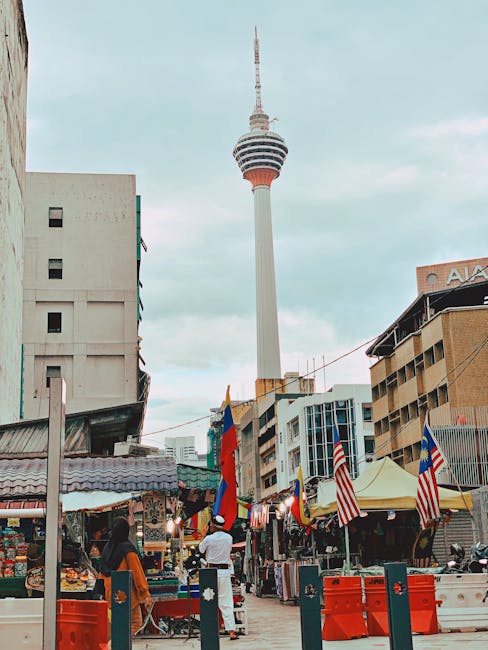
ZUS Coffee’s Hyperlocal Revolution: Redefining Southeast Asia’s Café Industry
In a region where café culture is as dynamic as the cities that fuel it, few stories capture the spirit of reinvention like ZUS Coffee’s meteoric rise. Founded in Malaysia in 2019, ZUS disrupted the status quo of Southeast Asia’s coffee landscape by blending barista-quality standards, hyperlocal flavors, and a tech-powered, affordable model. Surpassing Starbucks as Malaysia’s largest network within just five years, ZUS is rewriting the competitive playbook for an industry long dominated by global titans. But beyond the numbers lies a deeper narrative—one about community, digital transformation, and the power of local insights in a rapidly changing market.
The Birth of a Challenger: ZUS Coffee’s Strategic Genesis
Market Context and Opportunity: For decades, Southeast Asia’s coffeehouse sector was split between global leaders like Starbucks, regional favorites, and local mamak stalls. Premium chains such as Starbucks, with their international cachet, catered to the aspirational urban class—commanding prices north of RM11 per cup. At the other spectrum, convenience stores and local kopitiams thrived at the RM5 and below price points. This left a conspicuous gap for affordable, specialty-grade coffee—a gap ZUS strategically set out to fill.
Launch and Early Innovations: ZUS opened its first doors in Malaysia during 2019, a year before COVID-19 would forever alter digital adoption and consumer routines. Instead of mimicking Western flavor profiles, ZUS doubled down on “hyperlocal”—introducing drinks like the Gula Melaka Latte, a nod to Malaysia’s beloved palm sugar, and regionally inspired spins for each market entry. With prices set at least 20% below premium competitors, ZUS positioned itself as the “mass premium” alternative, delivering barista-crafted coffee to a much broader audience.
Digital as Default: COVID-19 catalyzed a wholesale shift to online ordering, and ZUS was ready. By 2024, 70% of its sales came from digital deliveries and pickups, giving it agility and data capabilities most rivals lacked. Rapid digitalization, cost-effective store builds, and a focus on value created an unbeatable recipe for expansion.
Hyperlocal Disruption: The Model Explained
Flavors Rooted in Culture: ZUS’s menu doesn’t stop at copying international trends—it anticipates and creates local cravings. Whether it’s purple yam lattes in the Philippines, pandan-gula Melaka ideas for Singapore, or the introduction of vegan specialty menus in urban Malaysia, ZUS transforms regional tastes into core offerings. This isn’t mere flavor localization; it’s an emotional connection to place and tradition, winning hearts where generic global chains fall short.
Affordable Luxury at Scale: By marrying operational efficiency (lean stores, digital-first fulfillment) and the purchasing power of scale, ZUS manages to keep prices consistently 20% lower than established competitors. This accessibility is critical in price-sensitive, high-growth markets.
Digital Community and Loyalty: The backbone of ZUS’s scale is its thriving digital ecosystem. Personalized push notifications, community flavor votes, and app-based loyalty programs drive retention and co-creation. In a region marked by high mobile penetration and young, social-savvy consumers, these tactics build cultural relevance well beyond the counter.
South and Southeast Asia: Expansion and Saturation
Rapid Growth Trajectory: By late 2025, ZUS was operating over 1,000 stores across the region—over twice Starbucks’ Malaysia footprint and with aggressive plans for 200 more Southeast Asian locations in 2025 alone. The brand’s roadmap includes 107 new outlets in Malaysia, a doubling of presence in the Philippines (already at 120+), launches in Singapore, and first steps inside the fiercely contested markets of Thailand and Indonesia. Franchise-led forays into North Africa (Morocco) and South Asia (Pakistan) are planned by mid-2026.
Competitive Countermeasures: This scaling is not without obstacles. Markets like Indonesia and Singapore are notorious for café saturation, with entrenched leaders like Starbucks, Luckin Coffee, and local favorites such as Kenangan. Here, ZUS is betting on differentiation through hyperlocal menus, community engagement (e.g. local hiring in Sarawak, vegan menus), and agile franchising.
Comparative Positioning: How ZUS Redraws the Industry Map
Starbucks: Global Legacy vs. Local Scale: With 320 stores in Malaysia, Starbucks has long set the industry standard for premium café experiences. Its strengths—iconic branding, consistent quality—are now outpaced in Malaysia by ZUS’s 743+ outlets and their resonance with local preferences. While Starbucks leans on its aspirational patina and international appeal, ZUS capitalizes on price, flavor innovation, and digital-first execution.
Luckin Coffee: Tech Innovator vs. Community Storyteller: Often described as China’s digital coffee phenomenon, Luckin has made aggressive moves into the region, prioritizing tech and value. ZUS’s edge is softer—but potent: its ability to wrap local stories around new flavors, building genuine local communities rather than just scaling price-driven volume.
Kopi Kenangan: The Local Hero’s Duel: In Indonesia, Kenangan’s local roots are strong, and its focus on affordable, quality coffee mirrors ZUS’s mass premium positioning. However, ZUS is betting that its pan-SEA vision and cross-market innovations will outpace single-country champions.
“The future of café leadership in Southeast Asia will belong not to those who simply scale fastest, but to those who embed themselves most deeply in the rhythms and rituals of local life.”
Emerging Patterns: Tactics that Are Redefining the Game
1. Community as a Growth Engine: ZUS’s outreach extends beyond the cup—platforms for flavor crowdsourcing, community hiring (notably in Sarawak, Malaysia), and playful storytelling campaigns create brand evangelists. This bottom-up engagement contrasts with the top-down, uniform strategies of multinational incumbents.
2. Digital Personalization and Loyalty: With 70% of all sales generated online, ZUS leverages real-time data to push personalized promotions. Features like weather-based perks, gamified flavor votes, and instant app rewards transform casual drinkers into regulars—a must in highly competitive, app-saturated urban markets.
3. Sustainability as Table Stakes: Recognizing shifting values among young Southeast Asian consumers, ZUS is rolling out vegan menus and environmental initiatives like ECO PEAL waste management. While still in early stages, these efforts ensure ZUS stays ahead amid growing environmental scrutiny.
Industry Disruption: Why ZUS’s Model Scales Where Others Stall
Breaking the Price-Quality Tradeoff: One of the traditional dilemmas for café operators has been balancing affordability with specialty standards. ZUS dismantles this tradeoff—using tech-fueled operational efficiency and bulk buying to offer high-grade brews at “mass premium” price points.
Local Risk, Regional Resilience: A weakness noted by some observers is ZUS’s dependence on localization, which carries risks of inconsistent scaling across widely varying cultures. Yet, this very approach has inoculated ZUS against brand fatigue and generic sameness. The model’s flexibility, coupled with robust central digital infrastructure, enables quick pivots—evident in successful launches of region-specific favorites across Malaysia, Singapore, and the Philippines.
Bulk Buying and Hedging Against Volatility: Amidst global coffee bean price fluctuations, ZUS turns its scale into a defensive asset—using bulk procurement to buffer against supply shocks that undermine smaller chains. This not only defends margins but also supports ZUS’s “affordable luxury” promise even as economic conditions shift.
Cross-Regional Reflections: Perspectives That Shape the Debate
New Entrants’ Hurdle: The Southeast Asian coffee market is attractive but perilous for new entrants. While local independents face low barriers, ZUS’s scale, funding (RM250m raised in September 2024), and omnipresence in digital ordering raise the bar for genuine disruption.
Buyers’ Power and Sensitivity: Consumers in this region are uniquely price-sensitive and quick to switch—yet, digital loyalty programs and continuous menu innovation by ZUS help lock in retention. In moments of consumer activism, such as regional boycotts affecting global chains, ZUS gains further.
Supplier Volatility and Sustainability: Like all industry players, ZUS is subject to commodity price swings. Forward-looking plans for sustainable sourcing and waste reduction are both market and moral imperatives, especially as eco-consciousness grows among Southeast Asia’s Gen Z and millennial populations.
Future-Proofing: Forward-Thinking Insights
Hyperlocal as the New Global: ZUS’s success is a clarion call to all consumer brands in emerging markets: hyperlocalization is not a tactical edge, but a strategic necessity. As seen in ZUS’s franchise-driven approach to entering Pakistan and Morocco, localization forms the foundation—not an afterthought—of expansion.
Digital Mastery as Differentiator: The future will reward those who treat digital not simply as a fulfillment tool, but as a core platform for customer intimacy, personalization, and community co-creation. ZUS’s 70% digital sales share is a benchmark for a new industry baseline.
Ethics and Inclusivity as Loyalty Drivers: Initiatives like community hiring and the rollout of vegan options are not “nice-to-have” gestures; they are fast becoming non-negotiables for urban, educated consumers. ZUS’s string of new social impact efforts will likely be watched by competitors as blueprints for deeper engagement.
Conclusion: Strategic Imperatives for the Café Industry’s Next Decade
ZUS Coffee’s journey, from a single Malaysian store to the largest café network in the country and a formidable regional contender, is more than a business case study—it’s a paradigm shift in how brands can win in emerging markets. The lessons are clear: embrace the nuances of every community you serve, commit to digital-first relationships, and never stop innovating in both flavor and format.
Competitors eyeing the Southeast Asian café battlefield must adapt or risk obsolescence. Replicating ZUS’s model means going beyond price wars or mobile apps—it means building genuine resonance, one local rhythm at a time. As ZUS prepares to inaugurate its first Indonesian and Moroccan outlets and solidify its presence in saturated cities like Bangkok and Singapore, the strategic importance of hyperlocal, tech-enabled, and purpose-driven growth has never been greater.
The future belongs to brands that listen, localize, and lead with authenticity. For ZUS Coffee, and the broader industry, the next brew is just beginning.