
ZUS Coffees Hyperlocal Revolution: How Malaysias Largest Tech-Driven Chain Is Disrupting Southeast Asias Specialty Café Scene In Kuala Lumpur, Manila, And Bangkok
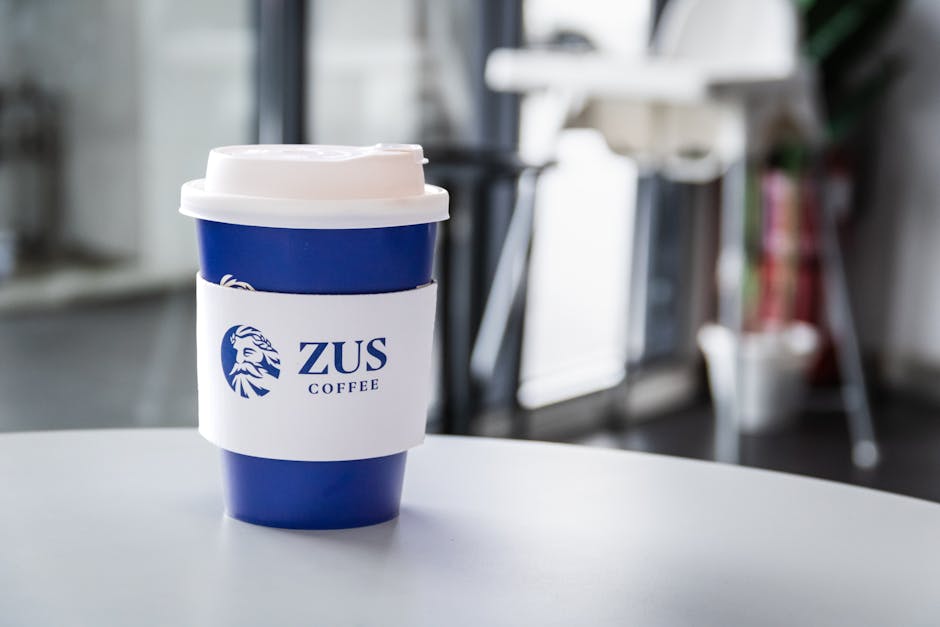
ZUS Coffee and Southeast Asia’s Accessible Specialty Revolution: The Rise, Disruption, and Future of Tech-Driven Café Culture
In the heart of Southeast Asia—a region long defined by its kopitiams, street stalls, and the sprawling shadows of global chains—an audacious new brand is reshaping the very idea of specialty coffee. ZUS Coffee, born in Malaysia just five years ago, has not only eclipsed Starbucks in its home market by store count but has also ignited a regional war over what it means to offer “accessible specialty.” With more than 743 outlets in Malaysia alone and aggressive expansion into the Philippines, Thailand, and beyond, ZUS is executing a blueprint that fuses technology, hyperlocal product innovation, and a disruptive pricing strategy that targets the mass-premium gap. This exposé dives deep into the mechanics behind ZUS Coffee’s rise, the strategic chessboard of Southeast Asia’s café landscape, and what their model reveals about the next era of food retail and digital consumerism.
The Genesis of “Accessible Specialty”: A New Middle Ground
Challenging the Traditional Dichotomy
The Southeast Asian coffee ecosystem has, until recently, lived between two worlds: the no-frills, low-cost domain of convenience stores and local kopitiams, and the polished, premium-priced enclaves of international giants like Starbucks. This left a vast mid-tier, specialty segment comparatively under-served—a gap ZUS Coffee identified and set out to own.
Foundation and Core Business Model
Founded in Kuala Lumpur in 2019, ZUS Coffee launched with an explicit mission: to deliver “barista-grade” coffee at approachable prices, leveraging technology to do away with the excesses of the third-place café model. The result: an app-first, digital-heavy ordering system accounting for about 70% of all Malaysian transactions, a rapidly replicable kiosk/store format, and a relentless data-driven approach to micro-market site selection and menu development.
Scale and Impact
By early 2024, ZUS had already claimed the title of Malaysia’s largest coffee chain by outlets, with 743 stores compared to Starbucks’ ~320. Its net income tripled to RM37 million (≈US$8.6 million) in the same period, signaling commercial validation for the “accessible specialty” thesis. The company’s commitment to aggressive growth is underscored by plans for at least 107 additional outlets in Malaysia within a single year, and a RM250 million (≈US$57.5 million) capital injection to accelerate regional expansion.
Technology as the Secret Sauce: Data, Digital, and Delivery
The App-First Playbook
While many café chains have digitized out of necessity, ZUS Coffee made digital the foundation, not an add-on. Its proprietary app powers everything from ordering and payment to personalized promotions and loyalty mechanics. This approach does more than facilitate transactions: it yields a data-rich view of customer behavior—frequency, location, flavor preferences, daypart demand—feeding a virtuous cycle of:
- Precise site selection and store clustering
- Rapid menu innovation and dynamic pricing
- Inventory and labor optimization based on real-time insights
Physical Format Meets Digital Infrastructure
ZUS’s physical stores are as much a function of its app as they are of real estate. The company’s compact kiosks and small-store footprints are not only cost-efficient (lower rent, capex, and front-of-house labor) but also perfectly tailored to app-first, grab-and-go, and fast delivery models. This stands in stark contrast to the lounge-centric “third place” ambitions of Starbucks and offers a new template for urban coffee retailing.
Hyperlocal Innovation: Embedding Culture Into the Core Menu
Beyond Occasional Localization
ZUS’s menu is not merely “localized” in the superficial sense—it is structurally and authentically embedded with local flavors. Signature creations such as the Gula Melaka Latte (infused with Malaysian palm sugar), ube-based drinks in the Philippines, and pandan or coconut variants for Thailand and Indonesia represent more than flavor fads; they are cultural calling cards.
This hyperlocal approach is tactical and strategic, helping ZUS to:
- Increase adoption rates and cultural relevance in each new market
- Counteract “foreign brand” resistance among local consumers
- Dynamically rotate offerings to sustain trend energy and suppress menu fatigue
Implications for the Wider Industry
The success of ZUS’s hyperlocal product strategy is forcing both international and regional competitors to do more than “flavor-of-the-month” localizations. Those who fail to embed cultural relevance risk ceding market share to new-wave brands with deeper local moorings.
Pricing Disruption: Owning the Mass-Premium Niche
The “Value-for-Money Specialty” Proposition
ZUS Coffee’s price band is deliberate and disruptive—positioned below premium chains (≥RM11 per cup), but above convenience coffee (≤RM5). Specialty beverages from ZUS are typically 20% cheaper than Starbucks or comparable upmarket players, allowing the brand to pull customers up from the convenience segment and siphon price-sensitive consumers down from the premium end.
What’s crucial is that this cost advantage is not secured through ingredient downgrades, but rather through:
- Leaner store formats and standardised fit-outs
- Bulk sourcing as scale grows
- Efficient digital ordering and fulfillment processes
Defensive Pricing Tactics
During commodity surges, ZUS has limited most price increases to approximately 3%, often freezing prices on core hero items. Bundled offerings and value-centric promotions further reinforce its price-value proposition—a discipline that may prove pivotal as competitive pressure intensifies.
Regional Expansion: The Playbook Goes Cross-Border
Pushing Beyond Malaysia: The Second-Act Challenge
With domestic dominance cemented, ZUS is now “exporting the model,” targeting under-penetrated, youthful, and price-sensitive urban segments across Southeast Asia. The company’s store count in the Philippines (120 outlets with 80 more planned for 2025), and its confirmed launches in Singapore, Brunei, Indonesia, and Thailand, showcase a regional land grab that is both capital-intensive and carefully staged.
Partners matter: In the Philippines, for instance, ZUS has partnered with local billionaire Frank Lao to accelerate adoption, leveraging local credibility and networks. Across new markets, ZUS customizes both menu and branding to fit cultural preferences—an approach that reduces “foreign chain” stigma and unlocks local resonance.
Funding and Infrastructure
Expansion is underwritten by a fresh RM250 million investment round, giving ZUS the financial flexibility to secure prime micro-locations, invest in regional supply chain capacity, and scale its proprietary app infrastructure. The company’s trajectory—on track to surpass 1,000 regional stores by October 2025—is a testament to the replicability and capital efficiency of its formula.
Strategic Analysis in Action: SWOT
Strengths
- Scale leadership in Malaysia: ZUS’s outlet density enables both cost and convenience advantages.
- Technology backbone yields actionable data for hyper-targeted marketing, site selection, and menu innovation.
- Price-value positioning resonates with a broad demographic seeking affordable luxury.
- Hyperlocal product strategy fosters cultural affinity and rapid adoption.
- Lean formats optimise ROI and accelerate rollout pace.
- Brand equity is still limited regionally; outside Malaysia, ZUS must contend with entrenched names and local café champions.
- Operational complexity rises with hyperlocalization and cross-market expansion.
- Pressure on margins from input volatility and limited price flexibility.
- No hard-to-replicate moat: scale and execution are hard, but not impossible, for well-funded competitors to imitate.
- The “value specialty” niche is wide open in many Southeast Asian cities.
- Small format advantage as real estate shifts to high-turnover, space-efficient tenants.
- Fintech and loyalty innovation—loyalty programs, embedded payments, subscriptions—offer new monetization paths.
- Supplier partnerships deepen as scale grows, improving margins and ESG positioning.
- Institutional and corporate channels could unlock B2B demand (offices, campuses, hospitals).
- Incumbent responses from global and regional chains (pricing, menu, digital upgrades).
- Commodity and FX volatility threaten cost structures.
- Regulatory complexity and labor risks across diverse markets.
- Trend fatigue and urban saturation could trigger cannibalization or discount wars.
Competitive Landscape: Who Wins the Next Coffee War?
The Price-Quality Matrix: Positioning the Players
On a spectrum from low-cost, basic quality (convenience stores) to high-cost, premium experience (Starbucks, indie specialty), ZUS Coffee deliberately occupies the “mass-premium” middle: specialty-grade quality, but with a price tag that is accessible to the middle class and young professionals. Where ZUS wins is by combining convenience, digital fluency, and local flavor innovation with scale—attributes that global chains are only now beginning to emulate.
Tech-Driven Rivalry
If ZUS has set a new “minimum bar” for digital experience (with 70%+ of sales online in Malaysia), regional competitors such as Kopi Kenangan, Luckin-inspired concepts, and even Starbucks are rapidly adapting. But ZUS’s dense clustering, micro-market focus, and relentless menu innovation mean that the pace of competition will only accelerate—and margin pressure will likely intensify.
Format Innovation: Small Is the New Big
ZUS’s kiosk and micro-store strategy is optimized for daily, functional consumption, not lounging. This is a sharp break from the aspirational “living room” model of early third-wave coffee, and is more in line with the way Southeast Asian urbanites actually work, travel, and socialize—fast, digital, on-the-go.
Porter’s Five Forces: The Competitive Reality
1. Threat of New Entrants: Moderate to High
While launching a single digital-forward coffee kiosk is relatively easy, scaling to hundreds or thousands of high-quality, hyperlocal outlets with robust technology and consistent supply is capital- and execution-intensive. Well-funded local and regional chains can (and will) attempt to copy the ZUS model, but first-mover density and data advantages are not trivial to duplicate.
2. Supplier Bargaining Power: Moderate
Coffee, dairy, and sugar prices are volatile, but ZUS’s growing bulk purchasing power and direct sourcing relationships improve its negotiating position. Regional supply chain diversification helps, but also raises operational complexity.
3. Buyer Bargaining Power: High
Consumers face minimal switching costs and enjoy high price transparency (especially on delivery apps). Loyalty programs, hyperlocal flavors, and convenience are essential levers for retention.
4. Threat of Substitutes: High
Competition is not just other café chains—bubble tea, convenience coffee, RTD drinks, and homemade solutions all compete for the same caffeine occasions. ZUS must consistently deliver on convenience, novelty, and digital engagement to keep its edge.
5. Industry Rivalry: High
Global incumbents, aggressive regional startups, and vibrant indie scenes ensure that rivalry will only intensify—especially as ZUS’s success sets new strategic benchmarks across the region.
Comparative Perspectives: How ZUS Differs from a Newcomer’s View
From the Outside In
To a newcomer, Southeast Asia’s coffee boom may look like another unfolding wave of global brand penetration. But the rise of ZUS Coffee (and its peers) signals something more nuanced—a new playbook where local cultural authenticity, digital infrastructure, and operational agility matter as much as product quality.
Comparing Business Models
- ZUS’s winning formula: Tech-centric operations, high-density clustering, value-driven specialty menu, and hyperlocal flavor innovation.
- Global chains: Spacious, aspirational venues with slower localization and heavier overheads.
- Regional/local chains: Fast tech adoption, but often limited in scale or local resonance outside their home markets.
- Independents: Highly localized, but lacking the tech and capital for regional dominance.
Real-World Implications: Rethinking Food Retail, Real Estate, and Tech Integration
Implications for Retailers and Developers
ZUS’s model calls into question the traditional calculus of retail real estate. Clusters of small, high-turnover coffee boxes can outperform the “flagship” approach. For landlords and developers seeking reliable traffic and efficient space utilization, this means rethinking tenant mix and fostering plug-and-play, tech-ready micro-locations.
Supply Chain Evolution
With scale comes the opportunity—and necessity—to deepen direct supplier relationships, drive ESG initiatives, and secure volume discounts. ZUS’s growing regional footprint will continue to tilt the balance of power away from commodity volatility and toward managed, brand-owned value chains.
Fintech and Data Monetization
The high share of digital transactions opens the door to fintech innovation: loyalty wallets, embedded payments, buy-now-pay-later, or even co-branded credit plays. Data, once a byproduct of operations, is becoming a strategic revenue stream and retention engine.
“The next era of café retail in Southeast Asia will be won by those who master not just the art of specialty coffee, but the science of cultural resonance, data-driven execution, and micro-market density. ZUS Coffee has pulled the future forward—and the rest of the industry must now catch up or fall behind.”
Forward-Thinking: Risks and Opportunities on the Horizon
Intensifying Competition
As ZUS’s playbook proves financially viable, expect a wave of copycats—both local entrepreneurs and international giants. Pricing wars, flavor innovation races, and rapid digital upgrades are inevitable. Maintaining brand authenticity and operational discipline will be the real tests for ZUS as it scales.
Margin Pressures and Consumer Fatigue
With commodity prices swinging and minimum wages rising, ZUS’s cost structure faces increasing stress. Meanwhile, trend cycles—ube today, something else tomorrow—demand relentless menu innovation to avoid consumer fatigue and “flavor-of-the-month” irrelevance.
Regulatory and Cross-Border Execution
Operating in multiple countries means navigating complex F&B regulations, labor dynamics, and supply chain logistics. ZUS’s ability to localize without losing operational consistency will determine whether its early success at home translates to durable regional leadership.
Opportunities for Monetization and Growth
Beyond core beverages, ZUS can expand into:
- B2B and institutional channels (campuses, corporates, hospitals)
- White-label or co-branded partnerships
- Fintech/loyalty “super app” models
- Regional supplier partnerships and ESG-led sourcing
Conclusion: The Strategic Imperative for Southeast Asia’s New Retail Era
ZUS Coffee is not merely a competitor—it is the living prototype of a generational transformation in Southeast Asia’s food and beverage sector. By marrying digital-first execution, hyperlocal product development, and a cost-efficient, scalable format, the company has rewritten the rules for café retail in some of the world’s fastest-growing consumer markets.
For business leaders in F&B, real estate, supply chain, or even fintech, the lessons are urgent: Tech-driven, data-rich operations are table stakes. “One-format-fits-all” is obsolete. And the brands that win will be those that embed themselves in the daily rituals and local tastes of their customers while moving at digital speed.
As the Southeast Asian specialty coffee story continues to unfold, ZUS Coffee’s ascent offers both a blueprint and a warning: disrupt yourself, or be disrupted. The coffee war is just beginning—and what happens next will shape not only how the region consumes its caffeine, but how it reimagines the future of everyday retail itself.
References:
- GrowthHQ: ZUS Coffee’s Hyperlocal Revolution
- ZUS Coffee – Our Story
- Marketing-Interactive: Thailand Debut
- Wikipedia – ZUS Coffee
- World Coffee Portal – Regional Market Coverage