
ZUS Coffees Hyperlocal Tech Revolution: How Malaysias #1 Chain Is Redefining Specialty Coffee In The Philippines, Thailand, Singapore, And Indonesia By 2026
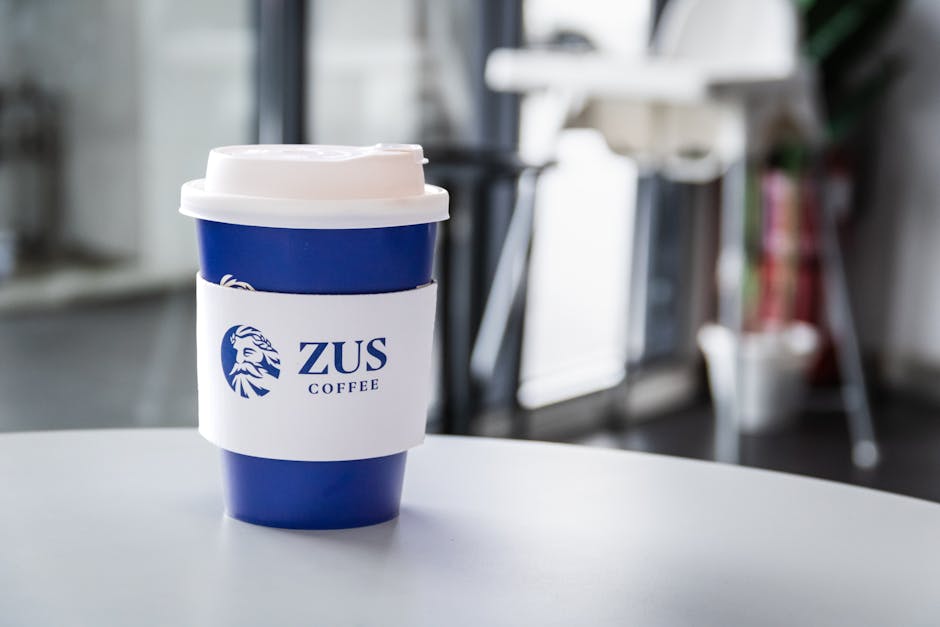
ZUS Coffee’s Hyperlocal Tech Revolution: Redrawing Southeast Asia’s Coffee Landscape by 2026
In the space of just six years, ZUS Coffee has redefined what it means to be a regional coffee powerhouse. From its 2019 launch to its 1,000th outlet in late 2025, ZUS’s rise is more than a tale of rapid expansion—it is a case study in how technology, data-driven localization, and cultural resonance can disrupt entrenched giants like Starbucks and shake up fiercely competitive markets across Southeast Asia. In 2026, ZUS stands not just as Malaysia’s largest coffee chain, but as a harbinger of how digital-first retail, if truly hyperlocal, can create emotional bonds with consumers, unlock cost efficiencies, and deliver a blueprint for others navigating the fragmented, flavor-rich, and increasingly digital ASEAN food and beverage sector.
The Dawn of a New Retail Model: ZUS’s Data-Driven Playbook
From Kuala Lumpur Start-up to Regional Leader: ZUS Coffee’s beginnings were unremarkable on paper—a single outlet in Kuala Lumpur, 2019. Fast-forward to early 2026, and ZUS commands 1,000+ stores region-wide, boasting 8,000 employees and a digital sales rate eclipsing 70%. While global competitors invested in physical dominance, ZUS bet on apps and analytics, capturing the granular tastes and evolving lifestyles of Southeast Asia’s vibrant populations.
Hyperlocal Technology as Core Differentiator: Unlike multinationals that push standardized offerings, ZUS’s proprietary application gathers and processes customer preferences—down to neighborhood-level insights. This system enables instant menu pivots, local ingredient sourcing, and real-time promotion targeting, executing what ZUS COO Venon Tian calls “menu co-creation” in every geography. The result: flagship drinks like palm sugar lattes in Malaysia and purple yam coffee in the Philippines, often priced 20% below rivals, fuel both community engagement and mass adoption.
Digital as Default: With 70% of all sales—deliveries and pickups—initiated digitally, ZUS is less a conventional café chain and more a tech-enabled omnichannel platform. COVID-19’s e-commerce acceleration played to its strengths: “We designed for digital, not as an afterthought, but as our primary channel,” says Tian. This positioning yields speed-to-market, agile expansion, and insulated cost structures, creating enviable margins even as ZUS undercuts premium competitors.
Crafting Neighborhood Belonging: The Power of Flavor and Culture
Flavors as Cultural Connectors: Southeast Asia’s coffee market isn’t just about caffeine; it’s about ritual and memory. ZUS flips the switch on “localization” by making it intrinsic, not an after-market tweak. In Malaysia, the chain’s palm sugar-infused creations have eclipsed Starbucks’ bestsellers. In the Philippines, billionaire Frank Lao’s $57M investment underpinned a surge to 120+ branches, with ube (purple yam) coffee weaponizing deep cultural nostalgia. In Singapore, pandan-gula Melaka lattes are poised to reach “local classic” status.
Agile R&D and Community Engagement: Via app polling and social media, ZUS empowers customers to vote on new flavors, directly tying its menu cycle to real-time sentiment. The feedback loop is fast; successful pilots can scale nationwide in weeks—underscoring the brand’s ability to bridge mass personalization with operational discipline.
Southeast Asian Markets: Comparative Performance and Strategic Nuances
Malaysia: The Tech-Infused Incumbent
With 743 stores (more than double Starbucks’ 320), Malaysia is ZUS’s proving ground. Here, app-driven loyalty programs and continual palm sugar flavor innovation have cemented dominance. The goal: 1,000 stores by 2027, with digital-first urban youth as primary drivers.
Philippines: Investment-Fueled Acceleration
An infusion of $57M and a focus on purple yam coffee catalyzed expansion from 50 to 120+ branches. ZUS leverages archipelago-wide delivery adoption, localizing both supply chains and flavor innovation. The ambition: 300 stores by 2027, doubling down on co-created Filipino variants, like “halo-halo” fusions, to outmatch entrenched competitors.
Thailand: Early-Stage, High-Potential
Late-2025 marked Thailand’s debut, targeting 50 stores by 2026. Early wins with Spanish Latte signal how ZUS’s technology can rapidly test and anchor new menu items. The next challenge: adapt to Thailand’s diverse palates—think mango sticky rice lattes—and embed itself through community-led events in urban centers.
Singapore: Quality Over Quantity Amid Saturation
A small but strategic presence (4-10 outlets as of 2026) lets ZUS trial local favorites, such as pandan-gula Melaka, and “Singlish” cup branding. Here, the brand focuses on building a “local pride” narrative and aims for 50 outlets by 2028 against international giants.
Indonesia: On the Launchpad
With early entries planned for Java, Indonesia is the biggest volume opportunity—but also the most price-sensitive. ZUS’s tech will be tested to hyper-optimize for flavors like halal-certified, palm-based “kopi susu,” with the promise: price points under IDR 30,000/cup to win the masses.
Brunei: Franchise Stability
Though lower in volume, Brunei serves as a test bed for franchising. Here, app technology deployed through partners ensures menu consistency and brand quality, showcasing ZUS’s franchise playbook for wider regional adaptation.
Strategic Innovations: Why ZUS Succeeds Where Many Stumble
Cost Leadership via Data and Scale: ZUS automates menu and pricing decisions through its tech stack, supporting 20% lower prices than competitors. Bulk procurement and data-directed inventory eliminate inefficiencies, enabling cost leadership without eroding quality.
Emotional “Belonging” Trumps Commodity Transactions: By embedding itself in local routines, from cup design to flavor and even language, ZUS achieves what many chains aspire to: affinity beyond price or convenience. Community crowdsourcing, app-driven “voting,” and collaborations with local chefs foster a sense of co-creation.
A Digital-Physical Flywheel: Unlike chains that treat digital channels as secondary, ZUS’s business model is built for omnichannel dominance. Store locations are selected based on geo-analytics from app heat maps, ensuring new outlets open where digital demand is already proven. This virtuous cycle insulates ZUS from high-rent pitfalls and boosts store-level ROI.
Efficient Expansion as a Competitive Weapon: The 200-store surge in 2025 (nearly half in Malaysia alone) was executed with speed and cost discipline. The approach: open “right-sized” outlets with high digital throughput, not just prime high-street sites. The result is faster time-to-profit and the flexibility to experiment in emerging markets without excessive capex risk.
A Comparative Glance: ZUS vs. Multinationals and Regional Rivals
Global Chains (e.g., Starbucks): Deep brand equity, but often beholden to global menu mandates and less agile pricing. In Malaysia, Starbucks remains at 320 stores and lacks equivalent data-localization capabilities, ceding market share to ZUS.
Regional Upstarts (Luckin, Kenangan): These brands bring digital innovation, but can struggle with “menu fatigue” and insufficient community resonance outside their home markets. ZUS’s play for emotional connection—embedding neighborhood tastes and stories—is a crucial differentiator.
Price vs. Localization: ZUS’s value comes from simultaneously driving down costs (through supply chain tech and digital logistics) while dialing up local cultural engagement. The hyperlocal strategy, powered by first-party data, is difficult to replicate without sustained technology investment—in effect, building a “moat” that newer arrivals or slower-moving incumbents will find hard to breach.
"The future belongs to brands who can combine the intimacy of a neighborhood café with the scale and intelligence of a technology company. In Southeast Asia, that means flavor and culture must be as algorithmically honed as logistics and pricing—ZUS Coffee is writing that playbook in real time."
The Real-World Implications for Operators, Investors, and Communities
For Retailers and Operators: ZUS’s model demonstrates that market dominance does not require brute force capital spend. Instead, investing in robust digital infrastructure and local R&D can yield faster, more sustainable returns. Operators everywhere should note: achieving 70%+ digital sales is both feasible and highly profitable when paired with hyperlocal product-market fit.
For Investors: The $57M investment from Filipino tycoon Frank Lao was not just a financial injection, but a signal to the broader market that food and beverage is now a technology play as much as a consumer one. The brand’s 5-year leap to market leader status in Malaysia illustrates what is possible for those prepared to fund tech-first, flavor-intelligent expansion.
For Local Communities and SME Ecosystems: ZUS’s approach to local sourcing, menu co-creation, and even job creation (with thousands hired across the region) weaves coffee culture into the social and economic fabric of Southeast Asia. Cities and neighborhoods see tangible benefits—from SME job links in Indonesia to supply chain localization in the Philippines—beyond the simple proliferation of storefronts.
Risks, Challenges, and the Road Ahead
Market Saturation and Brand Dilution: While ZUS has vaulted to the top in Malaysia and is scaling rapidly in the Philippines, the brand faces crowding in markets like Singapore and Indonesia, where flavor fatigue and loyalty fragmentation are real risks. Continuous flavor innovation and “local pride” marketing will be essential.
Pricing Volatility: In highly sensitive markets (notably Indonesia), ZUS’s cost advantage is a double-edged sword; maintaining sub-IDR 30,000 pricing will require relentless efficiency and hedging against supply chain shocks.
Scaling Emotional Bonds: As the brand adds hundreds more stores, maintaining the “neighborhood” experience that sets ZUS apart will be a test. The company’s culture of app-driven engagement and local menu curation must not be diluted by rapid growth.
Geo-Political Volatility: Nationalist and boycott trends—particularly against global brands—can offer tailwinds, but also carry risks if regional dynamics shift. ZUS’s strategy to foreground local sourcing and brand itself as a “regional neighbor” is both a shield and an opportunity.
Strategic Recommendations for Decision Makers
1. Invest in Tech-Led Localization: The ZUS example proves that allocating resources to app development and consumer data analytics delivers outsize returns—both in cost reduction (up to 20% vs. competitors) and in true menu differentiation. Operators aiming for regional expansion should target at least 50% of sales from digital channels within three years.
2. Rethink Marketing Budgets: Shift 10-15% of budgets toward hyperlocal flavor R&D and community co-creation, driving not just traffic but loyalty and emotional connection.
3. Prioritize Market Sequencing: ZUS’s strongholds in Malaysia and the Philippines show that targeted, data-driven market entry trumps brute expansion. Decision makers should prioritize quick-win geographies before mounting costlier forays into saturated or highly competitive areas.
4. Leverage Franchise and Partnership Models: As evidenced by Brunei’s stable franchise operations, exporting technology and menu curation frameworks can enable low-capex expansion with quality control.
5. Track and Benchmark for Success: Key metrics such as app engagement rates, digital sales as a percentage of total, store-level ROI, and local menu adoption should be built into dashboards to enable rapid course correction and internal accountability.
6. Embrace Sustainability and Community: Local sourcing, job creation, and community engagement strategies are not just PR tools—they are central to ZUS’s resilient, “boycott-resistant” brand equity. Regional players should follow suit.
Forward-Thinking Insights: What ZUS Coffee’s Story Means for the Future of F&B in Southeast Asia
ZUS Coffee’s ascendency is not a fleeting phenomenon nor a purely Malaysian story. It is a real-time demonstration of how tech-enabled, hyperlocal strategy is redefining what it means to lead in a region as diverse—and competitive—as Southeast Asia. The company’s relentless focus on flavor innovation, pricing accessibility, and digital omnipresence has forced incumbents and upstarts alike to reconsider old playbooks.
For new entrants, the lesson is clear: robust app-first, data-centric infrastructure is the ticket to relevance, not just survival. For established brands, the warning is sharper—cultural complacency and global standardization are no longer enough; the new consumer expects neighborhood resonance at national or even regional scale.
Operators, investors, and even policymakers should pay close attention to this new blueprint. As ZUS eyes 25% market share in Southeast Asian specialty coffee by 2028 and tests expansion into even more markets, the battle for flavor, digital intimacy, and local identity will only intensify. The stakes are high, but for those who get the formula right—much like ZUS—so too are the rewards.
To watch ZUS’s innovation in real time and view hyperlocal menu examples, visit ZUS Coffee’s official menu.
For in-depth reporting and expansion news, reference articles from Verdict Foodservice, Marketing Interactive, and World Coffee Portal.
Conclusion: The Strategic Imperative of Hyperlocal Tech in F&B’s Next Horizon
The ZUS Coffee phenomenon puts Southeast Asia at the center of a global reckoning: the coffee (and broader F&B) chain of the future will be as much a technology and data company as it is a purveyor of flavors. Menu customization powered by local data, cost leadership rooted in automated logistics, and digital-physical integration are not just the future—they are the present reality in markets where ZUS leads. Chains failing to build technological intimacy with their customer base will find themselves outpaced and outloved by those who do.
It is time for decision makers to act: double down on data, resource local innovation, and stack their leadership benches with digital, not just culinary, expertise. The ZUS model is available for all to see—but only the bold will adapt it in time. As consumer loyalty becomes ever more fleeting and the market ever more crowded, the winners will be those who can blend algorithmic efficiency with genuine local soul.
The next wave of industry leaders is rising—not just in Malaysia, but across every urban center that yearns for both convenience and connection in every cup.