
ZUS Coffees Southeast Asia Expansion: How Direct Trade Empowers Farmers In Malaysia, Philippines, Indonesia, Thailand, Singapore & Brunei For Sustainable Growth
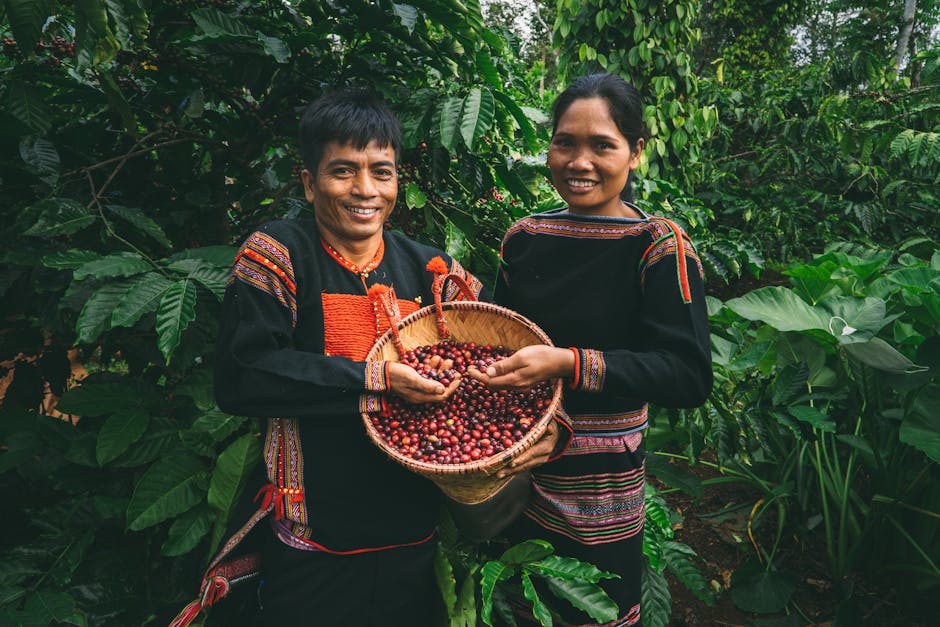
ZUS Coffee’s Southeast Asian Revolution: Empowering Farmers, Redefining Supply Chains, and Shaping Coffee’s Sustainable Future
Coffee is more than a beverage in Southeast Asia; it’s a daily ritual, a cultural touchstone, and a $1 billion+ industry projected to rise exponentially by 2029. At the heart of this transformation lies ZUS Coffee—Malaysia’s tech-driven coffee chain that, as of late 2025, not only disrupts market norms but pioneers a new era of farmer empowerment, supply chain localization, and sustainability. This exposé unpacks ZUS’s strategic maneuvers, their real-world impacts, and offers a critical lens for decision-makers eyeing the next coffee boom.
The Historical Roots and Market Dynamics: Southeast Asia’s Coffee Evolution
A Legacy of Smallholders: Southeast Asian coffee has long been shaped by smallholder farmers, many cultivating less than two hectares across Malaysia, Indonesia, and the Philippines. Yet, decades of market fragmentation and supplier dominance left farmers grappling for fair prices and sustainable livelihoods.
The Traditional Model: Intermediaries and legacy supply chains prioritized volume over value, often obscuring traceability and yielding inconsistent incomes for those at origin.
Emerging Disruptions: Market entrants—both global (Starbucks, Luckin Coffee) and regional kopitiams—have focused on retail expansion but seldom addressed farm-level impact or environmental stewardship at scale.
The ZUS Coffee Entry: Founded on tech-first principles and direct trade, ZUS Coffee’s rapid ascent—from 743 stores in Malaysia to expansion across the Philippines, Indonesia, Thailand, Singapore, and Brunei—signals a radical shift. Armed with RM250 million in funding (2024), ZUS isn’t just scaling; it’s rewriting the script on who benefits and how.
For context, ZUS targets 200 new stores in 2025, aiming for 6,000+ employees and capturing a >RM1 billion market. Direct partnerships and sustainability commitments are not just slogans—they’re operational mandates.
Rewriting the Supply Chain: Direct Trade, Localization, and Tech-Driven Adaptation
Direct Partnerships: ZUS Coffee’s signature move is its direct trade model. By bypassing intermediaries, green bean procurement ensures not only quality and traceability but—most critically—fairer prices for farmers. As ZUS states: “Direct Trade helps farmers develop with us and have a more sustainable future & growth together.”
Supply Chain Localization: Across core markets (Malaysia, Indonesia, Philippines), ZUS builds alliances with smallholder cooperatives. In Malaysia, partnerships with Coffex Coffee and Fraser & Neave anchor vertical integration, cost control, and traceability. Indonesia leverages Kapal Api to target 1.5 million smallholders, with plans for robust direct engagement in 2026.
Tech-Enabled Adaptation: Over 70% of ZUS sales flow through digital channels—app or delivery—allowing geo-targeted menu adaptations and rapid response to local sourcing. This backbone drives market intelligence, personalizes offerings, and enables seamless farmer integration.
Country-by-Country Analysis: Empowerment in Practice
Malaysia: Deepening the Ecosystem
With 743 stores, Malaysia is ZUS’s profit core. Here, direct trade via Coffex Coffee ensures smallholder cooperatives receive premium pricing, countering traditional supplier dominance. Fertilizer reuse initiatives (889kg CO2 saved) create a closed-loop benefit—coffee grounds become agricultural inputs, directly enhancing soil health for farmers. App-driven models fund farmer programs, and plant-based menu rollouts with Green Rebel at 200+ stores support ag ecosystem diversity.
Impact: Employs thousands locally; targets 10%+ supply chain localization. Ethical sourcing seen as strategic edge.
Philippines: Joint Ventures and Robusta Access
Through a joint venture with Choi Garden, ZUS launched 80 stores in 2025, tapping local regulatory ease and supply networks. Plans include co-ops for robusta procurement, co-branded kiosks in Cebu and Davao, and strategic e-commerce partnerships (e.g., GrabFood, Shopee) for scale. Investment from Frank Lao enables localized menu adaptations (e.g., purple yam fusions), signaling a broader commitment to farmer integration.
Impact: Rapid scaling (120+ stores); fills traceability void relative to competitors. Unprecedented rollout showcases JV efficiency.
Indonesia: Smallholder Engagement and Mass-Market Reach
Entry via Kapal Api Group enables legitimacy, but ZUS’s next move is direct engagement with Indonesia’s 1.5 million smallholders—crucial for arabica and robusta traceability. Integration with Gojek improves logistics, while plant-based collaborations signal regional ag-tech synergy.
Impact: Positions ZUS as a leader in ethical sourcing; direct farmer programs planned for 2026.
Thailand: Logistics Alliances and Dairy Localization
A RM20M push for 50 planned stores in 2026 brings recommended partnerships with CP Group for supply chain localization, particularly in Bangkok and Chiang Mai. Dairy collaborations enable Thai milk tea lattes using local inputs, while digital sales fit high mobile penetration.
Impact: First-mover promotions build customer base; primed for farmer empowerment through supply chain integration.
Singapore: Urban Farms and Ethical Sourcing
With four stores, ZUS leverages urban farm partnerships for sustainable beans, appealing to ethically minded, high-density consumers.
Impact: Fills premium niche; direct trade ensures traceability and consumer trust.
Brunei: Micro-Market Pilots
Franchise model with royal-linked firms and Borneo bean sourcing enables micro-market testing—data-first approach for underserved areas.
Impact: Exclusive kiosks test farmer integration scalability.
Comparative Perspectives: ZUS vs. Legacy Chains—What’s Different?
Authenticity vs. Scale: ZUS Coffee’s model contrasts sharply with Starbucks and regional kopitiams. While chains focus on retail footprint, ZUS invests in direct trade and farmer partnerships as competitive edge.
Traceability and Environmental Impact: ZUS fills gaps where rivals lack CO2 tracking or farm-level transparency. Its 889kg CO2 saved via fertilizer reuse becomes a benchmark for sustainability.
Economic Empowerment: ZUS’s direct trade reduces entry barriers for farmers, shifts supply chain power, and enables pricing 20% cheaper than incumbent brands by leveraging efficient store models and app-based loyalty.
Limitations and Caveats: Despite ambitious intent, ZUS’s farm-level integration remains insufficiently documented as of late 2025. The partnership-centric approach, while powerful, stops short of full organic scaling or 100% farmer ownership.
Real-World Implications: Economic, Environmental, and Social Outcomes
Economic Leverage: Partnerships catalyze entry into new markets, shifting supplier power to farmers via direct procurement. RM250 million funds 200 stores, with projected 30% revenue growth. KPIs suggest that farmer programs can cut supply costs by 10-15% and uplift incomes by 15-20%.
Environmental Gains: ZUS’s fertilizer reuse and partnership with Promise Earth save 889kg CO2 emissions—a concrete environmental win. Sustainability standards, e.g., Rainforest Alliance certifications, are recommended to further amplify impact.
Social Outcomes: The rise of plant-based menus (Green Rebel at 200+ stores) supports ag diversity and appeals to the 20%+ of Malaysians reducing meat consumption, indirectly benefiting broader farm ecosystems.
Emergent Patterns and Tactical Shifts: From Partnership to Ecosystem Ownership
JV Templates: The Philippines and Indonesia joint venture models accelerate scaling, allowing ZUS to target 1.5 million smallholders for robusta dominance and traceability. Metrics-driven alliances replicate quickly and efficiently.
Digital Loops: The reliance on apps (80% sales target) enables rapid geo-sourcing and loyalty-building, unlocking new ways for farmers to integrate into supply chains.
Sustainability Mandates: Replication of fertilizer reuse (889kg CO2 benchmark) and expansion of plant-based menus to farmer crops are recommended, positioning ZUS as a leader in food system conservation.
Strategic Recommendations: Lessons for Coffee Industry Decision Makers
Invest in Direct Farmer Programs: RM50-100 million earmarked for supply chain partnerships secures >10% localization and builds resilience against supply volatility.
Scale with Metrics: Use JV templates (Philippines, Indonesia) to track KPIs—farmer income uplift, CO2 savings—ensuring quantifiable outcomes.
Digitize for Traceability: Integrate blockchain for farm traceability, leveraging 80% app sales for geo-targeted sourcing.
Sustainability as Strategy: Expand fertilizer reuse, implement plant-based menu innovations, and pursue environmental certifications.
Risk Mitigation and Expansion: Build CP Group-style logistics in Thailand, pilot micro-market models in Brunei, and hedge rivalry via app-based pivots.
Capex Allocation: Decision makers should allocate 20-40% of capital to supply alliances for 2026+ outperformance in ASEAN’s booming coffee sector.
“Direct trade, anchored in partnership, is the new engine of coffee industry dominance—empowering farmers economically, environmentally, and strategically, while ensuring resilience and traceability that consumers and markets demand.”
Forward-Thinking Insights: Cross-Functional Value and Future Projections
For Investors: The partnership-first model reduces supply volatility and ensures 20%+ cost efficiency. Quantified projections indicate that 200 new stores in 2026 will yield 30% revenue growth and solidify ZUS’s share in a RM1 billion+ market.
For Agribusiness: Farmer empowerment is not just ethical; it is a competitive necessity. Traceability and sustainability, powered by tech and direct engagement, will define the next phase of Southeast Asian coffee.
For Environmental Stakeholders: Replicating ZUS’s 889kg CO2 savings and expanding plant-based innovation delivers measurable conservation outcomes.
For Digital Leaders: The 80%+ app-driven sales model allows for rapid adaptation and new channels for farmer engagement, with blockchain-led traceability as the next frontier.
Comparing Perspectives: New viewers may see ZUS’s expansion as mere retail growth, but insiders recognize supply chain localization, farmer empowerment, and sustainability as the true engines. Legacy models prioritize presence; ZUS prioritizes impact. This difference is what drives ZUS’s outperformance against Starbucks and Luckin Coffee, especially in Malaysia, where authenticity and ethical sourcing matter.
Conclusion: The Strategic Importance of Farmer Empowerment in Southeast Asia’s Coffee Surge
ZUS Coffee’s journey is a powerful case study in how direct trade, supply chain localization, and sustainability-driven partnerships can rewrite the rules of a legacy industry. By shifting supplier power to smallholders, investing in digital adaptation, and advancing environmental stewardship, ZUS has not only captured market share but set a new standard for what’s possible.
Yet, the road ahead requires deeper farm-level documentation, broader certification adoption, and bolder moves into ecosystem ownership. For business leaders, investors, and agricultural stakeholders, the imperative is clear: prioritize ZUS-like models for robust, resilient growth.
As Southeast Asia enters a new era of coffee consumption—projected to surpass RM1 billion regional value by 2029—the brands that empower farmers, reduce environmental impact, and leverage technology for traceability will define the future.
The coffee market’s next chapter isn’t written by the biggest chains, but by those investing in the origins of their supply.
Explore the latest data and strategies shaping Southeast Asia’s coffee surge and review case studies on sustainability-driven impact.
The future belongs to those who empower at origin, innovate at scale, and lead with purpose—ZUS Coffee is showing the way.