
ZUS Coffees Southeast Asia Takeover: How Malaysias #1 Chain Blends Digital Innovation & Local Flavor To Win In Thailand, Singapore, Philippines, Brunei, And Beyond
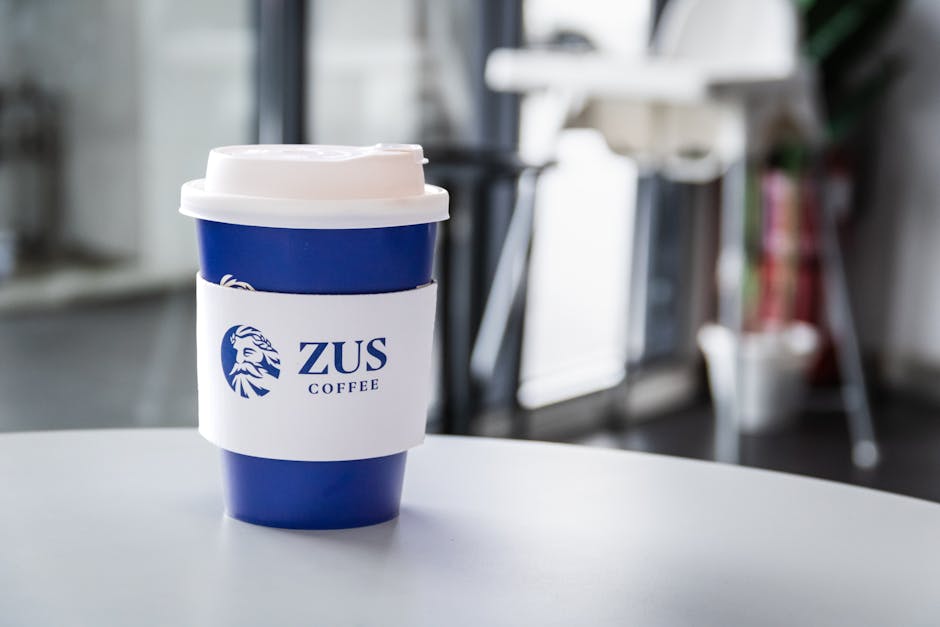
ZUS Coffee: Balancing Local Flavor and Digital Innovation in Southeast Asia’s Coffee Race
An unassuming startup brewed in Kuala Lumpur just seven years ago, ZUS Coffee now commands the largest network of coffee outlets in Malaysia and has rapidly staked its claim across Southeast Asia’s bustling F&B sector. By early 2026, ZUS had cracked open the doors to over 1,000 outlets—eclipsing multinational giants and rewriting the expansion playbook for regional chains aiming to blend technology with heart. With a unique "New Retail" model—anchored by a proprietary, data-driven app—ZUS’s journey is a masterclass in digital-first F&B scaling while navigating Southeast Asia’s fiercely local palates and competitive pressures. This exposé delves into ZUS Coffee’s ascent, its collision with established titans, and the tectonic shifts shaping the region’s F&B future.
The Birth of a Challenger: Local Roots, Global Vision
Market Disruption in Malaysia: Founded in 2019, ZUS swiftly recognized a market paradox: Malaysia’s coffee sector brimmed with global brands, yet few matched local tastes or affordability. By harnessing local insights and the mobile-centric habits of younger consumers, ZUS unseated Starbucks as market leader, boasting 743+ outlets in Malaysia by Q4 2025—leaving Starbucks’s 320 stores far behind (The Star).
Scaling with Purpose: The chain’s expansion wasn’t haphazard. ZUS built an operational foundation around community hiring—now employing over 8,000 staff region-wide—and “local-first” menu strategies, such as integrating palm sugar into Malaysian drinks, a move validating the power of subtle, authentic localization.
Setting the Standard: Industry analysts now cite ZUS as the de facto regional benchmark: fast-store rollout, high staff retention, and aggressive R&D. The company’s planned 1,300 outlets by end-2026 represent not merely growth, but a meticulously orchestrated push to reshape Southeast Asia’s café culture—one market at a time.
App-First "New Retail": The Core of ZUS’s Expansion Model
Digital Foundation: ZUS’s proprietary app is not window dressing; it’s the backbone of operations, driving over 80%+ of transactions. Designed to track micro-preferences (from bean selection to sweetener choices), the app feeds this live data back into R&D, enabling hyperlocal menu adaptation at unprecedented speed (Marketing Interactive).
Operational Efficiency: The app’s integration doesn’t stop at ordering—data analytics optimize inventory, labor allocation, and even real-time supply chain tweaks. This digital infrastructure allows ZUS to maintain its cost-competitive edge and compress market entry timelines (notably, just 6-7 months of R&D for new markets, compared to industry averages of a year or more).
Personalization as Loyalty: Beyond efficiency, ZUS’s digital ecosystem powers a feedback loop—personalizing customer experiences, running targeted campaigns, and fostering community engagement around local collaborations. The result? Industry-leading app penetration and the region’s highest repeat purchase rates among daily specialty coffee drinkers.
SEA Expansion Playbook: Tactical Shifts and Growth Drivers
Malaysia, the Powerhouse: ZUS’s home market remains its linchpin—expected to add 200 new outlets in 2026 alone. The domestic focus has allowed ZUS to perfect its operational formula, setting the pace for international forays.
Thailand: Bold Bets and Local Integration: Entering Thailand—a mature, highly competitive coffee market—with a single outlet at Dusit Central Park in January 2026, ZUS aims for 50 stores by year-end. The entry followed 6-7 months of intensive R&D, signaling ZUS’s commitment to nuanced market understanding. App-driven data and local hiring (led by GM Pattarnun Meesiripeyratorn) underpin this expansion, with the Spanish Latte emerging as a surprise bestseller tailored to local preferences (NST).
Singapore and Brunei: Testing for Saturation and Diversification: In these smaller, more saturated markets, ZUS is stress-testing its tech-localization playbook, betting that emotional connection, authentic “storytelling” campaigns, and menu innovation will differentiate it from a sea of competitors.
Philippines: Heritage-Inspired Menus: The chain’s rise in the Philippines is notable for its deep menu localization—purple yam (“ube”) coffee, for example, draws on national culinary nostalgia. Here, heritage flavors accelerate adoption, validating the ROI of localized product development.
Indonesia and Beyond: The Next Frontier with Caution: Anticipating entry into Indonesia (Q1 2026), ZUS faces dual realities: immense potential (270M+ population) but also a crowded, cutthroat market. Analysts urge caution—reminding that mere scale without local resonance can backfire in archipelagic markets where brand “Malaysian-ness” cuts both ways.
Tactical Innovations: Local Flavor Meets Digital Scale
Menu Localization by Market: ZUS’s “hyperlocal” menus are not afterthoughts—they’re engineered through real-time app data, then rapidly piloted and iterated. In Malaysia, palm sugar features are flagship options. In Thailand, Spanish Latte and local premiums. In the Philippines, purple yam lattes. This targeted “menu variance” (10-15% per market) drives faster adoption and higher average tickets (World Coffee Portal).
Community-Centric Hiring: With 8,000+ staff—predominantly hired locally—ZUS anchors itself as a community-first brand, not a transactional chain. Local partnerships and staff investment cultivate trust and repeat business, critical in markets like Thailand where F&B is rooted in personal relationships.
Cost Leadership Without Compromise: ZUS’s model delivers “specialty coffee at everyday prices,” leveraging operational savings from tech and local sourcing. This enables a “daily ritual” positioning, distinct from premium, occasional competitors.
Comparative Perspective: ZUS vs. The Incumbents
Starbucks and Global Chains: Traditionally, multinational chains have leaned on broad standardization for scale—prioritizing brand uniformity at the expense of local nuance. Starbucks, despite its pioneering reputation, now lags behind ZUS in Malaysia outlet count and hyperlocal resonance.
Regional Independents: Local chains often excel at community ties but lack the data-driven horsepower to efficiently scale across fragmented geographies. ZUS’s hybrid approach—tech for speed, local for relevance—bridges this gap, creating a new standard for what “regionalization” means in F&B.
The New Viewer’s Dilemma: For those unfamiliar with Southeast Asia’s market, the scope and speed of ZUS’s rise may seem improbable. But viewed through the lens of mobile-native consumer habits, intensifying “affordable luxury” expectations, and the explosion of food-tech analytics, ZUS’s blueprint is less anomaly than harbinger for the industry’s next decade.
Key Metrics and Benchmarks: Lessons for F&B and Tech Leaders
- Store Growth: Opened over 200 stores in 2025; targeting a further 300 by end-2026.
- App Penetration: Powers 80%+ of sales, compared to industry averages of 30-50%.
- Market Entry R&D: 6-7 months, versus >12 months for most chains—speed enabled by digital data capture.
- Staffing Ratios: Over 8,000 employees across SEA, supporting local hiring, retention, and adaptation.
- Cost Advantage: App/tech stack yields 15-25% cost savings on inventory and staffing, accelerating break-even on new outlets.
Actionable Insights for Competitors and Partners
Emulate the Tech-Local Hybrid: For regional F&Bs, the roadmap is clear: invest in a proprietary app, prioritize taste analytics, and compress market entry timelines through targeted R&D. Integrating CRM platforms with local data repositories can yield 20-30% efficiency jumps.
Master Menu Localization: Treat “menu variance” as strategic asset, using AI-based taste clustering to capture local flavor preferences. Target a 10-15% localized menu shift for new market launches to accelerate adoption.
Benchmark for Aggressive Growth: Aim for 150+ stores/year in anchor markets, with app penetration north of 70% to secure a data advantage. Staff locally—aim for 90% local hires to drive both brand loyalty and operational agility.
Risk Mitigation Matters: In saturated markets (notably Singapore and Indonesia), avoid price wars. Instead, invest at least 20% of market launch budgets in R&D collaborations, local partnerships, and emotional storytelling campaigns to foster authentic audience connection.
Real-World Implications: Shaping the Next-Gen Coffee Economy
Community Uplift: ZUS’s aggressive local hiring and supplier partnerships spur job creation and knowledge transfer, disrupting the notion that big-scale F&B is necessarily impersonal or extractive.
Data Sovereignty and Personalization: The company’s model raises the bar for data privacy, loyalty mechanics, and personalized offers—if adopted responsibly, this can enrich both business outcomes and consumer empowerment.
Potential Risks: Expansion into archipelagic, linguistically diverse SEA markets (Indonesia, Philippines) magnifies risks of operational missteps. Overreliance on digital platforms may also alienate less tech-savvy demographics—requiring careful outreach and menu inclusivity.
F&B Innovation Cycles: ZUS exemplifies the shift towards integrated, app-driven F&B, shortening the feedback loop between customer desires and operational delivery. Competitors unwilling or unable to adapt risk being left behind as “legacy” players.
In the coming decade, “winning Southeast Asia’s coffee war will hinge on more than just scale or taste—it’s the fusion of deep local empathy with relentless data-led innovation that will define the next generation of market leaders.”
Strategic Recommendations: Replication and Competition in the Digital-F&B Era
For Chain Operators & QSRs: Prioritize investment in a proprietary app ecosystem—focus on granular taste analytics, predictive for inventory, and dynamic menu updates. Allocate no less than 20% of new market capex to on-the-ground R&D and local collaborations. Use ZUS’s 1,300-store target as the benchmark for aggressive, tech-enabled regional scaling.
For Investors & Partners: Use physical footprint (1,000 stores) and staffing (8,000+ FTE) as proxies for revenue multiples—ZUS’s estimated $500M+ revenue potential demonstrates the power of integrated scaling strategies. Explore joint ventures for technology export or local sourcing, especially in “challenger” markets like Indonesia.
Diversification—Looking Beyond SEA: ZUS’s expansion into non-SEA markets (e.g., Pakistan, early 2026) is a timely reminder: F&B growth has natural ceilings in tightly contested regions. Strategic pivots to new geographies or digital verticals may unlock the next wave of value creation.
The Contrarian View: Challenges and Course Corrections
Market Saturation in Singapore and Indonesia: Even ZUS is not immune to the perils of over-expansion; chain proliferation in these mature markets means only those with distinct “emotional resonance” and community storytelling will thrive. Copycat models lacking originality or local empathy are likely to stall.
Operational Complexity: As ZUS scales, maintaining consistency across hundreds of outlets—while also flexing to local demand—will require robust oversight, investment in leadership development, and relentless feedback cycles.
Data Governance: The competitive edge of deep data capture comes with significant privacy and compliance obligations, especially as app-enabled loyalty becomes the norm. Sustainable scaling must embed strong data stewardship from the outset.
Conclusion: The Future of Coffee—A Playbook for Next-Gen F&B Dominance
ZUS Coffee’s meteoric rise is not simply a story of store counts or clever apps. It’s a case study in how businesses can wield technology to operationalize empathy, localize at scale, and fundamentally shift the economics of F&B in one of the world’s most diverse regions. By harmonizing digital infrastructures with a local-first ethos, ZUS has set a new gold standard—outpacing legacy giants and inspiring a new cohort of tech-enabled competitors.
The industry’s next inflection point belongs to those who can learn from ZUS’s relentless localization, its app-first “New Retail” mindset, and its willingness to challenge both global and regional orthodoxy. In this new landscape, true competitive advantage is found not in mere size, but in the intelligence with which data is wielded and the authenticity with which communities are engaged.
In the grand sweep of Southeast Asia’s coffee evolution, the ZUS model isn’t just visionary—it’s inevitable. For leaders with their eyes on growth, the time to act is now: invest in tech, respect local cultures, and—above all—never lose sight of the people who make every cup, and every community, unique.