
ZUS Coffees Tech-Driven Takeover: How Malaysias Largest Chain Is Disrupting The ASEAN Café Scene With AI, Apps, And A RM6 Billion IPO Ambition
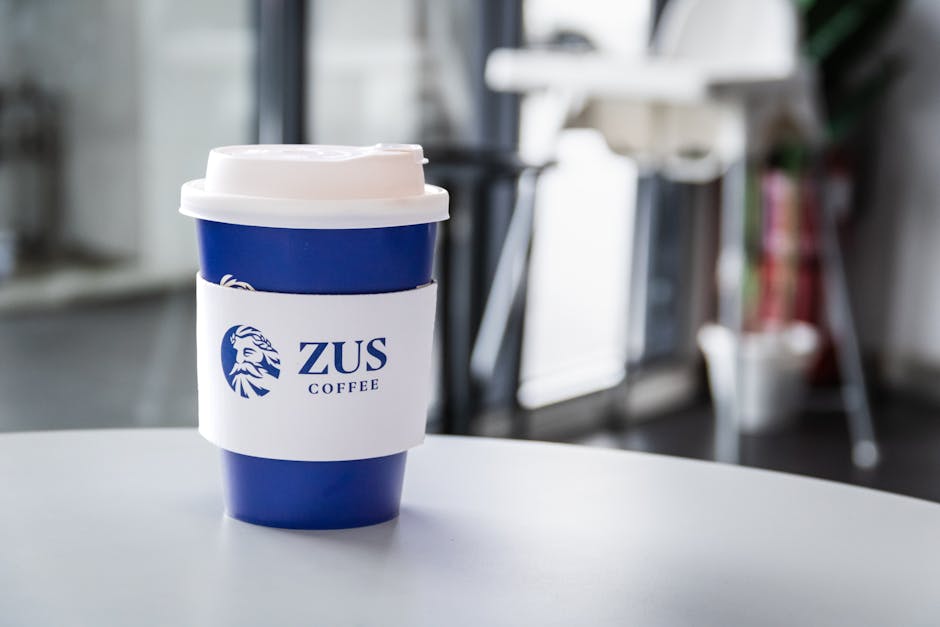
ZUS Coffee’s Tech-First Ascent: Reshaping Malaysia’s Café Landscape and Igniting the ASEAN Coffee Revolution
In just seven years, a brand born from a solitary storefront in Kuala Lumpur has rewritten the playbook for how coffee is conceived, delivered, and scaled in Southeast Asia. ZUS Coffee, with its relentless focus on technology, aggressive capital deployment, and data-fueled innovation, is no longer just a challenger—it is fast becoming the benchmark for regional coffee chains.
What does this transformation mean for local specialty cafés, international chains, investors, and FMCG players across Malaysia and the wider ASEAN region? In this exposé-style deep dive, we dissect the numbers, strategies, and seismic shifts behind ZUS Coffee’s meteoric rise, revealing a model that is both a threat and an inspiration for the next era of café commerce.
The Origins: From Kuala Lumpur Startup to National Powerhouse
**A Home-Grown Disruptor**
Launched in 2019, ZUS Coffee began as a single local outlet but quickly distinguished itself in a saturated market by leveraging technology not as an afterthought, but as its very backbone. By late 2024, it had exploded to roughly 600 locations—about 550 in Malaysia and 50 in the Philippines. This growth is not just linear but exponential, underlined by the chain’s plan to reach 1,050 Malaysian outlets and 1,300 globally by end-2026 (The Edge Malaysia).
**From Niche to Nationwide**
By March 2025, ZUS had already surpassed 700 Malaysian outlets. Its network density rivals that of established international names, yet with a distinctly local flavor profile and operational agility that resonates with the mass middle class. The brand’s success signals the dawn of a new phase for Malaysia’s specialty coffee scene—a battle not just over beans and branding, but over digital fluency, capital depth, and data mastery.
Funding and Valuation: Fueling the Expansion Frenzy
**Aggressive Capital Deployment**
ZUS’s breakneck expansion hasn’t been achieved on cash flow alone. In September 2024, a formidable consortium—consisting of KV Asia Capital (Singapore), Malaysia’s state pension fund KWAP, and Indonesia’s mighty Kapal Api Group—committed RM250 million (US$57 million) to the chain (Retail Asia). This infusion is structured to supercharge new store openings while offering early stakeholders partial liquidity—indicative of confidence in both ZUS’s near-term profitability and long-term platform potential.
**IPO Ambitions and Financial Stature**
Financial disclosures reveal that Zuspresso (M) Sdn Bhd, the corporate operator, doubled revenue to RM468.2 million in FY2024. Net profits soared more than threefold in a year, from RM10.15 million (FY2023) to RM36.62 million (FY2024). With a Main Market IPO on Bursa Malaysia on the horizon, analysts are projecting a market cap between RM4–6 billion. The brand is candid about its aspirations: raising at least RM1 billion in fresh capital via an IPO, with talk of a listing window as soon as mid-2027 (VNExpress).
The Tech-Driven, App-First Model: Reinventing the Café Experience
**Why the App Is the Storefront**
Central to ZUS Coffee’s disruption is its “app-first” strategy, treating the digital interface as the primary customer touchpoint. The ZUS App—available on Google Play and the Apple App Store—enables customers to order ahead, accrue and redeem points, and provide real-time feedback via live chat.
**Integrated Loyalty and Continuous Data Capture**
Transactions are not just sales; they are data points. Each order builds a persistent, AI-ready profile encompassing beverage preferences, timing, and responsiveness to promotions. The app architecture supports dynamic menus, time- and location-sensitive offers, and rapid feedback loops. This apparatus allows ZUS to test, iterate, and personalize at scale—far beyond the capabilities of analog competitors.
Data-Driven Product Development and AI Readiness
**Leveraging the Data Stack for Innovation**
ZUS’s data-led ethos is explicit: “We use our app to understand customer preferences, drive menu innovation, and optimize promotions in real time.” With transaction logs spanning hundreds of outlets, the company can deploy machine learning for recommendation engines, demand forecasting, and even dynamic pricing.
**Operational AI for Inventory and Staffing**
The chain’s scale—targeting over 1,050 Malaysian outlets by end-2026—creates a granular, multi-market dataset. This enables sophisticated AI in inventory optimization, micro-segmented menu curation, and hyper-local store planning. Specialty cafés, often with just one or a handful of locations, simply cannot replicate this depth of operational intelligence without adopting third-party analytics tools or collaborating with aggregators.
ASEAN Expansion: Beyond Malaysia’s Borders
**Strategic Regional Partnerships**
ZUS does not see itself as a Malaysian brand with regional ambitions; it is positioning as a Southeast Asia coffee platform. With the Indonesian Kapal Api Group as a strategic investor—and itself a powerhouse behind brands like Excelso—ZUS is well-placed to leverage local know-how for its upcoming launches in Indonesia and Thailand. Its moves into Singapore and Brunei, announced for late 2024, signal a pan-ASEAN playbook targeting both urban centers and emerging middle classes.
**Implications for Regional Players**
This expansion will pressure both international chains and local specialists—on price, localization, and digital convenience. It also creates partnership opportunities for regional roasters or FMCG players as ZUS hints at venturing into ready-to-drink and retail-packaged coffee verticals.
Competitive Response: Specialty Cafés and Global Chains at a Crossroads
**The New Rules of Engagement**
The scale and digital sophistication of ZUS Coffee reposition the competitive landscape. Specialty cafés must now compete not just on the cup’s contents, but on digital experience, personalization, and convenience.
For international chains: ZUS demonstrates how rapid local adaptation and digital integration can outmaneuver legacy systems. Chains like Starbucks and The Coffee Bean & Tea Leaf, long reliant on global playbooks, must now benchmark themselves against ZUS’s data-driven model and relentless localization.
For independent cafés: The imperative is differentiation. This means doubling down on experience—storytelling, provenance, barista-led education, and community events—while adopting tactical tech (order-ahead, loyalty integration) rather than trying to outspend or outscale ZUS.
Differentiated Perspectives: Newcomers vs. Industry Veterans
For New Market Entrants: The ZUS playbook is both a map and a warning. Rapid scale is possible with the right tech backbone, institutional capital, and relentless operational experimentation. However, incumbents are forewarned: ZUS’s competitive moat is not just physical scale—it is the compounding value of its app-generated data.
For Established Café Operators: The lesson is stark. Café culture rooted in tradition must adapt to a world where customers expect digital convenience. Analog holdouts risk marginalization as app-native brands like ZUS set new standards for loyalty, feedback, and personalized offers.
“Those who control the customer interface—and the flow of data behind it—will increasingly set the terms of competition, innovation, and even capital raising in the Southeast Asian coffee market.”
FMCG and Channel Convergence: The Blurring Lines of Coffee Commerce
**From Brew Bar to Supermarket Shelf**
With CEO statements signaling new moves into FMCG coffee—ready-to-drink formats, capsules, beans—ZUS is erasing boundaries between café and consumer packaged goods. The RM250 million raise is earmarked not just for retail outlets but to seed these verticals, leveraging the chain’s app data for flavor and product innovation.
**Why This Matters for Grocery Players**
Supermarkets and convenience chains must now treat ZUS not just as an out-of-home rival, but as a future FMCG category anchor. The convergence of café loyalty with packaged retail (e.g., app-voucher redemption for grocery SKUs) will reshape how coffee is bought, marketed, and consumed across channels.
Strategic Recommendations for Decision Makers
For Specialty Cafés:
- Digitize the customer journey—deploy or partner for a loyalty and order-ahead app.
- Leverage AI tactically—demand forecasting, recommendation boards, menu optimization.
- Differentiate on depth (origin stories, unique methods, experiences) rather than breadth or price.
- Explore collaboration: supplying beans, co-branded drinks, or joint marketing with digital-first chains.
- Benchmark against ZUS’s revenue, user metrics, and valuation multiples.
- Treat the loyalty app as the “data spine” of the business—invest in analytics, experimentation, and personalization.
- Adopt ZUS-style partnerships for new market entry, blending capital with local expertise.
- Link fundraising narratives to digital engagement metrics, not just outlet counts.
- Monitor ZUS’s FMCG expansion for threats and partnership opportunities.
- Use app data and loyalty platforms to innovate and test new retail SKUs.
- Deploy AI-driven analytics to understand and adapt to shifting coffee consumer behavior, both in cafés and at supermarket shelves.
App Experience: The New Benchmark for Engagement
For operators and strategists, the ZUS App provides a living case study. Downloading and using the app in Malaysian outlets reveals not just a tech feature set, but a philosophy: onboarding is frictionless, incentives are clear, and feedback is continuous. App-based loyalty is not peripheral; it is central to ZUS’s customer acquisition, retention, and expansion narrative.
Quick Reference: Key Figures and Milestones
- Founded: 2019 (Kuala Lumpur)
- Funding: RM250 million (US$57 million) in Sept 2024
- Malaysian outlets: ~550 (Aug 2024), ~700 (Mar 2025), targeting 1,050 by end-2026
- International: ~50 outlets in the Philippines (late 2024); Singapore & Brunei launches underway; pending Thailand & Indonesia
- Financials (FY2024): Revenue RM468.2 million; Net Profit RM36.62 million
- IPO/Valuation: Targeting RM4–6 billion market cap; RM1 billion raise; possible mid-2027 listing
- Growth Target: 1,300 outlets worldwide by end-2026
Conclusion: The Strategic Imperative of the ZUS Model
ZUS Coffee’s ascent is more than a story of retail execution; it is a live case study in how technology, data, and capital can transform a heritage industry.
**For business leaders in Malaysia and ASEAN**, the chain’s app-centric, AI-ready infrastructure delivers a wakeup call. Markets once defined by tradition and craftsmanship are now being rapidly re-platformed by digital-native players. ZUS highlights that scale alone is not enough; the future belongs to those who control and leverage the customer interface—and the ocean of data it generates.
The path ahead is clear: specialty cafés, international chains, and FMCG giants must either adapt, partner, or risk being relegated to the analog fringe of a market now defined by dynamism, experimentation, and digital engagement. As ZUS’s IPO approaches and its regional footprint expands, the "ASEAN coffee battle" will be fought—and won—on the twin fronts of digital experience and operational intelligence.
For those willing to act, the opportunity is as rich and complex as the perfect cup—blending innovation, tradition, and the power of transformative technology.